On a vegan diet I take four supplements without fuss: B12 every day (the one nobody should skip), vitamin D through the darker months, an algae omega-3, and a small dose of iodine. Iron, calcium, and zinc I get from food. I'm not a dietitian, so please get your bloods checked and talk to a professional before copying anyone, me included.
First, the honest disclaimer
I want to start here because it matters more than any product I could name. I'm a cook and a writer, not a dietitian or a doctor. Everything below is what I do for my own body, after years of eating this way and after the occasional blood test that told me what was actually going on. It is experience, not a prescription.
Your body is not my body. You might absorb things differently, take medication that interacts with something, be pregnant, be older, be younger, or simply have a different starting point. So the single most useful sentence in this whole guide is this: get your bloods checked, and talk to a qualified professional before you change anything.
That is not me being cautious for legal reasons. It is the actual practice that has saved me from guessing. A test costs a little money and an hour of your morning. Guessing for years can cost you a lot more. When I started, I assumed I was fine. A simple panel showed my B12 was drifting low even though I felt nothing yet. That is the whole point of testing: you catch the quiet problems before they get loud.
A blood test is cheaper than a year of guessing, and far kinder to your future self.
So read this as one person's cupboard, opened up for you to look inside. Take the ideas, check them against a professional, and build your own short list. The goal is never to swallow more pills. The goal is to eat well and fill the few real gaps that a plant-based plate leaves behind.
I also want to name a feeling that comes up a lot in messages from readers. People worry that needing any supplement at all means a vegan diet is somehow unnatural or wrong. I gently disagree. Plenty of omnivores are low in vitamin D and iodine too; the difference is just that their gaps stay hidden behind foods they never chose deliberately. Choosing what fills your gaps, with eyes open and a test in hand, is not a weakness. It is paying attention.
Why a plant-based plate still needs a little help
Here is the thing people get wrong in both directions. One camp insists a vegan diet is dangerously deficient. The other insists you need nothing at all if you "eat clean." Neither is true. A well-planned plant-based diet covers most of what a body wants, with a handful of clear exceptions that are easy to manage once you know them.
The honest list of things worth attention is short: B12, vitamin D, omega-3 fats, iodine, and then food-level attention to iron, calcium, and zinc. That is it. The NHS lays this out plainly in its guide to a balanced vegan diet, and it is worth a read because it is calm and free of fearmongering (see the NHS vegan diet guidance).
Why these and not others? Mostly because of where the nutrients naturally live. Some, like B12, are produced by bacteria and reach us mainly through animal foods or fortification. Some, like vitamin D, depend on sunlight that many of us simply do not get enough of. Others sit in plants in forms our bodies absorb less easily, so we lean on smart pairings rather than pills.
The mental model I use
I think of it as three buckets. The first is "supplement, always": B12 belongs here for anyone eating fully plant-based. The second is "supplement, sometimes": vitamin D, omega-3, and iodine, depending on where I live, the season, and what I eat. The third is "food, with attention": iron, calcium, zinc, where the answer is a better plate rather than a bottle.
That model keeps the cupboard small. I am suspicious of any routine that needs a pill organiser the size of a tackle box. If your list keeps growing, that is usually a sign the diet underneath needs work, not that you need more capsules.
What I do not bother with
It is worth saying what is absent from my shelf, because the gaps are as telling as the bottles. I do not take a daily multivitamin. They tend to throw a little of everything at you, often in forms or amounts that do not match what I actually lack, and they let me feel "covered" while skipping the test that would tell me the truth.
I also avoid the long tail of trendy powders: greens blends, adaptogens, collagen substitutes, mushroom complexes promising calm and focus and a longer life. Some may do something for some people. But the evidence is thin, the price is not, and they crowd out the boring four that genuinely matter. I would rather spend that money on good tahini and a bag of lentils.
Protein powder I keep in a different category entirely. It is a food, not a supplement, and I use it the way I would use any convenient ingredient: occasionally, in a smoothie, when a real meal is not happening. It does not earn a place in the little box by the kettle.
B12: the one I will never skip
If you remember one thing, remember this: take B12. It is the non-negotiable supplement of plant-based eating, and the science here is not controversial. B12 is made by bacteria, not by plants or animals directly, and on a vegan diet there is no reliable natural source unless a food has been fortified.
The deficiency is sneaky because it builds slowly and the early signs are vague: tiredness, a foggy head, tingling in the hands. Left long enough it can cause nerve damage that does not fully reverse. That sounds dramatic, but the fix is so simple it is almost funny: a cheap, well-absorbed supplement, taken consistently.
How I take it
- A daily lower-dose tablet, or a larger dose a couple of times a week, since the body absorbs less per sitting as the dose climbs.
- Cyanocobalamin is the form I use most. It is stable, cheap, and well studied. Methylcobalamin is fine too if you prefer it.
- I let chewables or sublingual tablets sit under the tongue, which seems to help absorption for me.
- I treat fortified foods (some plant milks, nutritional yeast, cereals) as a nice bonus, never as my only source.
The reason I will not lean on fortified foods alone is that the amounts vary, brands change recipes, and a single missed week of cereal should not be the thing standing between you and your nervous system. A standalone supplement is just simpler and more reliable.
If you want the proper detail on doses and forms, the US Office of Dietary Supplements has a clear, readable fact sheet that I send to friends often (read the NIH vitamin B12 fact sheet). It is the kind of source you can actually cite.
A note on dose math
People get confused by the numbers, so here is the plain version. Your body can only grab a small fraction of any single dose, and the bigger the dose, the smaller that fraction. This is why a "high" daily number and a much higher twice-weekly number can both work: it is not the label that matters, it is what crosses into your blood.
That quirk is also why I never panic about a missed day. B12 stores in the liver and runs down slowly over months, not hours. If you forget a tablet on a busy Tuesday, nothing happens. Consistency over weeks is what counts, not a perfect unbroken streak. I find that knowledge takes the anxiety out of it entirely.
One more thing worth knowing: certain medications, including some common ones for reflux and for blood sugar, can lower B12 absorption over time. If you take those long-term, it is another good reason to test and to mention your diet to whoever prescribes them.
Everything else on this page is optional in some season or place. B12 is not. Take the B12.
Vitamin D, mostly for the dark months
Vitamin D is the one that depends on your sky. Our skin makes it from sunlight, which is wonderful if you live somewhere bright and spend real time outdoors. It is far less reliable if you live at a high latitude, work indoors, cover up, or have darker skin, all of which change how much you actually make.
I live somewhere with grey, short winters, so from roughly autumn to spring I take a daily vitamin D supplement. In summer, when I am outside most days, I usually stop. This seasonal on-off rhythm feels closer to how the body works than dosing the same amount all year.
What to look for on the label
- Vitamin D3 that is labelled vegan or plant-derived, often made from lichen. Plain D3 is frequently from sheep's wool, so check.
- D2 is an option and is reliably vegan, though many people find D3 raises levels a little more steadily.
- A sensible daily amount rather than a heroic mega-dose. More is not better here, and high doses over time can cause real problems.
This is another place where a blood test pays for itself. Vitamin D is one of the few things genuinely worth measuring, because the right amount for you depends on where you start. I had mine checked once in deep winter, adjusted, and now I mostly run on the same gentle routine each year.
Why I do not chase it through food
You will see lists of "vitamin D foods," and on a plant-based diet they are mostly fortified products: some plant milks, the odd cereal, a few brands of margarine. The amounts are small and inconsistent. I treat them, like fortified B12 foods, as a pleasant extra rather than a plan. The sun and a sensible tablet do the real work.
There is also a quiet emotional benefit to the seasonal rhythm. Stopping the tablet in summer is a tiny signal to myself that the bright months have arrived and I should be outside. Starting it again in autumn is permission to slow down and stay cosy. It has become a small marker of the turning year, which I rather like.
Omega-3 from algae, not fish
Omega-3 fats are good for the brain, the eyes, and the quiet machinery of the heart. The forms that matter most, called EPA and DHA, are the ones fish are famous for. But fish do not make them either; they eat the algae that does. So I skip the middle fish and go straight to the source with an algae oil supplement.
Plants give us a different omega-3 called ALA, which sits in flax, chia, walnuts, and hemp. The body can turn some ALA into EPA and DHA, but the conversion is patchy and not very efficient for many people. So I do both: I eat the seeds for the everyday baseline, and I take a small algae oil to cover the EPA and DHA directly.
My simple approach
- A spoon of ground flax or chia most days, stirred into porridge, smoothies, or yoghurt. Ground, not whole, so the body can actually reach it.
- A handful of walnuts as a snack a few times a week.
- An algae-based EPA and DHA capsule, kept in the fridge so the oil stays fresh.
Is the algae oil strictly essential for everyone? No, and I will not pretend it is. It sits firmly in my "sometimes" bucket. But it is cheap insurance for something I value, and it lets me eat for pleasure rather than treating every meal like a chemistry problem.
A small balance worth knowing
There is a quieter detail behind the seeds. Omega-3 and omega-6 fats compete for the same conversion machinery, and modern diets tend to be flooded with omega-6 from cheap vegetable oils. So part of the job is not just adding omega-3 but easing off on the heavily processed oils that drown it out. Cooking more at home with olive oil does most of that for you.
This is why I do not stress about hitting some exact omega-3 number. If the broad shape of my eating is right, lots of whole foods, a steady trickle of seeds, not much fried takeaway, then the small algae capsule is just topping up a system that is already pointed the right way.
Iodine, the quiet one
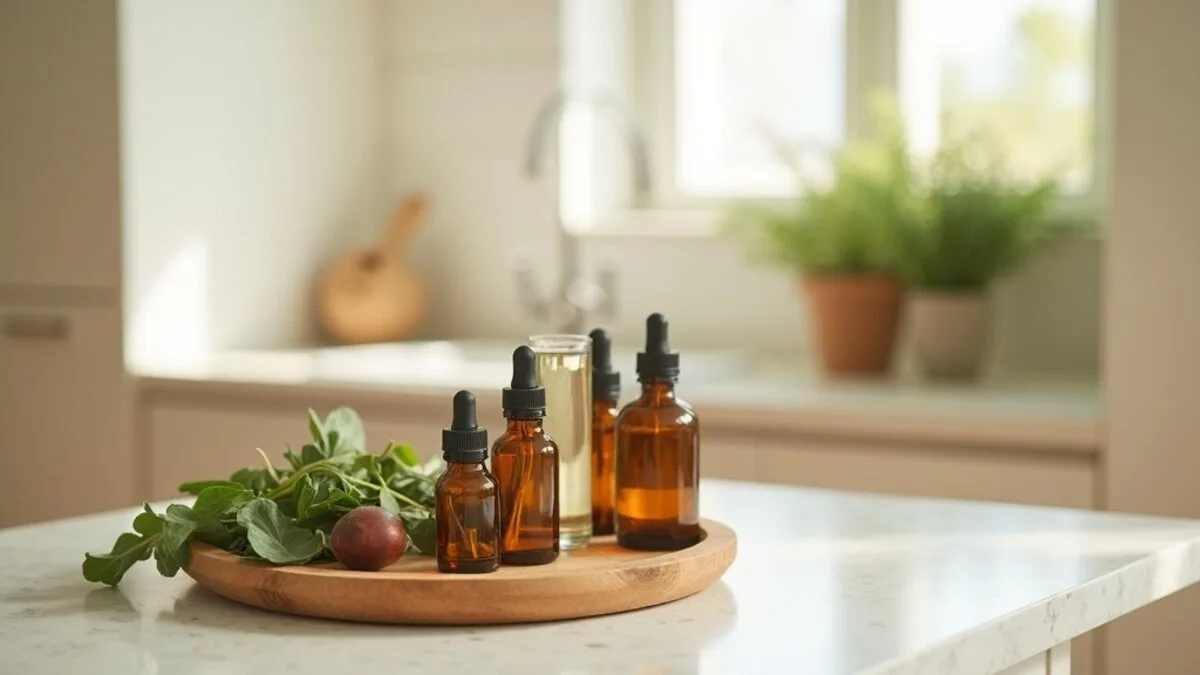
Iodine is the nutrient almost nobody talks about, which is exactly why it deserves a mention. It keeps the thyroid working, and the thyroid quietly runs your energy and metabolism. On an omnivore diet, a lot of iodine sneaks in through dairy and seafood. Cut those out and the supply can get thin without you noticing.
The tricky part is that iodine has a narrow happy zone. Too little is a problem, and too much (often from piling on seaweed) is also a problem. This is the one where I am most careful and least adventurous. I do not freestyle it with random sheets of nori.
How I keep it steady
- A small, measured iodine supplement, or iodised salt used sensibly in cooking.
- Seaweed treated as an occasional food, not a daily one, because its iodine content swings wildly between types and batches.
- No mega-dosing and no kelp tablets, which can deliver wildly inconsistent amounts.
If you are pregnant or trying to be, iodine moves from "worth a thought" to "please talk to a professional today." The thyroid matters enormously in pregnancy, and this is not a place for guesswork or blog posts. Mine included.
The salt question
A lot of people assume their salt is iodised. In some countries it usually is, in others it almost never is, and most fancy sea salts and pink salts contain very little. So the first cheap step is simply to read the box. If your everyday salt is iodised and you cook from scratch, you may already have a decent baseline without a separate tablet.
I land on a measured supplement anyway, because I keep my salt low for other reasons and do not want my iodine riding on how heavily I season dinner. It is a tiny, predictable amount that I never have to think about. Predictability is exactly what you want from the nutrient with the narrowest safe window.
Iron, calcium, zinc: food first
Here is the good news. The next three are usually a food question, not a pill question. Plants are full of iron, calcium, and zinc; the trick is helping your body actually absorb them. So this section is less about my cupboard and more about my plate.
Iron, with a squeeze of lemon
Plant iron is real but shy. It absorbs better in the company of vitamin C, so I pair iron-rich foods with something bright: lentils with a squeeze of lemon, tofu with peppers, beans with a tomato sauce. I also keep strong tea and coffee away from my main iron meals, since the tannins can block absorption.
Calcium, beyond dairy
Calcium does not live only in milk. I get plenty from fortified plant milk, calcium-set tofu, tahini, almonds, and dark leafy greens like kale and bok choy (spinach is high but locks much of its calcium away, so it counts less than it looks).
Zinc, the steady background
Zinc comes from beans, lentils, seeds (pumpkin seeds especially), wholegrains, and nuts. Soaking, sprouting, and fermenting these foods quietly improves how much you absorb, which is one more reason a slow, varied kitchen beats a frantic one.
The thing nobody mentions: phytates
Plants protect their minerals with compounds called phytates, which can hold on to iron and zinc and stop you absorbing all of it. This sounds like bad news, but the fixes are the same humble kitchen habits cooks have used for centuries. Soaking beans overnight, sprouting lentils on the windowsill, letting bread rise slowly, and fermenting are not just for flavour. They each loosen those minerals so your body can reach them.
So I do not fight my food, I prepare it kindly. A pot of beans that soaked overnight, a sourdough that took its time, a jar of sprouting chickpeas: these are not chores from a textbook, they are just good cooking that happens to be good nutrition too. The slow kitchen and the well-nourished body turn out to be the same kitchen.
A quick nutrient-to-food checklist
- Iron: lentils, chickpeas, tofu, pumpkin seeds, oats, dark greens (pair with vitamin C).
- Calcium: fortified plant milk, calcium-set tofu, tahini, almonds, kale, bok choy.
- Zinc: pumpkin seeds, lentils, chickpeas, cashews, wholegrains (soak or sprout when you can).
- Protein: tofu, tempeh, lentils, beans, edamame, seitan (more in the high-protein meals guide).
- Omega-3 (ALA): ground flax, chia, walnuts, hemp seeds.
If your everyday eating already covers most of that list, you are doing the real work. A varied plate of beans, grains, seeds, and greens is the actual foundation. The supplements are the trim, not the house.
How I actually buy and take them
The best supplement is the one you remember to take, so I make it boring on purpose. All four bottles live together in one small box by the kettle. I take them with breakfast, because breakfast already happens, and habits stick to other habits. This pairing is the same trick I lean on across my whole vegan wellness routine.
A small note on timing
A couple of these like a little company. Vitamin D and the algae omega-3 are fat-soluble, so I take them with a meal that has some fat in it, which breakfast porridge with seeds happily provides. The others are not fussy. I do not overthink the clock; "with breakfast" covers everything, and a routine I can describe in three words is a routine I will actually keep.
A few buying notes
- Check the label says vegan or vegetarian, since capsules can be gelatin and D3 can come from wool.
- Buy smaller bottles at first. If a supplement does not become a habit, you will not have wasted much.
- Store oils (like algae omega-3) in the fridge, and keep everything out of direct sunlight.
- Mind the expiry dates. A dusty bottle of who-knows-how-old D is doing nothing for you.
I retest my bloods every year or so, usually in late winter when levels tend to be at their lowest. That single check tells me whether the routine is working far better than any feeling could. It is the same gentle, evidence-led mindset I bring to building any habit, which I dig into in the healthy habits for beginners guide.
One last thing on attitude. Supplements can quietly turn into anxiety if you let them, another box to tick, another way to feel like you are failing. I refuse that. They are a small kindness to my body, taken with a coffee, then forgotten about for the rest of the day. If you want help loosening that grip around food and worry, the mindful eating guide is where I keep those thoughts.
If you are just starting out and the whole thing feels like a lot, do the smallest version. Buy one bottle of B12 this week and put it next to your kettle. That single act covers the most important gap by far. Everything else can wait until you have had a test and a proper conversation. Start small, stay consistent, and let the rest arrive in its own time.
Take the B12. Test once a year. Eat a varied, colourful plate. Almost everything else is detail.
Common questions
Can I get B12 from nutritional yeast or fermented foods instead?
Fortified nutritional yeast does contain added B12 and is a lovely bonus on pasta or popcorn. But amounts vary by brand and you cannot count on hitting your needs every day from it alone. Fermented foods like tempeh do not provide reliable active B12. Take the dedicated supplement and treat fortified foods as extra, not as your safety net.
Do I really need a blood test, or can I just take everything to be safe?
Please test rather than guess. Taking everything "to be safe" is how people end up over-dosing fat-soluble vitamins or iodine, which causes its own harm. A simple panel shows what you actually need, so you can take less, not more. I'm not a dietitian, so use the test to have a real conversation with a professional.
Is an algae omega-3 worth the money?
It sits in my "sometimes" bucket, not my "always" one. If you eat ground flax, chia, and walnuts regularly, you have a baseline. The algae oil adds the EPA and DHA your body converts only slowly from seeds. I think it is cheap insurance for the brain and heart, but it is a reasonable thing to skip if budget is tight and your diet is otherwise rich.
What should I read next?
Start with the vegan wellness routine to see how these pieces fit a normal week, then the high-protein meals guide for the food side. If supplements ever start to feel like pressure, the mindful eating guide is the gentle counterweight.