Tokyo, Kyoto, a side trip, and one open day. A vegan-friendly itinerary that leaves room to wander, eat slowly, and rest.
The shape of a slower Japan trip
Most Japan itineraries try to do twelve cities in nine days. Mine does three places in ten and leaves the eleventh day on purpose empty. The point of going somewhere isn't to see it. It's to be in it, eating quietly, walking a lot, noticing how a city handles being itself at eight in the morning.
I've now flown to Japan four times, and the trips I remember best are the ones where I did less. The first time, I had a colour-coded spreadsheet and a list of forty restaurants. I came home exhausted and oddly unable to describe a single street. The fourth time, I stayed in one Tokyo neighbourhood for four nights, ate at the same coffee place every morning, and I can still tell you the exact way the light fell across the counter at half past seven.
So this is not the itinerary that ticks every box. It's the one I'd hand a friend who asked, "How do I do Japan without coming back needing a holiday from my holiday?"
The trips I remember best are the ones where I did less.
The structure is simple. Four nights in Tokyo. Three in Kyoto. One side trip of two nights. One open day with nothing in it. You land, you let the jet lag pass, you stop checking your phone for the train you're about to miss, and somewhere around day five the country stops being a checklist and becomes a place you're actually living in.
I keep it deliberately vegan-friendly, because that's how I travel, and because Japan rewards the careful eater more than people expect. If you want the broader philosophy behind all of this, I wrote it down in the slow travel guide. This essay is that philosophy applied to one country I love.
For the food side of the trip, the dishes and the words that help, I wrote a whole guide to eating vegan in Japan.
How many days do you really need?
Ten days is the sweet spot if you want to feel Japan rather than survey it. You can do a credible first trip in seven, and you can spend a month and still not be done, but ten is the number where the pace finally settles. Two of those days are basically free, eaten by travel and tiredness, which leaves you eight real ones. Eight is plenty for two cities and a side trip done slowly.
I'd rather you spent four unhurried days in Tokyo than two frantic ones in Tokyo plus a panicked half-day in Osaka you'll forget by the time you're home. Distance is cheap on the train. Attention is the expensive thing.
What about jet lag?
From Europe it's an eight or nine hour shift forward, and it hits hard. From the US west coast it's a little kinder. Either way, plan your first day to be soft. Land, get to your room, shower, then go for a flat, slow walk outside in daylight. Don't nap past four in the afternoon. Eat dinner on local time even if you're not hungry. By day three you'll feel human.
This is exactly why I don't book anything important for the first 24 hours. The day you arrive is not a day you sightsee. It's a day you let your body catch up while you drink a coffee and look at things.
When to go
Late October into November is my favourite: clear light, cool air, the maples turning in Kyoto. Spring cherry blossom is gorgeous and absolutely heaving with people, so if you go then, go early in the morning and accept the crowds as part of the deal. July and August are humid in a way that will defeat you by noon. I'd skip high summer unless you have no choice.
Winter is the quiet secret. December and January are cold but clear and uncrowded, and a snow-dusted temple in Kyoto with almost nobody around is a different kind of beautiful. If you don't mind layering up, you'll have the place half to yourself and the food, all those warming hot pots and steaming noodle broths, suits the weather perfectly.
One country, or two cities?
People sometimes ask whether ten days is too long for just Tokyo and Kyoto. It isn't, because you're not "doing" two cities. You're living in two places and taking one trip out. The slowness is the feature, not a gap to be filled. If you find yourself bored, and you won't, the cure is to walk a new neighbourhood, not to add a new city.
This is the hardest idea to sell to first-timers, and the one they thank me for afterward. Depth beats breadth. Always.
Days 1 to 4: Tokyo, one neighbourhood at a time
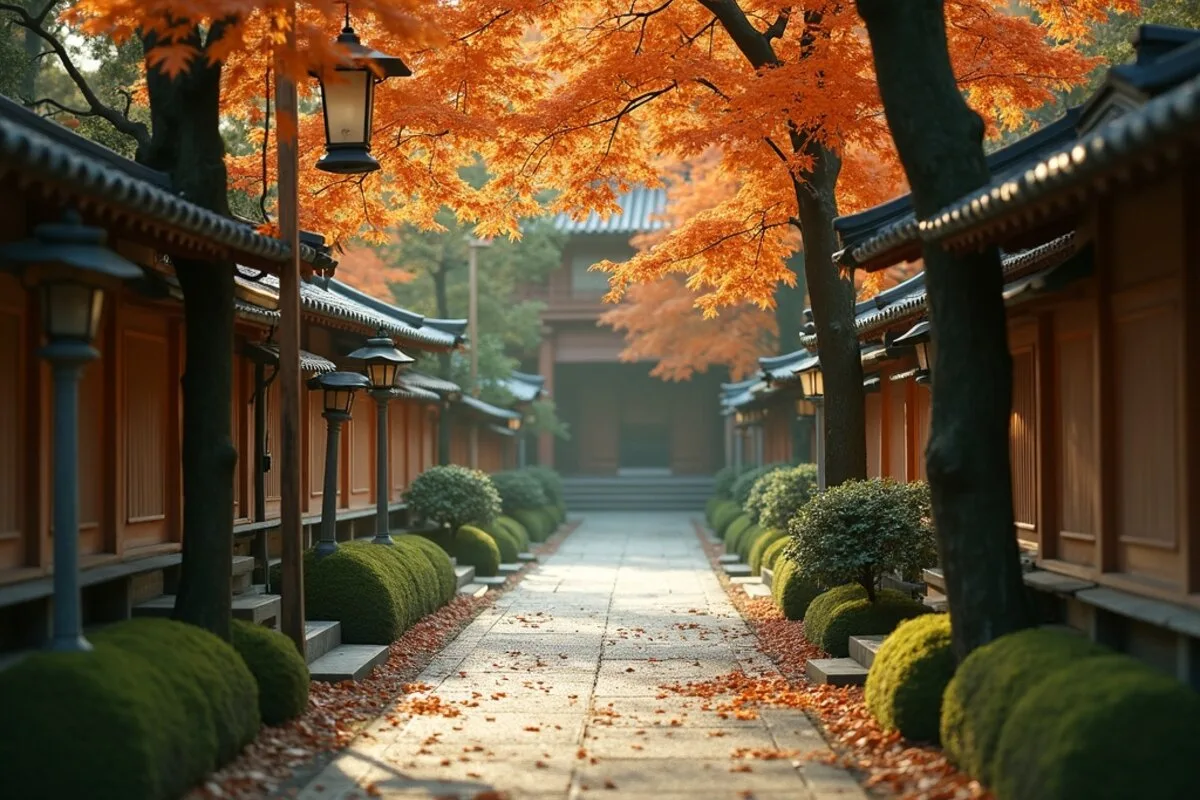
Stay in one neighbourhood and walk it before you take a train anywhere. I'd pick Shimokitazawa for its second-hand shops and small cafés, or Yanaka for the old-Tokyo lanes, temples, and a cemetery that's somehow the most peaceful place in the city. Both are a short ride from the centre, both let you live like a person rather than a visitor.
Tokyo is not one city. It's about thirty villages that grew into each other, and trying to "see Tokyo" is like trying to see Europe in an afternoon. So don't. Pick two or three neighbourhoods and go deep.
A loose plan for four days
- Day 1: Arrive, settle, a flat walk around your own neighbourhood, an early dinner, an early night. Nothing more.
- Day 2: Yanaka in the morning (start at Nezu Shrine before the crowds, then wander the lanes), an afternoon nap, then Shinjuku at dusk when the neon comes on and the air smells of grilled everything.
- Day 3: Daikanyama and Nakameguro, slow and bookish. The Daikanyama T-Site bookshop is worth an hour even if you can't read Japanese. Coffee, the canal, a long lunch.
- Day 4: One museum or garden, then a free afternoon to repeat whatever you liked most. Repetition is underrated on a trip.
Eating vegan in Tokyo
It's easier than it was even a few years ago, but you still plan. T's Tantan inside Tokyo Station does a vegan tantanmen that has saved me on more than one tired travel day, and it's right by the platforms. Ain Soph has a few branches and feels like a proper sit-down treat. For everyday eating, look up "shojin ryori" or "soy" restaurants near you and let HappyCow do the filtering.
The phrase I lean on is "vegan onegaishimasu," said with a small bow, plus a translation card I keep on my phone. More on that further down. The morning coffee culture, the old kissaten cafés with their toast and their quiet, is a genuine gift to anyone who likes a slow start to the day.
Tokyo at its quietest
The version of Tokyo people fear, the wall of bodies at Shibuya crossing, the crush of a rush-hour train, is real but easy to avoid. You simply travel against the commute and arrive at popular places early. By nine in the morning the famous gardens are calm. By ten at night the side streets of Golden Gai are full but never frantic.
My favourite Tokyo hours are early. There's a window, roughly six to eight in the morning, when the city belongs to dog-walkers, shrine sweepers, and old men doing stretches in the park. Get up for it once. Buy a hot can of coffee from a vending machine, find a bench, and watch a neighbourhood wake up. It costs nothing and it's the best thing I do there.
And don't over-plan the evenings. A bath, a wander, a bowl of something warm, then bed. You're storing energy for Kyoto, where the early mornings really matter.
Days 5 to 7: Kyoto without the crowds
Three days in Kyoto is just long enough to stop being a tourist, if you spend them right. The single most useful thing I can tell you is this: Kyoto's famous sights are wonderful at seven in the morning and unbearable at eleven. Get up early. Do the popular thing at dawn. Spend the heat of the day somewhere quiet, and come back out as the light goes gold.
You can read the city's long history on Wikipedia if you like context, but you'll feel it faster by walking. A thousand years of being the capital sits in the bones of the place.
Where to stay
Find a small inn, ideally a renovated machiya townhouse. They're narrow, wooden, and quiet, with a little courtyard and tatami that smells faintly of straw. Staying in one changes the whole texture of your trip. I'd take a machiya over a big hotel in Kyoto every time, even at the same price.
Three slow days
- Day 5: Arrive by train from Tokyo (the bullet train is just over two hours and genuinely a pleasure). Settle in, walk the Gion lanes in the early evening, eat well, sleep.
- Day 6: Up at dawn for Fushimi Inari before the tour buses. Climb past the first crowded gates until they thin out, then keep going for the quiet upper paths. Back down for breakfast, a long midday rest, then the Philosopher's Path at dusk.
- Day 7: Arashiyama early for the bamboo, or a single temple done properly. Then nothing planned. A tea, a bookshop, a bath.
Eat shojin ryori once
Do this even if you do nothing else culinary in Kyoto. Shojin ryori is Buddhist temple cuisine, plant-based by tradition, served as a sequence of small, careful dishes: sesame tofu, simmered vegetables, pickles, miso, mountain greens. It's vegan not as a marketing decision but as a centuries-old philosophy about not taking life. Eating it slowly, in a quiet room, is one of the more grounding meals I know.
A few honest Kyoto opinions
Skip the rickshaw rides and the rented kimono photo lines unless they genuinely delight you; they clog the most beautiful lanes and you'll feel the difference in the crowds. The Bamboo Grove at Arashiyama is lovely but tiny and mobbed by mid-morning, so it's a dawn thing or a skip.
Worth it, every time: a tea house with a view of a moss garden, a slow morning at a sub-temple most people walk past, and the simple act of eating tofu in the city that perfected it. Kyoto's water is soft and the tofu is genuinely better here. That's not folklore, it's the geology.
One more thing. Kyoto is a real city where people live, not a theme park, and locals are weary of the volume of visitors. Keep your voice down on residential streets, don't block doorways for photos, and the city softens toward you. Travelling gently is partly about being a good guest, which is a thread that runs through all my travel writing.
Kyoto's famous sights are wonderful at seven in the morning and unbearable at eleven.
Days 8 to 9: the one side trip
Pick exactly one. The temptation is to bolt on three more places now that you've got your train legs, but resist it. Two nights somewhere that isn't a major city is the whole point of these two days. Here's how I'd choose.
Naoshima, for art on the Inland Sea
A small island covered in contemporary art museums and outdoor sculpture, reached by train and ferry. The pace is slow by force: there's a limited bus, the museums close early, and the sea is right there. If you like the idea of looking at one Monet room and then sitting on a beach for an hour, this is your place. It does take effort to reach, so factor in the travel time honestly.
Koyasan, for temple lodging
A mountaintop monastic town where you sleep in a temple (a shukubo), eat shojin ryori at dinner and breakfast, and can join the morning prayers if you want. The cedar forest and the lantern-lit cemetery at Okunoin are unforgettable. As a vegan this is the easiest place in Japan to eat, because the monks have been cooking this way for over a thousand years. Bring warm layers; it's cold up there.
Kanazawa, for slower northern life
A handsome city on the Sea of Japan side, with one of the country's great gardens (Kenrokuen), a preserved geisha district, and far fewer tourists than Kyoto. If you want a "second Kyoto" feeling without the crush, go here. The seafood-heavy local cuisine is less vegan-friendly, so lean on the garden, the markets, and the tofu.
If none of those grab you, two gentler options sit closer to Kyoto: Nara as an overnight rather than a day trip (the deer, the giant Buddha, the park at dawn before the buses), or a single night at an onsen town like Kinosaki, where you wander between public baths in a cotton yukata and the whole evening is just hot water and quiet streets. Either one keeps the pace soft.
Whatever you choose, build in the travel time honestly and don't try to "see" the side trip the way you'd see a city. Two nights somewhere small is about texture, not sights. Arrive, slow down, eat the local thing, sleep well, come back.
All three of the main picks reward the slow traveller. None of them reward a rush. If you're travelling alone, any of these works beautifully, and I've said more about that in the solo travel piece.
Day 10: the day I leave empty
An empty day in Japan is not a wasted day. It's the day the trip becomes a memory you can carry.
This is the day I refuse to schedule, and it's quietly become the part of every trip I look forward to most. No museum, no train, no booking. A long walk in whichever city I'm in. One bookshop. One café where I sit too long. One bath, public or private, hot enough to make my shoulders drop.
The reason is simple. A trip made entirely of highlights has no connective tissue. The empty day is where everything you've seen settles into something you'll actually remember. You stop performing the holiday and start just being a person who happens to be in Japan.
Practically, I keep this day flexible right to the end. Sometimes I use it to go back to the one place I loved most. Sometimes I do laundry, write postcards, and watch the street. It's the same instinct behind the slow living routine I keep at home: leave space, and good things move into it.
The best souvenir I've ever brought back from Japan is the memory of doing nothing in particular, slowly, on a Tuesday.
How to eat vegan in Japan, in practice
Japan has a reputation for being hard for vegans, and it's half true. Dashi, the fish-and-kelp stock, is in almost everything savoury, including dishes that look plant-based. Soups, sauces, even some pickles carry it. So the work is real, but it's manageable once you know the moves.
Learn three things to say
- "Bejitarian desu" or "biigan desu" to flag that you're vegetarian or vegan.
- "Niku, sakana, dashi nashi de" meaning "without meat, fish, or dashi." The dashi part is the one that matters.
- "Onegaishimasu," a polite please, after almost anything.
I keep a screenshot of a longer translation card on my phone, written out in Japanese, that explains the whole thing clearly and apologetically. Showing it is far easier than performing my terrible accent, and staff are almost always kind about it.
Convenience stores are your friend
The konbini (7-Eleven, Lawson, FamilyMart) are genuinely useful. You'll find edamame, plain onigiri rice balls (ask for ones without fish or check the picture labels), inari sushi (sweet tofu pockets, usually vegan), fruit, salted nuts, and surprisingly good dark chocolate. On a long travel day, a konbini run plus one bar of chocolate has kept me going more times than I'll admit.
Where the easy wins are
- Shojin ryori restaurants and temple meals, fully plant-based by tradition.
- Soba and udon shops, if you can confirm a kelp-only broth. Zaru soba (cold noodles with dipping sauce) is often safer, but check the sauce.
- Tempura vegetables, watching for shared fryers.
- Curry rice at vegan-flagged spots, and the growing number of dedicated vegan cafés in Tokyo and Kyoto.
Use HappyCow to find places, then save a few to a map before you go. If you want the wider picture of which countries make this easy, I keep a running list in vegan travel destinations, and a tighter set of road habits in plant-based travel tips.
The things that catch people out
Dashi is the big one, as I said, but there are smaller traps. Miso soup almost always contains it. Many "vegetable" tempura sets share a fryer with prawns. Furikake rice seasoning often has fish or egg. And matcha sweets are usually fine but the wagashi shop may glaze something with honey, so ask if you avoid it.
None of this should scare you off. It just means you ask one clear question and then relax. Japanese hospitality is real, and once the staff understand what you can't eat, they take it seriously. I've had chefs come out from the kitchen to walk me through a menu line by line, which would never happen at home.
If you do get caught short, the konbini is always open and a bowl of rice with pickles and a banana is a perfectly fine dinner on a hard day. Don't make it a moral event. Eat what you can, be kind about it, and try again tomorrow. That low-stress attitude is the same one I bring to cooking at home, and it's most of what keeps plant-based eating sustainable for me year after year.
Money, trains, and what to pack
Japan still runs on cash more than you'd expect, especially at small restaurants and shrines. Carry some yen. That said, IC cards (Suica or Pasmo, now also on your phone) tap you through almost every train and bus and even pay at convenience stores, so load one up on arrival and stop counting tickets.
Do you need the rail pass?
For this itinerary, probably not. The Japan Rail Pass got a lot more expensive recently, and with only one long Tokyo-Kyoto hop plus a side trip, you'll likely save money buying individual bullet train tickets. Run the numbers for your exact route before you buy. If you were doing five cities, the answer might flip.
Reserve your Tokyo-to-Kyoto seat in advance if you can, especially in autumn or around the cherry blossom. It's a roughly two hour ride, smooth and punctual to the minute, and a window seat on the right side gives you a chance at Mount Fuji on a clear day.
What I actually pack
- Comfortable shoes you can slip off easily. You'll remove them at temples, inns, and some restaurants, so skip the complicated laces.
- Layers. Mornings are cool, afternoons warm, temple floors cold.
- A small towel. Many public toilets have no dryer, and it doubles for the baths.
- A reusable water bottle. Tap water is excellent.
- One protein bar and one chocolate bar per travel day, for the gaps.
- A power bank, since you'll be navigating on your phone all day.
Pack light. You'll likely walk fifteen to twenty thousand steps a day and haul your bag through stations, and the slow version of this trip is much nicer with less to carry. Consider sending a bigger bag ahead by takkyubin (luggage forwarding) between cities; it's cheap, reliable, and very Japanese.
A note on connectivity
Get a data eSIM or a pocket wifi before you go. You'll lean on maps, train apps, and translation constantly, and Japanese train stations are a maze where a working phone is the difference between calm and panic. The Google Maps transit directions in Japan are excellent, down to which carriage to board for the fastest exit.
Download an offline translation pack too, and the camera-translate feature for menus. Pointing your phone at a menu and watching the kanji turn into English is borderline magical, and it's what lets you eat at the tiny places that don't have an English card. Those tiny places, more often than not, are where the trip actually happens.
What I'd do differently
A few honest caveats, because no itinerary is perfect and I've made every mistake here at least once.
I tried to fit Osaka in once, on the theory that it was "right there." It is, and it's a great food city, but adding it turned a calm trip into a logistics exercise. I'd leave it for a future trip rather than wedge it into ten days. Same goes for Hiroshima, Nara as more than a half-day, and the temptation of the far north.
I'd also book less for dinner than my anxious self wants to. Two or three reservations across ten days is plenty. The rest of the time, wandering until something looks right is part of the pleasure, and it's how I've found my favourite meals.
And I'd guard the empty day harder. Every single trip, around day eight, I get a flicker of "but we could squeeze in one more thing." Every single time I've given in, I've regretted it. The squeeze is never worth what it costs.
If this is your first slow trip and you want to feel the rhythm before you commit to Japan, start closer to home. The Portugal guide and the roundup of vegan-friendly European cities run on exactly the same principles, just with shorter flights and easier dinners. The country changes. The unhurried part doesn't.
I'd add one more thing I keep relearning. The trip doesn't start when you land and it doesn't end when you fly home. It starts the morning you decide to stop cramming the calendar, and it carries on for weeks afterward in the small habits you bring back: the slower coffee, the longer walk, the quiet first hour. Japan is very good at teaching that, if you let it.
However you build it, the goal is the same. Come home rested, with a handful of specific memories and a craving to go back, rather than a phone full of photos of places you barely stood in. That's the whole trick. Fewer places, more presence.
Common questions
How long will this take, honestly?
The reading is 18 min. The practice is a lifetime. Start with one small piece this week and let the rest follow when it feels natural, not before.
Do I have to be fully plant-based for this to help?
No. Everything I write is for people who want a softer relationship with food and routine. The recipes happen to be plant-based; the ideas work in any kitchen.
What should I read next?
The related essays below, in order. If you only read one more thing, read A slow travel guide for food-loving travellers, it picks up exactly where this one ends.
Can I cite this guide somewhere?
Yes. Please link back to this page and credit Caleb Leuchi. All photographs are made for Leuchi unless noted; the writing is original.