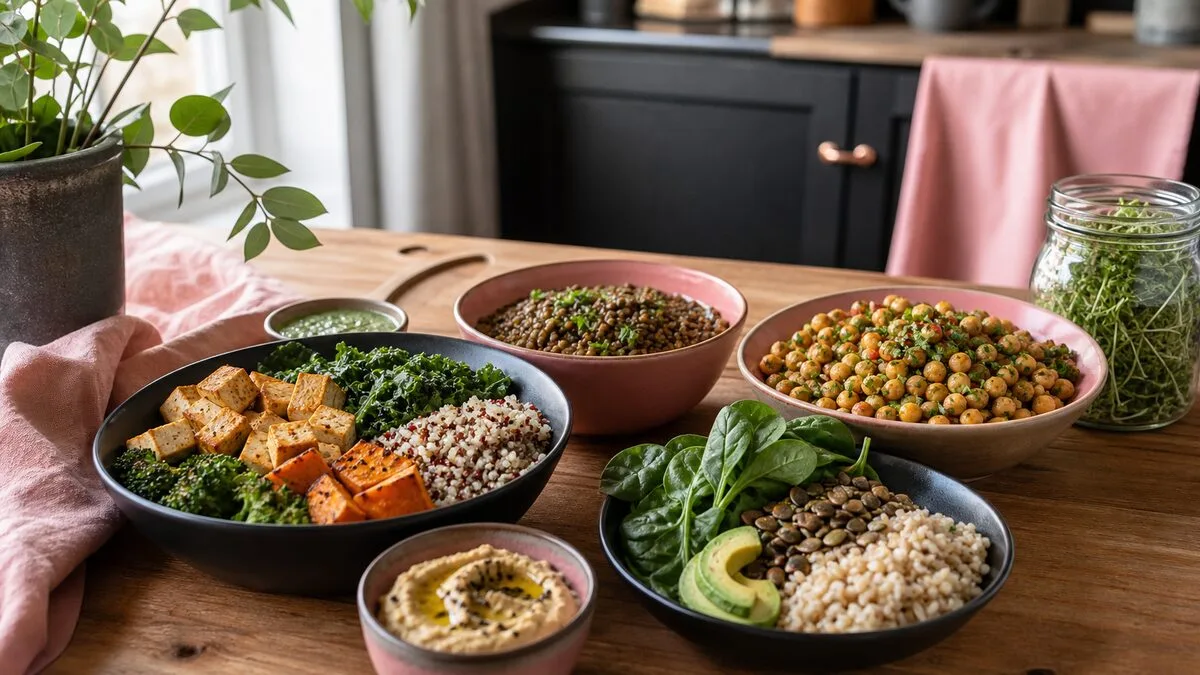
Beans, tofu, lentils, tempeh, a good sauce. How I build plates that keep me full past 3pm, without performing health.
How much protein do I actually need in a day?
Most adults do well on roughly 0.8 grams of protein per kilogram of body weight per day, which works out to about 56 grams for a 70 kg person. That number is a floor, not a target you should fear missing. If you're active, older, or rebuilding after illness, somewhere between 1.0 and 1.2 grams per kilogram feels better in practice. Plant eaters reach this comfortably once meals are built around legumes, tofu, and grains rather than around a salad with a hopeful sprinkle of seeds on top.
I used to think protein was something you chased. A number on a label, a tub of powder by the kettle, a low hum of worry that I wasn't getting enough.
Going plant based cured me of that, mostly by accident. Once I built plates around beans and tofu instead of treating them as the sad understudy to meat, the worry quieted down. I eat well now. I just stopped performing it.
Here's the part nobody told me at the start. When I first went plant-based, my lunches got smaller before I learned how to make them bigger. A salad at 1pm became an apple at 3 and a sleeve of crackers at 4, and by 6 I was eating peanut butter off a spoon at the counter, lying to myself that it counted as dinner.
The fix was never supplements. It was structure. Protein at every meal, and enough of it that my body actually noticed it had arrived.
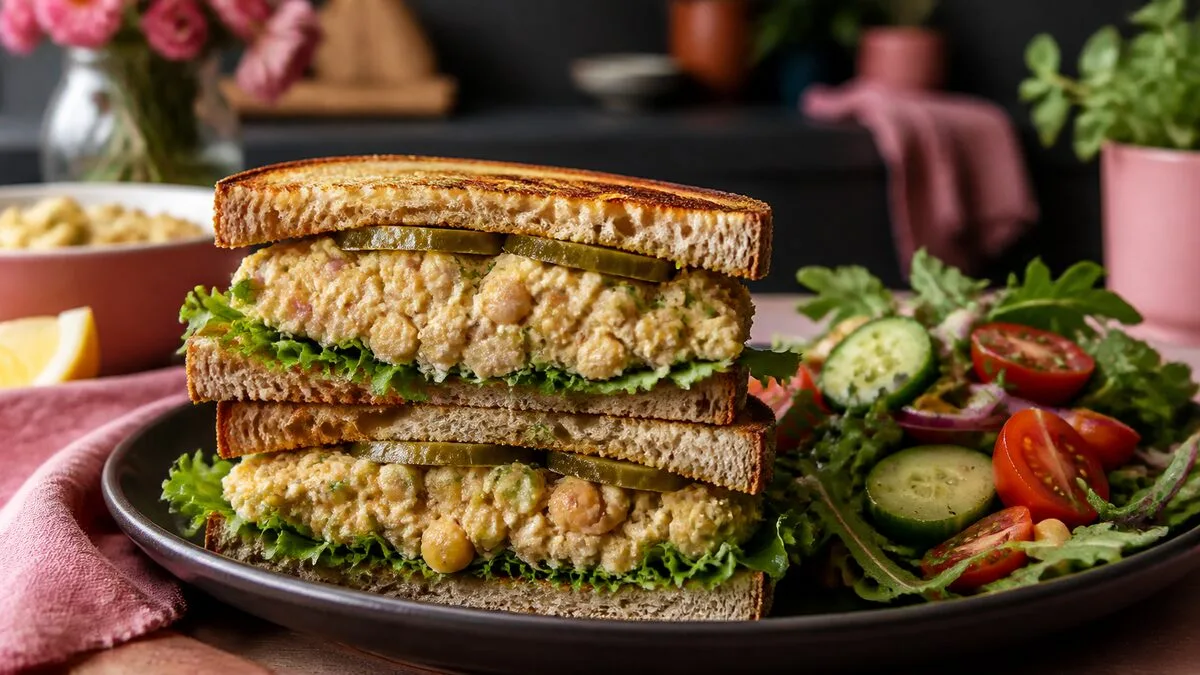
The rest of this essay is that structure, written so you can borrow the parts you need and leave the rest. You'll find the breakfast smoothie I drink three mornings a week, the chickpea sandwich that brought my lunch back from the dead, and the flexible meal prep that makes the whole thing survive a Tuesday when I get home tired and slightly annoyed at the world.
A quick word on why plant protein gets a bad rap
The old worry was about "completeness," the idea that plant proteins are missing amino acids and therefore inferior. It's mostly a misreading. Soy, for one, is a complete protein on its own. And across a normal day of mixed plants, the gaps fill themselves in without any thought from you.
I'll get into that properly later, because I think the anxiety around it does real harm. For now: eat a variety of beans, grains, nuts, and seeds, and the amino-acid maths takes care of itself while you're busy living.
When I want one bowl to do everything, I fall back on the ratio in my guide to building a vegan buddha bowl.
On the nights I want one tray to do the work, I roast my go-to tofu and sweet potato recipe.
Once I stopped fearing the block, tempeh earned a regular spot through these tempeh recipes.
The five anchors I cook on rotation
I keep five plant proteins in the kitchen at all times, and a meal is almost always one of them plus a grain, a green, and a sauce. That's the whole architecture. Nothing clever. The list:
- Lentils. French (the small dark ones) or brown, simmered with bay, a smashed garlic clove, and enough salt. The cheapest proper dinner I know, and around 18 grams of protein per cooked cup.
- Chickpeas. For the sandwich, for a quick soup, for crispy roasting in a hot oven until they rattle in the tin.
- Firm tofu. Pressed, cubed, tossed in cornflour and baked at 220°C until the corners go gold and chewy.
- Tempeh. I steam it for ten minutes first to take off the bitter edge, then crumble or slice it into almost anything. If you've never warmed to it, the steaming step is probably why. More on tempeh below.
- White beans. Cannellini or butter beans, for comfort dinners and silky blended soups. They mash into the creamiest base going.
Five is the right number for me. Three felt repetitive by Thursday. Eight meant half of them went off in the fridge while I dithered. Five gives me variety without waste, and I can hold the whole rotation in my head while standing in the shop.
Why I keep them as "anchors" rather than recipes
An anchor is a thing you cook a big batch of and then point in different directions all week. A pot of lentils becomes a stew on Monday, a grain bowl on Tuesday, and a thing I fry with onions and pile on toast on Wednesday when I can't be bothered.
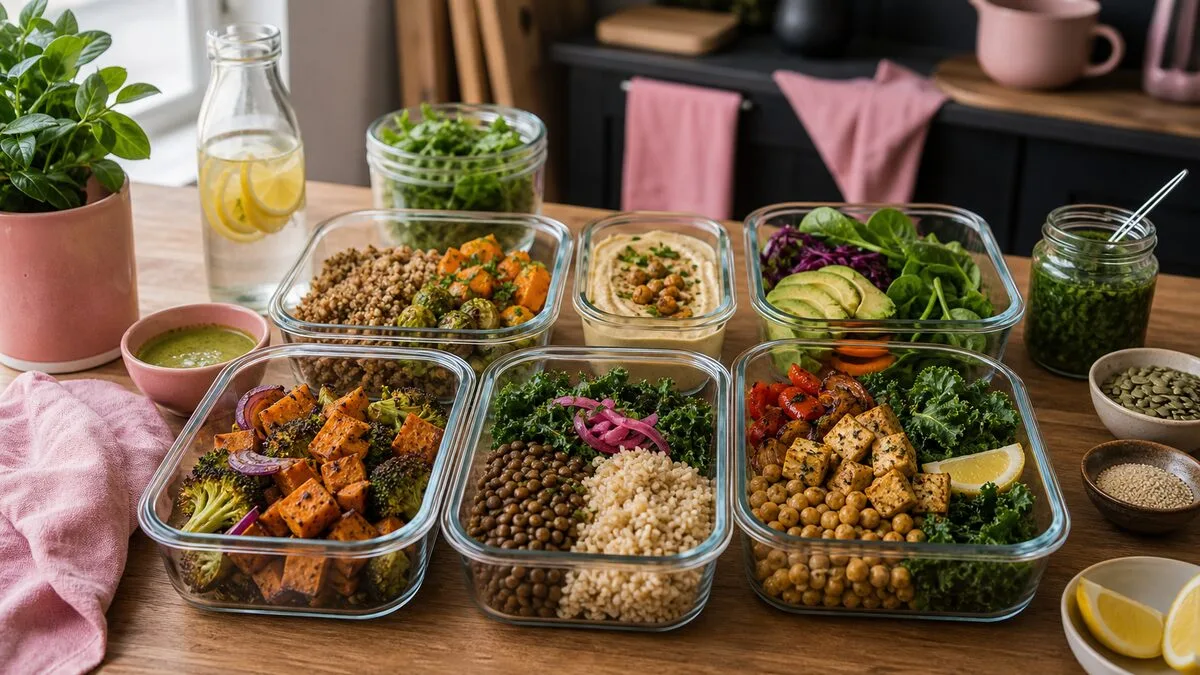
Recipes are lovely. But a recipe asks you to start from zero every time, and on a tired weeknight that's exactly the ask I can't meet. Anchors let me start from 70 percent done. This is the same logic that drives my whole approach to meal prep without the pressure, and honestly it's the single change that made plant-based eating stick for me.
The protein, roughly, per anchor
I don't weigh anything. But it helps to carry rough numbers, so you trust the plate instead of second-guessing it:
- One cup cooked lentils: about 18 g.
- One cup cooked chickpeas: about 15 g.
- 150 g firm tofu: about 17 g.
- 100 g tempeh: about 19 g.
- One cup cooked white beans: about 15 g.
Add a grain and a few seeds and any one of these meals lands comfortably north of 25 grams. Do that three times a day and the number you were worried about stops being a worry.
A plate I can build with my eyes closed
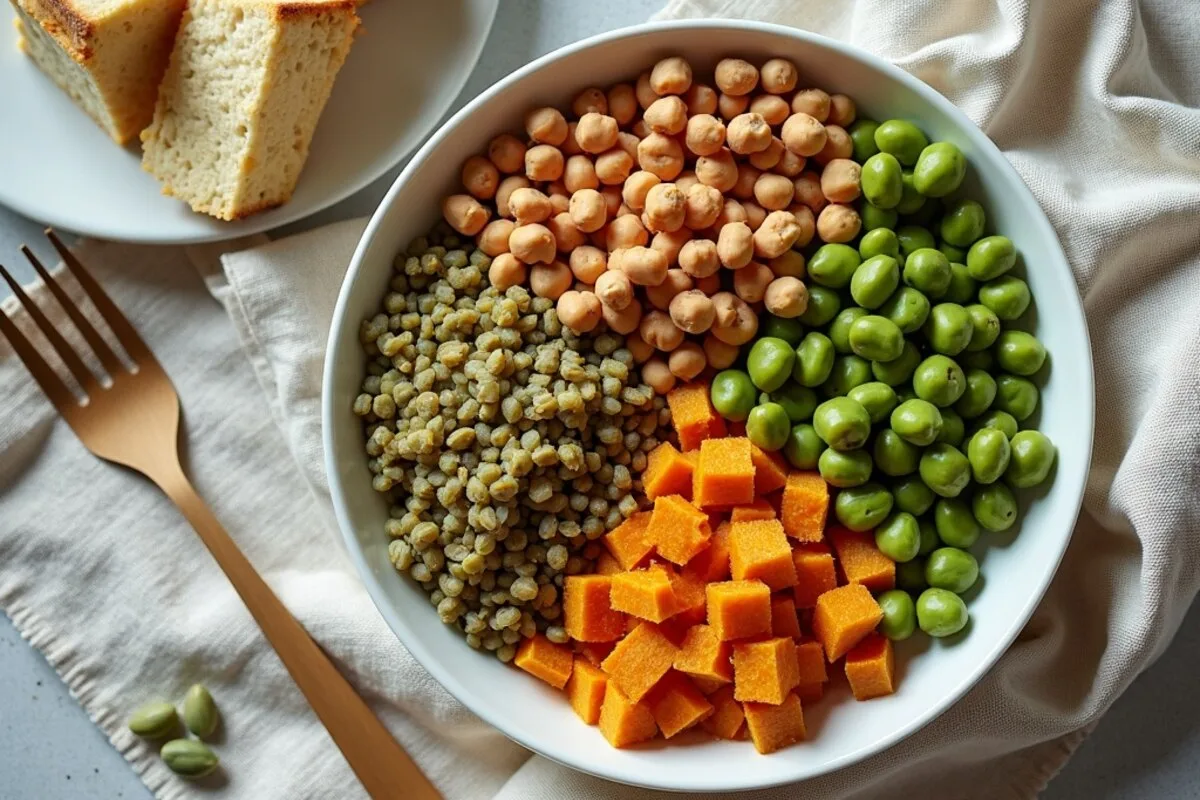
Half greens or roast veg, a quarter grain, a quarter protein, plus a real sauce. That is the whole shape.
It sounds boring written down. It does not taste boring, because the sauce is the love letter and the protein is browned properly and the greens are actually seasoned. The shape is just a frame. The cooking is where it gets good.
Let me walk through how I actually assemble it, because "a quarter protein" is the kind of advice that sounds useful and helps nobody at 7pm.
Start with the protein, because it takes the longest
Tofu and tempeh want a hot pan or a hot oven and a few minutes of inattention to crisp up. Lentils and beans are usually already cooked from a batch, so they only need warming. I get the protein going first, then prep everything else while it does its thing. That sequencing is the difference between dinner at 7:20 and dinner at 8:05.
Make the greens count
Raw greens are fine, but I get more pleasure from a quick sauté: a glug of oil, garlic, the green of choice, a pinch of salt, a squeeze of lemon at the end. Spinach wilts in ninety seconds. Kale wants three minutes and a splash of water to steam. Cabbage, shredded thin, goes sweet and a little charred and I will eat an embarrassing amount of it.
Pick a grain you don't have to babysit
Brown rice, farro, and quinoa all reheat well and don't turn to glue. I cook a big pot at the weekend and pull from it. If I'm starting from scratch midweek, couscous is ready in five minutes and asks nothing of me. The grain is the quiet workhorse here; it stretches the protein and keeps me full past 3pm, which was always the real test.
If you want the bowl version of this with no thinking required, that's exactly what the components in my meal prep guide are for. And if you want it to feel like a hug rather than a health plate, lean toward the comfort food end of the rotation.
The sauces that do the heavy lifting
If you take one thing from this whole essay, take this: a good sauce turns the same five anchors into a month of different dinners. The protein and grain stay constant. The sauce changes the country.
I keep three in rotation and batch them on a Sunday in jars. They live in the fridge for the week and rescue every lazy plate I build.
Tahini-lemon
Three tablespoons tahini, juice of half a lemon, a small grated garlic clove, salt, and water added a splash at a time until it pours. It seizes up and looks broken first. Keep adding water and whisking; it comes back glossy. This goes on roasted veg, grain bowls, and anything with chickpeas.
Miso-maple
One tablespoon brown miso, one teaspoon maple, one teaspoon rice vinegar, a little sesame oil, water to loosen. Salty, sweet, deep. Brush it on tofu before the last five minutes of baking and it glazes. Toss it through warm grains and it disappears into them.
Peanut-lime
Two tablespoons peanut butter, juice of a lime, a teaspoon of soy sauce, a pinch of chilli, water to thin. This is the one that makes people ask what's in it. It loves tempeh, noodles, and shredded raw cabbage.
Batch three sauces on Sunday and your weekday cooking quietly cooks itself.
None of these take more than four minutes. The trick is just making them ahead, so that on a Wednesday the only decision left is which jar to open.
Combining proteins, and why I stopped worrying about it
You do not need to combine proteins at a single meal to get all your amino acids. This was drilled into a generation of us as gospel, and it turned out to be a tidy myth. Your body keeps a pool of amino acids and draws from it across the whole day. Eat a normal variety of plants over breakfast, lunch, and dinner and the so-called incomplete proteins complete each other on their own schedule, not yours.
I find this genuinely freeing. It means I can have lentils and rice on Monday and tofu and noodles on Tuesday and not run some mental ledger of which amino acid I'm short on.
That said, the classic pairings still taste great
Beans and rice, hummus and bread, peanut sauce and noodles, lentils and grain: these combinations endured for centuries across many cuisines, and not by accident. They're satisfying, cheap, and they sit well in the stomach. So I lean on them, not out of nutritional fear, but because they're delicious and they happen to be balanced.
Where I do pay attention
Two nutrients deserve a little care on a plant-based diet, and neither is protein. B12 needs a supplement or fortified foods, full stop; your body can't make it and plants don't supply it reliably. Iron is worth a thought too, and a squeeze of lemon (vitamin C) on your lentils genuinely helps you absorb more of it. I write more about keeping energy steady on this kind of diet in my vegan wellness routine, which is the companion piece to all this cooking.
Beyond that, I don't track. I eat a wide spread of whole plants, I take my B12, and I let the rest go. The performing was always the tiring part.
What to do when it goes wrong
It will go wrong sometimes, and most of the failures are the same handful, so here's how I fix them.
"My tofu is soggy and sad"
You didn't press it, or your oven wasn't hot enough, or you crowded the tray. Press firm tofu for fifteen minutes under something heavy, toss the cubes in a spoon of cornflour, give them room on the tray, and bake at a genuine 220°C. Soft and silken tofu won't crisp at all, so don't try; blend that into sauces and smoothies instead.
"My tempeh tastes bitter"
Steam it first. Ten minutes in a steamer or simmered in a little water before you marinate it pulls the bitterness right out and helps it soak up flavour. This one fix converts most tempeh skeptics I know.
"My lentils turned to mush"
You used red lentils (which collapse on purpose, great for dal) when you wanted them to hold shape. For salads and bowls, use small dark French-style lentils or brown ones, and pull them off the heat while they still have a little bite. Salt them after they're tender, not before, or the skins toughen.
"I'm still hungry an hour later"
You're probably light on fat or fiber, not protein. Add a spoon of tahini, half an avocado, or a handful of nuts. Fat is what makes a meal stay with you, and plant-based plates often skimp on it without meaning to. I learned this the hard way over a lot of mid-afternoon biscuits.
"It's all a bit beige and boring"
Acid and salt, almost always. A squeeze of lemon, a splash of vinegar, a pinch more salt, some fresh herbs, a scatter of toasted seeds. Beige food is usually underseasoned food, not bad food.
A week of meals on a real budget
Plant protein is one of the cheapest ways to eat well, and I want to put actual shape to that rather than just claiming it. Dried lentils and beans cost very little, tofu and tempeh are mid-priced, and a bag of rice lasts most of a month. Here's roughly how a week looks in my kitchen.
- Monday. Coconut lentil dal with rice, made from the weekend lentil batch. Freezes the leftovers.
- Tuesday. Baked miso tofu, broccoli, and the grain pot. Twenty-five minutes, one tray.
- Wednesday. The chickpea sandwich for lunch, white-bean soup for dinner.
- Thursday. Peanut-lime tempeh with noodles and shredded cabbage.
- Friday. Whatever's left, fried together with onions and piled on toast with hot sauce. The best meal of the week, somehow.
The protein anchors carry the cost down because they're the cheap part of every plate. The expensive bits, the nice bread, the good olive oil, the fresh herbs, are seasonings, not staples, so they stretch a long way.
Buying notes that save money
Dried beans and lentils are far cheaper than tinned and freeze beautifully once cooked, so I do a big pot and portion it. Tofu and tempeh keep for ages unopened, so I stock up when they're reduced. And frozen spinach and peas are honestly fine here; they're cheap, they don't rot in the drawer, and they add bulk and a little protein to any pan. None of this requires a special shop. It's the regular supermarket, used a bit more deliberately.
A weekend I would actually recommend
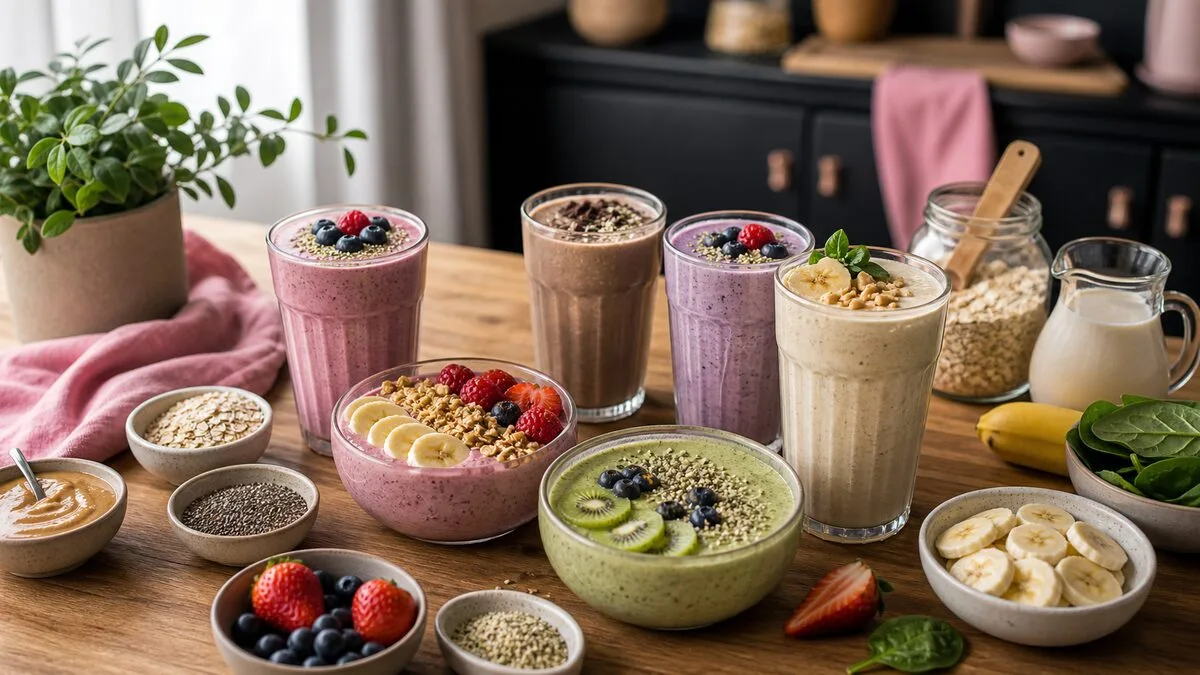
Saturday morning is for a real smoothie, the kind with protein and oats and almond butter, drunk slowly on a walk rather than gulped at the counter. Saturday lunch is the chickpea sandwich. Saturday dinner is the lentil thing, in whatever direction I feel like pointing it.
Sunday is rest first. Then, late afternoon, about forty minutes of gentle prep: a pot of grains, a tray of roast vegetables, and one of the three sauces in a jar. That's it. No factory shift, no thirty containers, no resentment building toward Tuesday.
Most guides hand you a twelve-step optimisation plan. I'm giving you four moving parts and a long walk. The walk matters as much as the cooking, which is something I keep relearning through my morning habits and a generally slower routine.
The goal was never a perfect macro split. It was to stop thinking about food so loudly that I forgot to enjoy it.
If you do only this one weekend, you'll wake up Monday with the bones of every meal already in the fridge. The week gets easier from there, almost on its own.
Building protein into breakfast and lunch, not just dinner
Most people stack their protein at dinner and then wonder why the morning and early afternoon feel shaky. I did exactly that for years. The fix is to treat breakfast and lunch as real protein meals rather than holding patterns until the evening.
Breakfast that holds
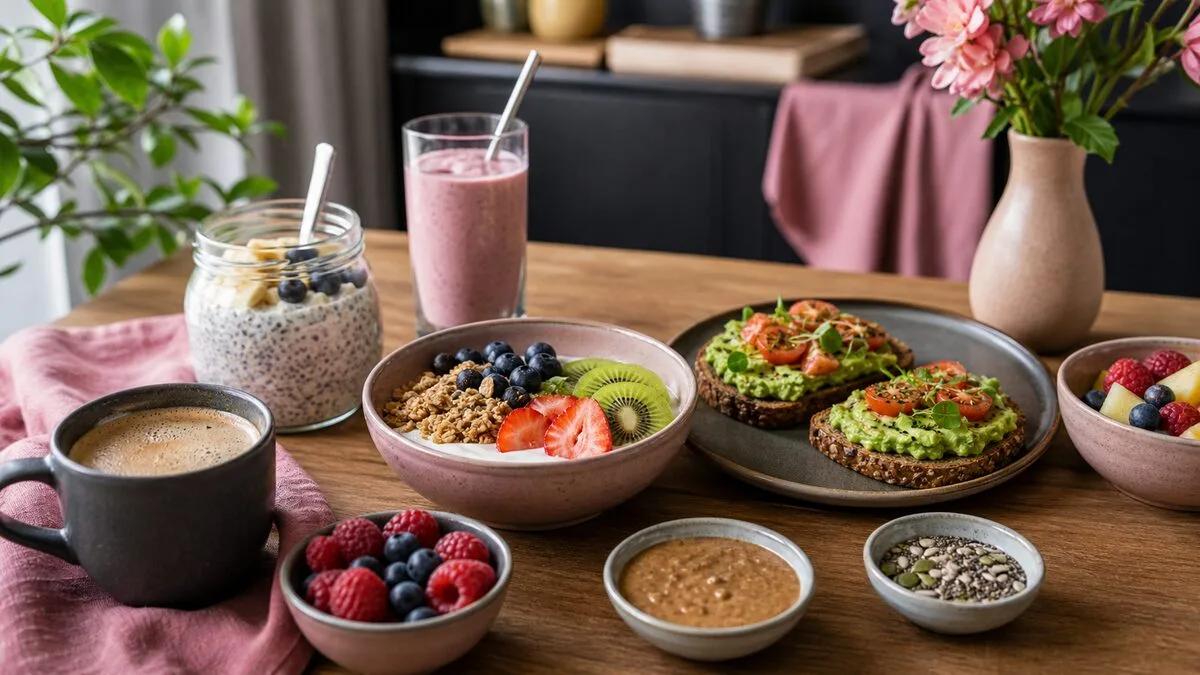
The two breakfasts I lean on both clear 20 grams without effort. A tofu scramble (half a block of firm tofu, turmeric, black salt for the eggy note, whatever veg is wilting) on good toast. Or overnight oats built with soy milk and a spoon of peanut butter and some chia, which quietly stacks up while you sleep. On rushed mornings it's a smoothie, and I've written the whole protein smoothie formula out separately because it earns its own piece.
If you want the full rotation of fast morning options, my easy vegan breakfasts piece is the companion to this one. The throughline is the same: pick three, rotate them, stop deciding from scratch at 7am.
Lunch that doesn't crash you
Lunch is where plant-based eating most often goes thin, and it's why my afternoons used to fall apart. The chickpea sandwich fixed mine almost single-handedly, but any grain bowl with a protein anchor and a sauce does the job. The test I use is simple: if I'm reaching for biscuits at 4pm, lunch was too light, and the answer is more protein and more fat at noon, not more willpower at four.
The snack question
I don't snack much now, mostly because the meals are sturdy enough that I don't need to. But when I do, I aim for something with protein in it: a handful of roasted chickpeas, edamame from the freezer, hummus and carrots, a few nuts. A snack that's all carbs leaves me hungrier than if I'd eaten nothing. A snack with some protein and fat actually closes the gap.
Detailed guides in this protein series
This page is the overview. For the deep dives, I have written separate guides that sit underneath it: high-protein vegan breakfast recipes for mornings that hold, high-protein vegan snack recipes for the gaps between meals, and a single comforting bowl of high-protein vegan mac and cheese for the evenings that call for it. Start here, then follow whichever you need.
Equipment and pantry: the short, honest list
You need almost nothing special for any of this, which is part of why it stuck. But a few things genuinely earn their place on the counter, and a few pantry items make the difference between a flat plate and a good one.
The four tools that matter
- A heavy tray. For roasting tofu, chickpeas, and vegetables. A flimsy one warps and steams instead of crisping.
- A blender. For sauces, soups, and smoothies. It doesn't have to be expensive; mine is ten years old and stubborn.
- A big pot. For batch-cooking grains and beans on the weekend. Bigger than you think you need.
- A microplane or fine grater. For garlic and lemon zest, which is where half the flavour in my sauces comes from.
That's the whole kit. No special gadgets, no single-use machines, no tofu press required (a clean tea towel and a heavy book do it fine).
The pantry that makes plant protein taste like something
Stock these and you can season anything: soy sauce, miso, tahini, peanut butter, nutritional yeast, smoked paprika, cumin, good olive oil, and a couple of vinegars. Add a lemon or two and some garlic from the fresh side and you have the backbone of every sauce in this essay.
Nutritional yeast deserves a special mention because it carries that savoury, cheesy depth that plant cooking can otherwise miss. I stir it into the tahini sauce, dust it over popcorn, and fold it into the cashew mac in my comfort food piece. It's the closest thing I have to a cheat code.
None of this is a shopping spree. It's a slow build, a jar or two a month, and once it's there your kitchen does most of the work for you. That, more than any single recipe, is what keeps me eating well without thinking about it.
Batch cooking and freezing without ending up sick of it
The fastest way to hate plant-based eating is to cook five identical containers on Sunday and force them down by Thursday. I did that for a year and quietly dreaded every lunch. The better move is to batch the components and freeze in a way that gives you variety, not sentence-served-cold.
What freezes well, and what doesn't
Cooked lentils, beans, and grains freeze beautifully in flat bags; they thaw in minutes and you'd never know. Soups and dals freeze even better and often taste deeper the second time. Roasted vegetables go a bit soft on thawing, so I eat those fresh. And anything dressed with a fresh sauce should be combined the day you eat it, never frozen pre-mixed, or the textures turn to mush.
Portion before you freeze, not after
I freeze in single portions, flat, so a brick of stew doesn't hold my whole dinner hostage. A frozen flat bag thaws in a bowl of warm water in the time it takes to cook a grain. This one habit is the difference between a freezer that saves you and a freezer that's a graveyard of forgotten tubs.
Label everything, because you will forget
Past me believed he'd remember what was in the unmarked bag. Past me was wrong every single time. A bit of tape and a pen turns the freezer into a real pantry instead of a mystery box. The lentils from three weeks ago are still a good dinner; you just have to know they're lentils.
If batch logic appeals to you, the whole system lives in my meal prep piece, and it pairs naturally with the weeknight dinners that lean on these frozen anchors. Done well, a single weekend of cooking quietly feeds you most of the way through the week.
The quiet part: protein is not a personality
I'll end where I started, because it's the thing I most want you to keep. Protein is a nutrient, not a project. It doesn't need an app, a powder shrine by the kettle, or a running tally in your head.
When I built my meals around beans and tofu and a good sauce, the anxiety just left. I wasn't tracking anything. I was eating lentils on a Tuesday because they were warm and cheap and tasted of bay and garlic, and somewhere in there the numbers had already taken care of themselves.
That's the whole trick, if it is one. Build plates with a protein anchor, a grain, a green, and a sauce. Press your tofu, steam your tempeh, salt your greens, and keep a couple of jars of sauce in the fridge. The rest is just dinner.
And give it time. The first week of this feels like work because everything is a decision. By the third week the decisions have mostly gone, replaced by habit and a fridge that's already half-stocked with the parts you need. That's the point where it stops being a project and starts being how you eat, which is also where the worrying finally quits for good.
I still cook badly some nights. I burn the tofu, forget to salt the greens, eat toast standing up because I couldn't be bothered. None of that matters. The structure is forgiving precisely because it isn't a rulebook; it's a shape you return to when you have the energy and abandon happily when you don't.
If you want a single next read, make it the protein smoothies piece; it picks up exactly where this one leaves off. After that, the weeknight dinners and the easy breakfasts are the two ends of the same day, and the whole recipes pillar ties it together. If the cooking is sorted but the rest of the day still feels frantic, the minimalist vegan lifestyle piece is the one I'd hand you next.
Common questions
How long will this take, honestly?
The reading is 14 min. The practice is a lifetime. Start with one small piece this week and let the rest follow when it feels natural, not before.
Do I have to be fully plant-based for this to help?
No. Everything I write is for people who want a softer relationship with food and routine. The recipes happen to be plant-based; the ideas work in any kitchen.
What should I read next?
The related essays below, in order. If you only read one more thing, read Vegan protein smoothies that actually satisfy, it picks up exactly where this one ends.
Can I cite this guide somewhere?
Yes. Please link back to this page and credit Caleb Leuchi. All photographs are made for Leuchi unless noted; the writing is original.