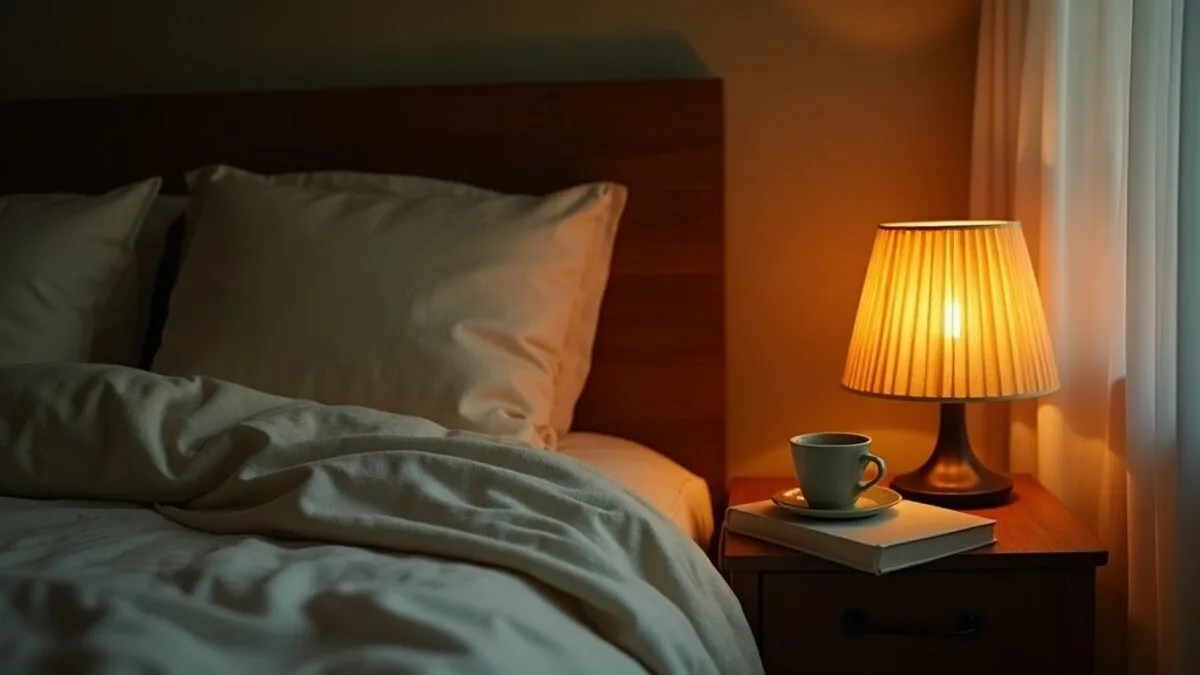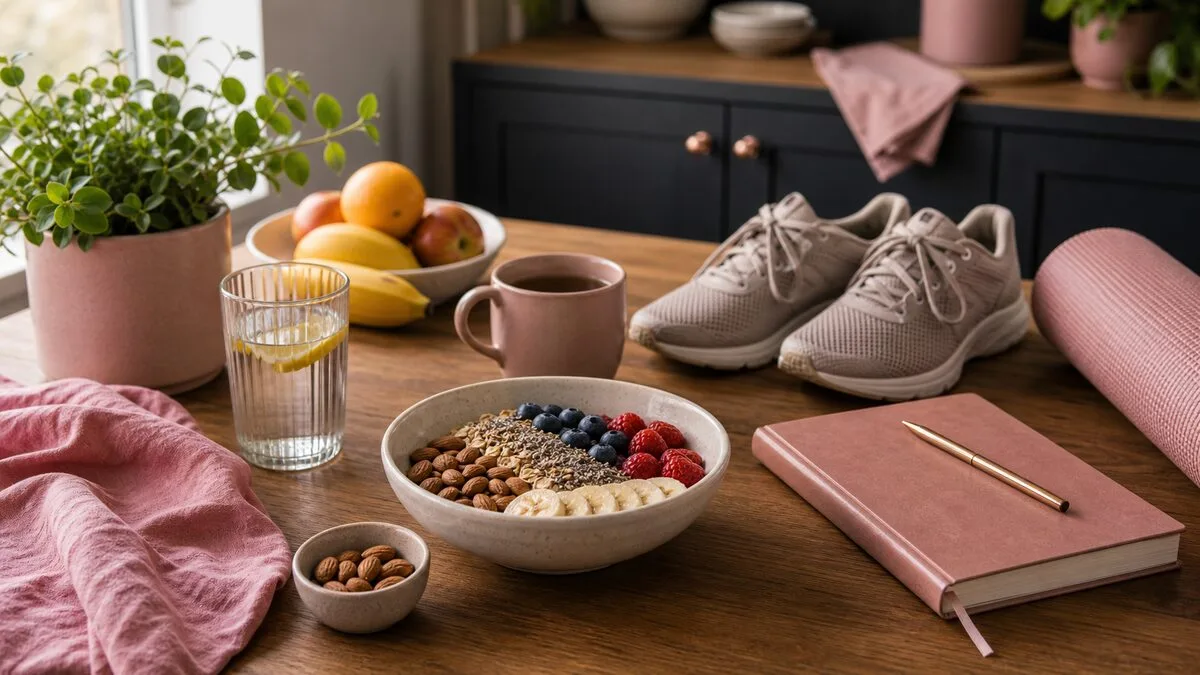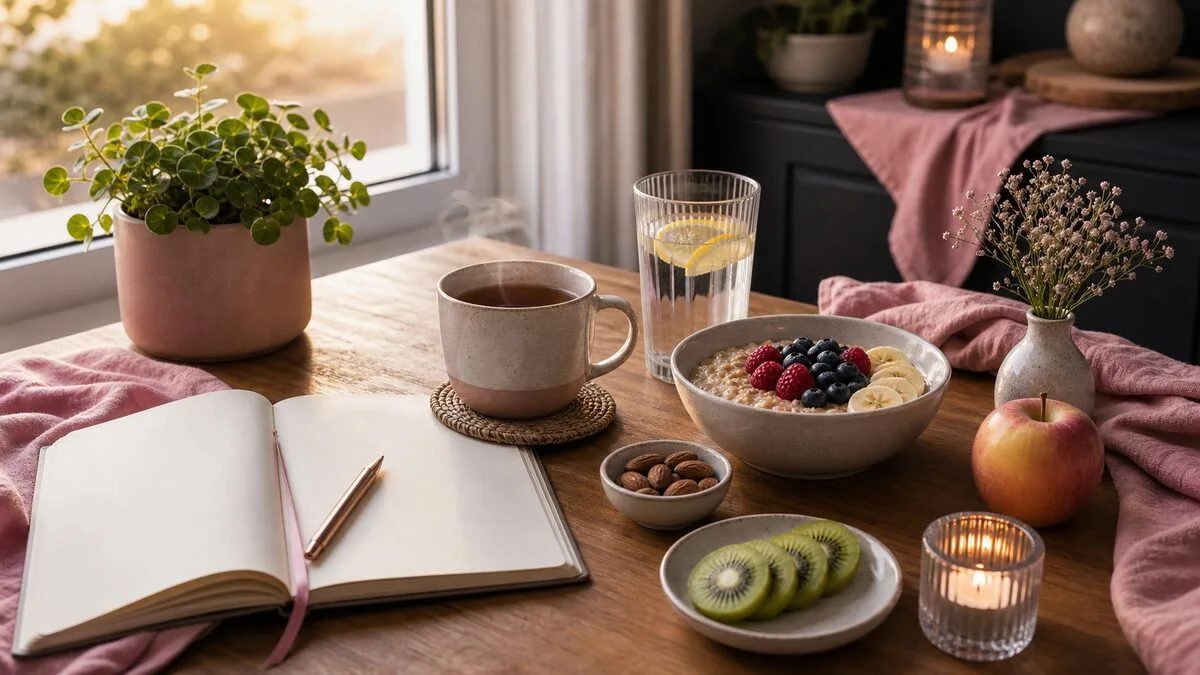
The first hour does not need to be perfect to matter. A few morning habits can lower the noise before the day asks for everything.
Why the first hour gets so much weight
The first hour sets the temperature of the rest of the day, but I don't think that's because mornings are sacred. I think it's because mornings are the only hour you fully control. The rest of the day gets negotiated with other people. Email decides part of it. Your kid decides part of it. The hour before all that is yours, and that's the whole reason it carries weight.
My first hour used to belong to my phone. I'd reach for it before my eyes were properly open, and by the time I sat up I'd already borrowed three other people's moods. The fix wasn't dramatic. I just moved the charger across the room and let the kettle be the first thing I touched. Small change. It rearranged the whole morning.
That's the thing nobody tells you about mornings. The lever isn't willpower. It's the order things happen in. Once I noticed that, I stopped trying to become a different person at 6am and started trying to set the room up so the easy choice was also the good one.
So the goal here isn't a perfect morning. I've never had one of those and I've stopped wanting one. The goal is a small, repeatable hour that you can come back to when the day starts pulling, the way you'd come back to a doorway in a crowded room. Somewhere to stand for a second before you move again.
If you've read the rest of the wellness pillar, you'll notice I keep saying the same thing in different rooms. Small, repeatable, kind. The morning is just where it's easiest to see.
I should also say what this essay isn't. It isn't a productivity hack disguised as wellness. I'm not trying to give you back ninety minutes so you can answer more email or build a side hustle before dawn. If a better morning makes you calmer and a little more yourself, that's the whole win. Anything you do with the extra steadiness is your business, not mine.
And the weight we give the first hour cuts both ways. A rough start can colour the day, sure. But a soft start can do the opposite, and that's the part worth leaning into. You're not protecting against disaster so much as quietly stacking the odds in your own favour, one ordinary morning at a time.
On the days my head will not settle, I come back to the small practice in my meditation for beginners guide.
On stiff mornings I unroll a mat and follow the gentle sequence in my guide to yoga for beginners.
When I want my first meal to actually hold me, I work from my high-protein vegan breakfast recipes.
What should the first hour actually include?
The first hour should include almost nothing. That's the honest answer, and it's the one most morning routines get wrong. You don't need a twelve-step ritual with a gratitude journal, a cold plunge, and a green juice you'll resent making. You need two or three cues that signal "the day has started gently" to a body that's still half asleep.
For me those cues are light, water, breath, and something I like to eat. Four small things, none of which take real effort once the room is set up to make them easy. I'll walk through each one, but I want to say the boring part first: the specific cues matter less than the fact that they're yours and they repeat.
A morning routine is not a performance. It's a way of telling your nervous system the day is survivable before the day has had a chance to argue.
I think a lot of us inherited the idea that mornings should be optimized, like a tiny startup you run before work. I don't believe that anymore. The mornings that actually held me together were the soft ones, where I asked very little of myself and got a surprising amount back.
One caveat, because I want to be straight with you: I'm a writer with a flexible schedule and no small children at home. If your morning starts with a 5am alarm and three lunchboxes, your version of this will be shorter and rougher, and that's completely fine. The principle scales down. A single glass of water counts. Standing in a doorway breathing for thirty seconds counts.
The two questions I'd actually ask
When I'm helping a friend build a morning, I don't start with a list. I ask two questions. What's the first thing you touch when you wake up, and what's the first thing you'd like to touch? The gap between those two answers is usually the whole project.
For most people the honest answer to the first question is the phone, and the honest answer to the second is something they can't quite name. Quiet, maybe. A minute that belongs to them. The good news is that you don't have to name it. You just have to put something small and physical between you and the screen, and let that small thing be the first thing.
That's why everything I keep is tactile. A glass. A curtain. The warmth of a mug. Tactile things are easy for a sleepy brain to reach for, and they pull you into the body and out of the feed. The phone is a doorway into everyone else's morning. The kettle is a doorway into your own.
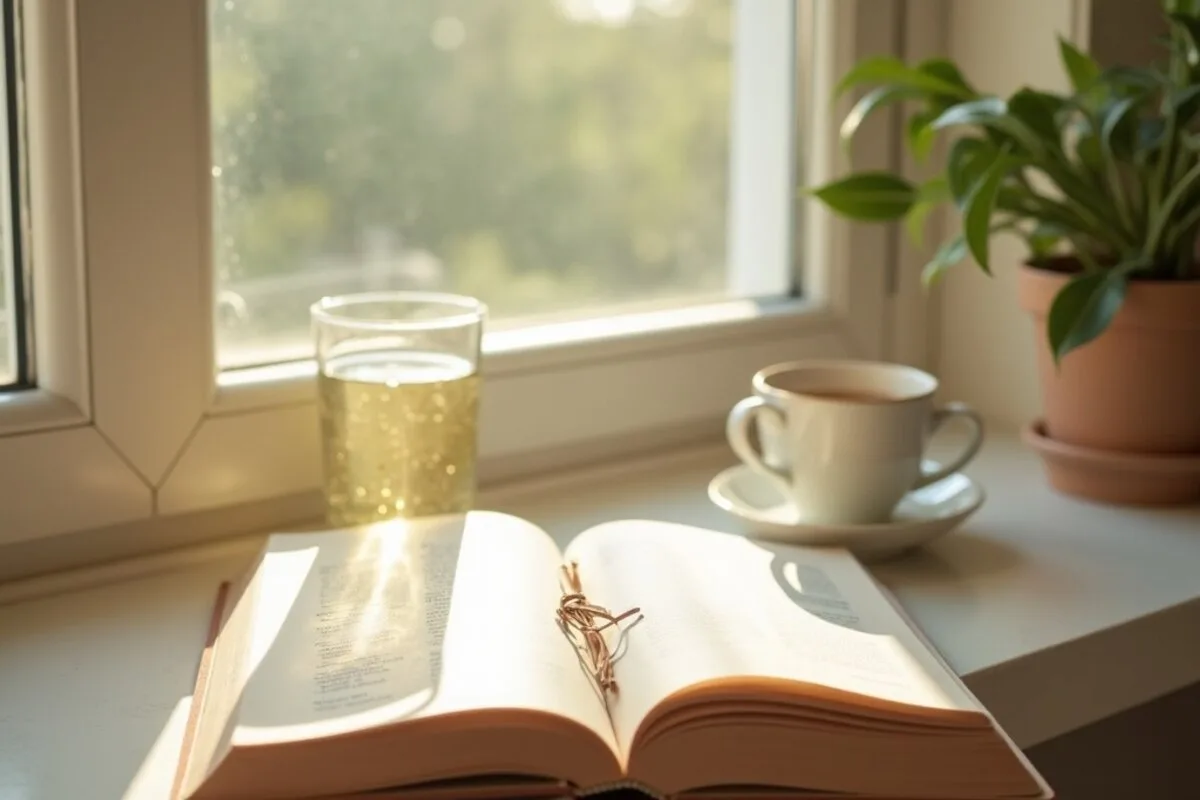
The four cues I keep, in order
Order matters more than I expected. When I tried to do all four at once, I did none of them. When I lined them up so each one nudged the next, they mostly ran themselves. Here's the sequence, and I'll explain the reasoning underneath.
- Light, before screens. Curtains open the moment I'm up. If the weather allows, I step outside for a minute, even in a dressing gown, even when it's grey.
- Water, before coffee. A full glass, drunk slowly while the kettle heats. Coffee still happens. It just waits fifteen minutes, which turns out to be enough.
- Breath, before tasks. Four counts in, six counts out, for roughly a minute. No app, no cushion, no special posture. I do it leaning on the counter.
- Breakfast you actually like. Not a virtuous breakfast. A good one. See easy vegan breakfast ideas and smoothies that satisfy for what that looks like in my kitchen.
The order isn't arbitrary. Light wakes the body up honestly, before caffeine fakes it. Water rehydrates a body that's been dry for eight hours. Breath catches the morning anxiety before it has anything to attach to. And breakfast lands on a body that's actually ready to receive it.
If you only ever do the first one, you'll still feel the difference. I'd bet on it. The other three are good, but light is the load-bearing wall.
Light first, and why it does more than coffee
Light first because, for me, nothing else moves the needle as quietly or as reliably. I'm not going to dress this up with claims I can't stand behind, but I'll tell you what I notice: when I get real daylight into my eyes within the first half hour, I'm more awake by mid-morning and sleepier at a sensible hour that night. Many people find the same thing, and there's a long, well-documented relationship between morning light and the body clock if you want to read about circadian rhythm in more depth.
The practical version is almost too simple. I open the curtains before I do anything else. On good days I take my water outside and stand on the step for sixty seconds. There's a particular quality to early light, thinner and more honest than the light at noon, and I've come to like it the way you like a song you forgot you knew.
What I do when there's no sun
I live somewhere that's grey for a good part of the year, so "step into the sun" is often a joke. Grey daylight still counts. It's far brighter than indoor lighting, even when it doesn't feel like it. I open the curtains anyway and stand near the window with my tea.
On the darkest winter mornings I'll switch on every lamp in the kitchen, which is a poor substitute but better than sitting in the gloom. It's not perfect. Wellness for real people rarely is, and I'd rather give you the honest version than a beach-house fantasy.
Coffee borrows energy from later. Light just hands it to you, no interest charged.
None of this means giving up coffee. I love coffee. It's the second thing I touch, not the first, and that small reorder changed how the caffeine feels. Less of a jolt, more of a lift. If you do nothing else from this whole essay, try the curtains. It costs nothing and it asks nothing of a person who's still half asleep.
The breath part, for people who think they can't meditate
You don't have to meditate, and I'm a little relieved to say that, because for years I couldn't either. I'd sit down to "clear my mind," fail spectacularly in about nine seconds, and conclude that mindfulness was for calmer people. It wasn't a mind problem. It was a framing problem.
What works for me is not meditation in any serious sense. It's just slow breathing with a longer exhale. Four counts in through the nose, six counts out through the mouth, repeated for about a minute. The long out-breath is the part that does the work, at least for me. It's the difference between trying to relax and giving the body a reason to.
I do it standing at the counter while the kettle heats. No timer, no cushion, no incense. If a minute feels like too much on a frantic morning, I do three breaths and move on. Three honest breaths beat ten minutes I keep promising myself and never take.
If your mind won't sit still
Mine doesn't either. The trick I stumbled into is to give the mind a small job rather than asking it to do nothing. Counting the breath is a job. Feeling the cool air come in and the warm air go out is a job. The thoughts still arrive. You just stop chasing them down the hallway.
If you want the deeper background, the page on mindfulness is a reasonable place to start, though honestly the practice matters more than the theory. I cover the daytime version of this, the part where you bring the same attention to a plate of food, in the mindful eating guide. They're the same skill at opposite ends of the day.
On weeks when even a minute feels like a stretch, I borrow from my stress relief rituals instead, which are blunter and require even less of me. Breath is the gentle tool. Sometimes you need the blunt one.
Why the exhale, not the inhale
People tend to think breathing exercises are about getting more air in. For calming down, it's the opposite. The long, slow exhale is what tells the body it's safe enough to settle, at least in my experience, and it's why I count six out and only four in. You don't have to know the mechanism to feel it work. You just notice your shoulders drop a centimetre by the third breath.
I'll add one small, slightly embarrassing tip. I started doing the breathing with my eyes open, looking at something boring like the grain of the counter, because closing my eyes made me feel like I was performing relaxation. Eyes open, looking at nothing in particular, the breath does its quiet job and I don't feel like a fraud. Find the version that doesn't make you self-conscious. The least theatrical version is usually the one you'll keep.
Breakfast that earns its place
Breakfast should be something you actually want to eat, full stop. I spent a stretch of years eating breakfasts I'd been told were correct, which is a fast way to start the day with a small resentment. The breakfast that earns its place is the one you look forward to, that holds you until lunch, and that doesn't ask for an hour of prep before you've properly woken up.
For me, plant-based, that usually means one of a few rotating things. Oats with whatever fruit is around and a spoon of nut butter. A thick smoothie when I want something I can drink while moving. Toast with avocado and a lot of salt when I want to chew. None of it is fancy. All of it is enough.
The protein I almost forgot
The one upgrade that genuinely changed my mornings was getting some protein into the first meal. I'm steadier until lunch, less likely to crash and reach for something sugary at eleven. I'm not preaching macros at you. I just noticed the difference and kept it. If you want specifics, my high-protein vegan meals and protein smoothies cover the easy wins.
And on the mornings when breakfast is a banana eaten standing up over the sink: that counts too. I'd rather you ate the banana than skipped breakfast trying to live up to a photo. The good-enough version, repeated, beats the perfect version you do twice and abandon.
If breakfast is your weak point, it might be a planning problem rather than a willpower one. A little plant-based meal prep on a Sunday means the tired version of you on Wednesday has something ready. The kindest thing you can do for your morning self is to do a little work for them the day before.
When the morning falls apart
A wellness habit isn't real until it survives the morning it goes wrong.
Mine fall apart often. Late nights, a sick household member, a 6am call that wasn't on the calendar. For a long time a wrecked morning meant the whole day was written off, which is a strangely common and strangely cruel logic we apply to ourselves. One missed cue, and we burn the rest of the day in protest.
The trick I learned is to keep one cue, not all four. Light alone is enough. Water alone is enough. A single slow breath in a stairwell is enough. The hour is a runway, not a checklist, and a runway still works if you only use part of it.
The smallest possible version
On the truly broken mornings, mine collapses down to this: open one curtain, drink one glass of water, take three breaths. Ninety seconds, maybe. It's not a routine anymore. It's a flare I send up to remind myself I'm still steering.
I also stopped treating a bad morning as evidence of anything. It's just a bad morning. The habit isn't a streak you can break. It's a place you keep returning to, and returning is the whole skill. People who are "good at routines" aren't more disciplined than you. They're just better at coming back without a lecture.
It helped me to give the broken version a name, so it felt like a real option rather than a failure. I call it the doorway morning, because that's literally where it happens, leaning in a doorway with a glass of water, getting thirty seconds of something before the day grabs me. Naming it took the shame out of the small version. A doorway morning isn't me failing at the full one. It's a different, perfectly good morning that I planned for in advance.
The morning doesn't need to be saved. It needs to be returned to.
If everything's gone sideways for more than a day or two, I lean on the floor version of my whole week instead, which I lay out in the vegan wellness routine. One walk, one real meal, eight hours horizontal. When the morning can't carry the day, the week can still hold the shape.
Building the hour so it survives a real week
The reason most morning routines die isn't the routine. It's the design around it. If your good choice depends on willpower at 6am, you've lost before you've started, because 6am you has no willpower to spend. So I design the room, not the discipline.
Set the room the night before
The charger lives across the room, so reaching for the phone means standing up, which means I'm awake enough to choose differently. The glass sits by the kettle. The curtains are the kind you can open with one hand. Tomorrow's win is mostly built tonight, and that's not a metaphor. It's furniture.
- Phone charges outside the bedroom, or at least out of arm's reach.
- A clean glass waits by the kettle every night.
- Breakfast ingredients are visible, not buried at the back of a cupboard.
- One light switch is positioned so the first thing you do is brighten the room.
Attach the new cue to an old one
Every cue I kept is glued to something I already did. Water happens while the kettle heats, because the kettle was always going to heat. Breath happens in the same gap. This is the single most useful habit idea I know, and I unpack it properly for total beginners in healthy habits for beginners. You don't add a habit to an empty slot. You hang it on a hook that's already there.
Start with one cue for two weeks. Just one. When it stops feeling like effort, add the next. I know that's slower than the thirty-day-transformation pitch, but it's the pace that actually held for me, and I've tried it the fast way enough times to stop trusting the fast way.
There's a quieter benefit to all this, too. When the morning is set up well, it tends to spill into the rest of the home and the rest of the day. I wrote about how that extends past the kitchen in cozy home rituals and the broader idea of an unhurried week in a slow living routine.
One more design note, because it took me embarrassingly long to learn: stop trying to redesign the whole morning at once. I used to map out a six-step ideal routine on a Sunday, follow it perfectly for three days, then crash and abandon all of it. The all-or-nothing redesign always loses to the boring single change you actually keep. Move the charger this week. That's the entire assignment. Next month, maybe the glass by the kettle. The morning gets better the way a garden does, slowly and mostly when you're not staring at it.
What is downstream of a good morning
Steadier energy is the headline benefit, and it's real, but it's not the one I'd lead with anymore. The quieter benefit is choice. When you've already done one thing for yourself before 8am, the rest of the day stops feeling like a long list of demands and starts feeling like something you're inside of rather than under.
That sounds grand for a glass of water and an open curtain. It's not, really. It's just that a small act of self-direction first thing seems to set a tone the day then follows. I notice I'm slower to snap, quicker to take a breath before a hard email, more likely to actually taste lunch. None of it is dramatic. All of it adds up.
There's a compounding thing that happens, too, that I didn't expect. A good morning makes a good evening slightly more likely, because I'm not running on a deficit by 9pm, and a good evening makes the next morning easier, because I sleep better. It loops. That's the real argument for starting with the first hour rather than trying to fix the whole day at once: it's the cheapest place to nudge a loop that touches everything else.
I'd also be honest that the morning isn't a fix for everything. A good first hour won't outrun a chronically bad night's sleep, which is why I treat the evening as the real start of the morning and lay out the whole thing in the sleep wellness guide. And it won't replace rest you actually need. Sometimes the kindest morning is the one where you stay in bed and the routine waits.
Pair this with mindful eating at meals, a real sleep runway, and a self-care routine that lives on ordinary Tuesdays, and you've quietly covered most of what wellness writing tries to sell you in much louder packaging.
What changed for me, specifically
I want to be concrete rather than vague here, because "more energy" is the kind of phrase that means nothing. What actually changed: I stopped getting the mid-morning slump that used to send me back to the coffee machine at eleven. I stopped reaching the kitchen each morning already irritable from twenty minutes of news. And I started, weirdly, looking forward to the first hour, which I'd never done in my life.
Some of that is the cues. A lot of it, I suspect, is just the absence of the phone in the first hour. When you stop pouring other people's urgency into your skull before you're awake, the morning has room to be ordinary, and ordinary turns out to be exactly what I needed.
If your mornings are loud with other people, family ones especially, the same principle still applies, it just shares the room. I wrote about that softer, shared version of the day in the broader idea of everyday balance habits, which is where the morning meets the rest of a normal life.
The version of this I'd hand a stranger
If you stopped me on the street and asked for the whole thing in three sentences, here's what I'd say. Open the curtains before you touch your phone. Drink a glass of water before your coffee. Take three slow breaths while it brews, and eat something you actually like.
That's it. That's the essay. Everything above is just me explaining why those four small things hold, and what to do on the mornings they don't.
You don't need the perfect kit or the right cushion or a 5am alarm borrowed from someone whose life looks nothing like yours. You need a few cues that are yours, set up so the tired version of you can reach them without a fight. Build it small enough that a bad day can't break it, and gentle enough that you'll want to come back.
Start tomorrow with one curtain. See how the morning feels when the first thing you touch isn't a screen. I think you'll keep it. And if you don't, no lecture. Just try again the morning after. That, more than anything, is the habit.
Common questions
How long will this take, honestly?
The reading is 12 min. The practice is a lifetime. Start with one small piece this week and let the rest follow when it feels natural, not before.
Do I have to be fully plant-based for this to help?
No. Everything I write is for people who want a softer relationship with food and routine. The recipes happen to be plant-based; the ideas work in any kitchen.
What should I read next?
The related essays below, in order. If you only read one more thing, read The wellness kit you will actually open, it picks up exactly where this one ends.
Can I cite this guide somewhere?
Yes. Please link back to this page and credit Caleb Leuchi. All photographs are made for Leuchi unless noted; the writing is original.