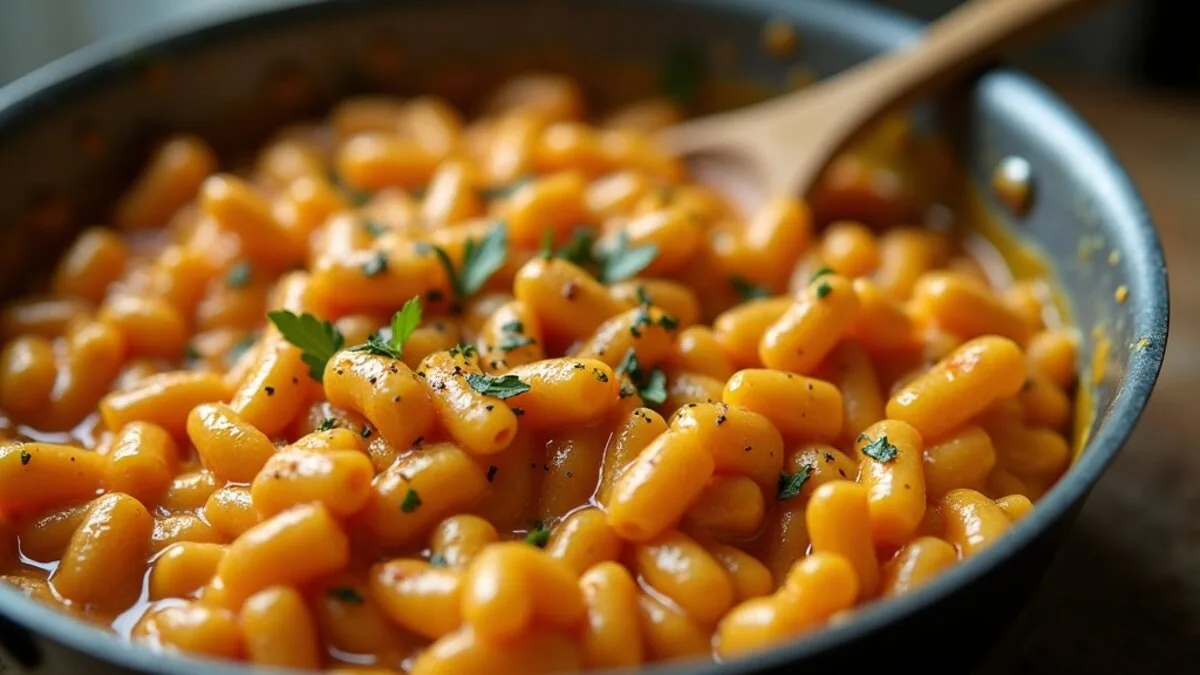
High-protein vegan mac and cheese is made by blending silken tofu and cashews with nutritional yeast and lemon into a creamy cheese sauce, then tossing it through a legume-based pasta such as red lentil or edamame. The tofu and high-protein pasta together push a bowl past 25 grams of protein while keeping all the creamy comfort of the original.
High-protein vegan mac and cheese, the quick version
High-protein vegan mac and cheese is made by blending silken tofu and soaked cashews with nutritional yeast into a creamy cheese sauce, then tossing it through a high-protein pasta like red lentil or edamame. The result is the comfort dish I grew up on, except a bowl carries 25 grams of protein or more instead of almost none. It still tastes rich and gluey in the best way. It simply does a lot more for me afterwards.
This recipe sits inside a bigger conversation about comfort food. If you want the wider collection of cosy plant-based dishes, my vegan comfort food recipes cover the whole table, from mushroom gravy to baked pasta. And if you care about protein across the day, this dish is one practical example of the framework in my high-protein vegan meals guide. Here, though, the focus is narrow: one dish, made creamy and genuinely filling.
Why this version is different
Most vegan mac and cheese leans on cashews, potato and oil for creaminess, which tastes wonderful but carries very little protein. This version keeps the creaminess while building protein into both the sauce and the pasta. Silken tofu does most of the work in the sauce, and a legume-based pasta finishes the job. Nobody at my table has ever guessed it was the high-protein one.
Why most vegan mac and cheese is low in protein
It is worth understanding the problem before the fix. The classic vegan cheese sauce is built for richness, not protein. Cashews, boiled potato, carrot and oil blend into something gloriously creamy, but those ingredients are mostly fat and starch. Pair that with regular wheat pasta and you get a bowl that comforts you and then leaves you hungry an hour later, because there is barely any protein holding it together.
The two levers that change this are the sauce base and the pasta. Swap some of the cashews for silken tofu and you add real protein without losing creaminess. Swap wheat pasta for a red lentil, chickpea or edamame version and you can double the protein of the dish in one move. Soy, in tofu form, has been studied extensively, and the Harvard T.H. Chan School of Public Health treats it as a sound, complete source of plant protein. So leaning on it here is not a gimmick. It is the most direct way to make this dish hold you.
Doing the protein maths
It is worth seeing where the grams actually come from, because it makes the upgrades feel less abstract. A standard bowl of wheat pasta with a cashew and potato sauce might carry six or seven grams of protein, most of it from the pasta, which is why it leaves you hungry. That is the baseline we are improving on.
Now swap in red lentil pasta, which roughly doubles the pasta's contribution to thirteen or fourteen grams a serving, and build the sauce on silken tofu, which adds another eight or so across the dish. Suddenly a single bowl is carrying somewhere north of twenty-five grams, and if you stir in a handful of peas or some white beans it climbs higher still. Same comfort, same creaminess, three or four times the protein. That is the whole trick laid bare.
The protein-packed cheese sauce
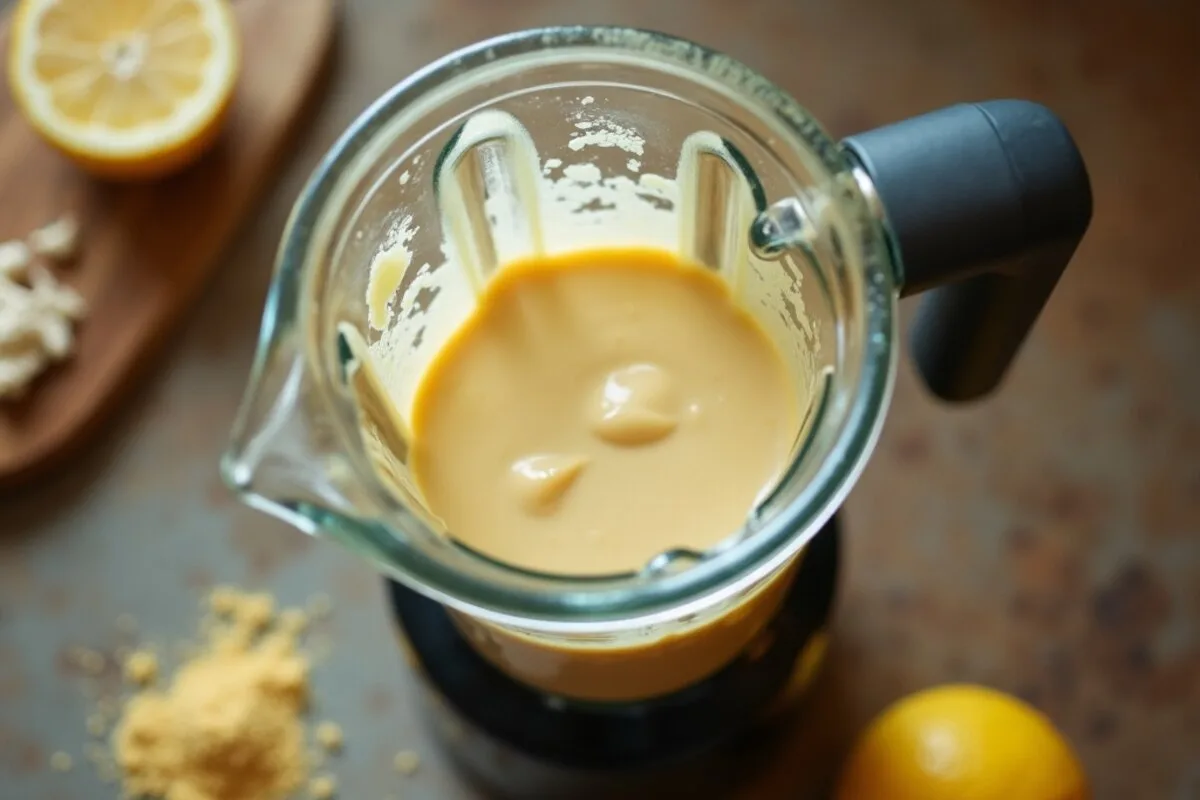
The heart of high-protein vegan mac and cheese is the sauce, and this one is built to be both creamy and protein-dense. It blends silken tofu, a smaller hit of cashews, nutritional yeast, lemon and a few seasonings into something glossy and pourable. The tofu is the change that matters. It brings around 8 grams of protein to the sauce and keeps it silky, while the cashews and yeast carry the flavour.
What goes in the blender
- 1 block (about 300g) silken or soft tofu, for protein and creaminess.
- 1/2 cup cashews, soaked in hot water for fifteen minutes if your blender is not powerful.
- 1/4 cup nutritional yeast, for the savoury, cheesy backbone.
- 2 tablespoons lemon juice, for the tang that reads as cheese.
- 1 teaspoon Dijon mustard and 1 teaspoon smoked paprika.
- 1 clove garlic, salt, and a cup of soy milk to thin.
Blend everything until completely smooth, scraping down the sides, then taste. It should be tangy, savoury and a little sharp. If it tastes flat, it almost always needs more salt or more lemon, not more yeast. Pour it into a pan over low heat to warm and thicken before it meets the pasta. It will tighten as it heats, so keep a splash of soy milk handy to loosen it.
What each ingredient is doing
It helps to understand why the sauce works, because then you can adjust it with confidence. The nutritional yeast brings the savoury, cheesy backbone, so it is doing the flavour heavy lifting. Lemon and mustard supply the tang and sharpness that your brain reads as cheese, where without them the sauce tastes merely creamy. Smoked paprika adds a faint warmth and colour, and the garlic rounds it out. Salt ties everything together and is almost always what a flat sauce is missing.
The tofu and cashews are texture and body rather than flavour. They are why the sauce coats the pasta and clings instead of sliding off. If you ever find the sauce tastes good off the spoon but bland on the pasta, the answer is usually to season it more aggressively than feels right, because the neutral pasta dilutes it. A sauce that tastes slightly too punchy alone is usually exactly right once it meets the noodles.
Choosing a high-protein pasta
The second protein lever is the pasta itself, and it is the easiest upgrade in the whole dish. Legume-based pastas have improved enormously, and the right one carries two to three times the protein of wheat pasta while behaving almost identically once sauced. This single swap is what turns a creamy bowl into a genuinely high-protein meal.
The options, ranked by how I use them
Edamame pasta is the protein champion, often carrying around 24 grams per serving, with a firm bite that holds up to a heavy sauce. Red lentil pasta is my everyday pick: roughly 13 to 14 grams per serving, mild in flavour, and the closest in texture to the real thing. Chickpea pasta sits in between, slightly nuttier. Wholewheat pasta is the fallback, and even that beats white pasta for protein and fibre.
One tip with legume pastas: cook them a touch under, drain promptly, and do not let them sit naked in the colander, because they can turn soft and starchy faster than wheat. Get them straight into the warm sauce. Done that way, even a committed pasta traditionalist will struggle to tell the difference once it is creamy and golden in the bowl.
Getting legume pasta right
Legume pastas have one quirk worth respecting: they release a lot of starch and foam into the cooking water, so a big pan of well-salted water keeps them from going gluey. I salt the water properly, because under-seasoned pasta is the most common reason a finished dish tastes flat no matter how good the sauce. Stirring in the first minute stops them clumping while they find their shape.
They also cook faster than the box often claims, so I start tasting a good two minutes early. The window between perfectly al dente and mushy is narrower than with wheat, and once it tips you cannot bring it back. Draining a touch early and finishing them in the hot sauce for a minute is the safest route, and it lets the pasta drink up flavour as it finishes rather than soaking it up plain in the pot.
The master method, step by step
With the sauce and pasta sorted, the assembly is quick. This is a weeknight dish, not a project. From the moment the water boils, it is on the table in under twenty minutes, which is a large part of why it stays in my rotation rather than living only in good intentions.
How it comes together
- Bring a large pan of salted water to the boil and cook 250g of your chosen high-protein pasta until just shy of al dente.
- While it cooks, blend the sauce ingredients until completely smooth.
- Warm the sauce in a wide pan over low heat, stirring, until it thickens slightly.
- Drain the pasta, reserving a mugful of the cooking water, and tip the pasta straight into the sauce.
- Toss to coat, loosening with a splash of pasta water or soy milk until it is glossy and clings to every piece.
- Taste, adjust the salt and lemon, and serve at once for roughly 25 grams of protein a bowl.
That is the whole thing. The only real skill is blending the sauce properly smooth and not overcooking the pasta. Get those two right and the dish is reliable every single time.
The blending detail that makes or breaks it
Smoothness is everything with this sauce. A grainy blend tastes chalky and reads as fake, where a silky one is indistinguishable from a rich cheese sauce. If your blender is not powerful, soak the cashews in just-boiled water for fifteen minutes first, which softens them enough to break down completely. Blend longer than feels necessary, scraping the sides twice, until you cannot feel a single grain when you rub a little between two fingers.
The silken tofu helps here, because it brings water and protein that loosen the blend and let the cashews break down more easily. If the sauce still feels thick in the blender, add soy milk a splash at a time rather than all at once. You can always loosen a sauce on the hob, but you cannot un-thin it, so I err on the side of slightly too thick and adjust in the pan where I can see what is happening.
Baked versus stovetop, and a crunchy top
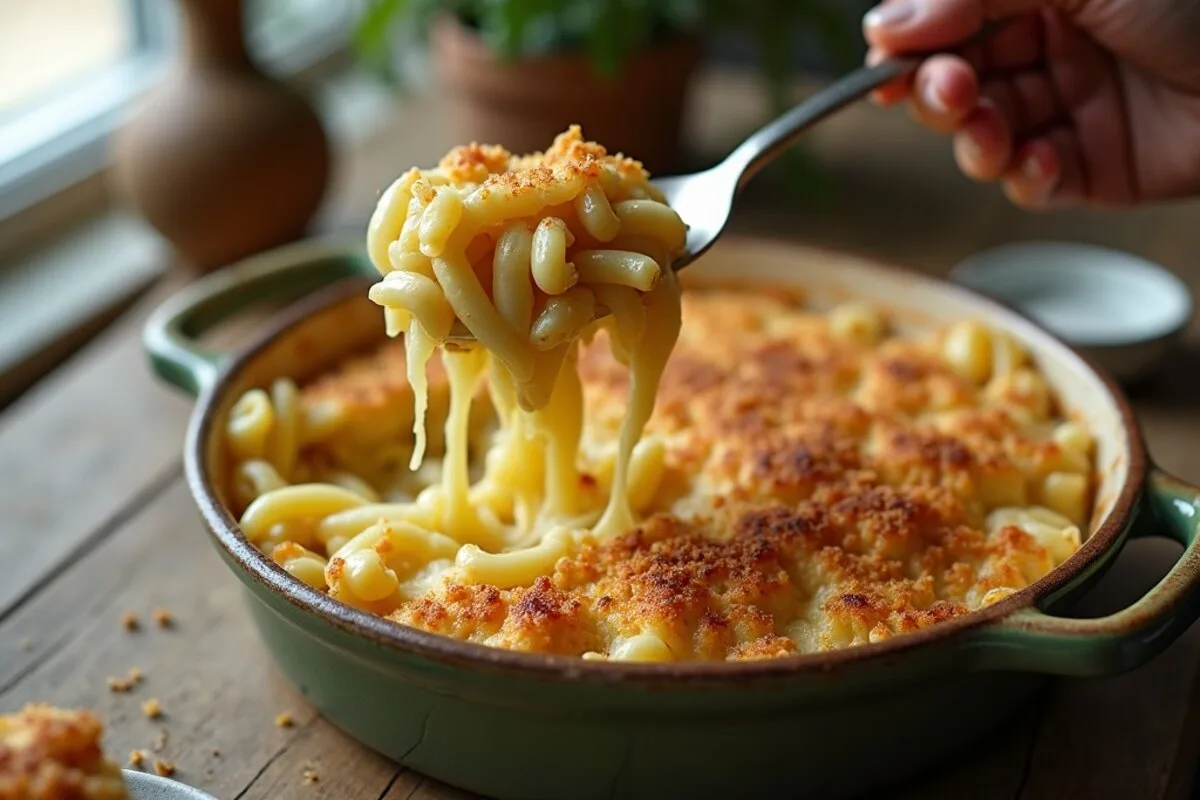
Stovetop is my weeknight default, because it is faster and the sauce stays at its creamiest. But there is a strong case for baking it when you want the full, nostalgic version with a crisp top. Baking deepens the flavour and gives you that contrast between molten centre and golden crust that makes mac and cheese feel like an occasion.
Taking it into the oven
Tip the sauced pasta into a baking dish, scatter over a topping of breadcrumbs tossed with a little oil and extra nutritional yeast, and bake at 200C for twenty minutes until the top is golden and crisp. For even more protein and bite, I sometimes stir cooked white beans or a handful of frozen peas through the pasta before it goes in. The beans melt into the sauce and quietly lift the protein again.
Boosting it further and flavour variations
Once you have the base, the dish takes well to additions. I treat the recipe as a canvas, especially when I want to push the protein higher or move the flavour somewhere new. None of these change the method, so they are easy to fold in on a whim.
Ways I change it up
- Stir crisped smoked tofu or pan-fried tempeh through at the end, the way I do in my smoked tofu recipes, for a savoury, protein-rich bite.
- Add a handful of frozen peas or edamame in the last minute of pasta cooking, for colour and extra protein.
- Fold in roasted broccoli or wilted spinach to make it more of a complete plate.
- Spike the sauce with a chopped chipotle for a smoky, spicy version.
- Stir through a spoon of white miso for a deeper, savoury, almost aged-cheese note.
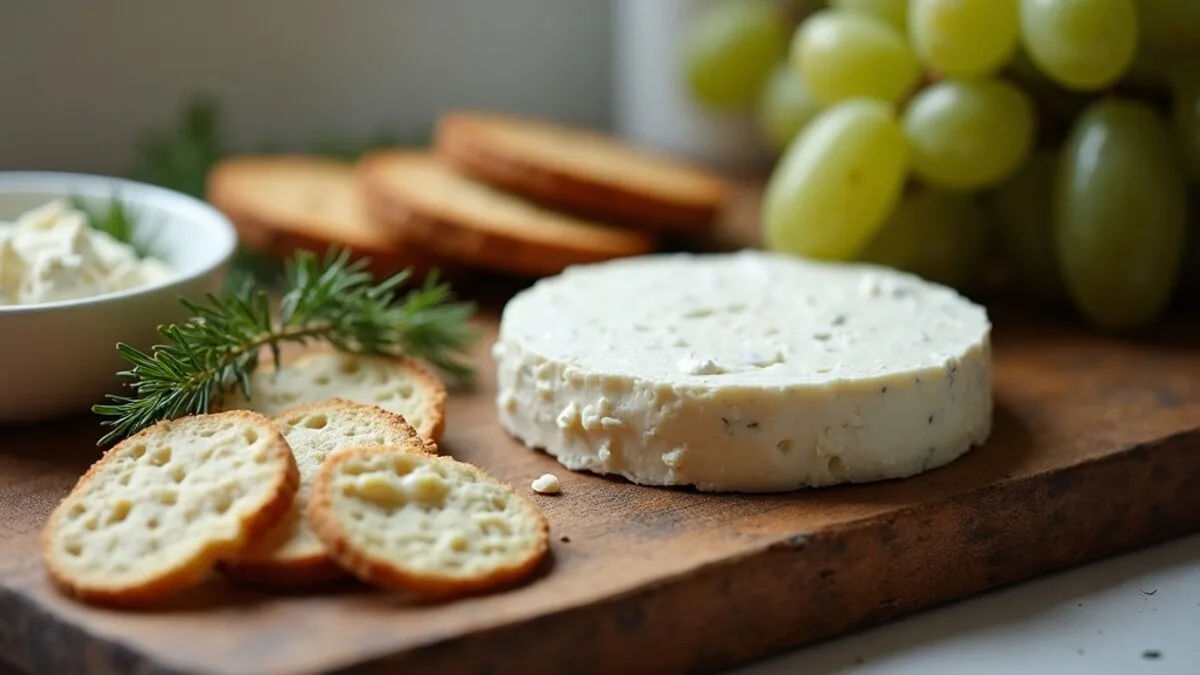
If you find yourself making this often and wanting to understand the cheese flavour itself more deeply, my guide to high-protein vegan cheese goes into the bases and techniques behind that savoury, tangy taste, including a few you can make from scratch.
Turning it into a complete meal
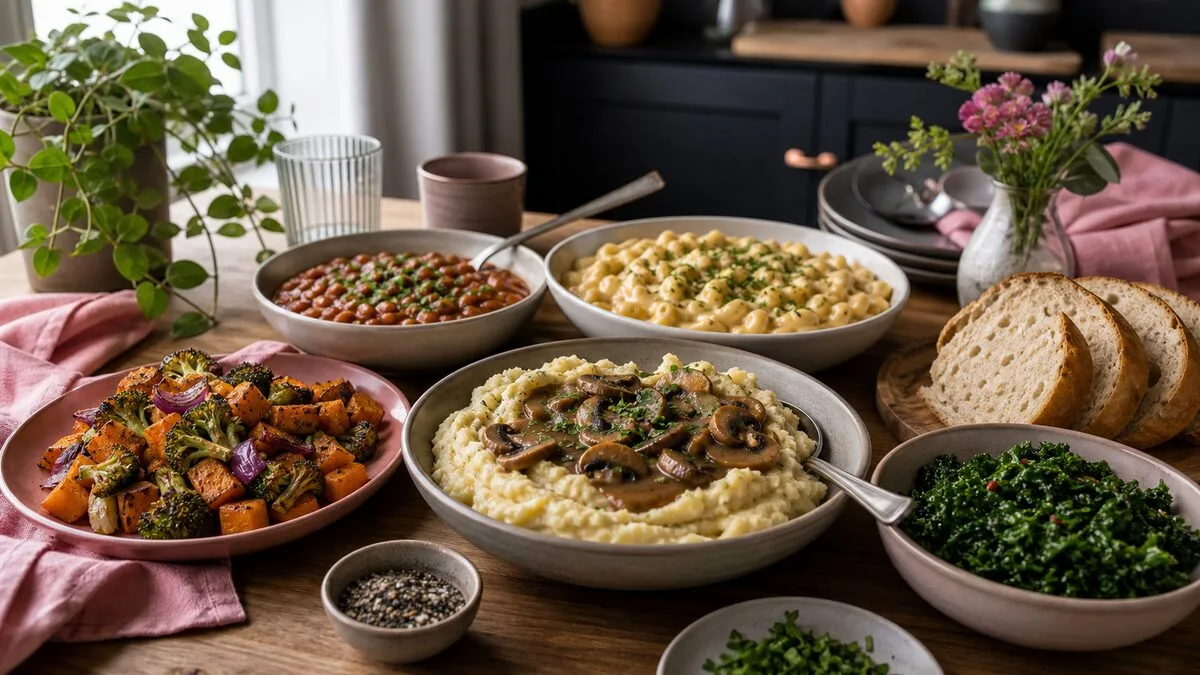
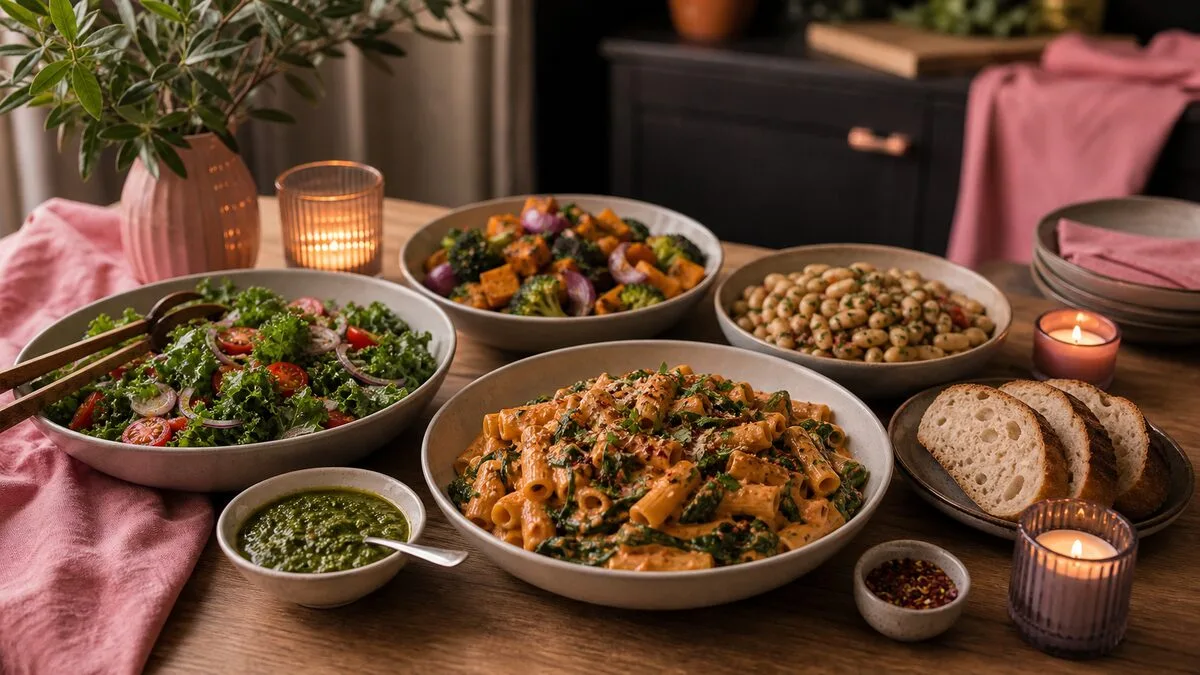
Mac and cheese on its own is comfort, but a few additions turn it into a balanced plate without much effort. A pile of roasted broccoli or a big green salad on the side cuts the richness and adds fibre, which keeps the meal from feeling heavy. Stirring greens directly into the pasta works too, and spinach in particular disappears into the sauce without anyone noticing it is there.
For an even heartier version, I sometimes fold in a tin of drained white beans or some crisped chickpeas, which pushes the protein higher still and makes it filling enough to be the whole dinner. Served with a sharp, lemony salad to balance the creaminess, it stops being a side dish and becomes a meal I am genuinely happy to put in front of anyone. That flexibility is what keeps it on heavy rotation in my kitchen.
Storing, reheating and making it ahead
This is good keeping food, with one caveat: legume pastas drink up sauce as they sit, so leftovers always need loosening. I make a point of storing it slightly saucier than I would serve it, knowing it will tighten overnight in the fridge.
The practical notes
Leftovers keep for three days in the fridge, and many people swear the dish is even better on the second day once the flavours have settled. To reheat, add a good splash of soy milk and warm it gently on the hob or in the microwave, stirring, until it is creamy again. The sauce comes back beautifully with a little liquid and a little patience. I would not freeze the finished dish, because the pasta turns mushy, but the sauce itself freezes well on its own, so I sometimes make a double batch of sauce and freeze half in a tub for a near-instant dinner later in the month, when cooking from scratch feels like one task too many.
Made ahead for a gathering, the baked version is forgiving. Assemble it earlier in the day, keep it covered in the fridge, and bake it just before people arrive. It comes out of the oven looking and smelling like the comfort food it is, with none of the last-minute stress.
Scaling it for a crowd
This doubles and triples without complaint, which makes it a quiet hero for feeding people. The sauce scales linearly, so I just blend in batches if my jug is small, and the pasta is the only thing to watch, since a huge pot takes longer to come back to the boil. For a crowd I lean toward the baked version, because it holds heat in the dish and lets everyone serve themselves rather than tying me to the hob while people eat.
If I am cooking for a mix of eaters, this is the dish I reach for, because nobody clocks it as the vegan option. It simply tastes like good mac and cheese, and the protein means it actually fills a hungry table rather than leaving people picking at bread an hour later. That quiet inclusiveness is a big part of why I keep coming back to it.
An honest word on comfort and nutrition
I want to be straight about what this dish is. It is comfort food, first and last. The protein upgrade does not turn it into health food, and it does not need to. What it does is let me eat a bowl of something genuinely comforting without the hollow, hungry feeling that the original version left behind. That is a real and underrated thing.
Nutritionally, leaning on tofu and legume pasta gives you protein and fibre that the classic recipe lacks, which is a clear win. The thing I would watch is salt, since nutritional yeast, miso and shop-bought breadcrumbs all add sodium quickly, so I season the pasta water lightly and taste before adding more. Beyond that, I let it be what it is: a warm, creamy, protein-rich bowl that feels like home and actually holds me until morning. For the bigger picture of how a dish like this fits a balanced week, my high-protein vegan meals guide is the place to go next.
If there is one dish that converted me to the idea that high-protein vegan cooking need not feel like a sacrifice, it is this one. It looks and tastes like the comfort food I grew up on, it feeds a hungry table without anyone thinking about nutrition, and it leaves me satisfied rather than hollow. That is all I ever wanted from a bowl of mac and cheese, and it turns out plants do it perfectly well.
Common questions
How do you add protein to vegan mac and cheese?
Two changes do it. Blend silken or soft tofu into the cheese sauce alongside the cashews, which adds protein and keeps it creamy. Then swap wheat pasta for a legume-based one like red lentil, chickpea or edamame pasta. Together they push a bowl past 25 grams of protein without losing any of the comfort.
What is the best high-protein pasta for mac and cheese?
Edamame pasta carries the most protein, often around 24 grams a serving, with a firm bite that suits a heavy sauce. Red lentil pasta is the most neutral and closest in texture to wheat, at roughly 13 to 14 grams. Chickpea pasta sits in between. Cook any of them just under al dente so they do not go soft.
Can I make high-protein vegan mac and cheese without cashews?
Yes. Lean harder on silken tofu for the creaminess and use a few tablespoons of soaked sunflower seeds or a little white bean instead of cashews. The flavour comes mostly from nutritional yeast, lemon, mustard and salt, so you can build a nut-free sauce that is still tangy and rich.
Does it actually taste like cheese?
It tastes convincingly cheesy thanks to nutritional yeast for savour, lemon for tang and mustard for sharpness. It is not a perfect copy of dairy cheddar, but it scratches exactly the same comfort itch. A spoon of white miso deepens it toward an aged, savoury note if you want it closer still.
How do I reheat it without it going dry?
Add a splash of soy milk and warm it gently, stirring, until it turns creamy again. Legume pastas absorb sauce as they sit, so leftovers always tighten up overnight. Store it slightly saucier than you would serve it, and a little liquid brings it right back.