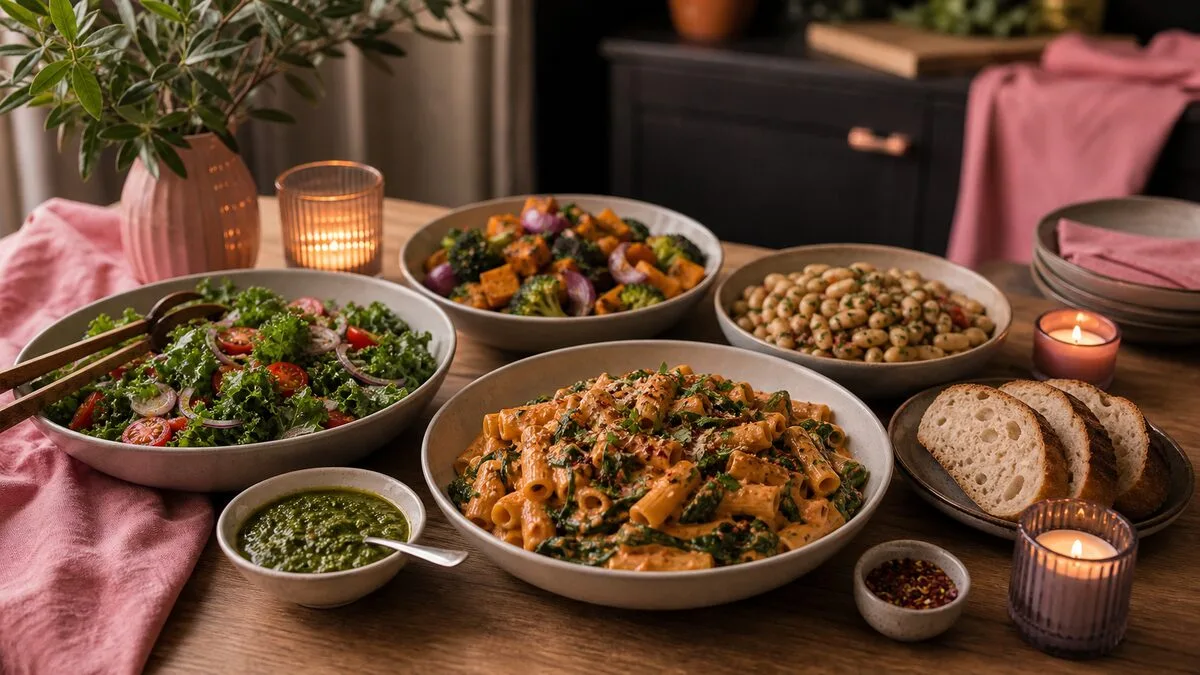
Dinner has to work when people are tired. These are the dishes I keep coming back to on the days nothing else fits.
What makes a good vegan weeknight dinner?
A good vegan weeknight dinner is fast (under thirty minutes), uses one or two pots, and carries real protein so it actually fills you up. The recipes that survive a tired Wednesday are built from pantry staples (beans, lentils, pasta, tinned tomatoes) plus a fresh vegetable and a sauce. Get those three things lined up and dinner is a fifteen-minute job, not a project. Everything below is just nice ways to do exactly that.
Dinner has to work when people are tired, and by Wednesday I am exactly that.
The recipes I actually cook on a weeknight are not the ones I'd photograph for a magazine. They're the ones I can make half-listening to a podcast, with the same handful of ingredients I always have in, on the night when deciding what to eat feels like more effort than the cooking itself.
That's the real constraint. Not skill, not time exactly, but decision fatigue. By dinnertime I've used up my capacity to choose things, so the meals that work are the ones that don't ask me to. This is the same logic that runs through my high-protein meals approach: build from anchors, keep the choices few, and let the structure carry you.
The shape under every recipe here
Almost every dinner in this piece is a protein, a base, and a sauce or broth. Beans in tomato. Tofu on rice. Lentils in coconut. Pasta with a quick sauce. Once you see the shape, you stop needing recipes and start improvising, which is the whole point. The recipes are training wheels; the shape is the bike.
Why dinner is the meal most worth getting right
Breakfast and lunch can coast on habit, but dinner is the one that decides whether a plant-based week feels sustainable or like a slow grind. A bad run of dinners is what sends people back to takeaways and then back to meat, not any grand philosophical wobble. So I put most of my cooking energy here, into making the evening meal easy enough that I'll never be tempted to skip it.
It's also the meal I most often share, with a partner, a friend, whoever's around. Which means it has to be good enough to put in front of someone without an apology, but simple enough that I'm not stressed while they're there. That balance, generous but unfussy, is what I'm always aiming for. The dinners that hit it are the ones that stayed in my rotation for years.
When I want a dinner that pulls apart like slow-cooked meat, I make my smoky vegan pulled jackfruit, and it never lasts long.
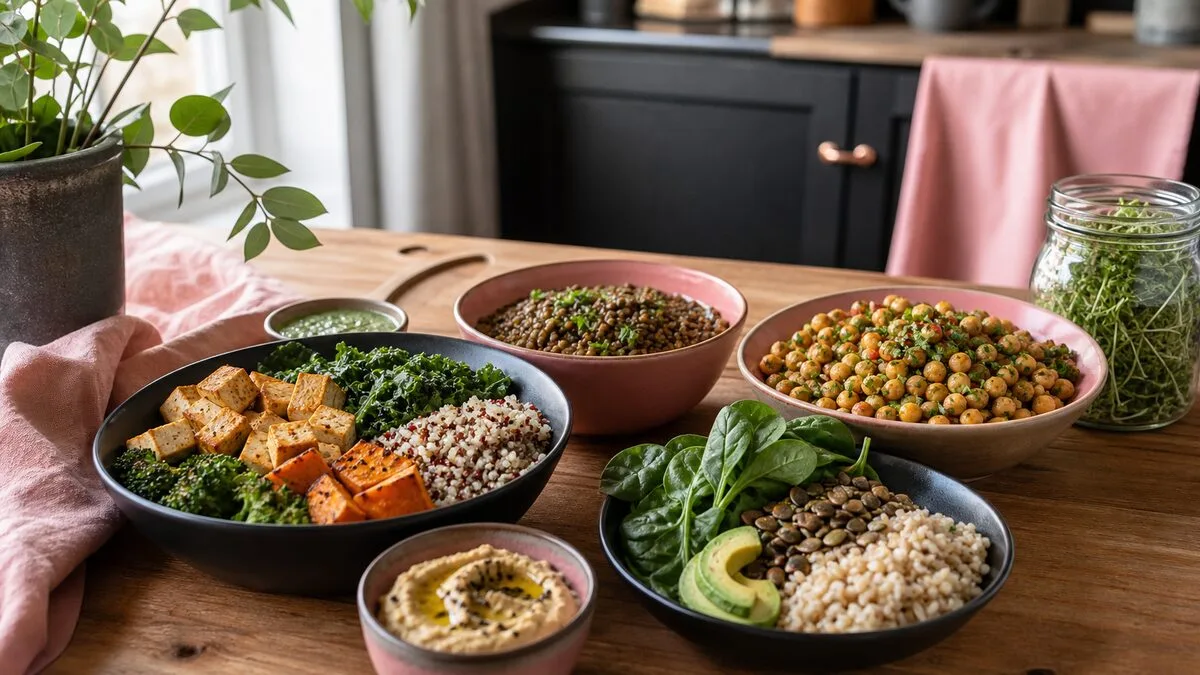
When I want one bowl to do everything, I fall back on the ratio in my guide to building a vegan buddha bowl.
On the nights I want one tray to do the work, I roast my go-to tofu and sweet potato recipe.
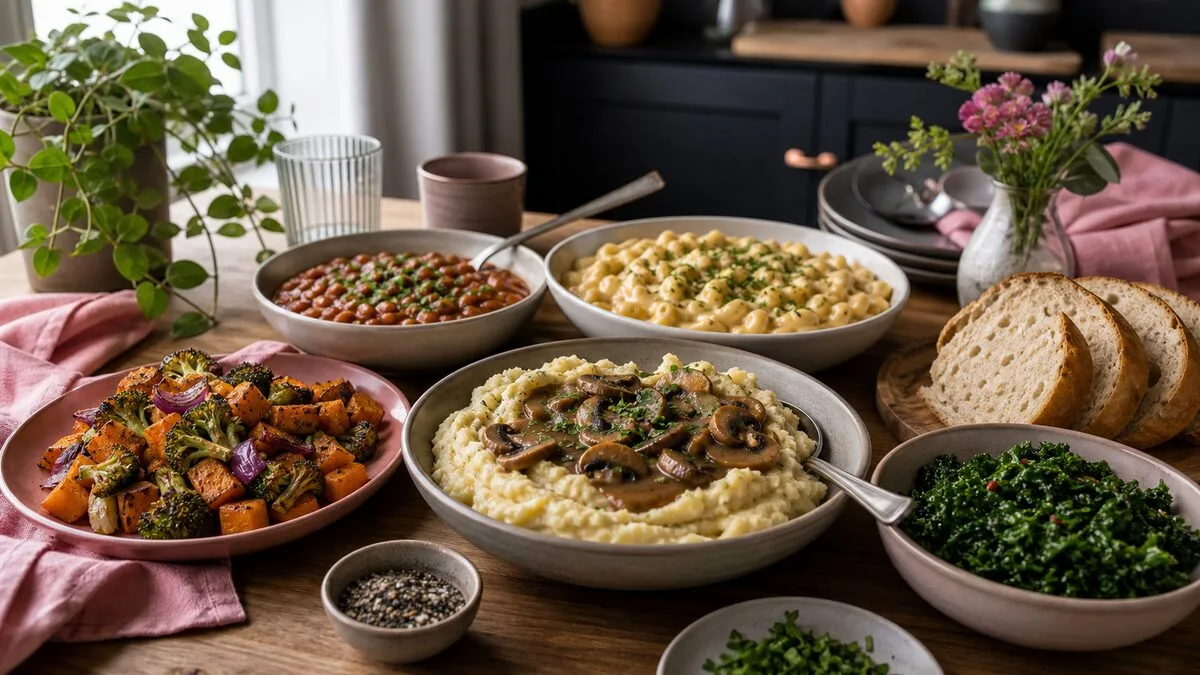
When comfort food needs to actually fill me, I make my high-protein vegan mac and cheese.
On the nights I want a pot that simmers itself, I work from my collection of vegan soup recipes.
The thirty-minute rule
If a weeknight dinner takes more than thirty minutes, I won't make it on a Wednesday. Full stop. I've learned not to lie to myself about this, and pretending otherwise only ends in a sad takeaway. So the recipes below are built around that constraint: soup that simmers while I sit down, pasta that's a one-pot operation, a tray bake that does its own thinking while I do nothing.
Where the thirty minutes actually goes
Most of it is chopping and waiting, not active cooking. So I front-load: I get the slow thing going first (the oven heating, the water boiling, the onions softening) and prep everything else in that window. By the time the first thing is ready, the rest is done. Sequencing is the entire skill of fast cooking, and nobody teaches it because it sounds too obvious to mention.
The shortcuts I refuse to feel guilty about
Tinned beans and lentils instead of dried. Pre-chopped frozen onions on a really bad night. Jarred garlic when I'm out of fresh. Frozen spinach, always. Good shop-bought stock. None of these make the food worse in any way I can taste on a Wednesday, and all of them save the minutes that decide whether I cook at all or order in. The perfect-from-scratch version can wait for the weekend.
Cook the base ahead so weeknights start at halftime
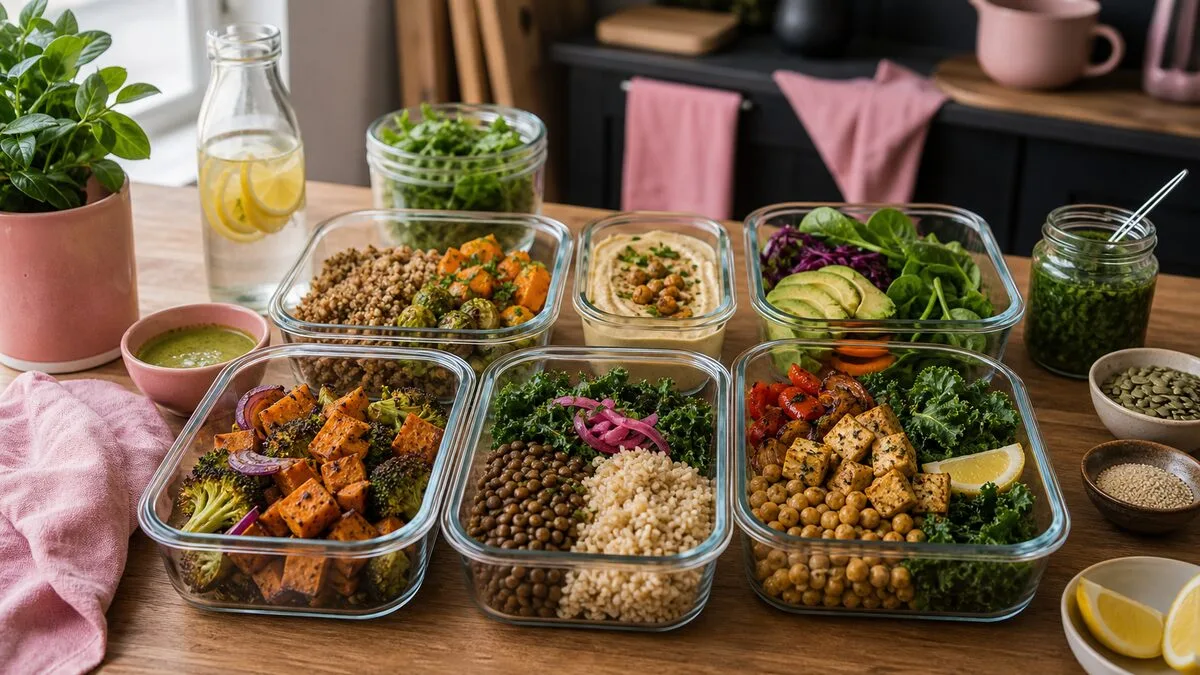
The single thing that makes the thirty-minute rule easy is having a grain already cooked. A pot of rice or farro from Sunday means a sheet-pan dinner is just the tray; the base is done. Lentils from a batch mean dal is mostly reheating. I treat the weekend grain and pulse pot as the thing that buys me the weeknight, and it's the heart of how I do meal prep without the pressure.
Once you internalise that, dinner stops feeling like starting from zero every night. You're finishing something you half-started days ago, and finishing is always faster than beginning. That mental shift, from cooking meals to assembling parts, is what made plant-based weeknights genuinely effortless for me rather than a daily test of willpower.
Four dinners I would recommend to anyone
These four are the backbone of my weeknight cooking. I make at least two of them most weeks, and I'd happily feed any of them to someone who'd never eaten plant-based in their life.
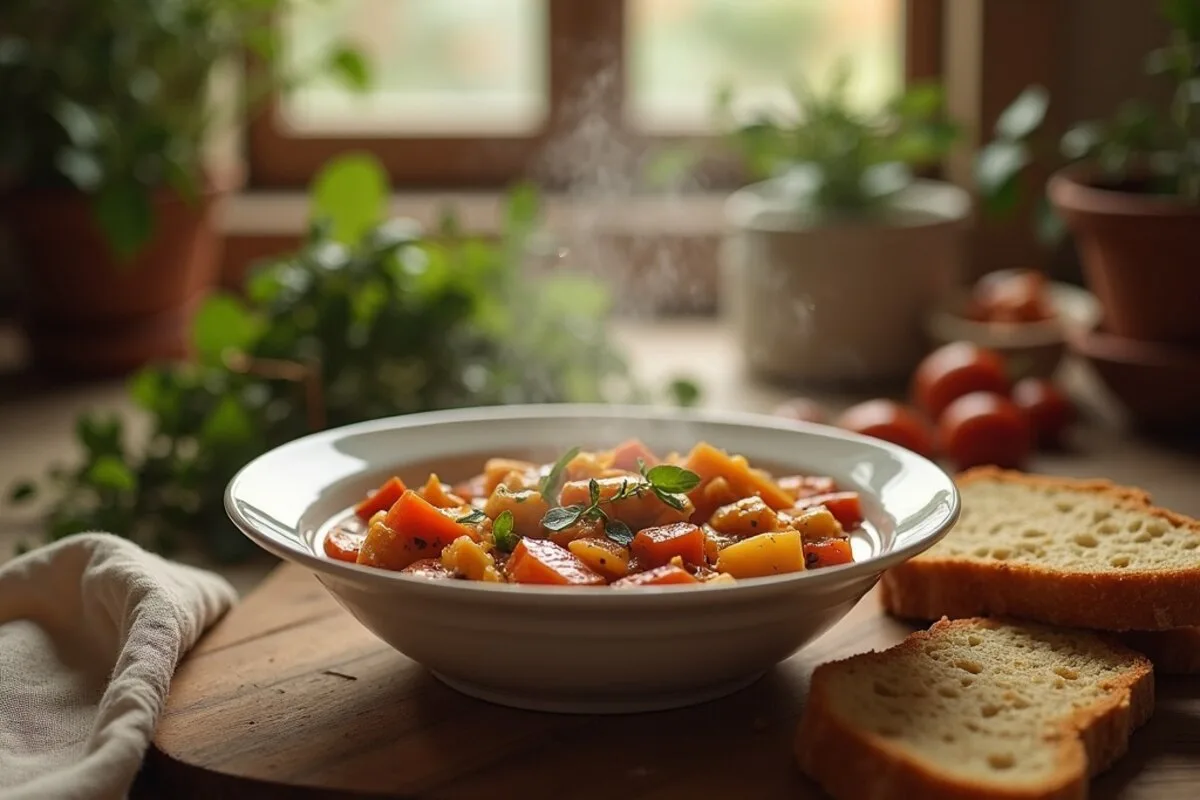
- White-bean tomato soup with crispy bread. Twenty minutes, blends right in the pot, and the beans make it genuinely filling rather than a starter pretending to be dinner.
- Spinach and tahini pasta. Pasta water plus tahini plus lemon makes a silky sauce in the time the pasta cooks. Wilt in spinach at the end. Done.
- Sheet-pan tofu with broccoli and miso glaze. Twenty-five minutes, one tray, almost no washing up. The oven does the work.
- Coconut lentil dal. Thirty minutes, freezes well, and a single pot stretches across three nights, so the second and third dinners are basically free.
What links them is that none requires a recipe once you've made it twice. They're built from things I always have, they scale up easily, and they reheat well. The dal especially earns its keep: I make a big pot, eat it Monday, freeze portions, and pull them out on the nights I have nothing. None of them needs a single specialist ingredient either, which matters when the cooking has to happen with whatever's actually in the kitchen.
The pasta, in one paragraph
Since the pasta is the fastest of the four, here it is whole: boil the pasta, salt the water well. In a bowl, whisk three tablespoons of tahini with the juice of half a lemon, a little grated garlic, salt, and a few spoons of the starchy pasta water until it pours like cream. Drain the pasta (keep a mug of water), toss it with the sauce and a big handful of spinach, loosen with more pasta water if needed. Twelve minutes, one pot, genuinely good.
The white-bean soup, in detail
If I had to keep one weeknight dinner, it'd be this soup. It's twenty minutes, it costs almost nothing, and it tastes like it took far longer. Here's exactly how I make it.
The method
Soften a chopped onion and two cloves of garlic in olive oil for five minutes. Add a tin of chopped tomatoes, a tin of white beans (drained), a cup of stock, a sprig of rosemary or a pinch of dried, salt, and pepper. Simmer fifteen minutes. Blend half of it for body, leave the rest chunky. Finish with a glug of good olive oil and a squeeze of lemon.
The crispy bread that makes it
While it simmers, tear stale bread into chunks, toss with oil and salt, and crisp them in a hot oven for ten minutes, or fry them in the pan. Pile them on top just before eating so they stay crunchy. The contrast of crisp bread against the soft soup is the whole experience, and it turns a bowl of soup into actual dinner.
Why white beans are the secret
Cannellini and butter beans blend into the creamiest base going, no cream required, and they bring around 15 grams of protein per cup so the soup keeps you full for hours. This is the trick behind half my comfort food too: blended white beans do the work that dairy used to, for a fraction of the cost and twice the protein.
Ways to change it through the week
The base soup is endlessly adaptable. Stir in a handful of kale near the end for greens. Swap rosemary for smoked paprika and a tin of chickpeas for a Spanish lean. Add a spoon of harissa for heat, or a parmesan-style scatter of nutritional yeast for depth. I rarely make it the same way twice, but the bones, beans, tomato, stock, something aromatic, never change. Learn the bones and the variations write themselves.
It also keeps and freezes beautifully, getting a little better overnight as the flavours settle. I often make a double batch on a Sunday and the second half becomes a no-effort Tuesday dinner, reheated with fresh crispy bread on top. That's the kind of cooking that makes a plant-based week feel easy rather than effortful.
Sheet-pan tofu, the lazy hero
The sheet-pan dinner is the one I reach for when I genuinely cannot be bothered, because the oven does everything and I do almost nothing. It's also how a lot of people learn to love tofu.
Getting the tofu right
Press a block of firm tofu for fifteen minutes, cut it into cubes, and toss them in a spoon of cornflour, oil, and salt. The cornflour is what gives you crisp edges instead of pale, sad cubes. Spread them out on the tray with broccoli florets, give everything room (crowding steams it), and roast at 220°C for twenty-five minutes, turning once.
The glaze
Mix a tablespoon of brown miso, a teaspoon of maple, a teaspoon of rice vinegar, and a little sesame oil. Brush it over the tofu and broccoli for the last five minutes so it caramelises rather than burns. Serve over rice from a batch you cooked earlier in the week, and dinner's done with one tray to wash.
Endless variations
Swap broccoli for whatever's in the drawer: cauliflower, peppers, green beans, sweet potato cut small. Swap the miso glaze for peanut-lime or a simple soy-and-garlic. The method never changes; only the cast does. That's why it survives so many repeats without getting boring, and why it's a cornerstone of my meal prep rotation.
The fifteen-minute noodle bowl
When even thirty minutes is too much, the noodle bowl is my floor. It's the fastest proper dinner I make, it uses pantry staples, and it scratches the takeaway itch without the wait or the cost.
The bones of it
Cook a nest of noodles (rice, udon, or just whatever's in the cupboard). While they boil, whisk a sauce: two tablespoons peanut butter, juice of a lime, a tablespoon of soy, a pinch of chilli, a little water. Toss the drained noodles with the sauce, a big handful of frozen edamame (thawed under the hot tap), and some shredded raw cabbage or carrot for crunch. Fifteen minutes, one pot, and the edamame brings real protein.
The protein add-ons
On a slightly less lazy night I'll crisp some tofu first, or crumble in leftover roast tempeh, or fry an onion and some mushrooms to make it heartier. But the plain edamame version is genuinely enough on its own, and it's the one I make most. It's the dinner equivalent of the no-time breakfast: minimal effort, maximum return.
Why this beats the takeaway
It costs a fraction of a delivery, it's ready before the delivery would even be confirmed, and I control the salt and oil. The peanut-lime sauce is the same one from my protein meals rotation, so once you've got it in your hands it shows up everywhere. There's a real satisfaction in realising you can out-speed a takeaway with what's already in the cupboard.
The brothy version for cold nights
When I want warmth rather than a cold-crunch bowl, I skip the peanut sauce and build a quick broth instead: stock, a spoon of miso, a splash of soy, ginger, and the noodles cooked right in it. Drop in greens and edamame at the end. It's a five-minute ramen-ish bowl that feels far more comforting than the effort suggests, and it's exactly the kind of thing I lean on when the weather turns.
Sauces and pantry shortcuts
The difference between a flat weeknight dinner and a good one is almost always the sauce, and the difference between cooking and ordering in is almost always the pantry. Get both sorted and you're rarely more than fifteen minutes from a real meal.
Three sauces that rescue anything
- Tahini-lemon: tahini, lemon, garlic, salt, water. For grain bowls and roast veg.
- Peanut-lime: peanut butter, lime, soy, chilli, water. For noodles and tofu.
- Quick tomato: garlic in oil, tinned tomatoes, salt, a pinch of sugar, simmer ten minutes. For pasta and beans.
Make a jar of one at the weekend and it carries you through several dinners. A plate of plain rice and roast veg becomes a meal the second a good sauce lands on it.
The pantry that makes weeknights possible
I keep these in stock and almost never run out: tinned tomatoes, tinned beans, dried lentils, pasta, rice, coconut milk, stock cubes, soy sauce, tahini, peanut butter, and a few spices. With that shelf and one or two fresh vegetables, I can cook every dinner in this piece without a special trip. That's the real secret to weeknight cooking; it's a stocking problem more than a cooking problem.
Frozen things I'm never without
Frozen spinach, peas, sweetcorn, and edamame live in my freezer permanently. They don't rot, they add bulk and a little protein to any pan, and they turn a thin dinner into a full one in seconds. Edamame especially is an easy protein hit to throw into noodles or rice when a meal feels light.
The five-minute flavour boosters
A few small things lift a plain dinner out of the ordinary, and none take effort: a spoon of miso stirred into a broth for savoury depth, a squeeze of lemon to brighten anything heavy, toasted sesame oil drizzled over noodles at the end, fresh herbs torn over the top, or chilli flakes for a little heat. I keep all of them within reach of the stove and reach for at least one most nights. They're the difference between food that's merely fine and food you actually look forward to.
The dal that lasts three nights
The coconut lentil dal earns its own section because it's the single most useful weeknight dinner I cook. One pot, thirty minutes, and it feeds me across most of the week with no extra effort. It also freezes better than almost anything.
The method
Soften an onion, garlic, and a thumb of ginger in oil. Stir in curry powder or garam masala and let it toast for a minute (this step matters; raw spice tastes flat). Add a cup of red lentils, a tin of coconut milk, a tin of chopped tomatoes, and a cup of water. Simmer twenty minutes until the lentils collapse into something thick and golden. Salt well, finish with lemon.
Why red lentils, this time
For dal you actually want the lentils to fall apart, which is why red lentils are right here even though they're wrong for a salad. They turn creamy and thick with no blending, and they cook in twenty minutes flat. A cup of dried red lentils costs very little and brings serious protein and fiber, which is why this is one of the best-value dinners I know.
Three nights from one pot
Night one it's dal with rice. Night two I thin the leftovers with a splash of water and eat it as a soup with the crispy bread from earlier. Night three I fold any remaining dal through rice and fry it into a kind of spiced rice bowl with a fried egg's worth of crisp tofu on top. Same pot, three different dinners, and the third one barely counts as cooking. That kind of stretch is the quiet economy of plant-based eating, and it's why a single thoughtful pot can feel like it feeds you all week.
What to do when it goes wrong
Weeknight dinners fail in predictable ways, usually because something was rushed. Here's how I rescue them.
"My sauce is bland"
Acid and salt, almost every time. A squeeze of lemon, a splash of vinegar, a pinch more salt, maybe a dash of soy sauce for depth. Taste as you go; a bland dish is almost never short of ingredients, just short of seasoning.
"My tofu won't crisp"
You skipped the press, skipped the cornflour, or crowded the tray. Press it, coat it, give it space, and make sure the oven is genuinely hot. And use firm tofu, never silken, which simply won't crisp no matter what you do.
"My dal is watery / claggy"
Watery: simmer it longer with the lid off and it'll thicken as the lentils break down. Claggy: add a splash of water or coconut milk and stir; red lentils keep drinking liquid as they sit. Either way it's fixable in two minutes on the heat.
"It came out boring"
Add a finishing element: fresh herbs, toasted seeds, a swirl of chilli oil, a handful of the crispy bread from the soup. Texture and a bright top note rescue almost any dull plate. Boring food is usually just unfinished food.
"I overcooked the vegetables to mush"
You added them too early. Sturdy veg like broccoli and carrots can roast or simmer a while, but spinach, peas, and herbs go in at the very end, often after the heat's off. Add quick-cooking things last and they keep their colour and bite. When in doubt, undercook slightly; residual heat finishes the job in the bowl.
"It needs to feed more people than I made for"
Stretch it with the pantry. A handful of pasta, an extra tin of beans, more rice, a few frozen vegetables. Most of these dinners scale generously without losing their character, and a splash more stock or water keeps the seasoning balanced. I'd rather over-make and have lunch sorted than come up short at the table.
Cooking for two, or for a tired household
Cooking dinner for one is one kind of puzzle. Cooking for a couple, or a household where everyone's tired and one person's fussy, is another. The good news is these recipes scale almost effortlessly.
Scaling up without scaling the effort
Soup, dal, and pasta all double with no extra work beyond a bigger pot. The sheet-pan dinner just needs a second tray. Because the methods are simple, feeding four takes barely longer than feeding two, and the leftovers become tomorrow's lunch, which is a quiet win on a busy week.
Letting people finish their own plate
The trick to feeding a mixed household is to cook one neutral base and let everyone customise. Plain dal with rice, then hot sauce or yoghurt or extra veg on the side. A tray of tofu and vegetables, then different sauces. Nobody's cooking two dinners, but everyone gets the plate they want. I lean on this constantly, and I've written more about the family side of it in plant-based family life.
The leftover that becomes lunch
I deliberately cook more than I need so dinner doubles as the next day's lunch. Dal, soup, and roast tofu all travel well and reheat happily, which means one round of weeknight cooking quietly feeds the next day too. It's the laziest, most effective form of meal prep there is: just make extra.
Feeding sceptics without a fuss
If you're cooking for someone who's wary of plant-based food, lead with the dinners that don't announce themselves as vegan: the white-bean soup, the tahini pasta, the noodle bowl. They're just good food that happens to have no animal products, and that framing wins people over far faster than any argument. Nobody pushes back on a bowl of warm soup with crispy bread on a cold night; they just ask for the recipe.
What weeknight cooking taught me
A good weeknight dinner is mostly about not having to choose anything once you're tired.
Decide on Sunday. Shop on Monday. Cook from a short list on Wednesday. The cooking gets genuinely easier the less you have to think while doing it. Meal prep helps, but only if it doesn't turn Sunday into a factory shift, which is the trap I fell into for a year before I learned to prep parts instead of meals.
The deeper thing weeknight cooking taught me is that consistency beats ambition. A simple dinner I'll actually make every Tuesday does more for how I feel than an elaborate one I cook twice a month and photograph. The goal was never to impress anyone. It was to eat something warm and filling on a tired night without it becoming a whole event.
There's a quiet dignity in feeding yourself well when you're tired and would rather not. It's a small act of care, repeated, and over a few months it adds up to feeling genuinely better, steadier, less at the mercy of whatever's open and delivering. The cooking is almost beside the point; the showing up is what matters, and these recipes are just there to make the showing up easy.
So keep the list short. Keep the pantry stocked. Keep one or two of these on heavy rotation and let the rest be occasional. Dinner stops being a daily negotiation and becomes something closer to a habit, which is exactly where you want it.
So if you take one thing from all of this, take the short list. Pick three dinners you'll genuinely make, keep their ingredients in stock, and stop trying to cook something new every night. The relief of not deciding is worth more than the novelty you think you're missing, and the food gets better the more you repeat it anyway.
If you want to go further, the high-protein meals guide is the pillar that ties all of this together, the comfort food piece is where these dinners go on a cold, slow evening, and the full recipes pillar has everything else, including the breakfasts that open the same day these dinners close. If the cooking's sorted but the evenings still feel rushed, my slow-living routine is the gentle companion to all of it.
Common questions
How long will this take, honestly?
The reading is 11 min. The practice is a lifetime. Start with one small piece this week and let the rest follow when it feels natural, not before.
Do I have to be fully plant-based for this to help?
No. Everything I write is for people who want a softer relationship with food and routine. The recipes happen to be plant-based; the ideas work in any kitchen.
What should I read next?
The related essays below, in order. If you only read one more thing, read High-protein vegan meals for real life, it picks up exactly where this one ends.
Can I cite this guide somewhere?
Yes. Please link back to this page and credit Caleb Leuchi. All photographs are made for Leuchi unless noted; the writing is original.