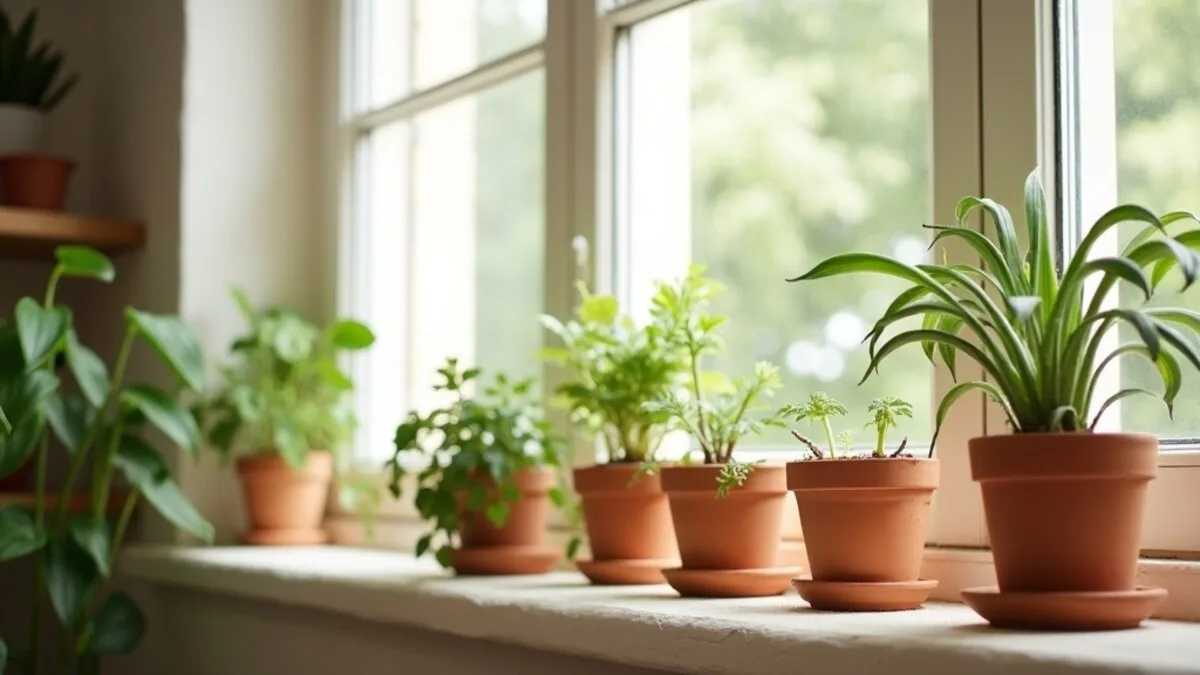
The easiest houseplants for beginners are pothos, snake plant, ZZ plant, spider plant, and peace lily. They tolerate forgotten waterings, mediocre light, and a wobbly first month. Put them where you will actually see them, water only when the soil has dried out, and resist the urge to fuss. Most plant deaths come from too much care, not too little.
Five forgiving plants to start with
If you want plants that survive a real, distracted life, start with these five: pothos, snake plant, ZZ plant, spider plant, and peace lily. I have killed enough greenery to earn the right to say it. These are the ones that stayed alive while I was learning, and they will do the same for you.
I am not going to hand you a list of fussy showpieces and wish you luck. A plant that needs misting twice a day and a humidity meter is a hobby, not a houseplant. These five ask almost nothing, and they reward neglect better than they punish it.
Here is the honest backstory. My first attempt at plants was a sad little parade of trendy varieties I had seen online, and I killed every one inside a season. Fiddle-leaf figs and delicate calatheas are beautiful and completely unforgiving of a beginner's hands. The five below are the ones that finally stayed alive, and once they did, I actually started enjoying the whole thing rather than dreading the next funeral.
Why these five, specifically
- Pothos: a trailing vine that grows in almost any light and tells you when it's thirsty by drooping, then perks right back up after a drink. Hard to truly kill.
- Snake plant: upright, architectural, and so drought-tolerant you can leave for a fortnight without worry. It would rather be ignored.
- ZZ plant: glossy and slow-growing, it stores water in thick roots, so it shrugs off the busy weeks when you forget it exists.
- Spider plant: cheerful, fast, and generous. It sends out little babies you can pot up and give away, which makes you feel like a competent gardener early on.
- Peace lily: the one that flowers, and the most honest of the group. It wilts dramatically when thirsty and recovers within hours of watering, so it teaches you the rhythm.
A good beginner plant is one that forgives you faster than you can panic.
If I had to rank them for an absolute first-timer, I would start with the snake plant and the pothos. The snake plant is nearly impossible to kill and looks sharp in almost any room. The pothos grows fast enough that you actually see progress, which is quietly encouraging when you are still unsure of yourself. Watching new leaves unfurl in your first few weeks is what turns a nervous beginner into someone who likes plants.
Start with one or two, not all five. A single thriving pothos teaches you more than a shelf of struggling strangers, and it keeps the whole thing feeling calm rather than like a new set of chores.
Where to buy your first plant
You do not need a fancy plant shop. A supermarket or hardware store will sell you a perfectly good pothos or snake plant for the price of lunch. Cheaper, in fact, means lower stakes while you learn, and these five are common precisely because they grow easily and ship well. Save the rare collector plants for later, once you trust your own hands.
When you pick one out, do a thirty-second health check before it comes home. Look under a few leaves for tiny webs or sticky spots, which hint at pests. Choose a plant with new growth coming through rather than the biggest one on the shelf. And gently lift it; if roots are bursting out the bottom, it has been stuck in that pot too long.
The first week home
Resist the urge to do anything dramatic. A new plant has just survived a truck, a shop, and your bag, so it is mildly stressed. Set it in a spot with decent light, water it once if the soil is dry, and then leave it be. Do not repot, do not feed, do not move it around chasing the perfect corner. Calm and consistent beats fussed-over every time.
The greenest change is usually using what you already own, which is where my list of eco-friendly home swaps begins.
A quick-reference light and water table
Here is the cheat sheet I wish someone had taped inside my cupboard when I started. Pin it somewhere, glance at it for the first month, and you will stop second-guessing yourself. After a few weeks the rhythm becomes instinct and you won't need it at all.
| Plant | Light it likes | How often to water |
|---|---|---|
| Pothos | Low to bright, no harsh midday sun | Every 7 to 14 days, when topsoil is dry |
| Snake plant | Low to bright, very adaptable | Every 2 to 4 weeks, let it dry fully |
| ZZ plant | Low to medium, tolerates dim corners | Every 2 to 3 weeks, drought is fine |
| Spider plant | Bright, indirect light | Every 7 to 10 days, keep lightly moist |
| Peace lily | Medium, indirect; tolerates low | When leaves droop, roughly weekly |
Treat those watering windows as ranges, not alarms. A cool winter room dries slowly, so you water less. A warm, sunny summer week dries fast, so you water more. The soil tells the truth; the calendar only guesses.
One rule that covers all five
When in doubt, wait a day. Every plant on this list survives a little drought far more easily than a soggy week. If you only remember one thing from the whole table, remember that underwatering is a wobble and overwatering is a funeral.
Reading the signs your plant gives you
Plants are not silent; they just speak slowly. Once you learn a few signals, the table becomes almost unnecessary. Drooping that recovers after watering means thirsty. Yellow lower leaves often mean too much water. Brown crispy edges usually mean dry air or too much direct sun. Pale, stretched-out growth means the plant is reaching for light it cannot find.
- Soft, drooping, perks up after water: normal thirst. You are reading it correctly.
- Yellow leaves, soil still wet: ease off the watering and check the drainage.
- Crispy brown edges: move it from a hot window, or the air is simply dry. Usually harmless.
- Long gaps between leaves, leaning hard: it wants more light. Shift it closer to a window.
None of these are emergencies. They are conversation. The longer you live alongside a plant, the faster you read it, until you adjust by instinct and barely think about the schedule at all. That fluency is the quiet reward of starting with forgiving plants.
Where in your home should they go?
Put each plant where its light needs match the spot, and just as importantly, where you will actually walk past it. A plant you never see is a plant you forget to water. The best location is the honest overlap between the right light and your daily path through the house.
Start by reading your light without a gadget. Hold a hand a foot above the spot at midday. A sharp, crisp shadow means bright light. A soft, fuzzy shadow means medium. Barely any shadow means low, and that is where the snake plant and ZZ earn their keep.
Matching plant to room
- Bright windowsill (east or south): spider plant and peace lily thrive, just keep them off the glass in high summer.
- A few feet from a window: pothos is perfectly happy here, trailing off a shelf.
- Dim hallway or a windowless bathroom: snake plant and ZZ tolerate it; peace lily copes too, with slower growth.
- The desk where you work: a small pothos or ZZ, so something living shares the hours.
I keep a couple near where I make tea in the evening, because tending them folds naturally into the wind-down. It became one of my small cozy home rituals without my even planning it, a thirty-second check that signals the day is softening.
Avoid two spots that look fine but quietly harm plants. The first is directly above a radiator or heating vent, where the hot, dry air scorches leaves and bakes the soil. The second is a cold draughty doorway in winter, which most houseplants hate. A foot or two away from either is usually all the difference you need.
Kitchens and bathrooms can be wonderful homes, by the way, because they tend to be a touch more humid. A pothos trailing off the top of a bathroom cabinet, catching the soft light of a frosted window, is one of the easiest wins in the whole house. Just make sure the room gets at least some daylight; a windowless bathroom is the one place even these tough plants struggle.
The right spot is where the light is correct and your feet already go.
Rotate each pot a quarter turn whenever you water. Plants lean toward light, and a quick spin keeps them growing evenly instead of reaching sideways into a lopsided shape over the months.
A note on north-facing and dark rooms
If your home is genuinely dim, do not force it. No plant truly thrives in a windowless room, and propping a struggling plant under a desk lamp is more effort than joy. The snake plant and ZZ tolerate low light better than anything, so start there, and accept that they will grow slowly. Slow is fine. Slow is alive.
For a truly dark corner you love and want greened, a small, inexpensive grow light solves it without drama. But that is optional, and honestly a step beyond beginner territory. For most homes, the trick is simpler: put the plant near the window you already have, and choose a species that matches whatever light that window gives.
Group plants, but loosely
Clustering a few pots together looks lovely and raises the local humidity a touch, which most leafy plants quietly appreciate. Just keep a little air moving between them so leaves are not pressed wetly against each other, which invites mold. A shelf, a windowsill, and the corner of a desk made my flat feel tended without my buying a single thing besides the plants.
How do I water without overthinking it?
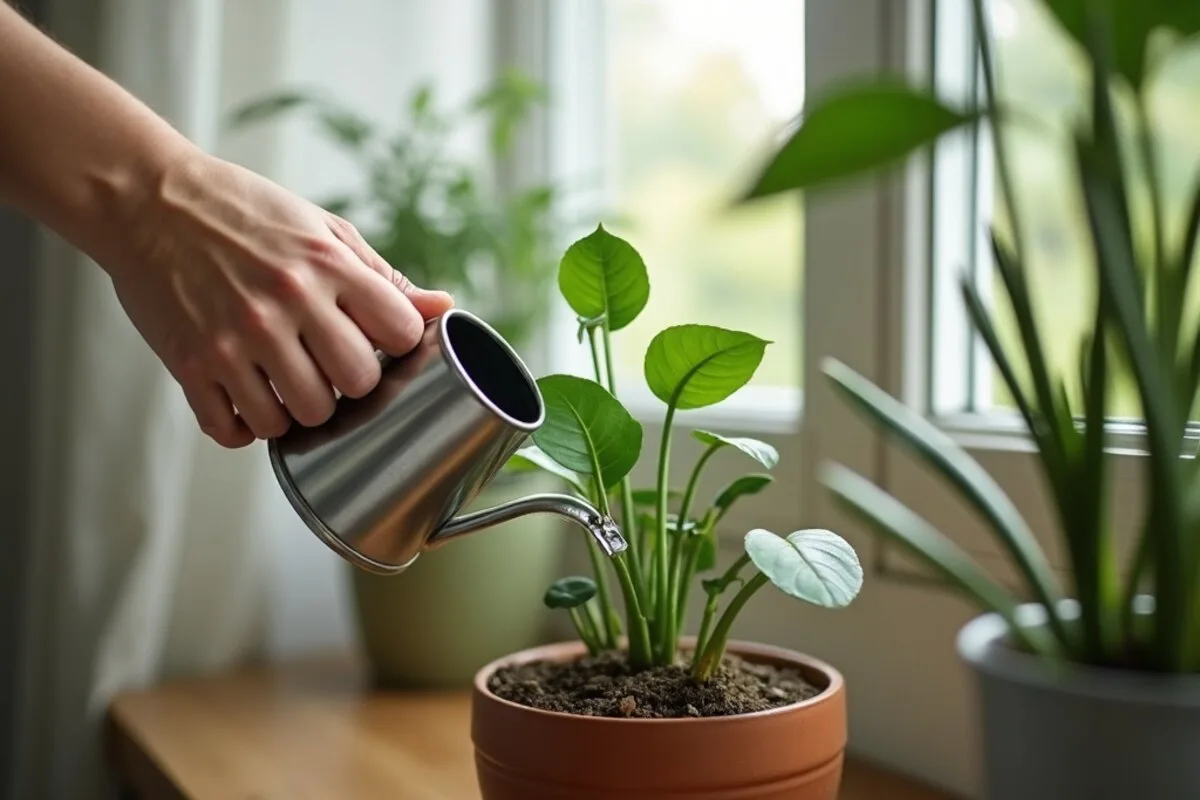
Water only when the soil has actually dried, then water thoroughly until it drains from the bottom, and tip away whatever pools in the saucer. That is the entire method. Most watering anxiety comes from doing it on a schedule instead of doing it when the plant needs it.
The finger test never fails. Push a finger an inch or two into the soil. If it comes out with damp dirt clinging on, wait. If it comes out clean and the soil feels cool-dry, it is time. Cheaper and more reliable than any moisture meter I have owned.
A few other quiet cues back up the finger test, if you like a second opinion. Lift the pot; a dry one feels noticeably lighter than a freshly watered one, and after a week or two you will judge thirst by weight alone. The soil surface lightening from dark brown to dusty tan is another honest sign. And on terracotta, the pot itself darkens when damp and pales as it dries.
A calm watering routine
- Check, don't assume. Do the finger test before lifting the watering can. Half the time the answer is "not yet."
- Water deeply, not often. Soak the whole root ball until water runs out the drainage hole, then stop.
- Drain fully. Never let a pot sit in standing water. Roots breathe, and drowned roots rot.
- Adjust by season. Everything drinks less in winter. Stretch the gaps without guilt.
Drainage matters more than almost anything else, so make sure every pot has a hole in the bottom. A beautiful pot with no drainage is a slow trap. If you fall for one anyway, keep the plant in a plain nursery pot that lifts out, and water that over the sink.
Doing this slowly, on the plant's clock instead of mine, taught me the same patience I keep relearning in the rest of life. It is the houseplant version of a slow living routine: pay attention, respond to what's actually in front of you, and stop manufacturing urgency.
What about misting, feeding, and tap water?
You can skip misting entirely for these five. It does almost nothing for humidity and mostly just makes you feel busy. If a plant truly wants moisture, grouping pots or a pebble tray of water nearby does far more than a spray bottle ever will. Save your energy.
Feeding is optional and easy to overdo. A diluted houseplant feed once a month through spring and summer is plenty; none at all through winter, when growth slows. More fertilizer does not mean more plant. It often means burned roots, which is just overwatering's chemical cousin.
As for water, tap is fine for nearly everyone. If your tap is heavily chlorinated, let a jug sit out overnight and the chlorine gasses off on its own. Peace lilies can show brown tips from very hard or fluoridated water, so if that happens, switch to filtered or rainwater for that one fussy plant. The rest will not notice.
The beginner mistakes I made first
Almost every plant I lost early on, I lost to overwatering. I loved them to death, topping up the soil because watering felt like caring. It is the single most common beginner mistake, and the saddest, because the plant is dying of kindness rather than neglect.
The confusing part is that overwatering and underwatering can look identical: droopy, yellowing leaves. So people see a sad plant and water it more, which finishes the job. When in doubt, check the soil before reaching for the can. The dirt settles the argument.
It helped me to understand why overwatering kills, because then it stopped feeling random. Roots need air as much as water. When soil stays soggy, the air pockets fill and the roots effectively drown, then rot sets in and the plant cannot drink even though it is surrounded by water. That is the cruel twist: an overwatered plant often looks thirsty, because its rotted roots have stopped working.
Mistakes to skip on your way past mine
- Watering on a fixed schedule. Plants don't read calendars. Water by soil dryness, not by which day it is.
- Pots without drainage. A pretty pot with no hole drowns roots quietly. Always check before you buy.
- Repotting straightaway. A new plant is already stressed from the move. Let it settle for a few weeks first.
- Too much direct sun. Pressing a low-light plant against a hot south window scorches the leaves brown and crisp.
- Fussing daily. Poking, moving, and misting constantly stresses a plant. Most of these five want to be left alone.
Owning fewer plants and knowing each one well beats a crowded jungle you cannot keep up with. That is the same instinct behind a minimalist vegan lifestyle: a little, tended properly, gives more calm than a lot, half-managed and quietly stressful.
When a plant does struggle, resist the urge to do five things at once. Change one variable, usually the watering, and then wait a week to read the result. Plants respond slowly, and patience is most of the cure.
The repotting mistake, and when to actually do it
New owners love to repot immediately, into a much bigger pot, with the best soil, as a sort of welcome gift. It usually backfires. A pot that is too large holds more wet soil than the roots can drink, so the extra dirt stays soggy and the roots rot. Plants like a snug fit, not a mansion.
Only repot when the plant has clearly outgrown its home: roots circling the surface or poking out the drainage hole, water running straight through, growth stalled despite good care. When you do, go up just one pot size, no more. Spring is the kindest time, when the plant is actively growing and can bounce back from the disturbance.
Pests are normal, not a verdict on you
Sooner or later you will spot a bug, and it does not mean you failed. Most common pests on these plants wipe off with a cloth and a little diluted soapy water, repeated weekly until they are gone. Isolate the affected plant from its neighbors while you treat it. Catching it early makes it a five-minute job rather than a crisis.
Plants, pets, and a note on toxicity
If you share your home with cats or dogs, know that several popular plants are toxic to them, including pothos, peace lily, and snake plant, while spider plant is the safe one of this group. Toxic usually means a sore mouth or an upset stomach, not disaster, but it is worth placing carefully.
I am not telling you to avoid these plants if you have pets. I am telling you to hang the pothos out of reach and keep the peace lily off the floor where a curious cat grazes. A high shelf or a hook solves most of it without giving up the plant you love.
Quick pet-safety reference
- Spider plant: non-toxic to cats and dogs. The easy choice for a pet-heavy home.
- Pothos: toxic if chewed; causes mouth irritation. Hang it or shelve it high.
- Peace lily: toxic if chewed; keep up off the floor and out of nibbling range.
- Snake plant: mildly toxic; place where pets won't bite the leaves.
- ZZ plant: toxic if eaten; same rule, keep it out of reach.
If you want to dig deeper before buying, the Royal Horticultural Society keeps a calm, trustworthy guide to houseplants with care notes and toxicity flags worth a glance. When unsure about a specific plant and your specific pet, a quick check there saves a lot of worry.
A practical word on placement with animals. Cats climb, so "out of reach" means higher than you think; a tall shelf or a ceiling hook beats a windowsill they can leap to. Dogs mostly reach what is on the floor, so lifting floor plants onto a plant stand often solves it entirely. Hanging planters are the genuine peace-maker, keeping trailing greenery beautiful and well above curious mouths.
Most curious nibbling happens in the first week, when a plant is new and interesting, then fades as the novelty wears off. If your cat is a determined chewer, give it a pot of cat grass of its own as a decoy. A little redirection works far better than scolding, and it keeps the relationship between pet and plant a calm one rather than a daily battle.
A plant that lifts the room should never become a thing you worry about. Place it well, and it just gives.
For households that want zero risk, you do not have to compromise on greenery. Beyond the spider plant, other non-toxic options exist if you fancy expanding later, including certain palms and the prayer plant family. But there is no shame in keeping it simple. A single safe spider plant, thriving on a sunny sill, is a perfectly complete answer for a home full of paws and small hands.
If you have small children, the same logic applies, plus a little more height. Most reactions to these plants are minor, a sore mouth or a queasy hour, but they are unpleasant and easily avoided. Keep the toxic ones up on shelves, and let the spider plant be the one within reach. That single swap removes nearly all the worry.
Why plants belong in a calm home at all
Beyond the look of them, plants give a home a pulse. There is something steadying about caring for a living thing on a slow schedule, asking nothing back but a little attention now and then. Studies keep suggesting greenery helps us feel calmer and more focused, but I did not need a study. I needed only to notice how much better a room felt with one quiet green corner in it.
That, in the end, is the whole point. A few green things in the right spots make a home feel tended and alive, and the tending itself becomes a gentle anchor in the week, the kind I lean on in my mindful weekend routine. Start with one. Let it teach you. The rest follows on its own.
Common questions
What is the single easiest houseplant for a total beginner?
The snake plant, by a wide margin. It tolerates low light, dry air, and weeks of being forgotten, which is exactly what a first plant goes through. If you want something that trails and looks lush, pothos is a close second and just as forgiving. Either one is hard to kill.
How do I know if I'm watering too much or too little?
Both can cause droopy, yellowing leaves, which is why people get it wrong. The deciding test is the soil itself. Push a finger an inch or two in. If it's still damp, you're overwatering, so wait. If it's dry and crumbly, you waited too long. Let the dirt settle the argument.
Are these plants safe around cats and dogs?
The spider plant is non-toxic and the safest of the five. Pothos, peace lily, snake plant, and ZZ are all toxic if chewed, usually causing mouth irritation or an upset stomach rather than anything severe. Place them on high shelves or hooks if you have curious pets, and check the RHS guide for specifics.
Why are the leaves on my new plant turning yellow?
Most often it's a settling reaction to the move, plus overwatering as you fuss over it. Give a new plant a couple of weeks to adjust before repotting or feeding it. Check the soil before each watering, change just one thing at a time, and then wait. Plants recover slowly, so patience is most of the fix.
Continue reading in this cluster
All lifestyle →
Lifestyle
Cozy home rituals that ground the day
Lifestyle
A slow living routine for modern days
Lifestyle
A minimalist vegan lifestyle that still feels warm
Lifestyle