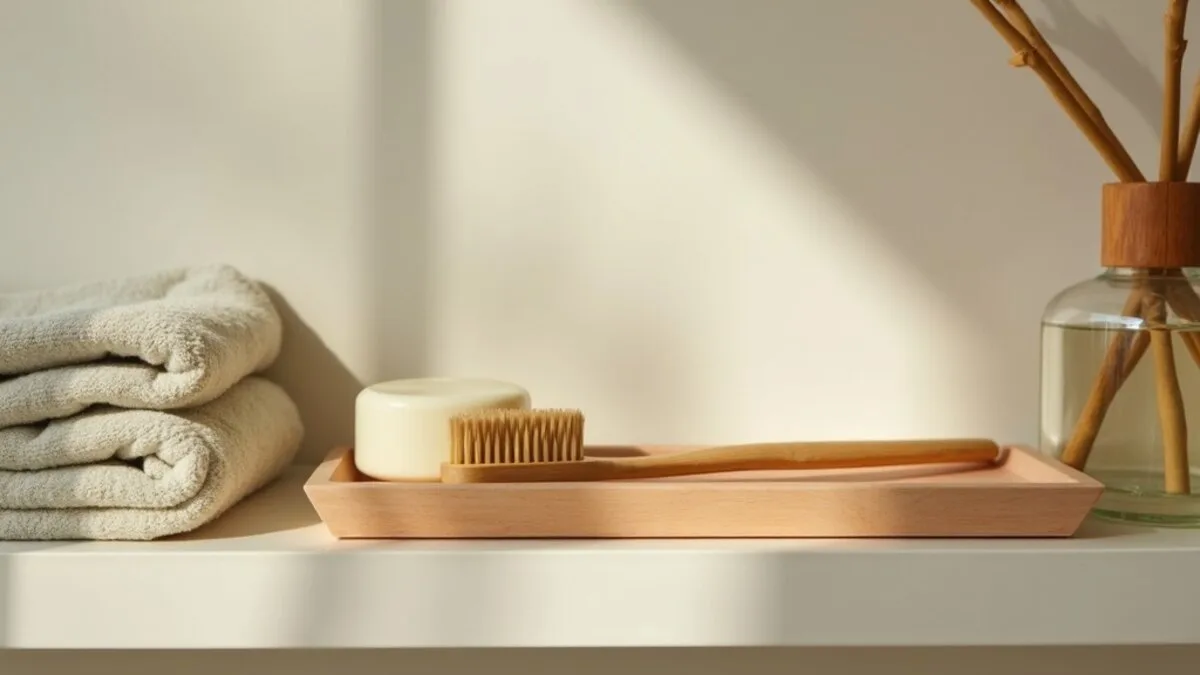
The best eco-friendly home swaps follow one order: first use up and care for what you already own, since the lowest-waste product is the one already in your cupboard. Then, only as things genuinely wear out, replace single-use consumables with durable refillables you can keep for years: a glass spray bottle, a solid soap, a metal razor, cloth instead of paper. I work room by room and choose for longevity, not for the photo. If you want the wider picture, my notes on sustainable living tips sit underneath all of this.
The principle: use it up, buy it for life, then refill
The most eco-friendly product is usually the one already in your cupboard. So the first swap I ever made was to stop buying swaps I did not need. For a while I had a drawer of well-meaning purchases: a second set of beeswax wraps, a bamboo gadget I used twice, three tote bags from three shops. That drawer taught me more than any article. The greenest thing in my home was almost always the thing I already owned.
So I work in a fixed order, and it has never let me down. First, use it up. Finish the plastic bottle of cleaner before you replace it. Second, buy it for life. When something truly wears out, choose the durable version once. Third, refill. Keep that durable thing in service for years by topping it up rather than rebuying. Three steps, in order, every time.
Why the order matters more than the product
If you skip straight to buying, even the most virtuous swap still made something new from raw material, shipped it to you, and sent your old item to landfill early. The carbon and waste of a swap live mostly in its making, not its using. A glass bottle you bought to feel green, then abandoned in a month, is worse than the plastic one you used for years. Order protects you from that trap. It keeps the focus on consuming less, which is the only swap that always works.
Is the greenest swap really doing nothing?
Often, yes, at least at first. Doing nothing but using up what you have is genuinely the lowest-waste move available, and it costs you nothing. I find that freeing rather than guilt-inducing. It means a calmer home is also a greener one. The same instinct runs through a minimalist vegan lifestyle: fewer, better things, kept longer. You are not behind because your shelf is not aesthetic. You are ahead because you bought less.
What "buy it for life" actually means
When I do buy, I look for repairable, refillable, and made of one honest material. Glass, stainless steel, solid wood, natural rubber, untreated cotton or linen. These age well and can be cleaned, fixed, or eventually composted or recycled. I avoid fused mixed materials, which cannot be separated and so cannot be repaired or recycled. A good rule: if I cannot imagine still using it in five years, I probably should not buy it today.
The bathroom was the last room I greened, which is why I wrote down my whole zero waste oral hygiene routine.
If you are just starting out, I keep a gentle list of eco friendly swaps for beginners.
Kitchen swaps that earn their place
The kitchen is where waste is most visible, so it is a satisfying place to begin, as long as you begin by using things up. I did not throw out my plastic containers to feel pure. I kept them until they cracked, then replaced them slowly with glass. The kitchen rewards patience because the durable versions here genuinely outlast their disposable cousins by years.
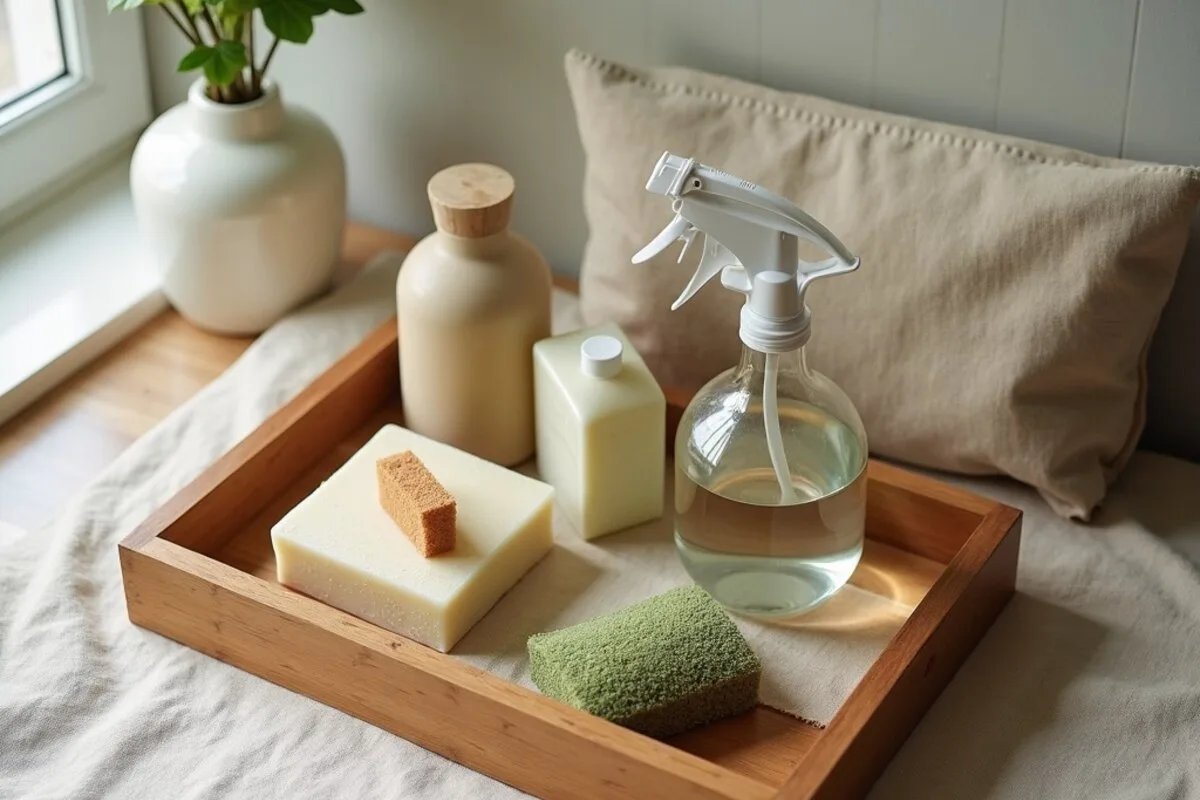
The swaps I actually kept
- Glass jars and containers: I reuse jars from sauces and jams. They outlast plastic, do not stain or hold smells, and go in the dishwasher forever.
- Solid dish soap or refillable liquid: a block of solid soap lasts months and ends the plastic bottle. If you prefer liquid, refill one bottle from a bulk pouch.
- Natural sponge or dishcloth: plant-fibre or cotton, washable and eventually compostable, instead of plastic sponges that shed microplastics.
- Beeswax or cloth wraps: useful, but only buy them once. Most people own more than they use.
- A good metal or wooden tool: one solid spatula that lasts twenty years beats five cheap ones.
What makes the biggest difference in a kitchen?
Wasting less food, by a wide margin. No container swap comes close to the impact of simply throwing away less of what you bought. The EPA's guide to reducing wasted food at home is the most useful thing I have read on this. Planning meals, storing food well, and eating leftovers does more than any reusable on the shelf. I keep a fuller routine in my zero-waste kitchen notes.
Cloth produce bags and the bulk aisle
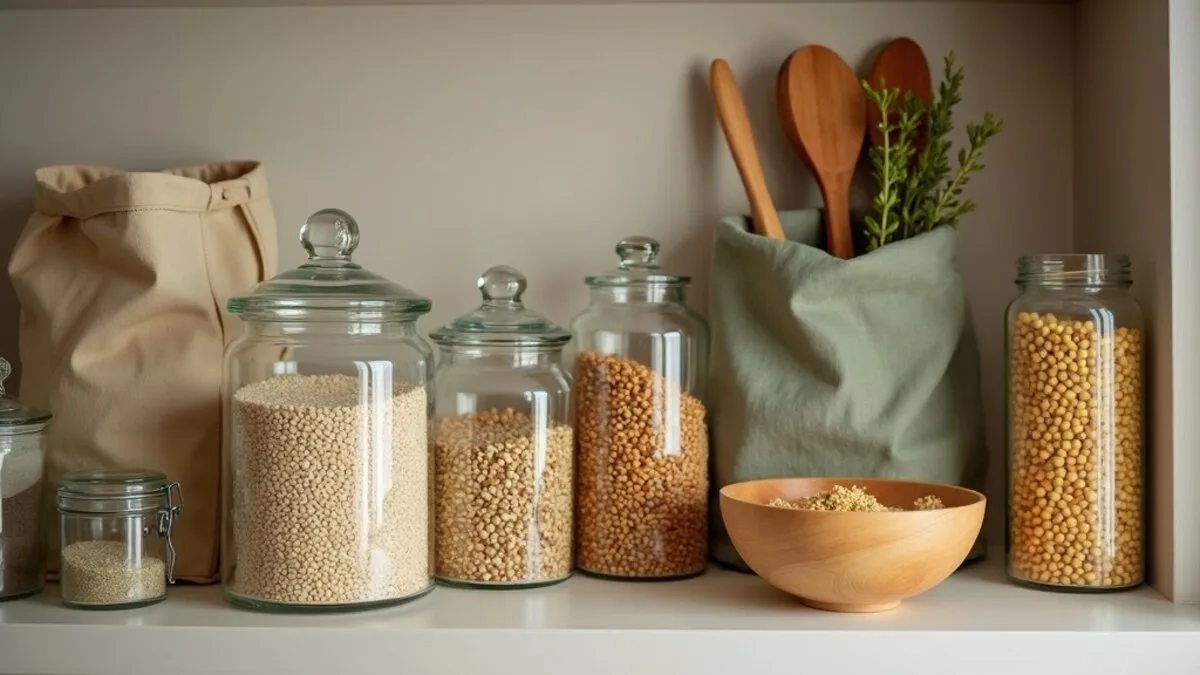
Thin cotton or mesh bags for loose fruit, vegetables, grains, and nuts replace a surprising amount of single-use plastic over a year. I keep four in a drawer near my shopping bags so I never forget them. They weigh almost nothing, the till can deduct their weight, and they wash with the towels. This is also where buying in bulk and refilling staples like rice, oats, and pasta quietly removes a steady stream of packaging from the bin.
Bathroom swaps that last for years
The bathroom is full of small plastic bottles that empty fast and last forever in landfill. It is also where durable swaps shine, because a metal razor or a solid bar can serve you for a decade. As always, I finished what I had first. There is no sense binning a half-full shampoo bottle to make room for a virtuous bar.
The durable bathroom kit
- Safety razor: a single stainless-steel razor with replaceable blades. Mine has lasted years and the blades are recyclable metal, not fused plastic cartridges.
- Bar soap and shampoo bars: a good bar lasts as long as two or three bottles and travels without leaking.
- Bamboo or recycled toothbrush: a modest swap, but it adds up across a lifetime of brushes.
- Refillable glass or metal bottles: for the products you still prefer as liquid, refill one good bottle rather than buying new plastic.
- Cotton or linen towels and flannels: washable face cloths instead of disposable wipes, kept for years.
Are bathroom swaps actually cheaper?
Over time, usually yes, though not on day one. A safety razor costs more upfront than a pack of disposables, then costs almost nothing for years because the blades are cheap. Bar soap works out cheaper per wash than bottled. The pattern repeats across the room: a higher first cost, then a long, low-cost tail. The trap is buying the durable thing and the disposable thing, which doubles your spending and your stuff.
The swap I tell people to skip
Anything that promises to fix a problem you do not have. You do not need a special bamboo holder for the bamboo toothbrush, or a charcoal gadget to make the bar soap greener. The bar is already the swap. Bathrooms attract clutter dressed as virtue, and the calmest, lowest-waste version is sparse. I find the same quiet satisfaction here that I do in my cozy home rituals: fewer objects, better cared for.
Laundry and cleaning, simplified
Cleaning is where the industry sells the most bottles and the most fear. Most of it is unnecessary. A handful of durable tools and a couple of refillable concentrates handle nearly everything I clean, and they cost a fraction of a cupboard full of specialised sprays. The simplest cleaning routine is also the least wasteful one, which is a happy coincidence.
The cleaning kit that replaced a cupboard
- One refillable glass spray bottle: filled with a diluted concentrate or simple vinegar solution. One bottle, refilled, instead of five single-purpose plastic ones.
- Microfibre-free cloths: cotton or linen rags, often cut from worn-out towels, washed and reused for years.
- Bar or concentrate cleaners: dilute at home so you are not shipping water in plastic across the country.
- A solid scrub brush: wooden handle, replaceable head, instead of plastic brushes that crack and get tossed.
Laundry without the plastic jugs
For laundry I moved to a concentrated detergent I dilute, washing in cold water, and a wool dryer ball or simply air-drying. Cold washing protects clothes and cuts energy, which matters more than the detergent format. I skip fabric softener entirely; it coats fibres and shortens the life of clothes, which is the opposite of what a durable wardrobe wants. The same logic underpins my capsule wardrobe guide: fewer, better garments, washed gently, kept for years.
What about recycling the bottles I do end up with?
Recycle them properly, but treat it as the last resort, not the plan. Recycling is real and useful, yet it is downstream of the actual goal, which is buying less packaging in the first place. The EPA's overview of recycling basics is a sober reminder that reducing and reusing always sit above recycling in the order. I rinse, sort honestly, and try to need the bin less each year.
Bedroom and living room textiles
Soft furnishings are quietly some of the most wasteful things we own, because cheap textiles wear out fast and most are blends that cannot be recycled. Here the durable swap is less about a product and more about a buying habit: choose natural, single-fibre textiles, and keep them for a decade rather than refreshing them every season.
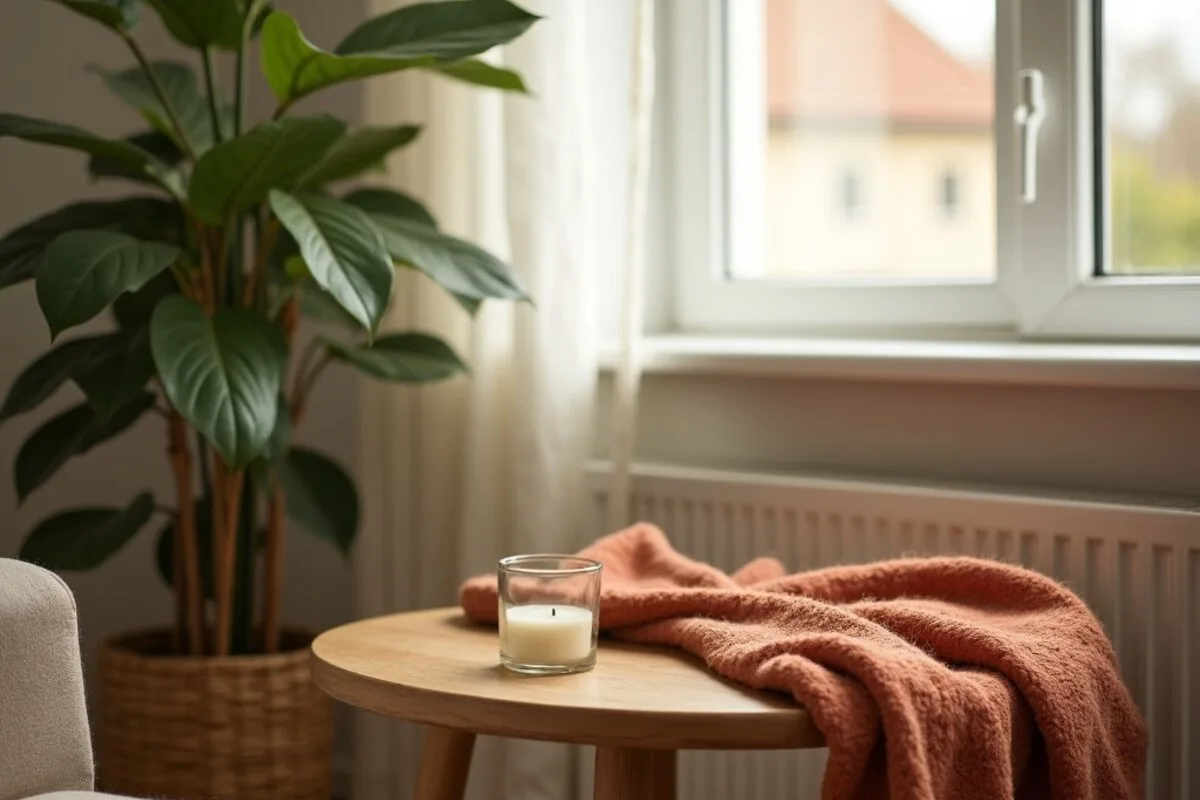
Textiles worth choosing well
- Wool or cotton throws: natural fibres are warm, repairable, and compostable at the very end. A good wool throw lasts decades.
- Linen or cotton bedding: breathable, gets softer with washing, and outlasts polyester blends that pill and shed.
- Natural-fibre rugs: wool, jute, or cotton, which can be cleaned, patched, and eventually recycled or composted.
- Refillable candles: a glass or metal vessel you refill, rather than throwing out the whole container each time.
The greenest decor is often a plant
A houseplant is one of the few additions to a room that gives back rather than just sitting there. It cleans nothing dramatically, despite the headlines, but it brings life, costs almost nothing if you propagate from cuttings, and lasts for years with simple care. If you are new to keeping them alive, my guide to houseplants for beginners covers the forgiving ones. A few plants do more for a room than a cart of fast decor.
Caring so things last
The durable swap only works if you actually maintain it. I wash wool gently and air-dry it flat. I rotate cushions and rugs so they wear evenly. I mend small holes early, before they become reasons to replace the whole thing. None of this is precious or time-consuming; it is fifteen minutes here and there that turn a five-year item into a fifteen-year one. Longevity is a habit as much as a purchase.
The entryway and shopping bags
The entryway is where good intentions either work or fail, because it is the last place you pass before leaving the house. Almost every avoidable single-use item I encounter outside, a bag, a cup, a bottle, could have been prevented by something kept at the door. So I treat the entryway as a launchpad, not a clutter shelf.
The launchpad I keep by the door
- A few sturdy tote bags: but only a few. The footprint of a cotton tote is real, so the point is to use the ones you own hundreds of times, not to collect more.
- A folding bag in every coat pocket: a tiny ripstop bag that lives in the pocket means I am never caught buying a bag at the till.
- A refillable water bottle: stainless steel, kept by the keys, refilled from the tap.
- A reusable cup: if you buy coffee out, one good cup pays for itself in fewer disposables.
How many tote bags is too many?
If you cannot use them all regularly, you have too many. A cotton tote has to be reused dozens to hundreds of times to beat a thin plastic bag on impact, simply because cotton is resource-heavy to grow. That fact flips the usual story: the eco move is not owning more totes, it is wearing out the few you have. I keep about four and turn down new ones, however nice the print.
The quiet trick: make the green choice the easy one
I rarely rely on willpower at the door. I rely on placement. The bottle sits on the keys. The folding bag lives in the coat I actually wear. The reusable cup is by the front door, not in a cupboard. When the low-waste option is the most convenient one, I take it without thinking. Designing the environment beats trying to remember, every single time.
Energy and water: the small wins
Swaps you can see get the attention, but the swaps you cannot see often matter more. The energy and water moving through a home quietly add up to a far larger footprint than the bottles and bags we fret over. The good news is that the durable swaps here are mostly one-time and then invisible for years.
The energy swaps that paid off
- LED bulbs: the clearest win in the house. They use a fraction of the energy and last for years, so you replace them rarely and buy fewer.
- A smart or simple power strip: switching off standby loads on electronics, which sip power around the clock for nothing.
- Cold-water laundry: heating water is most of a wash's energy, so washing cold is a free, durable swap.
- Lowering the thermostat a degree: a wool jumper and a throw cost nothing to run.
The water swaps worth making
A low-flow showerhead and a tap aerator are cheap, fit in minutes, and cut both water and the energy used to heat it, every day, for years. I also keep a jug to catch the cold water that runs before the shower warms, and use it for plants. None of this is dramatic. It is the quiet, repeated saving that makes it worth doing, and it never asks anything of me again once installed.
Why the invisible swaps beat the visible ones
A reusable cup is lovely, but a degree off the heating and cold-water laundry will usually save more carbon over a year than a drawer of clever kitchen gadgets. I had this backwards for a long time, fussing over visible plastic while ignoring the meter. The calmest realisation was that doing less, heating less, washing cooler, lighting more efficiently, is both greener and easier. It pairs naturally with a slower pace, the kind I describe in my slow living routine.
What to avoid: greenwashing and eco gadgets
For every honest swap, there are ten products selling you the feeling of one. Learning to spot them saved me more money and waste than any single swap I made. The pattern is consistent once you see it: a new thing, made from new material, sold as the solution to a problem you could have solved by buying nothing.
The traps I fell for so you do not have to
- Single-use "eco" gadgets: compostable pods, dissolvable sheets, and clever disposables. Anything used once and thrown away is still single-use, however natural the material.
- Vague labels: "natural," "green," "eco," and "conscious" mean nothing on their own. I look for specific, verifiable claims or ignore them.
- The full-kit reset: the matching set that asks you to bin everything you own and start fresh. That is consumption, not sustainability.
- Mixed materials: a "bamboo" item fused with plastic cannot be repaired or recycled. One honest material always wins.
How do I spot greenwashing quickly?
I ask two questions. First, does this replace a single-use thing with another single-use thing? If so, it is not a real swap. Second, would the most sustainable choice be to buy nothing at all? If the honest answer is yes, the product is selling me a feeling. A genuine durable swap survives both questions: it is reusable, repairable, and replaces a habit of buying, not just a brand.
The hardest swap is buying less
No product will ever sell you the most effective swap, because the most effective swap is restraint, and restraint has no margin. I keep returning to this because it is so easy to forget in a shop. Every guide, including this one, risks turning a philosophy of less into a shopping list of more. The cure is to read it, then go finish what is already in your cupboard.
How to swap on a budget, slowly
The fastest way to make eco swaps unsustainable is to try to do them all at once, which is expensive, wasteful, and overwhelming. I made mine over years, almost by accident, and that slowness was the whole reason they stuck. A swap made when something genuinely wears out costs you the price of the replacement you needed anyway.
The replace-as-it-dies method
- Wait for the wear-out. When the plastic spatula finally cracks, that is the moment to buy the wooden one. Not before.
- Buy the durable version once. Spend a little more on the thing you will keep for a decade, so you never buy it again.
- Refill, do not rebuy. Keep that durable thing in service. The savings come from the years of not buying, not the first purchase.
- Skip anything you do not already use. A swap for a habit you do not have is just new clutter.
Are eco swaps actually cheaper in the long run?
The durable ones usually are, because their cost is front-loaded and then nearly zero for years: a metal razor, LED bulbs, refillable bottles, natural-fibre textiles you keep for a decade. The disposable "eco" versions are not, since you keep rebuying them. The cheapest path of all is the one I keep naming, which is using up and maintaining what you already own so the purchase never happens.
Free swaps before paid ones
Before spending anything, I exhaust the free moves. Reuse glass jars instead of buying containers. Cut worn towels into cleaning cloths. Wash cold. Switch off standby. Catch the cold shower water for plants. Plan meals to waste less food. These cost nothing, often save money immediately, and frequently matter more than the paid swaps. Starting free also keeps the whole project calm rather than a fresh source of spending.
Making swaps stick as habits
A swap is only as good as the habit around it. I have owned all the right objects and still reached for the disposable, simply because it was closer. The lasting change was never the product; it was redesigning the small moments so the durable choice became the path of least resistance.
Designing the home so the green choice is the easy one
- Put the reusable in the way. Bottle on the keys, cloth bags by the door, refill jar at eye level. Convenience decides behaviour.
- Hide the disposable. If paper towels are out of sight, I reach for the cloth without a fight.
- Keep one of everything, not five. One spray bottle, one good cloth, refilled. Abundance of stuff is its own kind of waste.
- Refill on a rhythm. I top up concentrates on the same day I do a bigger shop, so I never run dry and panic-buy plastic.
Why habits beat willpower
Willpower runs out by the evening; a well-placed object does not. Every swap that survived in my home did so because I made the sustainable option the lazy option. That is not cheating, it is the entire game. The same principle quietens screens in my simple digital detox: change the environment, not your resolve, and the better choice happens on its own.
Forgive the slips
I still forget the bag. I still buy the bottled thing in a rush. A swap that demands perfection is a swap you will abandon out of guilt, so I let the misses be small and ordinary. The point is the long average across a year, not a flawless week. Calm consistency beats anxious purity every time, and it is far more pleasant to live with.
Bringing the household along
Swaps that depend on one person policing everyone fail quietly and breed resentment. The ones that last are the ones the whole household barely notices, because the system does the work. My aim is never to convert anyone; it is to make the low-waste option the obvious default for everybody who lives here.
How to involve a household without nagging
- Change the defaults, not the people. Refill the same bottle everyone already uses. Put the cloths where the paper towels were. No announcement required.
- Make it visible and easy. Clear jars, labelled refills, bags by the door. People use what they can see and reach.
- Let comfort win. A wool throw and a warm jumper make a cooler room cosy, so nobody fights the lower thermostat.
- Skip the lecture. A calm home full of good defaults persuades more than any speech about the planet.
Swapping with children in the house
Children copy systems far more than they follow rules. When the reusable bottle is simply the bottle, and composting is just where the peelings go, it becomes ordinary rather than a cause. I keep it concrete and low-pressure, the way I try to keep everything in our plant-based family life: this is just how our house works, no drama attached. The habits they grow up with will outlast any single swap I make.
The quiet end of all this
The point of every swap in this guide is not a more impressive shelf. It is a calmer home that takes a little less from the world and asks a little less of you. Use what you have. Repair before you replace. When something truly wears out, choose the durable version once and refill it for years. Do that slowly, room by room, and the whole house gets greener almost without you noticing.
Common questions
What are the best eco-friendly home swaps to start with?
Start by using up and maintaining what you already own, since the lowest-waste product is the one in your cupboard. Then, as things genuinely wear out, replace single-use consumables with durable refillables: a glass spray bottle, solid soap, a metal razor, LED bulbs, and cloth instead of paper. Choose one honest material, repairable and refillable, and keep it for years.
Are eco-friendly swaps actually cheaper?
The durable ones usually are over time, because their cost is front-loaded and then nearly zero: a metal razor, LED bulbs, refillable bottles, and natural-fibre textiles kept for a decade. Single-use "eco" products are not cheaper, since you keep rebuying them. The cheapest path of all is using up and caring for what you already own so the purchase never happens.
Which eco swap makes the biggest difference?
Wasting less, especially less food and less energy, beats almost any product swap. Planning meals and eating leftovers does more than any reusable container, and a cooler thermostat plus cold-water laundry usually saves more carbon over a year than a drawer of gadgets. The invisible swaps tend to matter more than the visible, photogenic ones.
How do I avoid greenwashing when buying swaps?
Ask two questions. First, does this replace a single-use thing with another single-use thing, like compostable pods or dissolvable sheets? If so, it is not a real swap. Second, would buying nothing at all be the more sustainable choice? If yes, the product is selling a feeling. Genuine swaps are reusable, repairable, made of one honest material, and replace a buying habit rather than a brand.
Continue reading in this cluster
All lifestyle →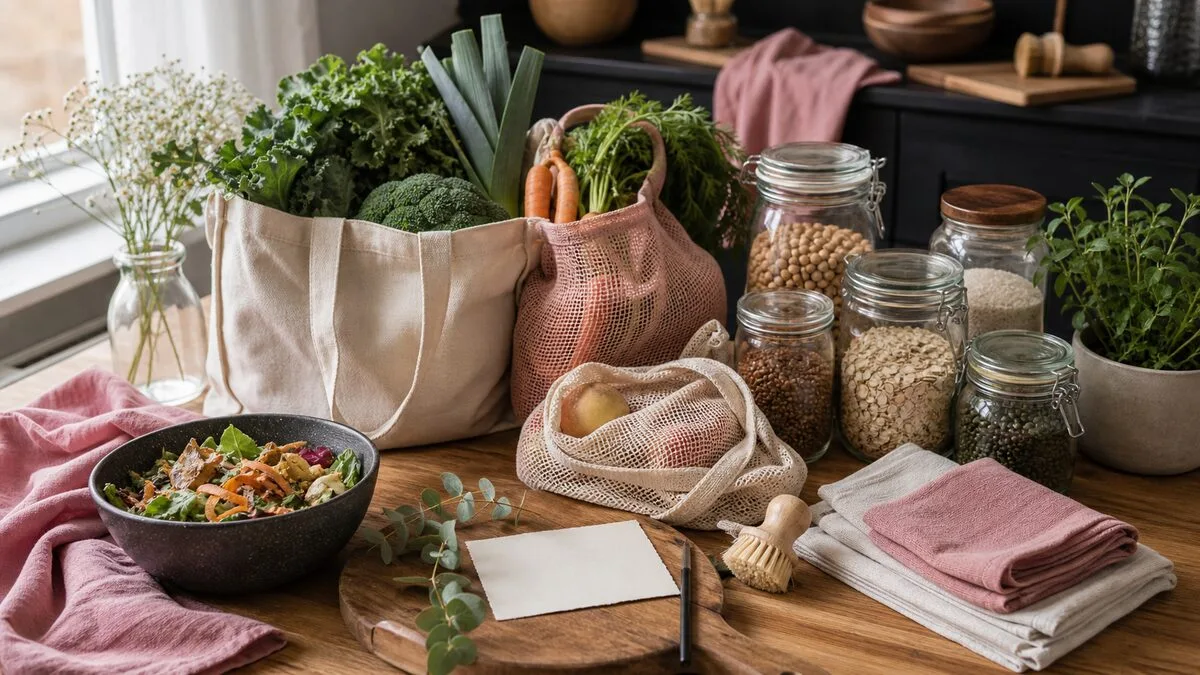
Lifestyle
Sustainable living tips for everyday people, Leuchi
Lifestyle
Zero Waste Kitchen
Lifestyle
A minimalist vegan lifestyle that still feels warm, Leuchi
Lifestyle