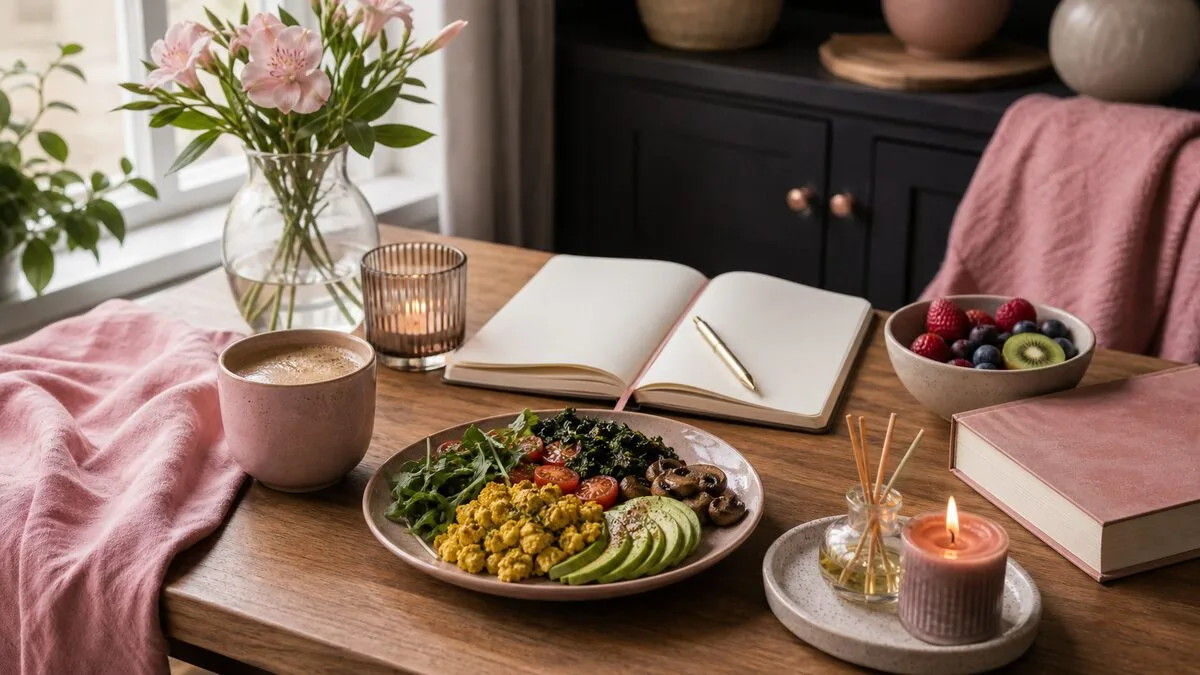
Weekends can vanish under errands. I like a rhythm that leaves room for food, rest, a walk, and one unhurried conversation.
The weekend I refuse to live
Saturday errand-list, Sunday productivity-list, Monday already-tired. I lived that version for years and called it being on top of things. What it actually was: two days of low-grade admin with the word "weekend" taped to the front. I'd finish Sunday night feeling like I'd worked a third shift, just an unpaid one with worse food.
The pattern was sneaky because every individual thing on the lists was reasonable. Groceries, laundry, the email I'd been avoiding, the cupboard that needed sorting. None of it was the problem. The problem was that the whole weekend was made of it, with no gaps, so I arrived at Monday having never actually stopped. Rest never got a slot. It was supposed to happen in the cracks, and there were no cracks.
So I stopped living that weekend. The replacement isn't dramatic and it isn't a strict schedule. It's just three blocks of time, two of them fiercely protected, and a loose agreement with myself about what each block is for. That's the whole structure. Everything else in this essay is detail.
A weekend isn't time off if you spend it doing the week's leftover work in a worse mood.
If you've read my slow living routine, this is what that looks like across two days instead of seven. And if you found your way here from everyday balance habits, think of the weekend as the place those daily habits get room to breathe, where the lunch becomes a long meal and the ten-minute walk becomes an afternoon one.
A few forgiving plants made the room feel alive again, and I wrote down the ones I trust in my guide to easy houseplants.
When my head is loud, three lines on a page help, which is the whole idea behind journaling for a quieter mind.
What makes a weekend feel mindful?
A mindful weekend isn't one full of meditation or quiet rituals. For me it's far simpler: a weekend where I'm actually present for the time, rather than spending it bracing for the next task on the list. Mindful just means the time is mine and I notice it passing, instead of it vanishing under errands while I look the other way.
The opposite of mindful here isn't busy, it's automatic. The bad weekend ran on autopilot. I'd wake up, the list would take over, and I'd surface on Sunday night with no memory of the two days, the way you arrive home from a drive with no memory of the road. The time happened to me. I wasn't in it.
So the goal of the structure below is presence, not productivity and not even relaxation exactly. It's about leaving enough unprogrammed space that I can be in the weekend while it's happening. The protected blocks aren't for doing restful activities. They're for being unscheduled, which is a different and rarer thing.
Breathing room is the whole point
I keep using the phrase "breathing room" because it's the most honest description of what I'm after. Not a packed itinerary of leisure, which is just a different kind of busy. Room. Gaps. Time with nothing assigned to it, where I can follow whatever the moment actually wants, a nap, a book, a walk, or staring out the window doing nothing at all.
That last one matters. Doing nothing has a terrible reputation and it's one of the most restorative things a weekend can hold. A protected block isn't wasted if I spend it apparently idle. The idleness is the medicine. This sits close to the spirit of a simple digital detox: the rest comes from the absence of input, not from filling the space with better input.
How the weekend actually goes now
Here's the shape, plainly, before I walk through each piece. Six rough blocks across two days, only two of them strictly protected, the rest loose. It looks like a schedule but it functions more like a frame: it holds the edges so the middle can be free.
- Saturday morning: a slow breakfast (see easy breakfasts) and one walk. Protected.
- Saturday afternoon: errands, briefly, contained to one window.
- Saturday evening: a long meal, friends or a film, no rush.
- Sunday morning: rest. Genuinely unstructured. Protected.
- Sunday afternoon: about an hour of light meal prep and weekday-proofing.
- Sunday evening: protected for nothing in particular.
The two protected blocks are Saturday morning and Sunday morning, plus the loose protection of Sunday evening. Everything else flexes. If a Saturday afternoon errand spills over, fine. If the long meal becomes a takeaway and a film, also fine. The frame isn't rigid. It just refuses to let the protected blocks get colonised by tasks.
That's the key discipline, and honestly the only real rule: the errands and the prep get windows, and they're not allowed to leak past them into the rest. A contained hour of admin is a tool. An uncontained weekend of it is the thing I'm trying to escape.
The slow Saturday morning
The Saturday morning is the block I protect most fiercely, because it sets the tone for everything after it. The rule is simple: no errands, no list, no rushing, for the first few hours. A slow breakfast and one walk. That's the entire assignment, and the looseness is deliberate.
The slow breakfast is the anchor. Not slow as in elaborate, slow as in unhurried. Often it's the same things I'd eat on a weekday, oats, fruit, toast, coffee, but eaten without one eye on the clock. The difference is entirely in the pace. On a weekday I fuel. On a Saturday I have breakfast, which turns out to be a different activity using the same ingredients.
Then a walk, usually a longer one than the weekday version, with no destination and no podcast unless I feel like it. The walk on a Saturday morning isn't punctuation the way the weekday one is. It's just a pleasure, a way of being outside and slow before the day has any demands attached to it.
Guarding the morning from the phone
The thing most likely to wreck a slow Saturday morning is the phone, because the phone is a portal straight to the week. One glance at email and I'm mentally back at the desk, the slowness gone in a second. So the phone stays out of reach until the breakfast and walk are done. Not banned forever, just not invited to the part of the morning that's supposed to be unhurried.
This is the single highest-leverage thing I do all weekend. A protected, phone-free, slow morning is worth more to how the weekend feels than any amount of careful planning later. Get the first few hours right and the rest tends to follow. Lose them to a screen and the whole day picks up the week's anxious tempo.
What I do with the slowness
People sometimes ask what the slow morning is actually for, as if it needs a justifying activity, and the honest answer is that it's for nothing in particular. That's the point. But in practice it tends to fill with small, unforced things, and I list them only to show how undramatic they are.
- A second coffee I don't rush, drunk sitting down rather than carried around the flat.
- Reading something on paper, often nothing useful, often fiction, with no goal of finishing.
- A bit of pottering, watering plants, opening windows, the gentle housekeeping that feels nice rather than obligatory.
- Looking out the window. Genuinely. The least defensible item and one of the best.
None of it would survive a productivity review. That's exactly why the morning works. It's the one stretch of the week where the question "but what did you get out of it" doesn't apply, and learning to let that question go for a few hours is most of what made my weekends feel like weekends again.
Errands, contained to one window
The errands still exist. Groceries get bought, laundry gets done, the boring necessary things get handled, because a weekend that ignores them just hands a heavier Monday to my future self. The shift isn't doing fewer errands. It's containing them to one window and refusing to let them sprawl.
Saturday afternoon is the window. I batch the errands, do them with a bit of pace, and then I'm done. The containment is what makes it bearable. When errands had no window, they expanded to fill the whole weekend, a task here, a task there, never a clean finish. Giving them a defined slot turns them from a fog into a chore, and a chore you can finish and walk away from.
I keep a short running list during the week so the Saturday window is efficient rather than a series of decisions. Not an elaborate system, just a note on the fridge or my phone where the week's necessary tasks land. When Saturday afternoon comes, I'm executing a list, not figuring out what needs doing. That alone shaves the window down considerably.
The art of the brief errand
The goal is brief, not thorough. I'd rather do the errands at eighty percent and reclaim the time than do them perfectly and lose the afternoon. A good-enough grocery shop, a load of laundry started not finished, the necessary done and the optional left. Perfectionism is the enemy of a contained errand window. It's how one hour becomes four.
And if the window runs over, I let some of it slide to next week rather than eating into the protected blocks. Not every task has to happen this weekend. The cupboard can stay messy. The week will survive an unsorted cupboard far better than I'll survive a weekend with no rest in it.
One more small thing that helps: I try to do the errands with someone or with something pleasant attached, so the window isn't pure grind. Music on while the laundry spins, a coffee picked up on the way to the shop, a quick chat with whoever I run into. The errands are still errands, but a bit of warmth threaded through them keeps the afternoon from feeling like the bad old weekend creeping back in.
Saturday evening: the long meal
Saturday evening is for a long meal, and "long" is the operative word. Not necessarily fancy, not necessarily for a crowd, but unhurried and treated as the centre of the evening rather than a refuelling stop on the way to something else. Sometimes that's friends round the table. Sometimes it's just me, cooking something slow and eating it properly with a film after.
The cooking is part of the rest, not a chore that delays it. On a weekday, cooking can feel like one more task between me and sitting down. On a Saturday evening I let it be the activity itself, a slow, pleasant hour of chopping and stirring with music on. The pace flips it from work into something close to a hobby. If you want the kind of generous, unfussy food I mean, the vegan comfort food pieces are exactly the register.
When it's friends, the meal becomes the whole evening, which is the point. A long table, no rush to clear, conversation that wanders. That's most of what I want from a weekend, honestly: one proper meal with people I like, unhurried. The whole structure exists partly to protect the energy for it.
Why the meal anchors the day
A long evening meal does for Saturday what the slow breakfast does for the morning: it bookends the day with presence. Between them I can run errands and be as ordinary as I like, but the edges are warm and unhurried, and that's what the day remembers. The meal is also a clean line between the day's doing and the evening's resting. After it, I'm off duty. There's a fuller version of this thinking in plant-based family life, where the shared table is the whole warm centre of the thing.
Sunday morning, properly unstructured
Sunday morning is the second protected block, and its protection is the strangest to explain because the assignment is to have no assignment. No breakfast plan, no walk plan, no list. I wake up and follow whatever the morning actually wants. Some Sundays that's a long lie-in and a book. Some it's an early walk. Some it's three coffees and the crossword and absolutely nothing else.
The unstructured-ness is the feature, not laziness. After a week of scheduled time and a Saturday with some shape to it, I need at least one block where nothing is decided in advance. It's the only way I know to give the week's accumulated tension somewhere to drain. A morning with no plan is a morning my nervous system can finally exhale into.
It took me a while to get comfortable with this, because unstructured time used to make me anxious. The empty morning felt like a vacuum that ought to be filled, and I'd fill it with low-value busywork just to quiet the discomfort. Learning to sit in the unstructured morning without filling it was a genuine skill, and it's the one that improved my weekends most.
Resisting the urge to optimise it
The constant temptation is to make Sunday morning productive, to slot in a workout, a project, a "good use" of the quiet time. I resist it. The moment Sunday morning gets a goal, it stops being the rest block and becomes another item. There are six other blocks for doing things. This one is for not doing them, and guarding that emptiness is worth more than whatever I'd otherwise cram in.
If a Sunday morning naturally turns active, a spontaneous walk, an unplanned bit of baking, that's fine, because it came from the morning rather than from a plan. The distinction is whether the thing arose on its own or got scheduled in. Spontaneous activity, welcome. Scheduled productivity, not in this block.
The one hour of weekday-proofing
Sunday afternoon is where I do the one piece of forward-looking work that earns its place: about an hour of light meal prep and general weekday-proofing. This is the only block aimed at the coming week rather than at the weekend itself, and I keep it deliberately small.
The meal prep is the core of it. Not a full Sunday of batch cooking, just enough that the coming weekdays are easier: a pot of grains, a batch of beans, a sauce, maybe a soup. Forty minutes, often less. That small effort is what lets the weekday version of the real lunch happen without thought, because lunch becomes a reheat instead of a decision. An hour on Sunday buys five calmer weekday middays.
The rest of the hour is light tidying and setting up Monday, so the week starts on a clear surface rather than a cluttered one. A quick reset of the kitchen, clothes sorted, the one or two things that make Monday morning frictionless. It's small, but a calm Monday morning is one of the kindest gifts a Sunday can give.
Why I cap it at an hour
The cap matters as much as the prep. Left unbounded, weekday-proofing would happily eat the entire Sunday afternoon, because there's always more you could prep, tidy, and organise. Capping it at roughly an hour keeps it a useful tool instead of a Sunday-shaped chore. After the hour, I stop, even with things left undone. The undone things are next week's problem, and next week is well equipped to handle them.
This block is also where the weekend most clearly connects to the rest of my life. A bit of sensible, low-waste prep on Sunday means less scrambling, less takeaway, less binned food across the week. The hour pays for itself several times over. But only if it stays an hour.
Sunday evening, protected for nothing
The last block is the one I'm most protective of and the one most people find strange: Sunday evening, protected for nothing. No prep, no list, no "just getting ahead." Once the afternoon hour is done, the rest of Sunday is off limits to anything resembling work or preparation.
I guard it because Sunday evening is where the dreaded Monday anxiety usually moves in, and the way it moves in is through productivity. The instinct to "just sort one more thing" before the week is the exact instinct that turns Sunday evening into a tense prelude to Monday rather than the last calm hours of the weekend. So I refuse it. The work can wait twelve hours.
What fills the block instead is whatever's gentle. A film, a book, an early night, a slow nothing. It mirrors Sunday morning in a way, both protected, both unstructured, the rest block at each end of the day. Bookending Sunday with two empty blocks is how I keep the day from quietly becoming Monday's runway.
The boundary that makes the week start better
Here's the thing I didn't expect: protecting Sunday evening from work makes Monday better, not worse. I used to believe that getting ahead on Sunday night bought me an easier Monday. It didn't. It just spread the week's stress backwards into the weekend and left me starting Monday already tired. A genuinely restful Sunday evening means I begin the week with something in the tank.
So the boundary is selfish in the best way. Sunday evening protected for nothing isn't an indulgence I pay for later. It's an investment in a Monday that starts from rest instead of from a head start I didn't actually need. For the morning side of that, my morning wellness habits piece carries it into the week.
Naming the Sunday dread, then dropping it
It helps to name the thing directly. The Sunday-evening dread is real, and for years I treated it as a signal that I hadn't prepared enough, so I'd prepare more, which made it worse. The dread isn't a to-do list trying to get my attention. It's just the nervous system noticing the rest is ending, and no amount of life-admin actually quiets it.
What quiets it, in my experience, is the opposite of preparation: leaning further into the rest, not bracing against the week. A warm, slow, unproductive Sunday evening tells my body the weekend is still happening right up until I'm asleep, and that turns out to be far more soothing than any head start. The dread shrinks when I stop feeding it tasks.
I won't claim it vanishes entirely, because some weeks carry genuine weight and Sunday knows it. But it's a fraction of what it was. Protecting the evening rather than filling it took the Sunday dread from a low hum across the whole evening to, at most, a brief flicker as I turn off the light, which I can live with easily.
When the weekend doesn't go to plan
I should be honest: plenty of weekends don't go like this at all. A work crisis swallows Saturday. A sick day eats Sunday. Travel, family obligations, a hundred ordinary things knock the frame over. The structure above is what I aim for, not what reliably happens, and pretending otherwise would be useless to you.
So the more important skill is what I do with a wrecked weekend, and the answer is: I don't write it off. The all-or-nothing trap is as real here as anywhere. The thinking goes, "well, Saturday's already gone, so the whole weekend's a write-off," and that's how one lost morning becomes two lost days. The recovery is to protect whatever blocks remain rather than abandoning the lot.
If Saturday's gone, I protect Sunday morning even harder. If the whole weekend's chaos, I claw back a single slow hour somewhere and treat it as the whole weekend in miniature. One protected block is infinitely better than none, and a weekend that delivered just one slow morning is a partial success, not a failure.
Lowering the bar on purpose
The frame is meant to be flexible, and the flexibility is what keeps it alive over years rather than collapsing the first busy month. A rigid weekend routine breaks the moment life intervenes, and then you've got nothing. A loose one bends and survives. So I hold the structure with an open hand. Hit all six blocks and it's a great weekend. Hit two and it's a decent one. Hit one and at least I rested for an hour, which beats the old weekends where I rested for none.
This is the same forgiveness I bring to the daily habits, and it's worth repeating because it's the part that's easy to forget. The point isn't a perfect weekend. The point is more breathing room than I had before, caught wherever I can catch it, with no penalty for the weekends that get away.
How to build your own version
My six blocks won't be your six blocks, and they shouldn't be. The structure is mine, shaped by my work, my home, and the fact that I cook for pleasure. Yours will look different. But the principles underneath travel, and that's what I'd actually hand you if you wanted to build your own.
- Find your two protected blocks. Pick the two stretches of the weekend you most want to keep free, and defend them. Two is enough. Don't try to protect the whole weekend.
- Give the errands one window. Contain the necessary admin to a single defined slot, and don't let it leak past the edges into the protected time.
- Cap the forward-looking work. One small block aimed at the coming week, capped tight, so it stays a tool and not a Sunday-shaped chore.
- Build the frame around one good meal. Anchor at least one part of the weekend with an unhurried meal you actually look forward to.
- Hold it loosely. Aim for the shape, accept the weekends that miss it, and protect whatever blocks survive a chaotic one.
Start with just the two protected blocks if the rest feels like too much. Honestly, that alone, two defended stretches of unstructured time, transformed my weekends before I ever added the windows and caps. Everything else is refinement on top of that one move.
A mindful weekend, in the end, isn't a perfectly planned two days. It's a couple of protected gaps where the time is actually mine, held loosely enough to survive a hard week, with the errands boxed in and the rest left genuinely empty. That's the breathing room. If you want where this leads, the slow living routine stretches the same instinct across the whole week, the cozy home rituals piece fills the protected blocks with warmth, and the broader idea sits under the heading of slow living if you'd like to read around it.
Common questions
How long will this take, honestly?
The reading is 9 min. The practice is a lifetime. Start with one small piece this week and let the rest follow when it feels natural, not before.
Do I have to be fully plant-based for this to help?
No. Everything I write is for people who want a softer relationship with food and routine. The recipes happen to be plant-based; the ideas work in any kitchen.
What should I read next?
The related essays below, in order. If you only read one more thing, read A slow living routine for modern days, it picks up exactly where this one ends.
Can I cite this guide somewhere?
Yes. Please link back to this page and credit Caleb Leuchi. All photographs are made for Leuchi unless noted; the writing is original.
Continue reading in this cluster
All lifestyle →
Lifestyle
A slow living routine for modern days
Lifestyle
Cozy home rituals that ground the day

Lifestyle
A simple digital detox that feels possible

Lifestyle