Tempeh recipes work best when you steam or simmer the block for ten minutes before cooking, which strips out the bitterness and lets it drink up a marinade. From there you can pan-fry it in a maple soy glaze, crisp it into smoky tempeh bacon, toss it through a fast stir-fry, crumble it for tacos and bolognese, or roast it on a sheet pan with vegetables. Tempeh is whole fermented soybeans, so it is nutty, firm and high in protein, and once you fix the bitterness it is one of the easiest proteins to cook well.
Tempeh recipes, the short version
Tempeh recipes almost always start with one step that nobody tells beginners about: steam or simmer the block for ten minutes before you do anything else. That single move pulls out the faint bitterness that puts so many people off, and it opens the tempeh up so it soaks in flavour instead of sitting there bland. Once you have done that, the rest is easy. You slice it, marinate it, and cook it the way you would any firm protein.
In this guide I walk through what tempeh is, why it can taste bitter, and how to fix it, then I give you five recipes I make on repeat. The printed one is a maple soy pan-fried tempeh, the dish that finally won me over. After that come smoky tempeh bacon, a fast stir-fry, a crumbled filling for tacos and bolognese, and a hands-off sheet-pan tray. None of them are difficult.
Where this sits in my protein writing
This is the dedicated tempeh corner of a bigger conversation about plant protein. If you want the whole framework for building filling plates, my high-protein vegan meals guide is the complete protein guide and the place to start. This page narrows in on tempeh alone: what it is, how to make it taste good, and the handful of recipes worth knowing. Think of it as the deep dive rather than the overview, the way you would reach for a single ingredient once you trust the bigger picture.
What tempeh actually is
Tempeh is whole soybeans that have been cooked, then fermented and pressed into a firm cake. You can usually see the beans held together in a pale, marbled block, which is the easiest way to tell it apart from tofu. Where tofu is made from strained soy milk and is soft and neutral, tempeh keeps the whole bean, so it is denser, nuttier and noticeably chewier. That fermentation is the whole point, and it gives tempeh a savoury, almost mushroomy depth that tofu does not have.
Because it holds the whole bean, tempeh is one of the most protein-rich plant foods you can buy, carrying somewhere around 18 to 20 grams of protein per 100 grams. It is also a source of fibre, which tofu mostly loses in processing. The Harvard T.H. Chan School of Public Health treats whole and fermented soy foods like tempeh as a sound, complete source of plant protein, which is a large part of why I lean on it so often.
Tempeh versus tofu, in plain terms
People often ask me to choose between the two, and I refuse, because they do different jobs. Tofu is a blank canvas you crisp and flavour from the outside, and I cover that fully in my guide on how to cook tofu, which is the sibling technique to this one. Tempeh already has flavour of its own, so you are working with it rather than building from nothing.
- Tofu is soft, neutral and made from soy milk. It takes on whatever you give it.
- Tempeh is firm, nutty and made from whole fermented beans. It brings its own taste.
- Tofu crisps best when pressed and coated. Tempeh crisps best when steamed first, then pan-fried.
- Both are complete proteins, but tempeh carries more protein and fibre per bite.
So I keep both in the fridge. When I want something to disappear into a creamy sauce, I reach for tofu. When I want a savoury, chewy, almost meaty bite, tempeh is the one. They are friends, not rivals.
The one step that fixes bitter tempeh
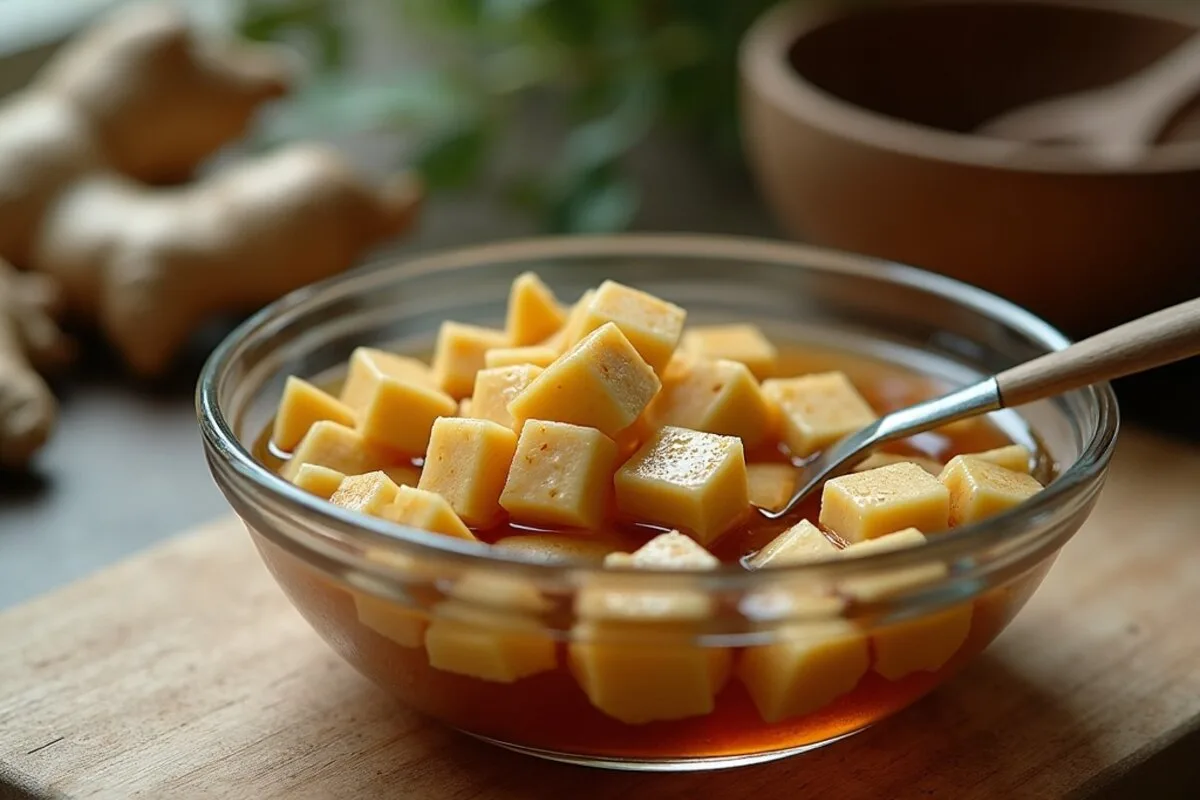
Here is the thing I wish someone had told me at the start. Plain tempeh, straight from the packet, often carries a faint bitterness, a slightly chalky, beany edge that reads as off if you are not expecting it. That is the single most common reason people try tempeh once and never come back. The good news is that it is completely fixable, and the fix takes ten minutes of doing almost nothing.
Steam or simmer the block before you cook it. I set a steamer basket over an inch of water, or I just lower the block straight into a pan of gently simmering water, and I leave it for ten minutes. The heat and moisture mellow that bitter note and soften the tempeh enough that it stops feeling so dense. It also opens up the surface, so when the marinade goes on, it actually goes in rather than sliding off.
How I do the pre-steam
- Slice the block first if your recipe needs slices, or leave it whole for crumbling later.
- Simmer or steam for ten minutes. A splash of soy sauce or a bay leaf in the water is a nice touch but not essential.
- Lift it out and pat it thoroughly dry, because a wet surface will steam rather than sear in the pan.
- Let it cool for a couple of minutes before it meets the marinade, so it drinks rather than scalds.
Some brands are milder than others and barely need this, and a few people genuinely do not mind the bitterness at all. But if you are new to tempeh, do not skip it. This is the step that turns tempeh from a food you tolerate into a food you actually want. Every recipe below assumes you have done it.
Why the steam works
It helps to know why, because then you trust the step rather than treating it as a superstition. The bitterness in raw tempeh comes partly from compounds in the soybeans and partly from the live cultures still active in the block. Gentle heat and moisture deactivate those cultures and leach the bitter compounds into the water, which is why the water can look faintly cloudy afterwards. At the same time, the steam relaxes the dense bean structure, so the marinade has somewhere to go. One small step quietly solves two problems at once.
How to marinate tempeh so it tastes of something
Once the block is steamed and dry, marinating is where tempeh comes alive. Its porous, beany texture is a gift here, because it pulls liquid deep inside in a way that tofu never quite manages. A good tempeh marinade does not just coat the surface, it seasons the whole piece, so every bite carries flavour rather than just the crust. This is the step that rewards a little patience.
A balanced marinade needs four things, and once you understand them you can improvise endlessly. You want salt, usually from soy sauce or tamari. You want a little sweetness to balance it and help it caramelise, from maple syrup, brown sugar or date syrup. You want acid for brightness, from rice vinegar or lemon. And you want aromatics, from garlic, ginger, smoked paprika or chilli. Whisk those together and you have the backbone of almost every tempeh dish I make.
Timing and a shortcut
Because steamed tempeh is so absorbent, even fifteen minutes in a marinade makes a real difference, though an hour or overnight is better. If you are short on time, there is a clever shortcut: skip the soak and instead build the marinade straight into the pan. Fry the tempeh first, then pour the marinade in at the end and let it bubble down into a sticky glaze that clings to every piece. That is exactly how the maple soy recipe below works, and it is the fastest route to flavour.
If you want more snack-sized ideas built on marinated, crisped tempeh, I lean on it constantly in my high-protein vegan snack recipes, where small bites of seasoned tempeh do a lot of quiet work between meals. The marinade thinking is identical, just scaled down to something you can grab from the fridge.
Maple soy pan-fried tempeh
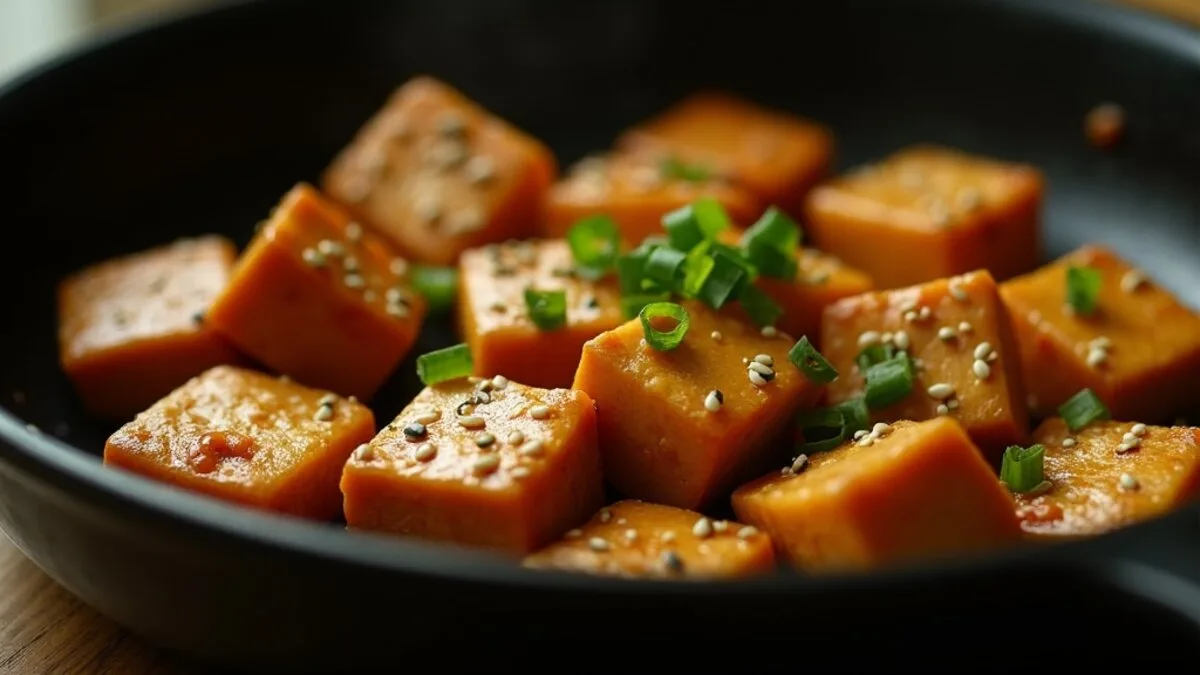
This is the printed recipe, and it is the one I hand to anyone who thinks they dislike tempeh. Maple soy pan-fried tempeh is sweet, salty, sticky and just a little smoky, with a glaze that reduces down and clings to each golden slice. It comes together in about thirty-five minutes start to finish, most of which is the ten-minute steam, and it works over rice, in a bowl, or piled into a wrap. It is the dish that converted me.
What you need
- 1 block (about 225g) tempeh, sliced into thin planks or triangles.
- 3 tablespoons soy sauce or tamari, for the salty backbone.
- 2 tablespoons maple syrup, for sweetness and that sticky glaze.
- 1 tablespoon rice vinegar, for brightness.
- 2 cloves garlic, minced, and a thumb of fresh ginger, grated.
- 1 teaspoon smoked paprika, for warmth and colour.
- 2 tablespoons neutral oil for frying, plus sesame seeds to finish.
- 2 tablespoons water, to loosen the glaze in the pan.
How it comes together
First, steam or simmer the sliced tempeh for ten minutes, then lift it out and pat it dry. While it steams, whisk the soy sauce, maple syrup, rice vinegar, garlic, ginger, smoked paprika and water in a small bowl. Warm the oil in a wide pan over medium heat and lay the tempeh in a single layer, frying for three to four minutes a side until deeply golden and crisp at the edges. Do not crowd the pan, or it will steam instead of brown.
Now turn the heat down a touch and pour the marinade straight into the hot pan. It will hiss and bubble at once, so keep the tempeh moving and turning as the liquid reduces. In two or three minutes it thickens into a glossy, sticky glaze that coats every piece. Pull the pan off the heat the moment it looks lacquered, scatter over sesame seeds, and serve straightaway. Three servings, roughly thirty-five minutes, and almost impossible to get wrong.
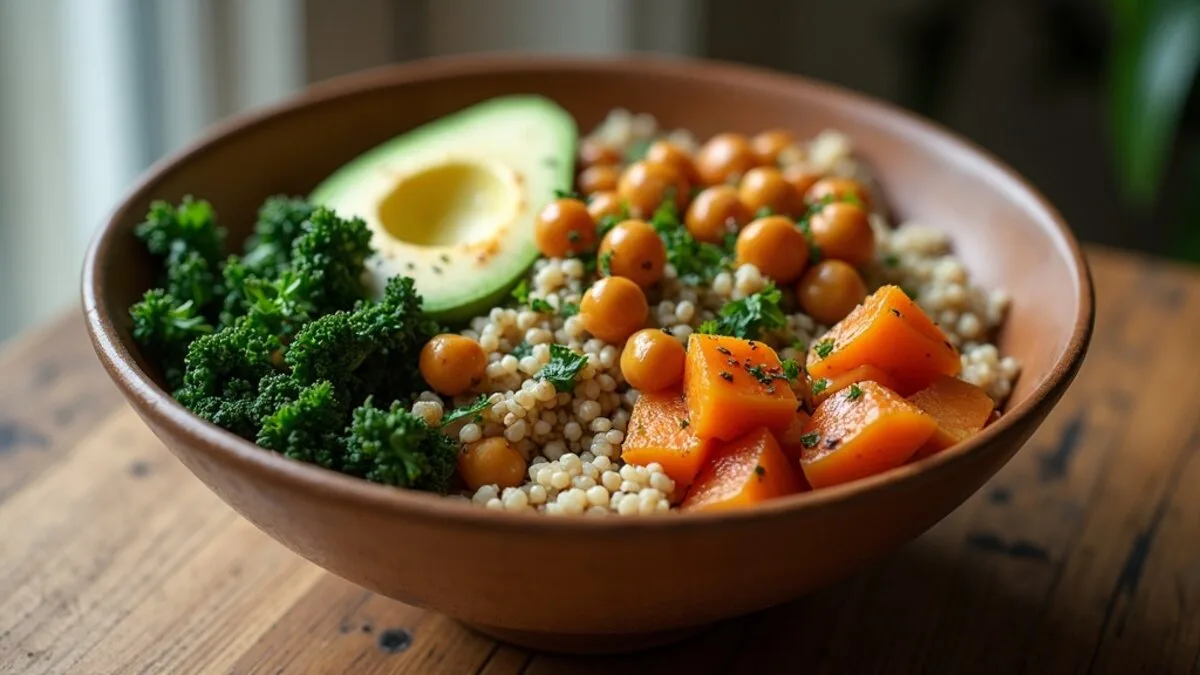
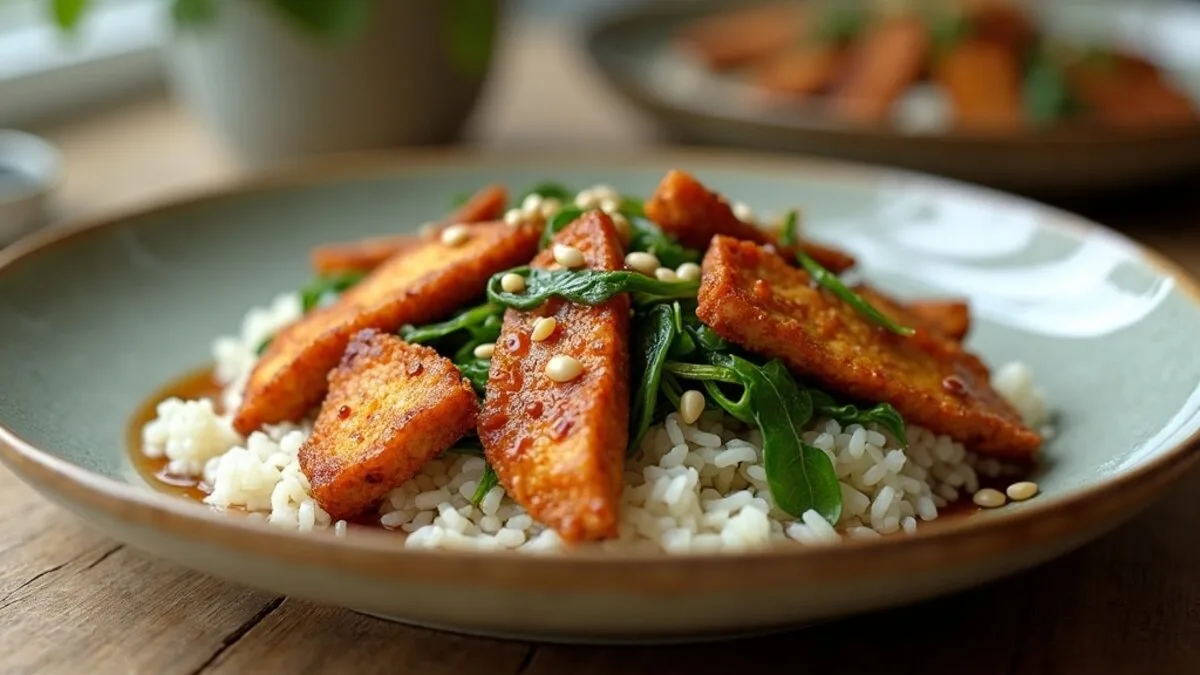
I serve this over rice with quick-pickled cucumber, or I fold it into a grain bowl. It is the natural protein for a vegan buddha bowl, where the sticky glaze plays beautifully against fresh greens and something creamy like avocado or tahini. Leftovers reheat well, and the glaze firms up in the fridge into something almost like candy.
Smoky tempeh bacon
If maple soy is the gateway, tempeh bacon is the dish that makes people genuinely excited. Sliced thin and marinated in smoke, salt and a little sweetness, then fried until the edges go crisp and frilled, it delivers that savoury, smoky, chewy hit that a strip of bacon used to. It is wonderful in a sandwich with avocado and tomato, crumbled over a salad, or eaten standing at the stove, which is usually where mine ends up.
The method
Steam the block for ten minutes as always, then slice it as thinly as you can manage, ideally a few millimetres. Whisk together two tablespoons of soy sauce, one tablespoon of maple syrup, two teaspoons of smoked paprika, half a teaspoon of liquid smoke if you have it, a little garlic powder and a grind of pepper. Lay the slices in this marinade for at least fifteen minutes, turning once so both sides drink it in. Thin slices and a smoky marinade are the whole secret here.
Fry the slices in a little oil over medium-high heat, pressing them gently with a spatula so they make full contact with the pan. Give them two to three minutes a side, until the edges darken and curl and the surface turns glossy and crisp. They firm up further as they cool, so do not panic if they seem soft straight from the pan. A drizzle of the leftover marinade in the last thirty seconds deepens the colour and the smoke. This is the recipe I make for sceptical brunch guests, and it never lasts.
A fast tempeh stir-fry and crumbled tempeh
Tempeh shines in fast, savoury cooking, and these two ideas are my weeknight workhorses. The first is a straightforward stir-fry. The second is a trick that turns tempeh into a crumbled filling for tacos and bolognese, which is honestly the way I cook it most often, because it slips into familiar dishes without anyone needing to think about it as a new ingredient.
The fast stir-fry
Steam the block, pat it dry, and cut it into small cubes. Fry the cubes hard in a hot wok with a little oil until they are crisp on several sides, then push them aside and stir-fry whatever vegetables you have, broccoli, peppers, snap peas, spring onion. Add a splash of soy sauce, a little maple syrup and grated ginger, toss everything together for a minute, and finish with sesame oil. Served over rice or noodles, it is on the table in twenty minutes and reliably good. It also folds neatly into my wider rotation of vegan dinner recipes when I want protein without much thought.
Crumbled tempeh for tacos and bolognese
This one is a quiet revelation. Steam the block, then crumble it with your hands or grate it on the coarse side of a box grater until it looks like minced meat. Fry the crumble in oil until the pieces brown and crisp, then season it for whatever you are making. For tacos, that means cumin, smoked paprika, chilli and a squeeze of lime. For a bolognese, it means garlic, tomato, oregano and a splash of soy sauce for depth. The texture is genuinely convincing, and the protein is real. I keep a tub of plain steamed crumble in the fridge precisely so I can make either in ten minutes flat.
Sheet-pan tempeh recipes and vegetables
For the nights when I do not want to stand at the stove, the sheet pan does the work. This is the most hands-off of all the tempeh recipes here: you toss everything in marinade, spread it on a tray, and let the oven crisp the tempeh and caramelise the vegetables while you do something else. It is the closest tempeh gets to genuinely effortless, and it makes enough to leave leftovers.
How I build the tray
Steam the block, pat it dry, and cut it into cubes or thick slices. Toss the tempeh and a tray of chopped vegetables, sweet potato, red onion, peppers and broccoli all roast well, in a marinade of soy sauce, maple syrup, olive oil, smoked paprika and garlic. Spread everything in a single layer on a lined tray, giving the pieces room so they roast rather than steam, which is the one rule that matters here.
Roast at 200C for twenty-five to thirty minutes, turning everything once halfway through, until the tempeh is deeply golden and the vegetable edges have caught and crisped. The tempeh absorbs the marinade and the roasting concentrates it, so the cubes come out chewy, savoury and a little sticky. I eat this straight from the tray with a spoon of tahini or hummus, or pile it onto grains for the week ahead. It reheats beautifully, which makes it a quiet hero of my meal-prep rotation.

Buying, storing and freezing tempeh
A few practical notes make tempeh far easier to keep in your rotation. Buying it is the first thing people get stuck on, because brands and styles vary. Plain soy tempeh is the most versatile and the one I reach for in every recipe here. You will also see grain tempeh blended with rice or barley, which is a little softer, and flavoured or pre-marinated versions, which are convenient but cost more and give you less control.
What to look for and how to keep it
- Choose a firm, dense block with the beans clearly bound together. A little surface greying or black spotting is normal and harmless.
- Unopened, it keeps for weeks in the fridge, so check the date and stock up when you find a brand you like.
- Once opened, wrap it well and use it within a few days, the way you would any fresh protein.
- Pink, blue or fuzzy mould, or a sharp ammonia smell, means it has turned. Bin it.
Tempeh also freezes well, which is the tip that keeps it from going to waste. I slice or cube a block, freeze it on a tray so the pieces stay separate, then bag them. Some people swear freezing and thawing improves the texture, making it even more absorbent for marinades. Frozen tempeh thaws in minutes in warm water, and you can steam it straight from frozen if you are in a hurry. Between a long fridge life and an easy freeze, it is one of the lowest-waste proteins I keep.
If you enjoy this style of savoury, smoky soy cooking, you might also like my smoked tofu recipes, which chase a similar depth of flavour from the other side of the soy family. Tempeh and smoked tofu are close cousins in my kitchen, and the techniques cross over neatly.
An honest word on learning to love tempeh
I will be straight with you, because I remember exactly how it felt. My first block of tempeh was a small disaster. I did not steam it, I barely seasoned it, and I ate one bitter, chalky bite and decided tempeh was not for me. It took me a long time and a friend's patient explanation to come back and learn the steam-first step that fixes almost everything. So if your first attempt went badly, you are in good company, and it was not your fault.
What I want you to take from this is that tempeh is not a difficult or acquired food once you know the trick. Steam it, dry it, marinate it, cook it hot, and it becomes one of the most satisfying proteins on the plant-based table, nutty and chewy and genuinely filling in a way few vegan foods manage. The recipes here are simply five reliable starting points. Once they feel easy, you will start improvising, and that is when tempeh stops being a project and becomes a habit.
For the bigger picture of how tempeh fits a balanced, protein-rich week alongside tofu, beans and lentils, my high-protein vegan meals guide is the complete protein guide and the right place to go next. But if you only take one thing from this page, let it be the ten-minute steam. That small, dull, easily-skipped step is the entire difference between tempeh you tolerate and tempeh you crave.
The tempeh recipes on this page are not the limit, just the foundation. Once the steam, dry, marinate and sear rhythm feels automatic, you will find tempeh slotting into dishes you never planned for it, a handful crumbled into a chilli, a few slices crisped for a sandwich, a tray roasted on a Sunday for the week. That is the quiet promise of these tempeh recipes: not a single showpiece dinner, but a reliable protein you stop thinking hard about and simply start cooking, the way the best kitchen staples eventually become second nature.
Common questions
Why does my tempeh taste bitter?
Plain tempeh often carries a faint bitterness from the whole soybeans and the fermentation, which is the most common reason people dislike it. The fix is to steam or simmer the block for ten minutes before cooking, which mellows that beany, chalky edge. It also opens the tempeh up so it absorbs a marinade properly. Skip that step and even a good recipe can taste off.
Do you have to steam tempeh before cooking?
You do not strictly have to, but for most brands and most beginners it is the single best thing you can do. Ten minutes of steaming or simmering removes the bitterness and makes the tempeh more absorbent, so it drinks up flavour instead of staying bland. Some milder brands need it less, but if you are new to tempeh, never skip it.
Is tempeh healthier than tofu?
Neither is strictly healthier, but they differ. Tempeh is whole fermented soybeans, so it carries more protein and fibre per bite and brings the benefits of fermentation. Tofu is made from soy milk, so it is softer, more neutral and lower in fibre. Both are complete plant proteins. I keep both and choose based on the dish rather than on which is better.
How do you make tempeh for beginners?
Start simple. Steam or simmer the block for ten minutes, pat it dry, then slice it and fry it in a little oil until golden. Pour over a quick glaze of soy sauce, maple syrup, garlic and ginger, and let it bubble down until sticky. That maple soy method is forgiving, fast and the recipe I hand to anyone trying tempeh for the first time.
How long does cooked tempeh keep?
Cooked tempeh keeps for three to four days in an airtight container in the fridge, and many dishes taste even better the next day once the flavour settles. It reheats well in a pan or microwave, and a glazed tempeh firms up nicely as it cools. You can also freeze cooked tempeh for a month, though plain steamed tempeh freezes best of all.