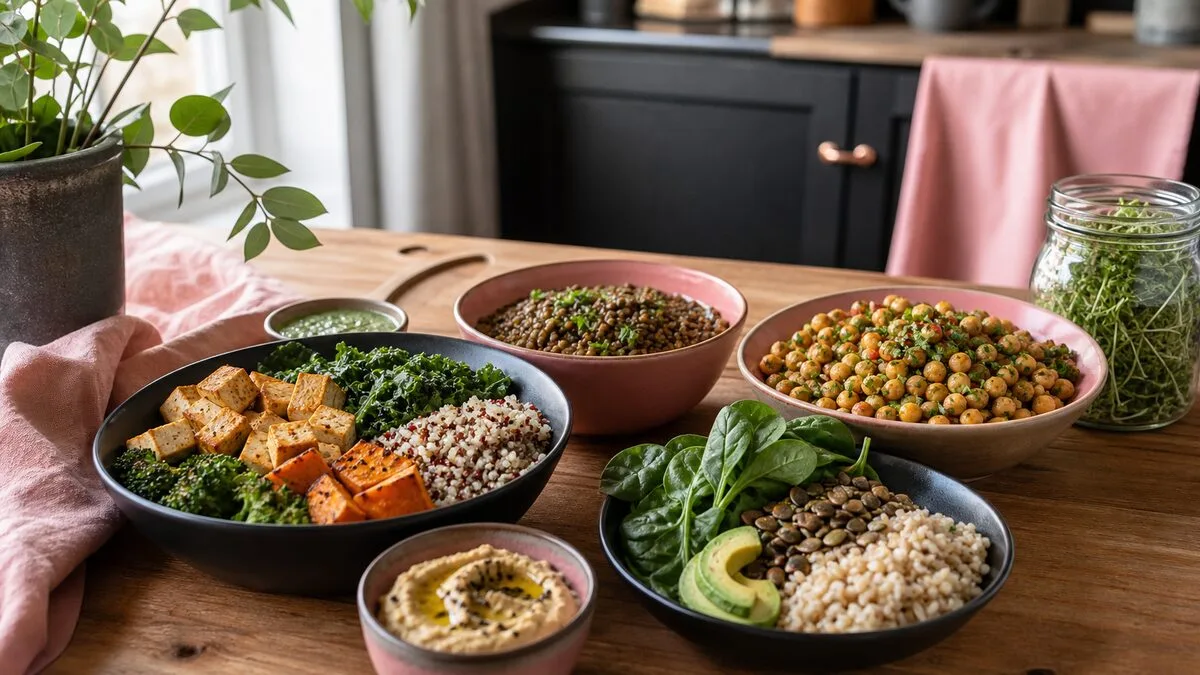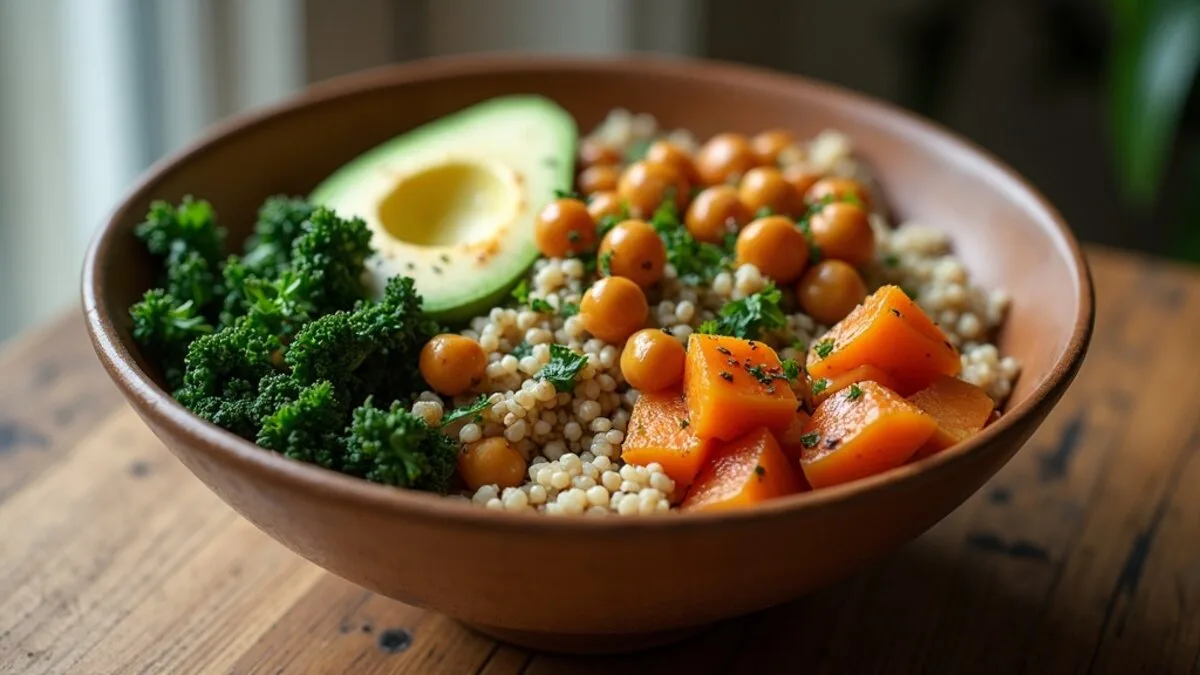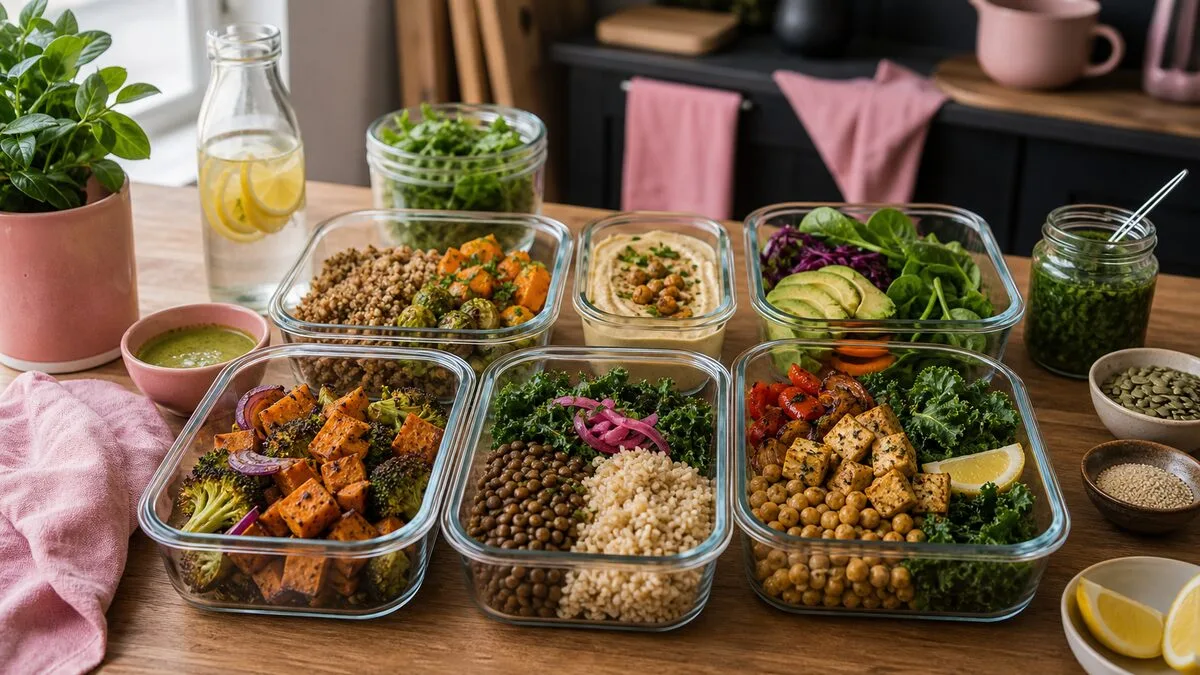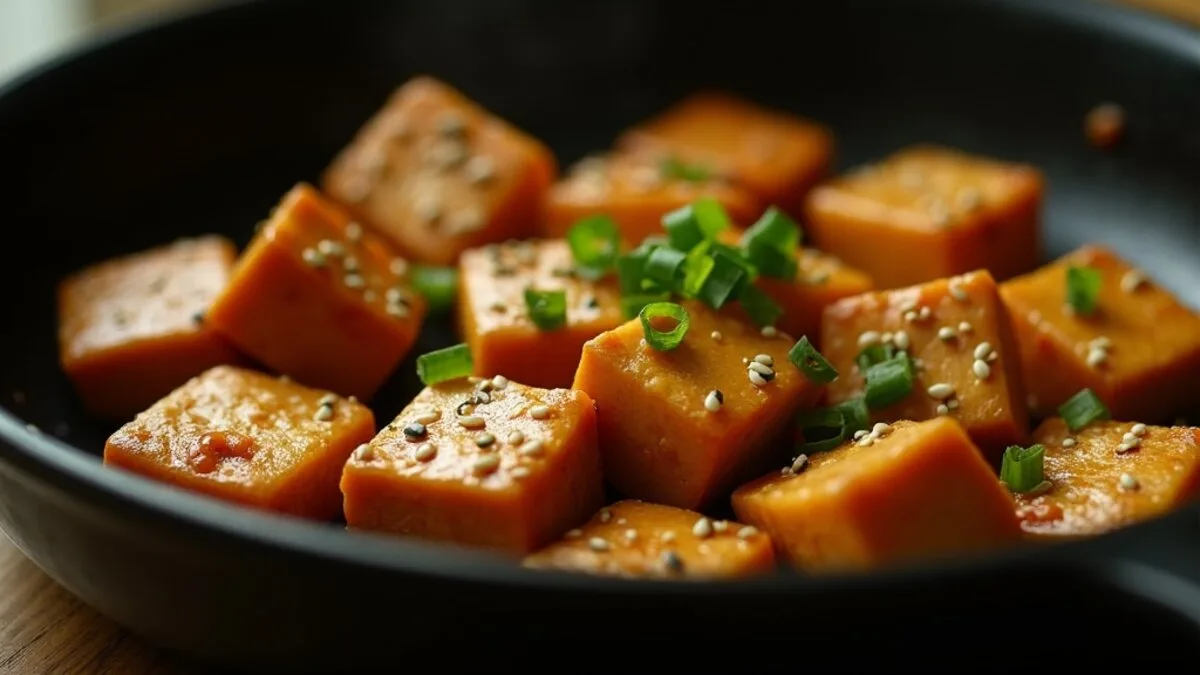
To cook tofu so it actually tastes good, start with firm or extra-firm tofu, press out the water, then cut it into cubes and toss them with a thin coat of cornstarch. Cook it hot: pan-fry in a film of oil, or bake at 220C (425F), until every side is golden and crisp, and only add sauce after it crisps. That order, drier tofu plus high heat plus late sauce, is the whole secret, and it carries straight into high-protein vegan meals all week.
Which tofu to buy, and when
Tofu is not bland. It is patient. It tastes of whatever you give it, which is a feature, not a flaw. But the kind you buy decides almost everything that happens next. Walk past the wrong block and no technique will save you.
Tofu comes in a firmness scale, set by how much water is pressed out during making. More water means softer and more delicate. Less water means firmer, denser, and easier to brown. I keep two kinds in my fridge at all times, and that covers nearly every meal I cook.
The firmness scale, plainly
- Silken: custard-soft, sold in shelf-stable boxes. It blends into sauces, soups, and dressings. Never fry it like a cube.
- Soft: spoonable, good for warm bowls and some scrambles. It holds almost no shape.
- Firm: the everyday workhorse. It holds a cube, browns well, and forgives mistakes.
- Extra-firm: drier and denser, my default for crisp pan-fried and baked tofu.
- Super-firm (high-protein): vacuum-packed, barely any water, no pressing needed. It costs more and is worth it on a busy night.
What I reach for, by dish
For crispy cubes, stir-fries, and grain bowls, I use extra-firm or super-firm. For a soft, eggy scramble I use firm or soft. For creamy puddings, smoothies, and silky pasta sauces I use silken. Buying the right block is the cheapest upgrade you can make. Soy is also a genuinely good source of protein, and you can read a calm overview from Harvard's Nutrition Source on soy if you want the nutrition side.
If you are building a week of meals around it, the firm grades store and reheat best. I lean on them for plant-based meal prep, where texture has to survive a few days in a container.
A note on labels and brands
Labels are not perfectly standardised between countries and brands. One company's firm can feel like another's extra-firm. The honest test is to press a corner with your thumb. If it dents easily and weeps water, it is on the softer end and wants gentle cooking. If it resists and stays dry, it will crisp well. Over time you will learn which brand on your shelf behaves how, and that knowledge is worth more than the printed word on the front.
Why I keep two kinds on hand
A block of extra-firm and a box of silken cover almost everything I want to make. The extra-firm handles the savoury, crisp, centre-of-the-plate dishes. The silken quietly enriches sauces, soups, and a fast dessert when guests arrive. Between them I rarely feel I am missing a tool. If I had to choose only one, it would be extra-firm, because crisp tofu is the dish people remember and the one most worth getting right first.
When I want dinner to stay light on carbs, I lean on the low-carb ideas in my collection of keto tofu recipes.
When comfort food needs to actually fill me, I make my high-protein vegan mac and cheese.
Once I stopped fearing the block, tempeh earned a regular spot through these tempeh recipes.
Why pressing matters (and when you can skip it)
Water is the enemy of crispness. Tofu is roughly 80 percent water, and that water sits between you and a golden crust. When wet tofu hits a hot pan, the surface steams instead of browning. You get pale, bouncy, sad cubes. Pressing pushes some of that water out so the heat can do its job.
How I press tofu
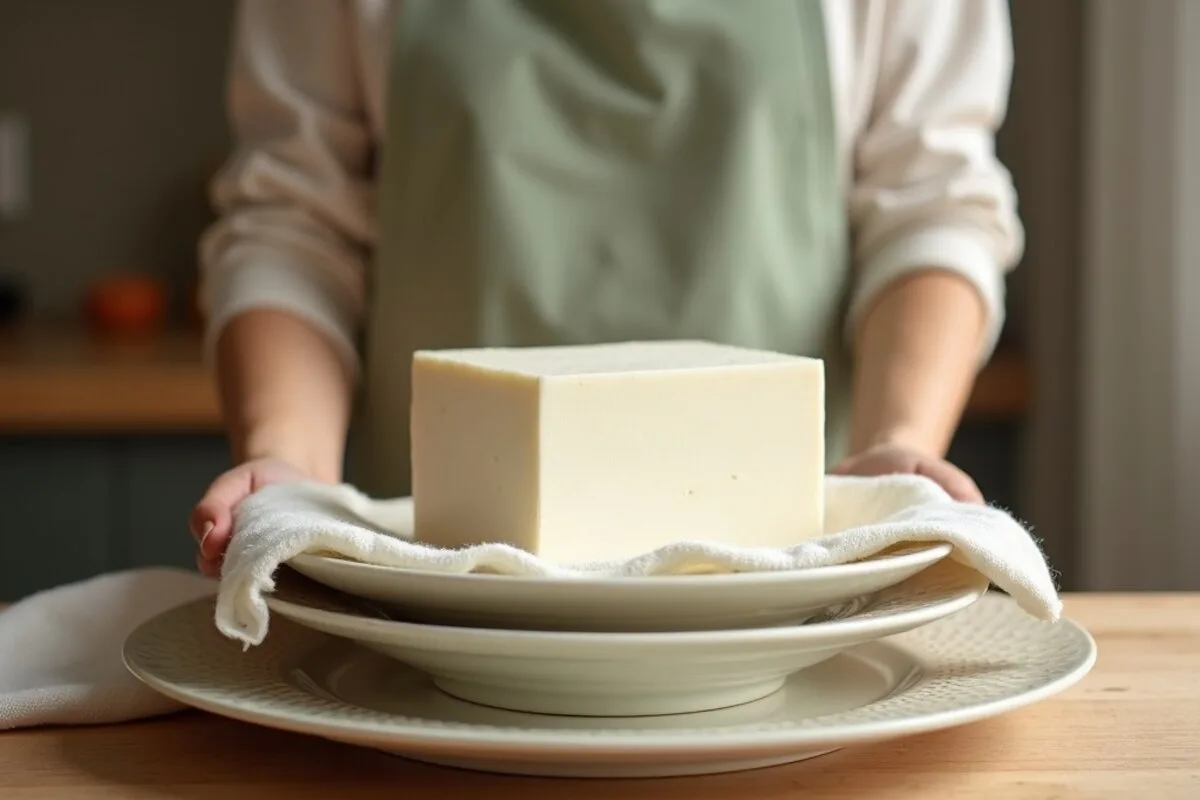
Drain the block. Wrap it in a clean tea towel or a few paper towels. Set it on a plate, lay a second plate on top, and weigh it down with something heavy: a couple of cans, a small skillet, a full kettle. Leave it 20 to 30 minutes. That is enough for most cooking. A dedicated tofu press works too, but plates and cans have never let me down.
Do you have to press tofu?
No, not always. Press firm and extra-firm tofu when you want it crisp, because the drier the surface, the better it browns. You can skip pressing entirely with super-firm (high-protein) tofu, which arrives almost dry. You should also skip it for silken and soft tofu, which would collapse. If you are short on time, press for even ten minutes and pat the block very dry; it still helps.
A faster shortcut
When I forget to press ahead, I cube the tofu first, then press the cubes gently between towels for five minutes. More surface area means water leaves faster. It is not as thorough, but on a weeknight it gets me most of the way there.
How long is too long
You can over-press firm tofu until it turns dense and slightly crumbly, but for most cooking that takes more than an hour of heavy weight, so it is rarely a real risk. Twenty to thirty minutes under moderate weight is the sweet spot. If you want to press ahead, a pressed block keeps fine in the fridge for a day, wrapped, ready to cube and cook when you are. I often press in the morning so dinner is faster.
Freezing as a pressing shortcut
One trick worth knowing: a block that has been frozen and thawed presses far more easily, releasing water in a steady stream when you squeeze it. The texture changes too, which I cover later, but if your goal is simply dry tofu fast, the freezer does a lot of the pressing for you. I keep a spare block in the freezer for exactly this reason on weeks when I know I will be short on time.
The cornstarch trick for real crispiness
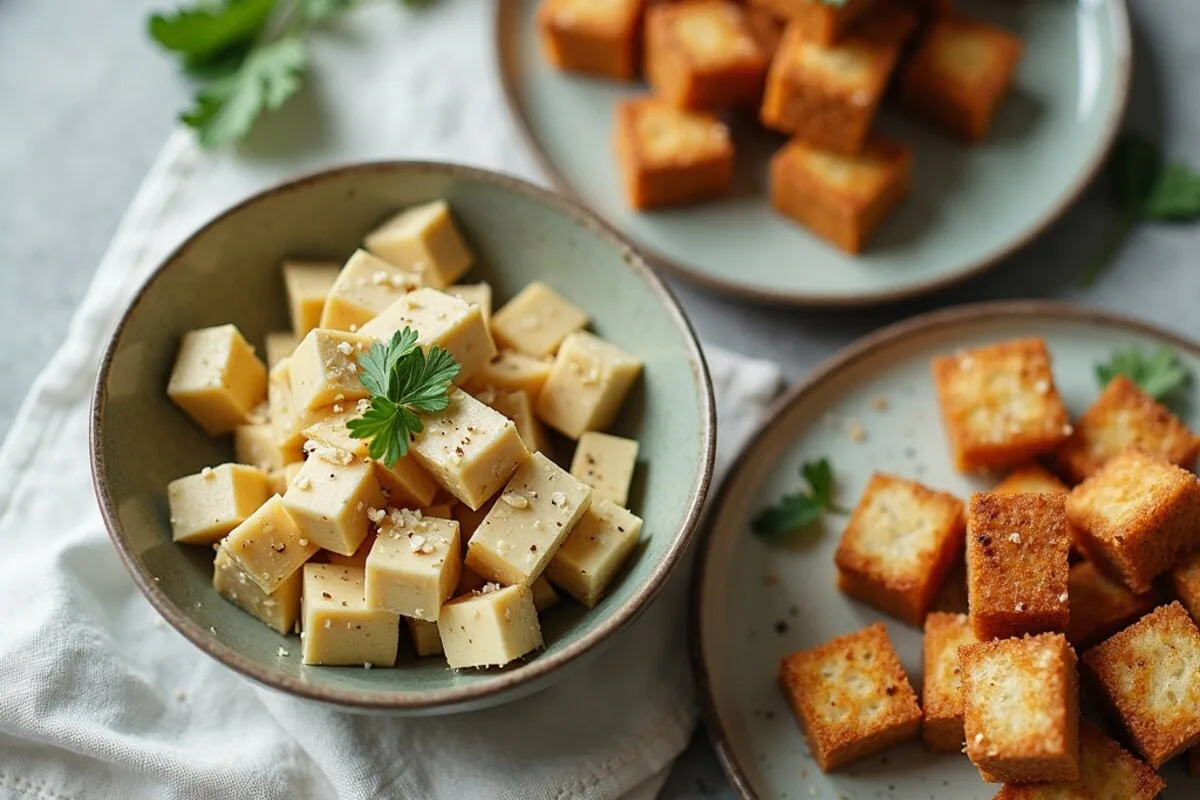
This is the single change that made my tofu taste like restaurant tofu. After pressing, I toss the cubes in a thin coat of cornstarch (cornflour) before they go anywhere near heat. The starch dries the surface further and, under high heat, sets into a crackly shell that stays crisp far longer than bare tofu does.
How to coat it well
- Cut the pressed block into 2cm (about three-quarter inch) cubes or thick slabs.
- Put them in a bowl, drizzle with a teaspoon of oil and a pinch of salt, and toss.
- Sprinkle over one to two tablespoons of cornstarch for a standard block.
- Toss again, gently, until each piece wears a light, even, slightly powdery coat.
You want a whisper of starch, not a paste. Too much turns gummy. If you see white clumps, you have overdone it; add a few more cubes or shake off the excess. Arrowroot or potato starch work the same way if that is what you have.
Does cornstarch really make a difference?
Yes, a large one. Bare tofu browns but goes soft again within minutes of leaving the pan. A cornstarch coat builds an actual crust that holds its crunch through tossing, saucing, and even a short rest in a bowl. It is the difference between tofu that is fine and tofu people ask about. I rarely skip it for anything I want crisp.
Other coatings worth trying
Cornstarch is my default, but it is not the only option. A spoonful of nutritional yeast tossed in with the starch adds a savoury, almost cheesy edge. A little rice flour gives an even shatter-crisp finish that I love for Asian-style bowls. For a thicker, craggier crust, you can dip pressed cubes in a thin batter of flour and plant milk, then in seasoned breadcrumbs, though that is a weekend project rather than a Tuesday one.
Season the coat, not just the tofu
I almost always mix seasoning straight into the cornstarch: salt, of course, but also garlic powder, smoked paprika, or a little white pepper. Because the coat is what sits against your tongue first, seasoning it makes every bite taste deliberate rather than plain. Keep the spices fine and dry so they cling. A teaspoon of total seasoning per block is plenty, and you can always add a finishing pinch of flaky salt at the end.
Pan-frying: the everyday method
Pan-frying is how I cook tofu most nights. It is fast, it gives the most control, and it makes the deepest golden crust. The rules are simple: hot pan, enough oil, and patience to leave the cubes alone.
My step-by-step
- Heat a non-stick or well-seasoned cast-iron skillet over medium-high.
- Add two tablespoons of a neutral high-heat oil and let it shimmer.
- Lay the cornstarch-coated cubes in a single layer, not touching.
- Do not move them for three to four minutes, until the underside is deep gold.
- Turn and repeat on the remaining sides, eight to twelve minutes total.
- Lift onto a plate. Salt right away while the surface is still hot.
Why is my tofu soggy?
Soggy tofu almost always comes from one of three things: it was not pressed, the pan was crowded, or the heat was too low. Crowding drops the pan temperature and traps steam, so the cubes braise in their own moisture instead of frying. Cook in batches if your pan is small. Give each piece room and time, and resist flipping early; the crust releases itself when it is ready.
Once you have a reliable pan-fry in your hands, it slots into almost anything. I pile it over rice for quick vegan dinner recipes, or tuck it into a grain-and-greens vegan buddha bowl with whatever I have roasted.
Choosing the right oil and pan
Use a neutral oil with a high smoke point: rapeseed, sunflower, or a light vegetable oil. Save olive oil and butter substitutes for finishing, since they brown and burn before the tofu is done. As for the pan, non-stick is the most forgiving while you learn, but a well-seasoned cast-iron skillet gives the deepest, most even crust once you trust it. Whatever you use, let it heat fully before the tofu goes in. A cold pan is where most sticking begins.
Slabs, cubes, or planks
Shape changes the eating. Cubes give the highest crisp-to-soft ratio and suit bowls and stir-fries. Thick slabs stay tender in the middle and make a satisfying centrepiece, good for sandwiches and plates with sauce. Thin planks crisp almost all the way through and are lovely in wraps. I cut to the dish rather than out of habit, and I keep the pieces a consistent size so they cook evenly and finish at the same moment.
Baking and air-frying for hands-off batches
When I want a big batch without standing at the stove, I bake or air-fry. Both give an even, all-over crisp with almost no attention. They are my go-to for cooking once and eating across several days.
Oven-baked tofu
- Heat the oven to 220C (425F). Line a tray with baking paper.
- Spread the coated cubes in a single layer, not touching.
- Bake 25 to 30 minutes, flipping once at the halfway point.
- They are done when the edges are deep gold and feel firm and dry.
Higher heat and a flip are what separate good baked tofu from rubbery baked tofu. A wire rack on the tray helps air reach the bottoms if you have one.
Air-fried tofu
- Preheat the air fryer to 200C (400F).
- Add the cubes in one layer, shaking the basket if needed for room.
- Cook 12 to 16 minutes, shaking the basket every five minutes.
Air-frying is the fastest crisp I know and uses the least oil, often just a teaspoon. The cubes come out tight and chewy in the best way. A double batch on Sunday feeds me through several lunches; it is the backbone of how I do plant-based meal prep without getting bored.
Can you bake tofu without oil?
You can, and it still crisps thanks to the cornstarch, though it will be drier and chewier rather than rich. A light spray or teaspoon of oil gives a better colour and a more satisfying bite. If you are keeping things very lean, the air fryer is your friend, since it browns well on the smallest amount of fat.
Broiling and grilling for char
Sometimes I want smoke and edges rather than an even crust. The broiler and the grill give tofu a charred, almost barbecued character that the pan cannot. For these, I cut thicker: slabs about 1.5cm thick, or planks, so they hold together over fierce heat.
Under the broiler
- Set the broiler to high and the rack about 15cm from the element.
- Brush the pressed slabs lightly with oil and a little soy sauce.
- Broil five to seven minutes a side, watching closely, until charred at the edges.
On the grill
Oil the grates well and let them get properly hot before the tofu goes on. Super-firm or well-pressed extra-firm holds up best; softer blocks tear. Leave the slabs alone until they release cleanly, then turn once. A glaze brushed on in the last minute caramelises beautifully without burning. Skewered with vegetables, charred tofu turns a simple dinner into something that feels like an occasion, which suits a slow summer evening and a bit of mindful eating at the table.
Getting clean grill marks
The trick to bars rather than tears is patience and a dry surface. Press the tofu well, pat it dry, brush it lightly with oil, and resist the urge to nudge it. Lay each slab down and walk away for a few minutes. When it has set a crust against the grate, it lifts away cleanly with a thin spatula and leaves those dark, handsome lines behind. If it sticks, it simply is not ready yet. Give it another minute.
Marinating, and when to add the sauce
Here is the timing rule I wish someone had told me early: add wet sauce after the tofu crisps, not before. Sauce poured onto cooking tofu reintroduces all the water you worked to remove. The crust softens, the pan steams, and you are back to soggy. So I crisp first, then toss in sauce off the heat or for thirty seconds at the very end.
Marinating done right
Tofu does soak up flavour, but mostly on its surface and slowly. A long marinade in a thin, salty, low-sugar liquid (soy sauce, rice vinegar, garlic, ginger) seasons it well. I marinate pressed slabs for 30 minutes to a few hours, then pat them dry, dust with cornstarch, and cook. Sugary or oily marinades burn fast and resist browning, so I keep those as a finishing glaze instead.
A reliable order of operations
- Press, then marinate if you like (in a thin, savoury liquid).
- Pat very dry. Coat with cornstarch.
- Cook hot until crisp on all sides.
- Only now add the sauce or glaze, briefly.
Treated this way, the same crisp tofu carries a hundred dinners. It is the protein anchor I lean on across high-protein vegan meals, and a calm reminder that, as the NHS guide to a balanced vegan diet notes, soy foods make a dependable everyday protein.
How deep does marinade really go?
Less far than you might hope, and that is fine. Unlike a porous sponge, dense tofu mostly carries flavour on and just beneath its surface, so a long soak gives diminishing returns past a few hours. This is why I treat the cooking and the finishing sauce as the main events. A quick savoury marinade seasons the outside, the crust holds the flavour, and the glaze at the end delivers the punch. Trust the surface, season it well, and you will not miss the deep soak.
Scrambles, silken tofu, and the soft side
Not all good tofu is crisp. The soft and silken grades open a whole other set of dishes, and ignoring them for years was my loss. Here the goal is creaminess or a tender, eggy crumble, so we leave the cornstarch and high heat behind.
A simple tofu scramble
Crumble firm or soft tofu by hand into rough curds. Warm a little oil, add the crumbles, and let them sit so some edges catch. Season with turmeric for colour, a pinch of black salt (kala namak) for a gentle egginess, and plenty of pepper. Cook just until heated through and slightly dry. It is the fastest savoury breakfast I make, and it sits happily among my other easy vegan breakfast ideas.
What is silken tofu best for?
Silken tofu blends into something glossy and rich, so I use it where I want creaminess without dairy. Blitzed with garlic and lemon it becomes a pasta sauce. Whipped with cocoa and a little maple it sets into a quick chocolate mousse. Spooned into miso soup it stays soft and trembling. It also enriches dressings and smoothies; a spoonful folds nicely into vegan protein smoothies for body and staying power.
Handling silken without breaking it
Silken tofu is fragile, so drain it gently and lift rather than stir when it goes into soup. For blended uses it does not matter how it looks going in. For anything where the cubes should stay intact, lower the tofu in at the very end and let residual heat do the rest.
Freezing tofu for a meatier texture
This is a quiet trick that changes the texture entirely. Freezing firm or extra-firm tofu turns the water inside it into ice crystals. When it thaws, those crystals leave behind a network of tiny holes, so the tofu becomes spongy, chewy, and far more absorbent. It drinks up marinade like nothing else.
How to do it
- Freeze the whole drained block, in its packet or in a bag, until solid.
- Thaw it fully, in the fridge overnight or in a bowl of warm water.
- Press hard to squeeze out the water; it will release a surprising amount.
- Tear or cube it, marinate, then cook as usual.
Frozen-then-thawed tofu takes on a denser, almost meaty chew that is wonderful in stews, braises, and saucy stir-fries. I use it whenever I want tofu to act like the centre of the plate, especially in heartier vegan comfort food recipes where it needs to stand up to a rich sauce.
What to expect from the texture
Be ready for a real change. Frozen tofu is chewier, slightly yellow once thawed, and spongier to the touch than fresh. This is normal and exactly the point. It tears into rough, craggy pieces that catch sauce in every crevice, which is why I sometimes prefer it to neat cubes. If you want the clean, custardy interior of fresh tofu, do not freeze it. The two textures suit different dishes, and it is worth keeping both habits in your repertoire.
Flavour pairings and storage
Because tofu is patient, the seasoning is where your personality goes in. After years of cooking it, a few pairings have earned a permanent place in my kitchen.
Pairings I return to
- Soy, ginger, garlic, sesame: the classic savoury base for stir-fries and bowls.
- Maple, soy, smoked paprika: a sweet-smoky glaze brushed on at the end.
- Lime, chilli, peanut: bright and rich, lovely over rice or noodles.
- Lemon, herbs, nutritional yeast: fresh and savoury for spring plates.
- Miso and a touch of rice vinegar: deep umami that needs little else.
Storing tofu before and after cooking
Once opened, keep raw tofu submerged in fresh water in a sealed container, changing the water daily, and use it within three to four days. Cooked crispy tofu keeps three to four days in the fridge but softens; reheat it in a hot dry pan or the air fryer to bring the crust back. Avoid the microwave for crisp tofu, since it steams the crust soft again. Crispy tofu does not freeze well after cooking; freeze it raw instead, as above.
A note on sauce, stored separately
When I batch-cook tofu for the week, I keep the crisp cubes and the sauce in separate containers and combine them only when I reheat. Sauce in contact with cooked tofu overnight softens the crust into something flabby, no matter how good the crisping was. Stored apart, the tofu firms back up in the pan and the glaze goes on fresh, so a Thursday lunch tastes nearly as good as the Sunday it was made. It is a small habit that quietly saves a lot of texture.
The mistakes I made so you don't have to
Most of what I know about tofu I learned by getting it wrong first. If your tofu has been disappointing, the cause is almost certainly on this list.
The common ones
- Buying the wrong block: trying to crisp soft or silken tofu. Use extra-firm or super-firm for crisp dishes.
- Skipping the press: wet tofu steams instead of browning. Press, or buy super-firm.
- Crowding the pan: too many cubes drop the heat and trap moisture. Cook in batches.
- Flipping too soon: the crust releases when it is ready. Wait for it.
- Saucing too early: wet sauce undoes the crisp. Add it last.
- Under-seasoning: tofu needs salt and bold flavour. Be generous.
- Heat too low: tofu wants medium-high or hot, not gentle warmth.
The short version
Drier tofu, higher heat, later sauce. Hold those three in mind and the rest becomes detail. Tofu rewards a little care more reliably than almost anything else I cook, and once these habits settle in, you will stop following recipes and start trusting your own hands. That, quietly, is the whole point.
Common questions
Do you have to press tofu before cooking it?
Not always. Press firm and extra-firm tofu when you want it crisp, since drier tofu browns better. You can skip pressing for super-firm (high-protein) tofu, which is already nearly dry, and for silken or soft tofu, which would collapse. Even a quick ten-minute press plus a good pat dry helps if you are short on time.
Why is my tofu soggy instead of crispy?
Usually one of three reasons: it was not pressed, the pan was crowded, or the heat was too low. Crowding traps steam so the tofu braises in its own water. Press it well, give each piece room, cook on medium-high, and do not flip until a crust forms. A light cornstarch coat helps the crust hold.
What kind of tofu is best for frying?
Extra-firm or super-firm tofu. They hold less water, so they keep their shape and brown into a proper crust. Firm tofu works too if you press it. Save soft and silken tofu for scrambles, soups, sauces, and blended desserts, where their delicate texture is the point.
When should I add sauce to crispy tofu?
After it crisps, never before. Wet sauce poured onto cooking tofu reintroduces moisture and softens the crust. Cook the tofu until golden on all sides, then toss it in sauce off the heat or for the last thirty seconds. For deep flavour, marinate in a thin savoury liquid beforehand, then pat dry, coat, and cook.