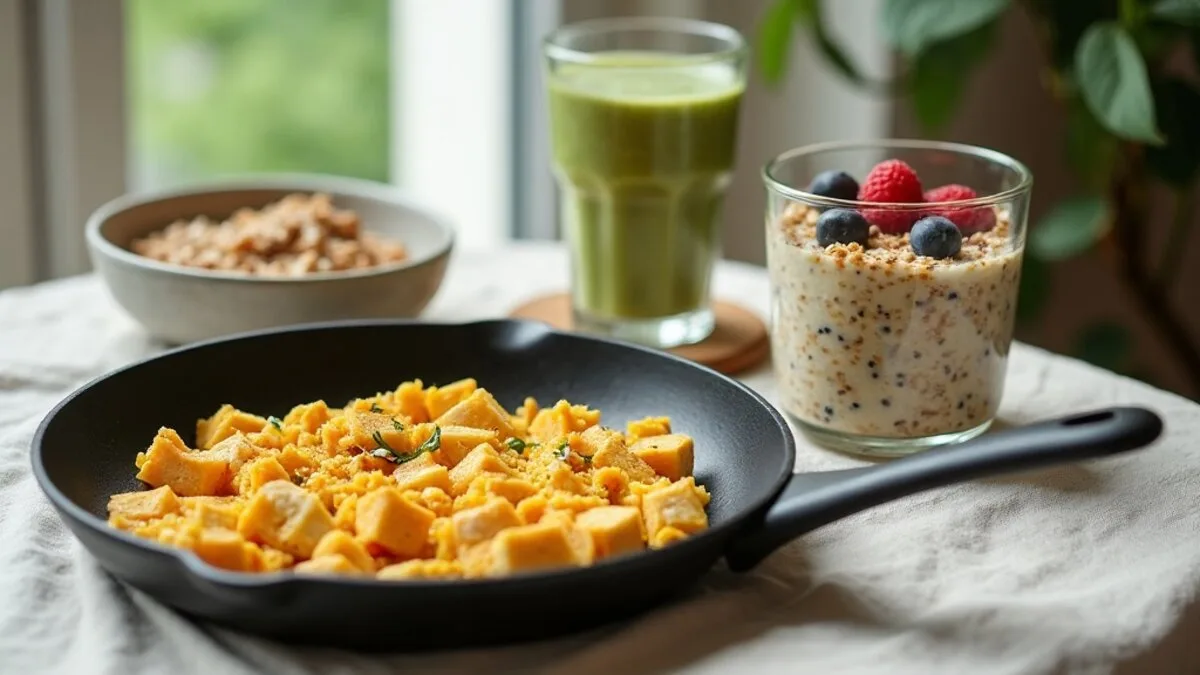
The best high-protein vegan breakfast recipes are built around tofu, soy milk, beans, seeds and a little protein powder rather than toast and cereal. Aim for 20 to 30 grams: a tofu scramble, protein overnight oats made with soy milk, vegan protein pancakes, a soy-and-seed smoothie, or savoury chickpea flour waffles. Each one keeps you full to lunch instead of crashing by ten.
High-protein vegan breakfast recipes, the short answer
The best high-protein vegan breakfast recipes are built around tofu, soy milk, beans, seeds and a little protein powder, rather than around toast and cereal alone. That single shift is the whole trick. If your first meal leans on fast carbs, you crash by mid-morning. If it carries 20 to 30 grams of protein, the morning holds, your hunger stays quiet, and you stop raiding the biscuit tin at eleven. Everything below is a recipe I actually make, with the protein roughly counted so you can see where it comes from.
I want to be honest about the scope here. This is the breakfast chapter of a much larger story. If you want the full framework for building protein into every meal, my complete guide to high-protein vegan meals is the place to start, and these recipes slot neatly underneath it. For the relaxed, no-counting version of morning food, my easy vegan breakfast ideas cover the gentler end. This piece is the one for mornings when protein is the point.
What counts as high protein at breakfast
I treat 20 grams as a sensible floor for a breakfast that earns the name. Below that, you have a snack pretending to be a meal. The recipes here land between 18 and 32 grams each, which is enough to blunt the morning slump without turning breakfast into a chemistry exam. None of them ask for obscure ingredients. Tofu, soy milk, oats, peanut butter, lentil or chickpea flour and a scoop of plant protein do most of the heavy lifting, and they are things I keep in the flat anyway.
How much protein a vegan breakfast actually needs
Most adults do well aiming for somewhere around 1.2 to 1.6 grams of protein per kilogram of body weight across the day, spread fairly evenly. For a lot of people that means a daily target in the region of 70 to 110 grams. Breakfast is the meal where plant-based eaters tend to fall short, because the default vegan breakfast is carbohydrate dressed as virtue. Front-loading a quarter of your protein before you leave the house makes the rest of the day far easier to balance.
The reassuring part is that plant protein works. The long-standing worry about combining proteins at every meal has been quietly retired by nutrition researchers. As the Harvard T.H. Chan School of Public Health notes, eating a varied diet of whole plant foods across the day supplies all the essential amino acids you need. So I do not fuss over pairing rice with beans at 7am. I just make sure the protein is genuinely there, in grams I can name.
Where the grams hide
A few numbers worth memorising. Half a block of firm tofu carries roughly 18 to 20 grams of protein. A cup of soy milk adds about 8, where almond milk adds barely 1. Two tablespoons of peanut butter give around 7. Half a cup of dry oats brings about 5, and a scoop of pea or soy protein adds 20 or more. Once those numbers live in your head, building a 25-gram breakfast stops being guesswork and starts being arithmetic you can do half asleep.
Why timing matters more than people think
There is decent evidence that spreading protein fairly evenly across the day helps your body use it better than loading it all into dinner. Most people eat a tiny breakfast, a moderate lunch and a huge evening meal, which wastes a lot of the morning. Shifting even 20 grams into breakfast smooths that curve out. I am not precious about it, but I have noticed that the days I eat real protein early are the days my energy stays level and my focus does not dip at eleven.
It also changes my appetite for the better. A protein-forward breakfast quietly reduces how much I want to snack before lunch, without any willpower involved, because protein is simply the most filling of the three macronutrients. That is the practical payoff. I am not chasing a number for its own sake. I am buying myself a calmer, steadier morning, and the grams are just how I make sure it actually happens.
Savoury tofu scramble with over 20 grams of protein
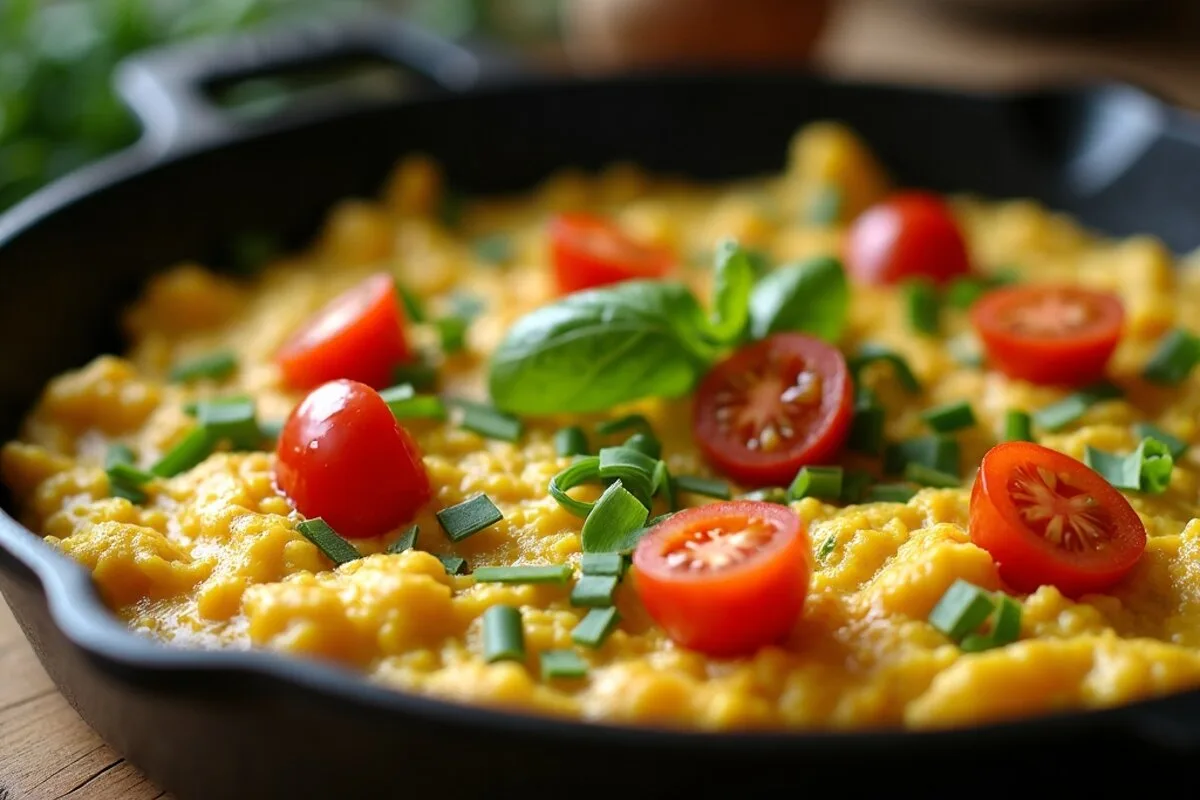
This is the high-protein vegan breakfast recipe I cook most often, because it is fast, savoury and genuinely filling. Half a block of firm tofu, crumbled and seasoned well, lands around 20 grams of protein before you add anything else. The texture trick is to not stir it to death. I let it sit and colour in the pan so it keeps some bite, the way good scrambled eggs used to behave for me before I stopped eating them.
How I make it
Crumble half a block of pressed firm tofu into a hot, oiled pan. Let it sit for two minutes, then add half a teaspoon of turmeric for colour, a teaspoon of nutritional yeast for savour, a pinch of black salt for the eggy note, and salt and pepper. Stir once, cook another three minutes, and fold through a handful of spinach at the end. I eat it on a slice of rye, which nudges the plate past 25 grams of protein. Cherry tomatoes and chives are optional but make it look like I tried.
The swaps that keep it interesting
Some mornings I add a spoon of cooked black beans, which pushes the protein higher and makes it more of a burrito filling. Other days I stir in chopped silken tofu at the end for a softer, creamier scramble. Smoked paprika turns it smoky, a little harissa turns it loud. The base stays the same, so I never have to think hard before the kettle has boiled.
Which tofu, and why pressing helps
Firm or extra-firm tofu is what you want for scramble, not silken, which is too wet to hold a crumble. Pressing it for ten minutes under something heavy drives out water and lets the tofu brown and crisp rather than steam in the pan. If you are short on time, even patting it dry hard with a clean cloth makes a real difference. The drier the tofu goes in, the more it behaves like the scramble you are hoping for.
One more small thing that changed my scramble: cook it in a properly hot pan with enough oil, and resist stirring. Heat and patience are what build the golden edges that make tofu taste of something. A lukewarm pan and constant fussing give you pale, wet crumble every time. None of this is hard, it just rewards a few minutes of attention you might not expect a weekday breakfast to need.
High-protein overnight oats that set while you sleep
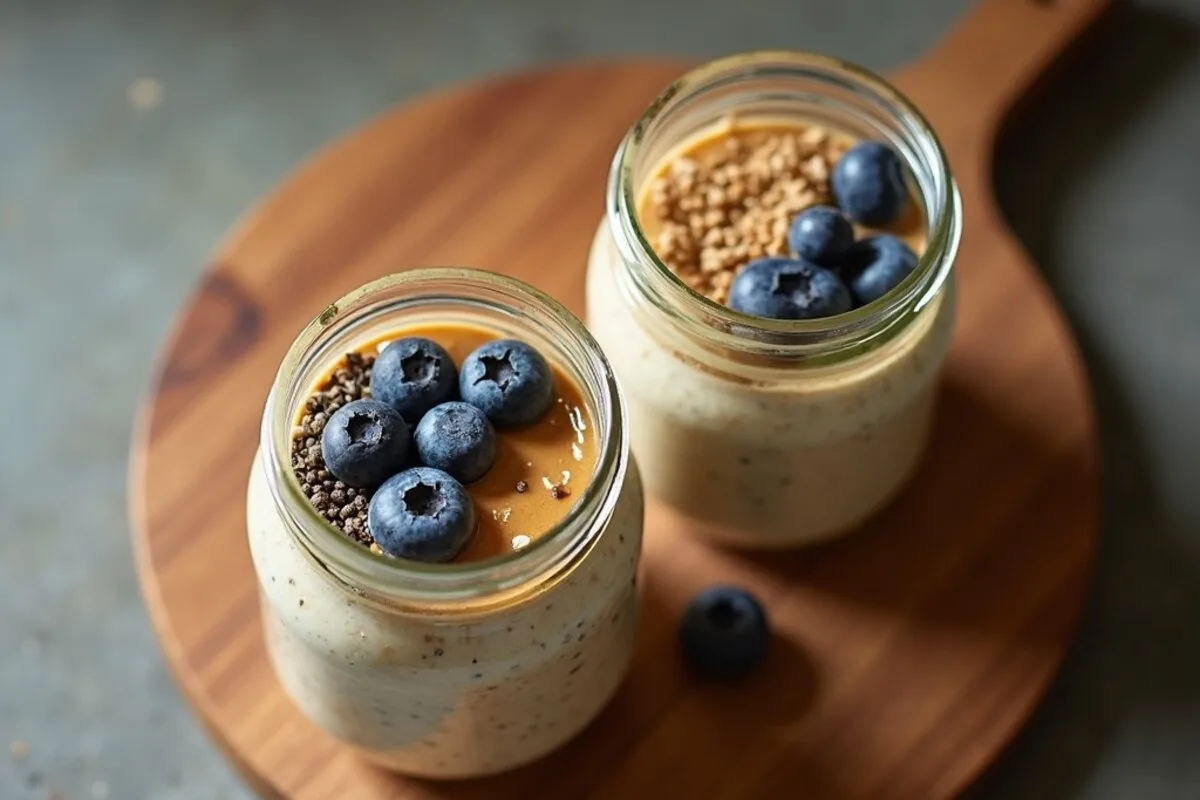
Standard overnight oats are mostly carbohydrate, which is why they leave me hungry by ten. High-protein overnight oats fix that with two changes: soy milk instead of nut milk, and a real protein source stirred in. Built properly, one jar carries 25 to 30 grams of protein and still tastes like dessert you are allowed to have for breakfast. This is the make-ahead recipe I lean on hardest during a busy week, because it is ready the second I open the fridge.
The ratio that works
Into a jar goes half a cup of rolled oats, a cup of soy milk, a tablespoon of chia seeds, a scoop of vanilla pea protein and a spoon of peanut butter. Stir hard so the protein powder does not clump, then leave it overnight. By morning the chia and oats have drunk the milk into something thick and spoonable. I top it with berries and a few pumpkin seeds. The soy milk and protein scoop alone bring well over 25 grams, and the chia adds a little more.
If protein powder is not your thing, double the soy milk, add three tablespoons of chia and stir in a heaped spoon of soy yoghurt. You lose a few grams but keep the meal honest. I keep three jars going at once on Sunday night, which means three mornings where breakfast is simply a decision I already made.
Warm oats, the same idea
On cold mornings I make the same thing hot. I cook the oats in soy milk on the hob, then stir the protein powder in off the heat so it does not clump or turn chalky, and finish with peanut butter and fruit. Adding the protein at the end is the trick most people miss, because boiling it can leave it grainy. Done this way, a bowl of warm protein porridge carries the same 25 grams and feels like a hug on a dark winter morning.
Fluffy vegan protein pancakes for slow weekends
Weekend mornings deserve something that feels like a treat but does not sandbag me by noon. These vegan protein pancakes manage both. The batter uses chickpea flour and a scoop of protein powder alongside the regular flour, which lifts a plate of three pancakes to around 22 grams of protein. They cook up surprisingly fluffy, given how virtuous they are, and they freeze well enough that I batch a double stack.
The batter
Whisk together half a cup of plain flour, a quarter cup of chickpea flour, a scoop of vanilla protein, a teaspoon of baking powder and a pinch of salt. Add a cup of soy milk and a tablespoon of oil, and let it rest five minutes so the chickpea flour hydrates. Cook spoonfuls on a medium pan until bubbles form, then flip. The chickpea flour gives a faint nuttiness and a lot of structure, so they do not fall apart the way pure oat pancakes can.
I serve them with soy yoghurt and fruit rather than a flood of syrup, which keeps the sugar in check and lets the protein do its work. Leftover pancakes go straight into the freezer between squares of parchment, and a quick blast in the toaster brings them back. That is a high-protein breakfast waiting for the morning I have no time at all.
A breakfast smoothie that eats like a meal
A smoothie only counts as breakfast if it actually fills you, and most do not. The difference is protein and fat. My standard morning blend carries close to 30 grams of protein and keeps me going until lunch without a single thought of snacking. I go into far more detail in my dedicated guide to vegan protein smoothies, but here is the version I make when I am running out the door.
The blend
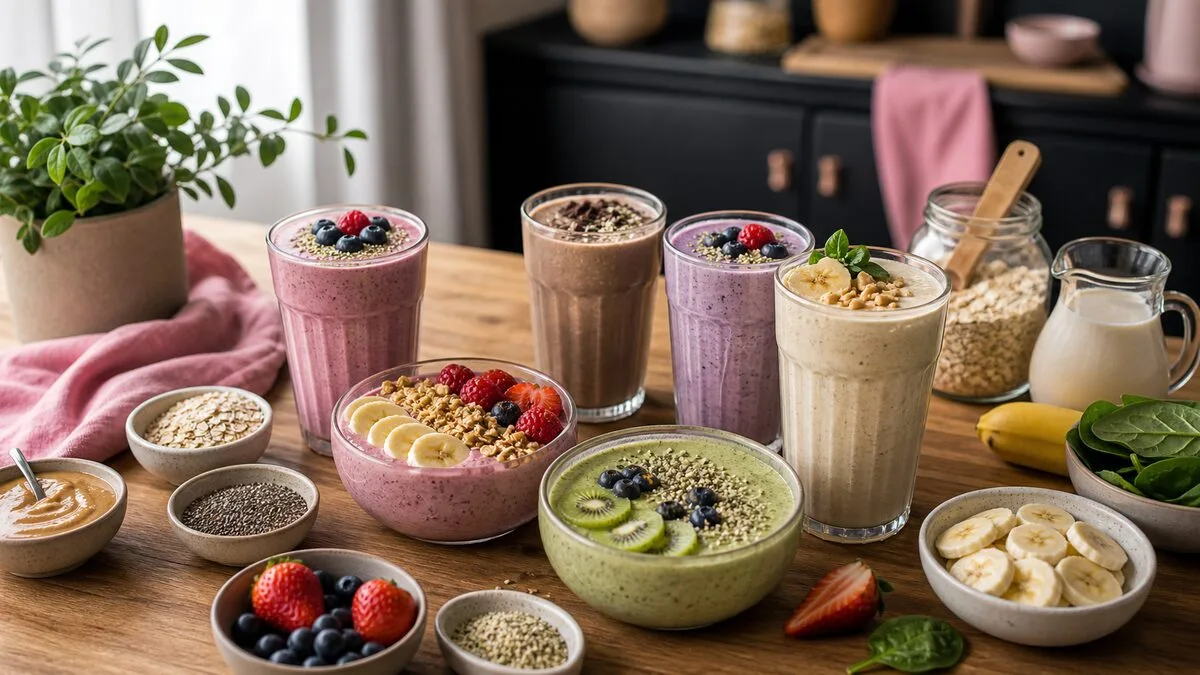
Into the blender: a cup of soy milk, a frozen banana, a scoop of protein powder, a tablespoon of peanut butter, a tablespoon of ground flax and a handful of spinach you will not taste. Blend until smooth. The soy milk and protein scoop carry most of the load, the peanut butter and flax add staying power, and the banana makes it taste like a treat. If I want it thicker, I add a few tablespoons of oats and let it sit a minute.
The reason this works where a fruit-only smoothie fails is simple. Fruit and juice empty the stomach fast, so hunger returns quickly. Protein and fat slow everything down. A smoothie built on soy and seeds behaves like a meal because, nutritionally, it is one.
Drink it, do not sip it
One behavioural note that matters more than the recipe: a smoothie only replaces breakfast if you treat it as breakfast. If I sip it slowly over an hour at my desk, my body never quite registers it as a meal, and I am hungry again by ten. Drunk properly, sitting down, in a few minutes, it satisfies the way chewing a plate of food does. It sounds trivial, but it is the difference between a smoothie that works and one that leaves you reaching for toast an hour later.
Chickpea flour waffles and other savoury wins
Not every morning wants sweetness. Chickpea flour, sometimes sold as gram flour or besan, is the quiet hero of savoury high-protein vegan breakfast recipes. A cup of it carries around 20 grams of protein, and it sets into something eggy and satisfying. I use it for waffles, for a folded chickpea omelette, and for a quick socca pancake when I cannot face washing the blender.
The savoury chickpea batter
Whisk a cup of chickpea flour with a cup and a quarter of water, half a teaspoon of turmeric, a teaspoon of nutritional yeast, black salt and pepper. For waffles, pour into a hot waffle iron and cook until crisp. For an omelette, pour into an oiled pan, scatter over mushrooms and spinach, and fold once it sets. Either way you get a savoury, protein-dense plate that feels like proper food rather than a compromise.
These savoury options matter more than people expect. Sweet breakfasts can wear thin by the third day, and boredom is the quiet reason most morning routines collapse. Having a savoury, high-protein option in the rotation is what keeps me eating well on a Tuesday rather than reaching for whatever is fastest and emptiest.
Beans on toast deserve a mention here too, because they are the most underrated high-protein breakfast in the British cupboard. A small tin of beans carries around 9 grams of protein, and piled on good wholegrain toast with a little hot sauce, it is a genuine 15-gram breakfast that costs almost nothing and takes three minutes. I keep a few tins in for exactly the mornings when even the chickpea batter feels like too much effort.
Make-ahead and grab-and-go protein breakfasts
The honest truth is that the best high-protein breakfast is the one you will actually eat when you are late. So half of this is logistics, not cooking. I keep the freezer and fridge stocked so the protein decision is already made before my eyes are fully open. This is the same logic I use across my plant-based meal prep, just aimed at the first meal of the day.
What I keep ready
- Three jars of protein overnight oats, made Sunday night, good for three days.
- A stack of protein pancakes in the freezer, ready for the toaster.
- Pressed tofu in a tub, so scramble is a five-minute job.
- Soy yoghurt and a bag of mixed seeds for a fast, no-cook bowl that still hits 20 grams.
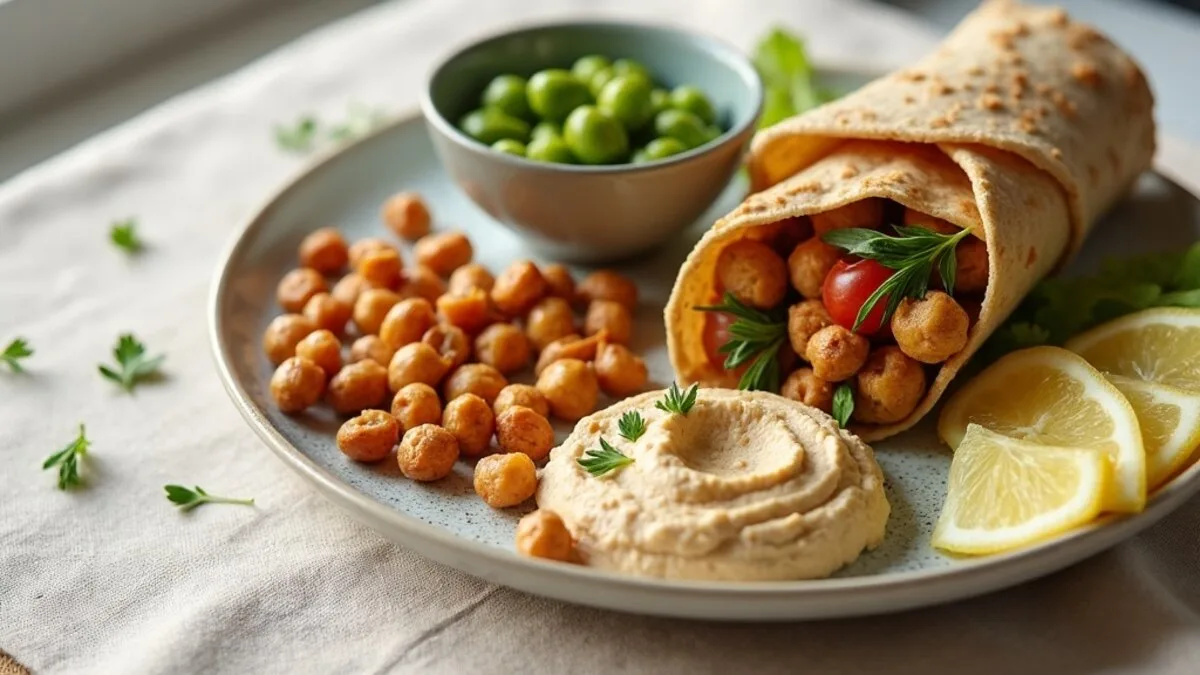
- Roasted chickpeas in a jar, for the mornings I eat breakfast standing up.
With those five things on hand, I never have a morning where the only fast option is empty carbohydrate. The work happens once, on a quiet evening, and then it quietly pays me back every weekday. That is the part no recipe card tells you, and it is the part that actually keeps a routine alive.
A note on freezing and reheating
The freezer is the quiet hero of a high-protein morning. Protein pancakes freeze beautifully between squares of parchment and crisp straight from frozen in a toaster. Tofu scramble can be made in a big batch and frozen in portions, then reheated in a pan with a splash of water. Even cooked grains and beans freeze well, ready to bulk out a fast bowl. Ten minutes of labelling and portioning on a Sunday turns the freezer into a stack of breakfasts already made.
The one thing I would not freeze is the smoothie base or anything dairy-free yoghurt based, which separates and turns grainy. For those, I rely on the fridge and a short shelf life instead. Knowing what freezes and what does not is half the battle. Once you do, a busy week stops being the enemy of eating well, because the hard part already happened on a calm evening when you had the time to spare.
An honest word on protein at breakfast
I should say the unglamorous thing. You do not need to obsess over breakfast protein to be healthy, and chasing huge numbers is its own kind of disordered fuss. Most people eating a varied plant-based diet get enough protein across the day without trying very hard. The reason I count it at breakfast is narrower than health anxiety: a protein-forward first meal simply makes my mornings steadier and my afternoons less crash-prone. That is the whole benefit, and it is enough.
The two nutrients I would actually watch are vitamin B12 and, to a lesser degree, iron, neither of which these recipes fix on their own. I take a B12 supplement and lean on fortified soy milk, which is the sensible baseline for any vegan and something I cover in my vegan wellness routine. Beyond that, eat a breakfast that holds you, vary it so you do not get bored, and let the grams be a tool rather than a master. That is the spirit these recipes are written in.
Common questions
What vegan breakfast has the most protein?
A tofu scramble built on half a block of firm tofu is hard to beat, landing around 20 grams before you add bread or beans. Protein overnight oats made with soy milk and a scoop of pea protein run even higher, often 25 to 30 grams. Both are simple, cheap and far more filling than cereal or plain toast.
Can I get enough protein at breakfast without protein powder?
Easily. Tofu, soy milk, peanut butter, chickpea flour, beans and seeds will carry a breakfast past 20 grams of protein on their own. Protein powder is a convenient shortcut for smoothies and oats, not a requirement. I use it some mornings and skip it on others without the meal suffering.
Is soy milk really better than almond milk for protein?
For protein, yes, and it is not close. A cup of soy milk carries around 8 grams of protein, where almond milk has barely 1. If your breakfast leans on a milk, whether in oats, smoothies or coffee, switching to soy is the single easiest way to add real protein without changing what you eat.
How do I stop my tofu scramble tasting of nothing?
Season harder than feels right. Tofu is a blank canvas, so it needs nutritional yeast for savour, turmeric for colour, black salt for the eggy note, and proper salt and pepper. Letting it colour in the pan rather than stirring constantly also builds flavour. A bland scramble is almost always an underseasoned one.
Are these breakfasts good for weight loss?
Protein-forward breakfasts help, because protein is the most filling nutrient and keeps mid-morning hunger quiet. That tends to reduce snacking without any willpower involved. I would not frame them as diet food, though. They are simply meals that hold you, which is useful whatever your goals.