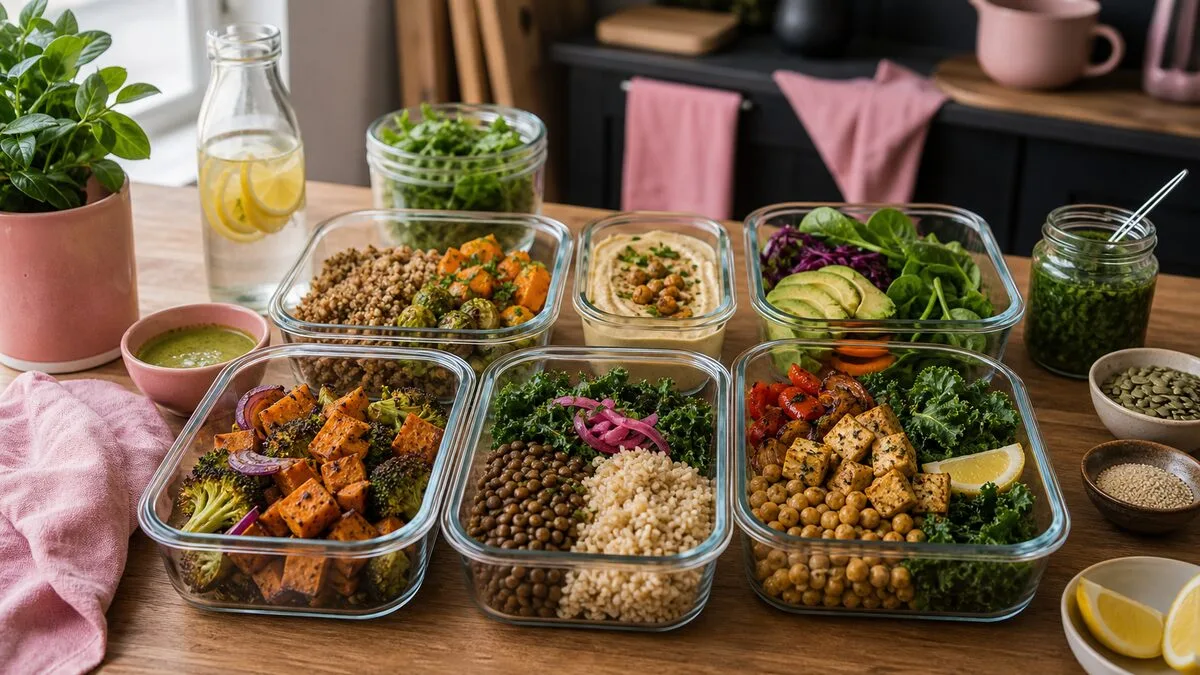
Meal prep should make the week softer, not stricter. Flexible plant-based components that rescue lunch.
The Sunday I stopped meal-prepping like a factory
I used to spend three hours on Sunday cooking five identical containers, eat the same lunch four days in a row, and quietly resent every Tuesday by noon. Then I stopped. The version I do now is closer to preparing parts than cooking meals, and it changed the whole week.
The old way had a logic to it, I'll give it that. One recipe, five portions, done. The problem wasn't efficiency. The problem was that by Wednesday I'd open the fridge, see the same beige container, and order something instead. I was prepping food I didn't want to eat. That's not saving money or time. That's just a slower way to waste both.
So I made a small rule for myself. I'd never again cook a finished meal for the week ahead. I'd cook ingredients. Components. Things that could become four or five different dinners depending on what mood Thursday turned out to be. The pressure lifted almost immediately.
This piece is the whole method, the parts I keep stocked, the order I cook them in, and the small fixes for when a batch goes wrong. None of it is fancy. Most of it happens in about an hour on a Sunday, usually with the radio on and a coffee going cold beside the cutting board.
When I want a dinner that pulls apart like slow-cooked meat, I make my smoky vegan pulled jackfruit, and it never lasts long.
When I want one bowl to do everything, I fall back on the ratio in my guide to building a vegan buddha bowl.
On the nights I want one tray to do the work, I roast my go-to tofu and sweet potato recipe.
For the gap between meals, I lean on a few high-protein vegan snack recipes kept ready in the fridge.
On the nights I want a pot that simmers itself, I work from my collection of vegan soup recipes.
What does flexible prep actually mean?
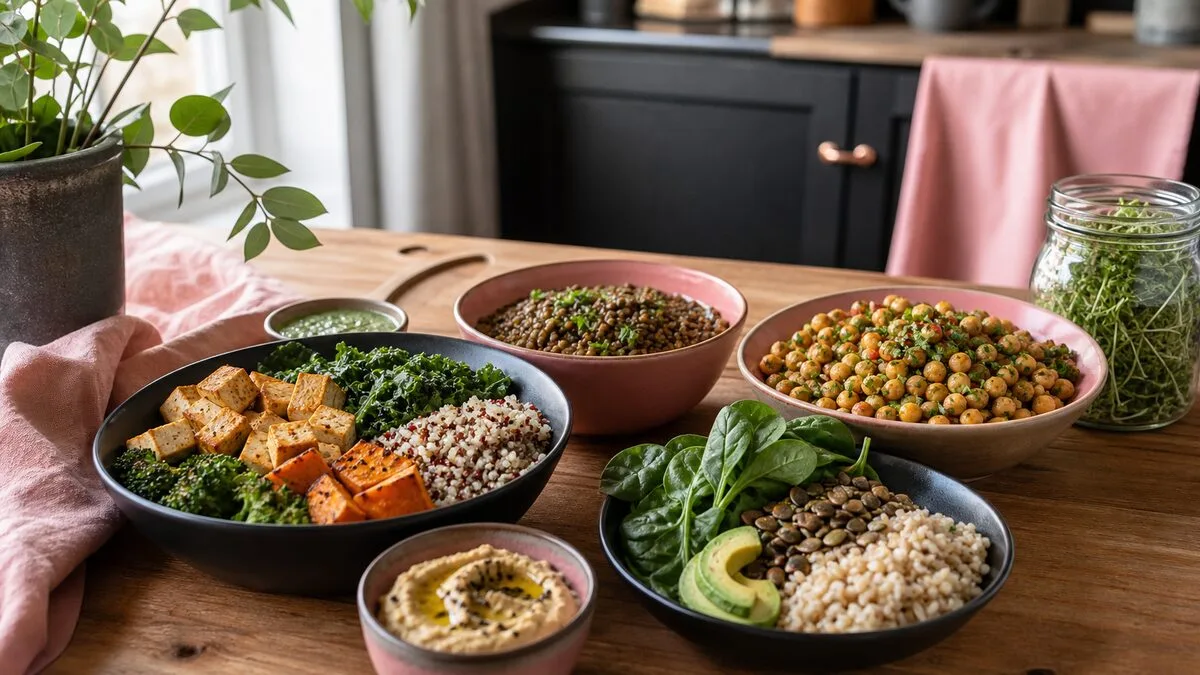
Flexible prep means you cook a handful of building blocks instead of assembled dishes, then mix and match them all week. A pot of grain isn't lunch. It's the start of six lunches. The shift is small on paper and large in practice.
Think of it the way a decent line cook thinks about a mise en place. They don't make twelve identical plates on Monday morning. They prep the components (the grains, the proteins, the sauces, the garnishes) and assemble to order. You're doing the same thing, just for a household of one or two, with a fridge instead of a walk-in.
The payoff is that boredom stops being a risk. Rice with roast squash and tahini on Monday becomes a grain bowl with chickpeas and salsa verde on Tuesday, then fried rice with whatever's left on Wednesday. Same pot of rice. Three meals that feel unrelated.
Prep components, not meals, and the week stops feeling like a sentence you handed yourself on Sunday.
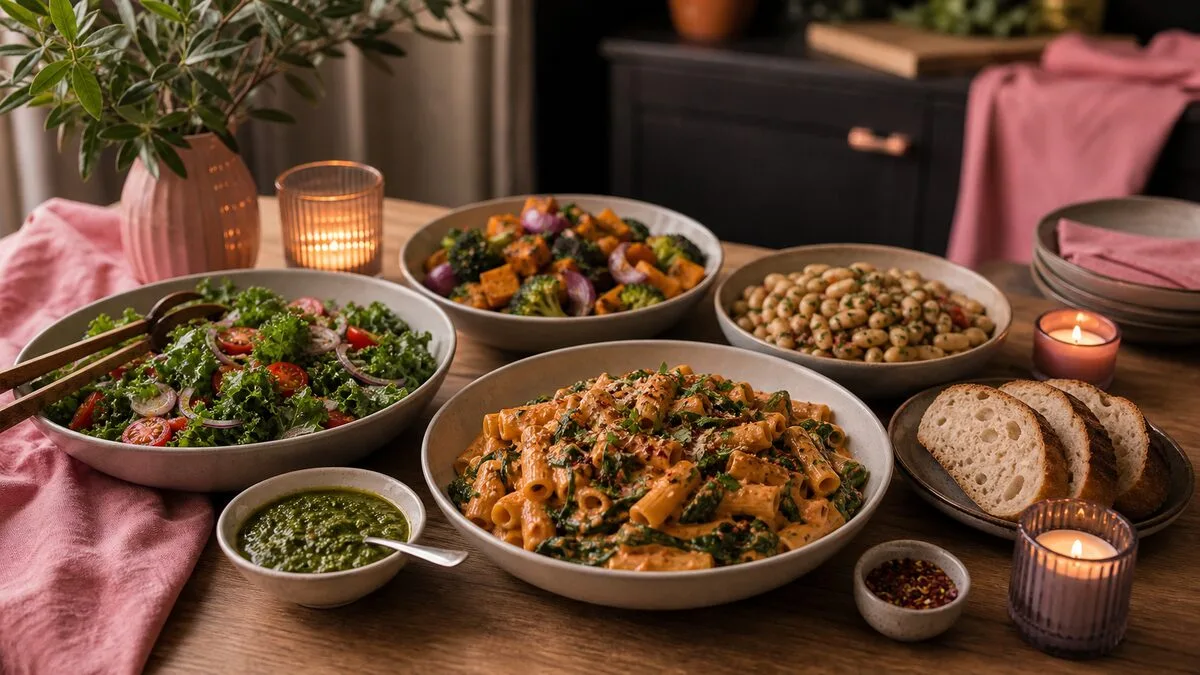
There's a quieter benefit too. When the parts are ready, cooking on a weeknight takes seven minutes instead of forty. That's the gap where takeout usually wins. Close the gap and you eat at home more, almost by accident. If you want the dinner-shaped version of this idea, I wrote about it in vegan dinners for cozy weeknights.
Four parts, not four meals
Here are the four components I keep on rotation. Cook one of each on a Sunday and you've got the raw material for most of the week, no recipe required.
- A grain: a big pot of brown rice, farro, or quinoa. The neutral base everything sits on.
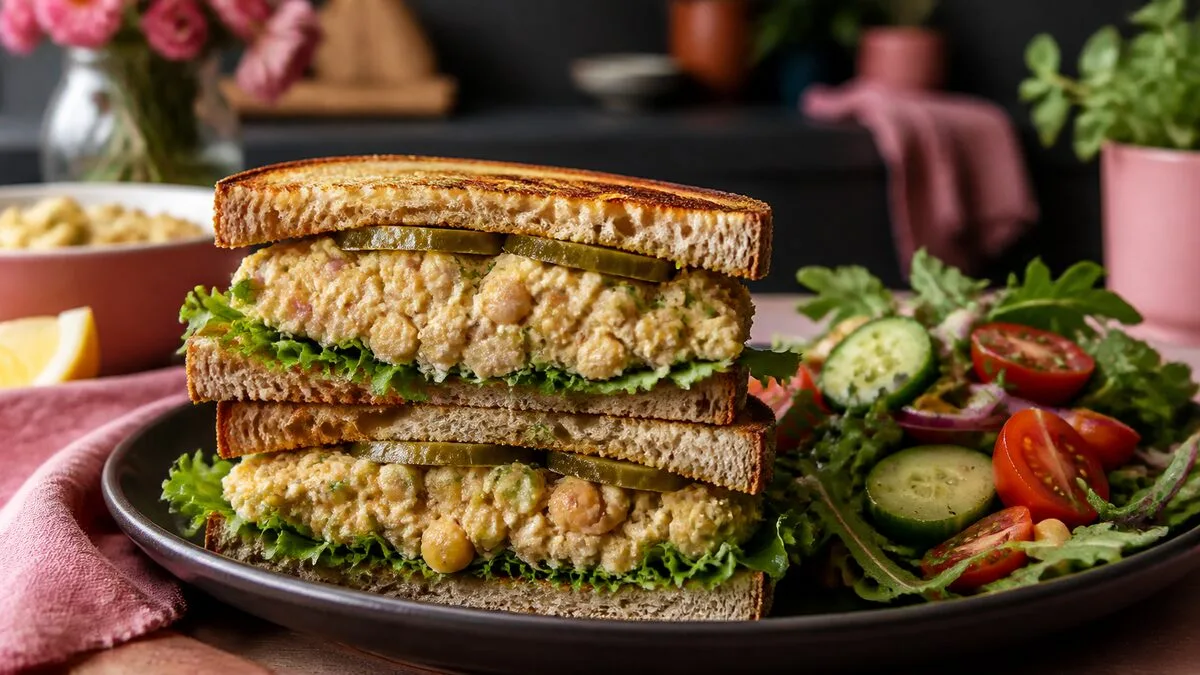
- A pulse: a tin of chickpeas turned into the sandwich filling, or a pot of lentils for the protein and the staying power.
- A roast tray: whatever vegetables look tired in the fridge, plus olive oil and salt. This is where leftovers go to be rescued.
- A sauce: tahini-lemon, miso-maple, or salsa verde. The part that makes it taste like a meal somebody planned.
That's it. Combine them differently across the week and you've got five different lunches without cooking five times. The trick is that no single component tastes like a finished dish on its own, so your brain never registers Tuesday as a repeat of Monday.
You can scale this up or down. Cooking for one? Halve the grain and roast tray, keep the full tin of beans (they keep). Feeding a family? Double the grain and the tray, and read plant-based family life without the drama for the diplomacy side of it. The framework holds either way.
The grain: cook a big pot, treat it like a base
I cook two cups of dry grain on a Sunday, which gives me roughly six cups cooked. That's enough for a week of one-person lunches with a little spare for a fried-rice night when I run low on everything else.
Brown rice is my default. The ratio I trust is one cup of rice to two and a quarter cups of water, brought to a boil, then dropped to the lowest simmer with the lid on for about 35 minutes. Let it sit off the heat, lid still on, for ten more. That resting step is the difference between fluffy and gluey.
Farro is faster and more forgiving. I cook it like pasta: salted boiling water, drop the grain in, taste it from about 18 minutes on, drain when it's chewy. Quinoa is faster still, ready in 15, but rinse it first or it can turn bitter. If you want the botanical detail, quinoa is a pseudocereal, technically a seed, which is part of why it cooks so quickly. There's a decent rundown on quinoa if you're curious.
How to keep a grain from getting boring
Cook it in stock instead of water once in a while. Stir a spoon of olive oil and a squeeze of lemon through it while it's warm. Toast the dry grain in the pot for two minutes before you add liquid, it deepens the flavour without any extra ingredients. Small moves, big difference.
The pulse: beans and lentils carry the protein
A pulse is the part that keeps you full. Without it, a grain bowl is a snack that thinks it's a meal. With it, you've got real staying power and around 15 grams of protein per serving before you've added anything else.
Tinned chickpeas are the workhorse. Drain them, save the liquid if you bake (that brine is aquafaba and it whips like egg white), and either toss them straight into a bowl or crisp them in a hot pan with smoked paprika for ten minutes. The chickpea is one of the oldest cultivated legumes we have, and there's a good reason it's lasted: it's cheap, sturdy, and takes seasoning beautifully. More on the chickpea if you like a rabbit hole.
Lentils I cook from dry because they're quick and they don't need soaking. Brown or green lentils hold their shape in a colander, which matters for bowls. One cup of dry lentils to three cups of water, simmer 20 to 25 minutes, salt at the end (salting early can keep them tough). Drain and they're ready to scatter over anything for four days.
A budget note
Dry pulses are absurdly cheap. A bag of dry chickpeas costs about a third of the tinned version per portion, and the texture's better if you've got the time to soak overnight. I keep both: dry for the planned weeks, tins for the chaotic ones. No shame in a tin.
The roast tray: where tired vegetables go to be saved
The roast tray is the most forgiving thing in this whole system, and it's where I empty the crisper drawer of anything that's seen better days. Sad carrots, a half-soft pepper, the last of a squash, broccoli that's starting to flower. All of it improves in a hot oven.
My method never changes. Heat the oven to 220°C (425°F). Cut everything into roughly even pieces so they cook at the same pace. Toss with olive oil (about a tablespoon per tray, no more, or they steam), a generous pinch of salt, and whatever spice I'm in the mood for. Spread them out so they're not crowded. Roast 25 to 35 minutes, turning once.
The single most common mistake is crowding the pan. Vegetables that touch each other steam instead of caramelise, and you lose the browned edges that make roast veg worth eating. Use two trays if you have to. Give them room.
What goes with what
- Root veg (carrots, parsnips, squash): cumin, coriander, a little maple at the end.
- Brassicas (broccoli, cauliflower, sprouts): chili flakes, lemon zest after roasting.
- Peppers and courgette: smoked paprika, a splash of balsamic.
Roast veg keeps its dignity in the fridge better than most things. Cold roast squash on toast with tahini is one of my favourite quiet lunches, the kind I'd happily eat standing up at the counter.
The sauce: three dressings that change everything
This is the component people skip, and it's the one that does the most. A grain, a pulse, and some roast veg in a bowl is fine. The same bowl with a proper sauce is a meal you'd serve a friend. Make one jar of dressing on Sunday and it'll lift everything you eat for a week.
Tahini-lemon
Three tablespoons tahini, juice of half a lemon, one small crushed garlic clove, a pinch of salt, and cold water added a spoon at a time until it's pourable. It'll seize and look broken when you add the lemon, keep going, the water brings it back. Goes with almost everything.
Miso-maple
One tablespoon white miso, one teaspoon maple syrup, one tablespoon rice vinegar, two tablespoons neutral oil, a little grated ginger. Salty, sweet, deeply savoury. Brilliant on roast veg and grains. Miso is fermented soybean paste, and a little goes a long way, see miso for the background.
Salsa verde
A fistful of parsley, a smaller fistful of mint, chopped fine, with capers, a chopped pickle or two, olive oil, and lemon. No exact measurements, just taste it. Bright and sharp, it wakes up anything that's tasting a bit flat by Thursday.
Store dressings in clean jars in the fridge. Tahini-based ones thicken as they sit, loosen with a splash of water before serving.
How I assemble a week of lunches in my head
Once the four parts are made, assembly is the easy part, and the part I genuinely enjoy. I don't write a plan. I open the fridge and let the components suggest something. Here's roughly how a typical week goes, so you can see the logic.
- Monday: rice, lentils, roast carrots, tahini-lemon. The classic grain bowl.
- Tuesday: farro, crisped chickpeas, roast broccoli, miso-maple. Tastes nothing like Monday.
- Wednesday: leftover rice fried in a hot pan with whatever veg is left, salsa verde spooned over. Ten minutes, max.
- Thursday: the chickpea sandwich filling on sourdough with a handful of greens.
- Friday: everything that's left, in one big bowl, all three sauces if I'm feeling it. The clean-out lunch.
Notice there's no recipe in any of that. There's a base, a protein, a vegetable, and a sauce, recombined. The greens and the bread I buy fresh, because lettuce that's sat in a container all week is a sad thing and I won't pretend otherwise.
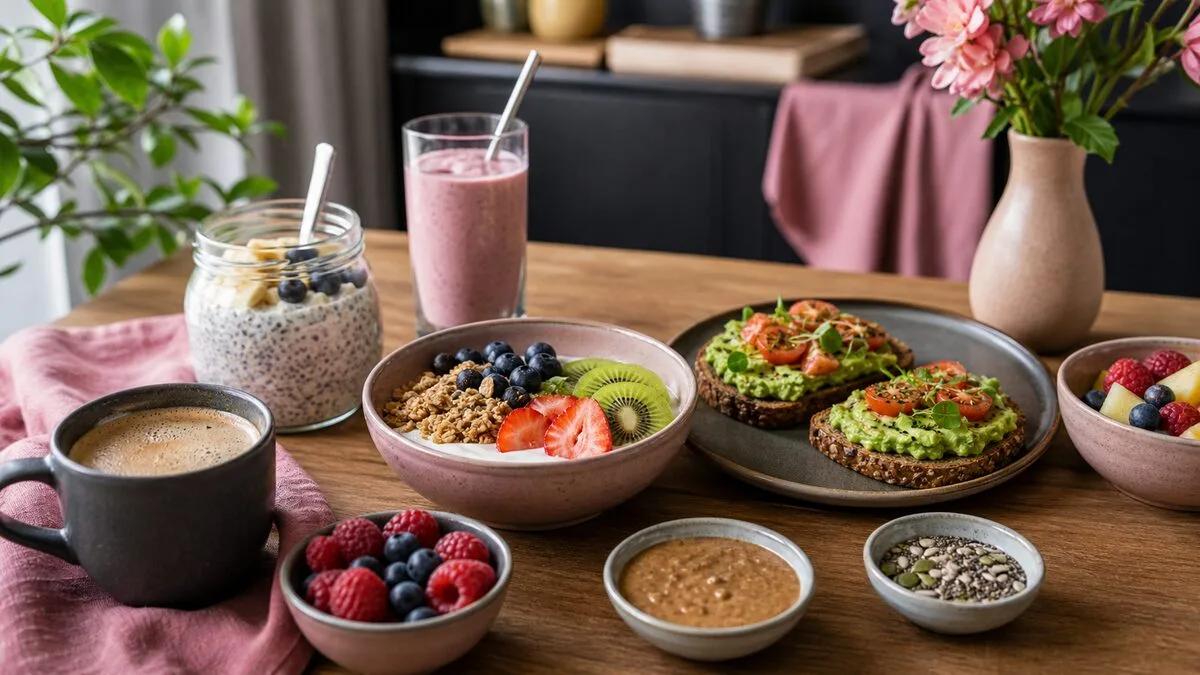
If breakfast is your weak spot too, the same component thinking works there, I leaned on it heavily in easy vegan breakfast ideas for busy mornings. Cook the oats once, vary the toppings.
Storage rules I follow
Grains, beans, and roast veg keep four days in the fridge, full stop. I cook on Sunday and stop trusting the oldest container by Thursday night. Dressings keep a week, sometimes longer if there's vinegar or lemon in them doing quiet preservation work.
A few rules I don't break:
- Cool things before they go in the fridge, but don't leave cooked food out longer than two hours. Spread it on a plate to cool faster if you're in a hurry.
- Store components separately, not pre-assembled. A dressed grain bowl turns to mush. The same parts kept apart stay good twice as long.
- Reheat with a splash of water, not oil. Grains and beans dry out, and a tablespoon of water in the pan brings them back to life. Oil just makes them greasy.
- Don't dress salads or greens until the morning you eat them. Acid wilts leaves fast.
Most of this freezes well too. Cooked beans, lentils, and grains all go into the freezer happily in flat bags. Roast veg less so, it goes soft, but a soup is a fine destination for soft frozen veg. I keep a "scraps" bag in the freezer and turn it into stock when it's full.
Troubleshooting and the cost of all this
Things go wrong. Here's what usually happens and how I fix it without starting over.
My grain went mushy
You used too much water or peeked too often. Spread it on a tray and pop it under a low oven for ten minutes to dry it out, or just commit and turn it into a creamy risotto-ish thing with stock and miso. Mush is only a failure if you fight it.
Everything tastes the same by Wednesday
Your sauces aren't different enough. The components are meant to be neutral, the sauce is where the personality lives. Make sure your three dressings actually taste distinct (one nutty, one savoury-sweet, one sharp) and the problem usually vanishes.
What does a week of this cost?
For one person, the four components run me somewhere around eight to twelve of whatever your currency is, depending on how much I buy dry versus tinned. Grains and pulses are the cheapest calories in the shop. The expensive bits (good olive oil, tahini, miso) are bought rarely and last for months. This is, genuinely, one of the cheapest ways I know to eat well, which is part of why I keep doing it.
If energy through the week is the real goal, not just convenience, the food is only half of it. I wrote about the other half in a vegan wellness routine for steady energy.
A Sunday hour, not a Sunday marathon
The whole point is that this fits into an hour and leaves you alone for the rest of the week. I put the grain on first because it needs the most time, then build the roast tray and slide it in the oven, then cook the lentils on the hob while the rest happens. The sauce gets made last while everything cools.
One pot, one tray, one pan, one jar. By the time the dishes are dry, the week's foundation is sitting in the fridge and I haven't given up my whole Sunday afternoon to do it.
If you take one thing from all this, let it be the reframe. You are not cooking meals in advance. You're stocking a small pantry of ready parts, and your weeknight self gets to be the cook who assembles them. That version of you is tired, a little hungry, and deeply grateful. Be kind to that person. The rest of the system is just details.
Start with two components this week, a grain and a sauce, and add the others when it feels easy. The factory version burned me out. This one, somehow, I'm still doing years later.
Beyond the four: extras that earn their place
The four parts are the spine. Once you're comfortable, a few optional extras make the week feel even less like work. None of these are required. They're the things I add when I've got ten spare minutes and want next week to be a bit more interesting.
A jar of quick pickles
Thinly slice a red onion, cover it with equal parts vinegar and water plus a teaspoon of salt and a teaspoon of sugar, and leave it in the fridge. Twenty minutes later it's bright pink and sharp, and it lifts every bowl for two weeks. Cucumber and carrot ribbons work the same way. Acid and crunch are what most fridge lunches are missing.
Toasted seeds and nuts
A handful of pumpkin seeds or chopped almonds, toasted dry in a pan for three minutes until they smell nutty, stored in a jar. They add fat, protein, and the textural contrast that separates a sad bowl from a good one. I scatter them over everything, sweet or savoury.
A pot of something braised
On a slower Sunday I'll braise a tin of tomatoes with garlic, chili, and a tin of beans into a thick, spoonable sauce. It becomes pasta on Monday, a topping for grains on Tuesday, and the base of a soup by Friday. Tomato-based things only improve as they sit, which makes them ideal prep food.
Tofu and tempeh, when you want a centrepiece
Some weeks a bowl isn't enough and I want a proper slab of something on the plate. That's where tofu and tempeh come in, and both prep beautifully ahead of time. They're the closest thing the system has to a main course.
For tofu, I press a firm block for twenty minutes (wrap it in a clean towel, put a heavy pan on top), cube it, toss with a spoon of cornflour and salt, and roast at 220°C for 25 minutes until the edges go golden and chewy. Pressed and roasted tofu keeps four days and reheats without turning rubbery. If you've never gotten on with tofu, it's usually a texture problem, and pressing fixes most of it. There's a thorough overview of tofu if you want to understand what you're working with.
Tempeh I prefer steamed first for ten minutes (it removes the slight bitterness), then sliced and pan-fried in a little oil until crisp, then glazed with the miso-maple dressing from earlier. Tempeh is whole fermented soybeans pressed into a cake, so it brings more texture and protein than tofu. The tempeh entry is worth a read if it's new to you.
Both of these slot straight into the assembly logic from earlier. Swap the pulse for a few slices of roasted tofu and the same bowl feels like a different meal. For more on building plates around proteins like these, my notes in high-protein vegan meals for real life go deeper than I can here.
Prepping for the days you won't want to cook at all
There's a kind of day this system is really for. The day you get home late, the day something went sideways, the day the idea of chopping a single onion feels like too much. The whole point of the parts is that those days have a soft landing built into them.
I keep what I think of as a "no-cook" assembly in mind for exactly those nights. Grain from the fridge, beans straight from the container, a fistful of pre-toasted seeds, a glug of the tahini sauce, a handful of greens if I've got them. Cold or barely warmed. Zero stove time. It takes the same effort as opening a delivery app, except it's already paid for and it's actually good for me.
That's the difference flexible prep makes that nobody mentions. It's not really about the productive Sundays. It's about the bad Tuesdays. You're not cooking ahead to impress anyone or to optimise your macros. You're leaving a small kindness in the fridge for a future version of yourself who's running low.
The best prep isn't the meal you planned. It's the dinner you fall into on the night you'd otherwise have skipped one.
When I started thinking about it that way, the resentment that used to come with Sunday cooking just evaporated. It stopped being a chore I owed the week and became something closer to looking after myself in advance. If you've read this far, that's the shift I'd most like you to take away. The recipes are easy. The reframe is the whole thing.
The containers and tools that actually matter
I'm wary of gear lists, because most of meal prep needs almost nothing. You can do all of this with one pot, one sheet pan, and the containers you already own. But a few small things genuinely improve the experience, so here's the short, honest version.
Glass containers with proper lids beat plastic for one reason: you can reheat in them and you can see what's inside. Half my old plastic-tub fridge waste came from food I'd simply forgotten, hidden behind something opaque. Clear sides fix that. I have four medium glass boxes and two small ones, and that's the whole collection.
A wide, shallow container cools food faster and stacks better than a deep one. Beans and grains spread thin chill quickly and stay safe. A good chef's knife, sharp, turns the chopping from a slog into something almost meditative. A microplane for zesting lemon and grating garlic punches above its size. And jars, lots of jars, for dressings, pickles, and seeds.
That's it. No vacuum sealer, no label maker, no special bento system. The system is the method, not the equipment. If you've got a pot and an oven, you're already fully equipped, and anything beyond that is a small comfort rather than a requirement.
Letting the seasons do the planning for you
The last thing I'll say is about variety over the long run, because the question I get most is some version of "doesn't it get boring eventually?" The answer is no, and the reason is that I let the seasons rotate the components for me without thinking about it.
In winter the roast tray is root veg and squash, the grain is farro, the sauce leans toward the warm, miso-heavy side. The braised tomato pot shows up more. In summer the tray gets lighter (courgette, peppers, aubergine), the grains go cold into salads, the salsa verde does most of the heavy lifting, and the quick pickles come out constantly.
I don't plan any of this. I just buy what looks good and is cheap at the time, which tends to be whatever's in season anyway, and the framework absorbs it. The four parts stay the same. What fills them changes with the weather, so the rotation happens on its own. That's why I've never burned out on it the way I burned out on cooking five identical containers.
Seasonal eating also happens to be cheaper and tastes better, which is a nice bonus rather than a moral position. A tomato in August needs nothing. The same tomato in January needs a lot of help. Cook with the calendar and the food meets you halfway. If you want the slower-living thinking behind all of this, I keep coming back to it in cozy home rituals that ground the day, where the kitchen is only part of a larger, gentler week.
Common questions
How long will this take, honestly?
The reading is 13 min. The practice is a lifetime. Start with one small piece this week and let the rest follow when it feels natural, not before.
Do I have to be fully plant-based for this to help?
No. Everything I write is for people who want a softer relationship with food and routine. The recipes happen to be plant-based; the ideas work in any kitchen.
What should I read next?
The related essays below, in order. If you only read one more thing, read High-protein vegan meals for real life, it picks up exactly where this one ends.
Can I cite this guide somewhere?
Yes. Please link back to this page and credit Caleb Leuchi. All photographs are made for Leuchi unless noted; the writing is original.