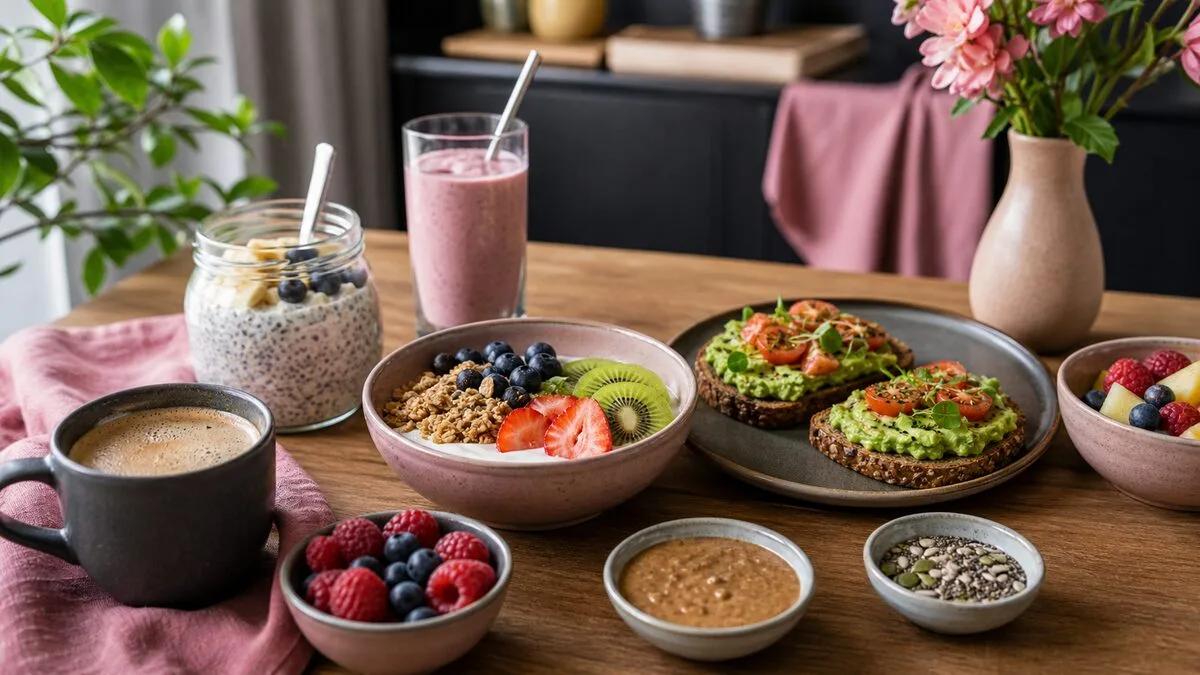
Breakfast is where vegan days either begin gently or fall apart. I like options that are filling, fast, and forgiving.
What makes a vegan breakfast actually filling?
A breakfast keeps you full when it carries protein, fiber, and fat together, not just fast carbs. Toast and jam spike and crash; oats with peanut butter and chia, or a tofu scramble on sourdough, hold you steady until lunch. Aim for roughly 15 to 20 grams of protein in that first meal and the mid-morning slump mostly disappears. That's the whole secret, and everything below is just nice ways to hit it.
Breakfast is where vegan days either begin gently or fall apart, and for a long time mine fell apart.
I'd grab toast on my way out, feel virtuous for about forty minutes, and then be ravenous and irritable by ten, raiding the office biscuit tin and wondering why this plant-based thing felt so hard. It wasn't hard. My breakfast was just too small to count.
Once I started building the morning meal the same way I build the rest of my protein-forward plates, the crashes stopped. I'm not a morning person and I won't pretend to be one. So everything here is filling, fast, and forgiving, because those are the only breakfasts I'll actually make.
The three pillars, quickly
- Protein is what keeps hunger away: tofu, soy milk, protein powder, peanut butter, hemp seeds.
- Fiber slows everything down: oats, chia, fruit, wholegrain bread.
- Fat makes it stay with you: nut butter, avocado, seeds, a few nuts.
Hit two of those three and you've got a real breakfast. Hit all three and you'll forget to think about food until lunch, which is exactly the goal.
Why "fast carbs alone" lets you down
A bowl of cornflakes or white toast with jam sends your blood sugar up fast and drops it just as hard, which is the mid-morning crash you feel as hunger and a foul mood. It isn't a willpower failure. It's chemistry. The fix isn't to eat less, it's to slow the meal down with fiber and fat and to give it some protein to actually build on. Same calories, completely different morning.
I noticed this most clearly the week I swapped my usual toast-and-jam for oats with peanut butter and chia. Nothing else in my life changed, but the 10am biscuit run just stopped happening. I wasn't fighting a craving; the craving never showed up. That's the whole case for building breakfast properly, and once you feel it you won't want to go back.
On the mornings I have three soft bananas going dark, they turn into a loaf of easy vegan banana bread before lunch.
If tofu has ever let you down, the fix is mostly technique, which is why I wrote down exactly how to cook tofu so it crisps every time.
For a savoury, ready-to-eat protein, I keep coming back to my smoked tofu recipes.
When I want my first meal to actually hold me, I work from my high-protein vegan breakfast recipes.
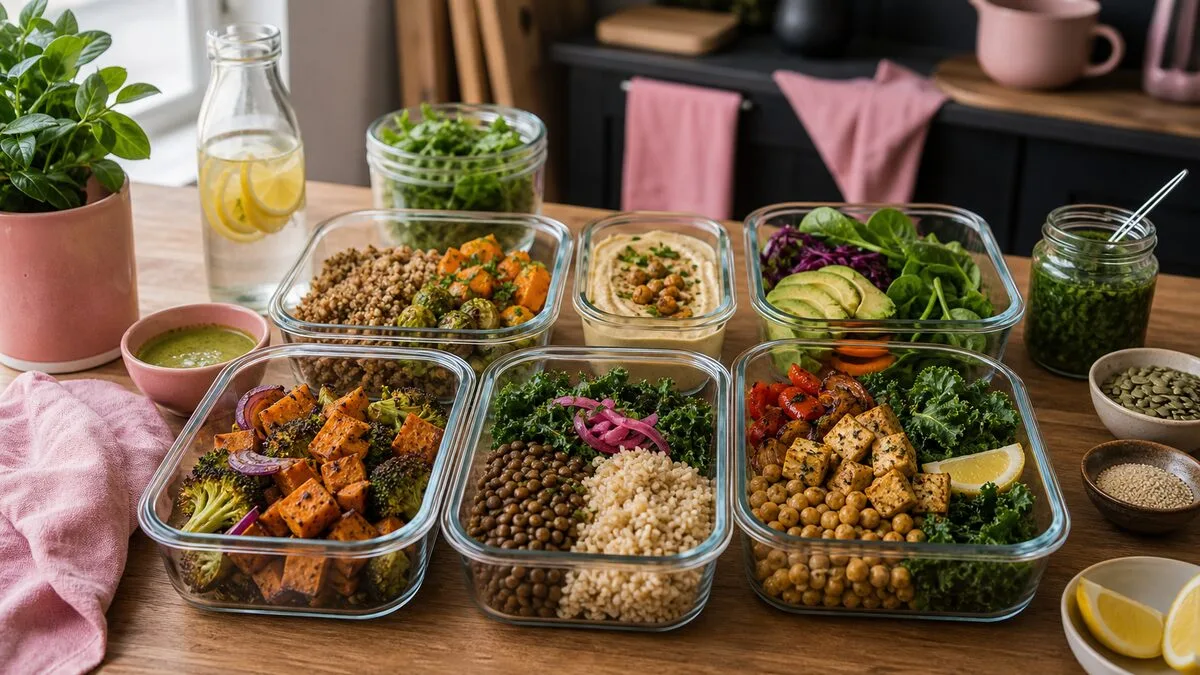
When I want the week handled in one calm session, I follow my step-by-step method for vegan meal prep for the week.
Three breakfasts I rotate
A breakfast list with twelve recipes is a recipe list, not a routine. Nobody decides between twelve things at 7am with one eye open. I rotate three, and I choose between them based on how I feel when I open the fridge. That's the entire system.
- Cold: overnight oats with peanut butter and frozen raspberries, built the night before so morning-me does nothing.
- Warm: tofu scramble on sourdough with a fistful of greens, for the days I have ten minutes and want something hot.
- Liquid: a real protein smoothie, drunk on a walk when I'm running out the door.
Three is enough variety that I don't get bored and few enough that I never have to think. If I'm honest, most weeks it's oats four days running, because past-me already made them and present-me is grateful. The other two are there for when I want them, not as obligations.
Why rotation beats a meal plan
A rigid plan tells you what to eat on Thursday whether or not Thursday-you wants it. A rotation gives you a short menu and lets the choosing happen in the moment. It's the same gentle logic I use for meal prep: build the components, keep the options few, and let the day decide. Less discipline required, which means it actually lasts.
How to build your own three
If my three don't suit you, build your own by the same rule: one cold, one warm, one liquid, each carrying protein. Maybe your cold one is soy yoghurt with granola, your warm one is beans on toast, your liquid one is a smoothie. The categories matter more than my specific recipes, because they cover every kind of morning, from "I have ten minutes" to "I'm eating in the car."
The reason this beats a Pinterest board of forty breakfasts is that you'll never make forty things. You'll make the same handful, so the handful might as well be good, filling, and quick. Pick three you genuinely like, get the ingredients in, and let the board stay a fantasy.
Overnight oats, the version that works
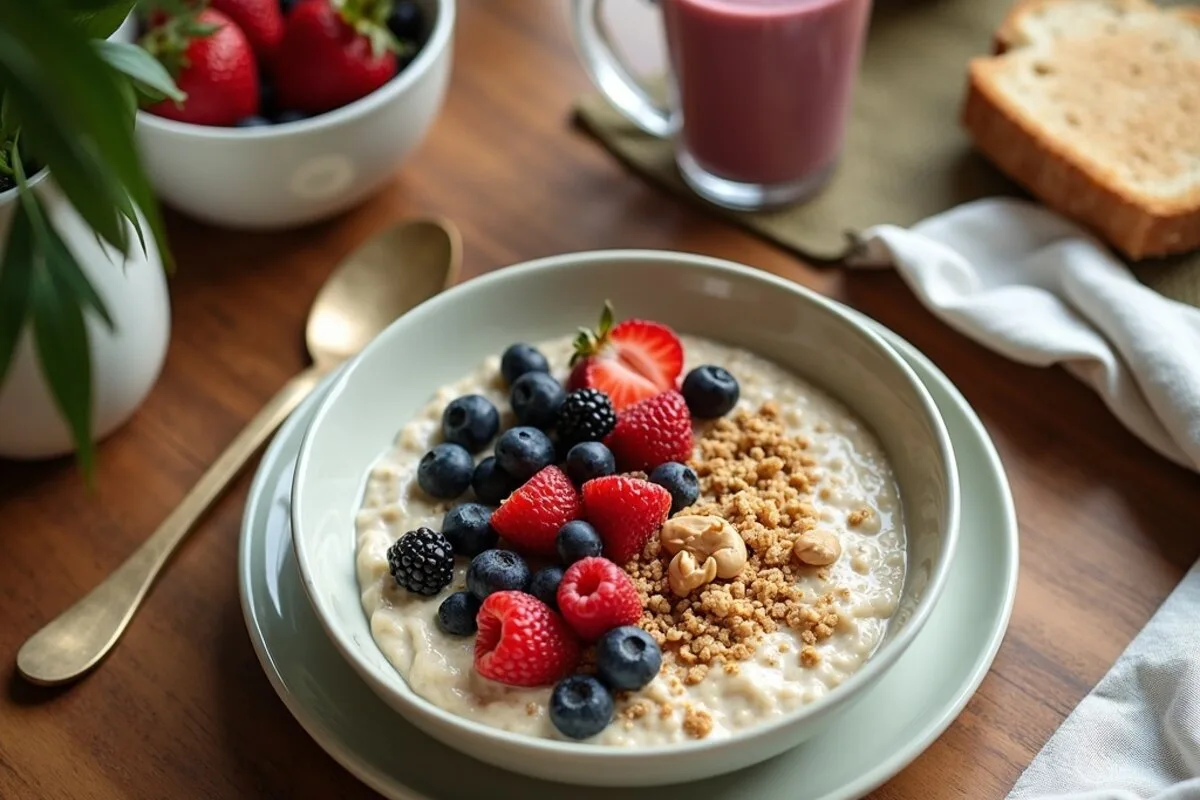
Most overnight oats are sad because they're just oats and water, and they sit in the fridge looking like wallpaper paste. The version I make has all three pillars built in, so it's a proper meal rather than a worthy chore.
The base ratio
Half a cup of rolled oats, three-quarters of a cup of soy milk (soy for the protein, not almond), a tablespoon of chia, and a heaped tablespoon of peanut butter. Stir, lid on, fridge overnight. In the morning it's thick, creamy, and stays with me for hours.
The toppings that make it
Frozen raspberries thaw overnight into a kind of jam and turn the whole thing pink. Frozen mango goes silky. A handful of nuts adds crunch and more fat. A drizzle of maple if I want it sweeter, though the fruit usually does that job. The base never changes; the top is where I keep it interesting.
Troubleshooting the texture
Too thick in the morning? Splash in more milk and stir; the oats keep drinking liquid as they sit. Too thin? You used too much milk, or skipped the chia, which is the thing that sets it. Gloopy and grey? You used quick oats instead of rolled; rolled hold their shape and stay pleasant. I make two jars at once and the second one is lunch-adjacent on a slow day.
How long they keep
An undressed jar holds three or four days in the fridge, so a Sunday batch covers most of the working week. The fruit on top is the only thing that limits it: fresh berries weep after a day or two, but frozen ones and chia hold fine. If I'm prepping ahead, I layer the oats and milk and chia, then add the toppings each morning, and the jars stay good and fresh-tasting all week.
Warm oats, the same idea
On a cold morning I tip the soaked oats into a pan with a splash more milk and warm them for two minutes, stirring. It turns the cold jar into a bowl of proper porridge with zero extra prep, because the soaking already happened overnight. Same ingredients, two temperatures, depending on the weather and the mood.
A tofu scramble worth getting up for
A tofu scramble converted more people I know to plant-based breakfasts than anything else, because it scratches the savoury, eggy itch that fruit and oats can't reach. The trick is mostly seasoning, and one specific ingredient.
The method
Crumble half a block of firm tofu into a hot, oiled pan with your fingers, so the pieces are uneven like scrambled egg. Let it sit and brown before you stir, then add turmeric for colour, a pinch of black salt (kala namak) for the eggy sulphur note, and salt and pepper. Three minutes, in and out. Pile it on toast with wilted spinach.
The one ingredient that matters
Black salt is the difference between "scrambled tofu" and "this genuinely tastes like eggs." It's cheap, it lasts forever, and a tiny pinch does it. Without it the scramble is still good; with it, it's uncanny. If you make one purchase off this whole essay, make it that.
Add some greens and a slice of good bread and the scramble clears 20 grams of protein easily, which is why I reach for it on gym mornings. It's the breakfast version of the savoury plates in my comfort food rotation, just faster and earlier.
Ways to dress it up
The plain scramble on toast is the everyday version, but it stretches into something bigger when I want a proper weekend breakfast. A handful of cherry tomatoes blistered in the pan first, then the tofu. Mushrooms cooked down until they go deep and savoury. A spoon of nutritional yeast for extra cheesy depth. Wrap the whole thing in a tortilla with hot sauce and you've got a breakfast burrito that holds up if you eat it on the move.
Which tofu to use
Firm or extra-firm, always. Silken tofu turns to soup in the pan and breaks your heart. You don't need to press it hard for a scramble, since you actually want a little moisture to steam off, but pat it dry and it browns better. A block lasts two or three breakfasts, so I crumble what I need and keep the rest covered in water in the fridge.
Rules that keep mornings calm
The recipes matter less than the rhythm around them. These three rules are what turned my mornings from a scramble (the bad kind) into something close to gentle.
- One step the night before. Soak the oats, press the tofu, pre-cut the fruit. Five minutes at 9pm buys you a calm 7am.
- One thing you actually look forward to. Good peanut butter, a proper coffee, a bit of citrus. Breakfast you enjoy is breakfast you'll keep eating.
- One built-in source of real protein so you don't crash by 11. This is the non-negotiable one.
I lean hard on the first rule. Almost every breakfast I love is mostly assembled the night before, so the morning is just opening a fridge and adding a topping. That's not discipline; it's laziness in the right direction, which is the only kind I trust.
Five quiet minutes at night buys you a calm morning. That trade has never once disappointed me.
Coffee counts as a ritual, not just caffeine
I make my coffee slowly, on purpose, while the oats come out of the fridge. It's a small anchor that tells my body the day has started gently. I write more about this kind of thing in my morning habits piece, but the short version is: the meal and the ritual around it matter together, not separately.
Lower the bar on purpose
The single biggest reason morning routines fail is that people set them too high. A breakfast that requires twenty minutes of cooking and a clean kitchen will not survive a real Tuesday. So I deliberately keep mine almost embarrassingly low-effort, because a low bar I clear every day beats a high one I clear twice a month. Make the easy version your default and treat the elaborate one as a weekend bonus.
Eat sitting down, even for two minutes
This sounds precious, but it changed how my mornings feel. Eating standing at the counter, scrolling, I never quite registered that I'd eaten, and I'd be hungry again sooner. Sitting for even two minutes, no phone, just the food and the coffee, makes the meal land. It's a tiny piece of mindful eating that costs nothing and pays off all morning.
Make-ahead and five-minute options
Some mornings I have ten minutes and some I have none. Here's the spread, from "did it last night" to "did it standing up."
Make-ahead, the night before
- Overnight oats, obviously, in a jar.
- A batch of baked oatmeal cut into squares, which keep five days and reheat in seconds.
- Pre-pressed tofu, so the scramble is genuinely three minutes in the morning.
- Smoothie ingredients bagged in the freezer, ready to tip into the blender.
Five minutes or less, from cold
- Wholegrain toast with peanut butter, banana, and a scatter of hemp seeds. Cheap, fast, hits all three pillars.
- A bowl of soy yoghurt with granola, fruit, and a spoon of nut butter.
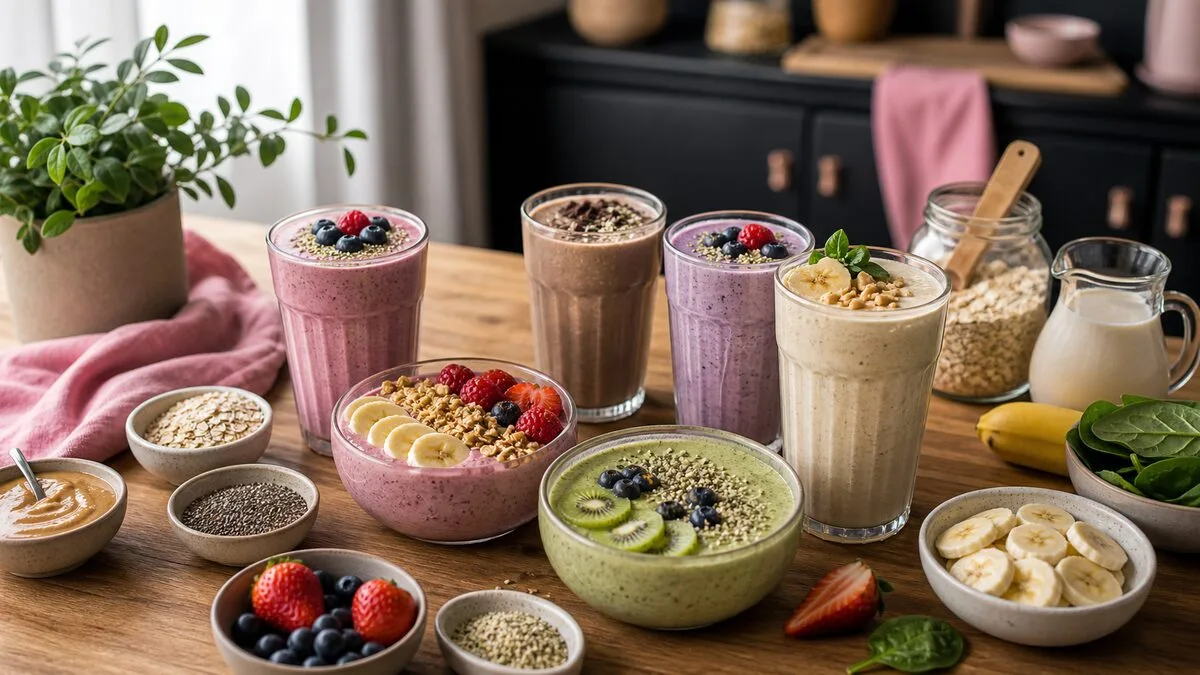
- A protein smoothie, which is the king of the no-time breakfast.
The toast-and-peanut-butter option is underrated. It sounds too simple to count, but with a wholegrain loaf, a banana for fiber, and seeds for protein and fat, it's a genuinely complete breakfast in ninety seconds. I eat it more often than I'd admit at a dinner party.
The freezer is your best make-ahead tool
I keep small bags of pre-portioned smoothie fruit in the freezer, each one a single drink's worth, so the morning job is tip-blend-go. I freeze leftover pancakes and baked oatmeal squares too; they reheat from frozen in a toaster or microwave while I'm still finding my keys. A bit of weekend cooking, frozen smartly, quietly removes most weekday breakfast decisions. It's the same batching logic that runs through my meal prep approach, scaled down to the first meal of the day.
Stocking for the no-time mornings
The trick to a fast breakfast is having the right things on hand before you're rushed. I keep a standing list: oats, soy milk, chia, peanut butter, a couple of bananas, frozen berries, a block of tofu, good bread. With those eight things in the kitchen, every single breakfast in this piece is possible without an extra shop. Run out of one and I just lean on a different option until the next trip.
What to do when it goes wrong
The breakfast failures are few and fixable. Here are the ones I see most.
"I'm starving by 10am"
Your breakfast was too light on protein and fat. Add a tablespoon of peanut butter, a scoop of protein, or a handful of nuts. Carbs alone, even healthy ones, won't carry you to lunch. This was my whole problem for the first year.
"I don't have time in the morning"
Then don't cook in the morning. Shift the work to the night before, or to a smoothie you can drink walking. Every breakfast in this piece can be made ahead or in under five minutes; there's no morning so rushed that one of them doesn't fit.
"Tofu scramble tastes like nothing"
You're missing the black salt, and probably the salt-salt too. Tofu is a blank canvas; it needs seasoning the way egg never did. Turmeric, black salt, plenty of regular salt and pepper, and let it brown before you stir.
"I'm bored of breakfast"
Change the topping, not the system. Same oats, different fruit. Same scramble, different greens or a dash of hot sauce. The base stays; the small details keep it alive. Boredom is almost always a topping problem, not a recipe problem.
"My oats taste bland"
Two things: salt and fat. A pinch of salt in the jar wakes the whole thing up, the same way it does in baking. And oats made with water taste like wallpaper, while oats made with soy milk and a spoon of nut butter taste like a treat. Most bland oats are just underseasoned and made with the wrong liquid.
"I just don't feel hungry in the morning"
Then don't force a big meal. A smoothie or a piece of toast with peanut butter is plenty, and it'll often switch your appetite on for a proper lunch. Forcing a large breakfast you don't want is its own kind of stress. Eat something small with a little protein and let your body catch up at its own pace; this is exactly the gentle, non-performative approach I take to eating in general.
Weekday speed versus weekend slowness
I think of breakfast in two registers, and keeping them separate stops the weekday version from feeling like a chore and the weekend one from feeling like a missed chance.
Weekdays are about not deciding
On a workday the whole point is to remove choice. The oats are already made, the smoothie ingredients are already bagged, the tofu is already pressed. I'm not cooking; I'm assembling, half-asleep, in the time it takes the coffee to brew. The best weekday breakfast is the one that needs the least of me, because the morning is borrowing energy I'd rather spend elsewhere.
Weekends are about pleasure
Saturday is when I'll actually stand at the stove. Pancakes made with mashed banana and oat flour. A big scramble with all the trimmings. French toast on thick bread soaked in soy milk, cinnamon, and a little chickpea flour to bind it. These take twenty minutes and I make them slowly, with music on, because the slowness is the point. It's the same instinct behind my whole slow-living routine: do the ordinary thing unhurriedly and it stops being ordinary.
Pancakes, since you'll ask
One mashed banana, a cup of oat flour (just blitzed oats), a cup of soy milk, a teaspoon of baking powder, a pinch of salt. Whisk, rest five minutes, cook on medium until bubbles set. The banana does the binding that egg used to. They're tender, a little sweet on their own, and they freeze well for a weekday cheat.
The weekend breakfast that feels like a small holiday
My favourite slow Saturday is a scramble with blistered tomatoes and mushrooms, thick sourdough toast, a pot of coffee, and nowhere to be. It takes maybe twenty-five minutes and I treat the whole thing as the morning's main event rather than a refuelling stop. There's something genuinely restorative about cooking a proper breakfast with no rush attached, and it sets a calm tone that tends to carry through the rest of the day.
If you only ever cook the fast weekday versions, you miss this entirely, and the fast versions start to feel like a sentence. So I protect one slow breakfast a week the way I'd protect any small ritual. It's a tiny luxury that costs the price of a block of tofu and half an hour of unhurried time, which feels like a good trade most weekends.
Feeding other people, and a word on nutrition
Breakfast for one is easy to optimise. Breakfast for a household, with someone rushing and someone fussy, is a different sport. The good news is that the same principles scale; they just need a bit more flexibility.
Breakfasts that work for a family
A tray of baked oatmeal feeds several people and reheats all week, so nobody's cooking on a school morning. A scramble stretches easily if you crumble a whole block. Smoothies are a quiet way to get fruit and protein into a child who'd rather not, and they don't notice the spinach if the berries are dark enough. I've written more about this in plant-based family life, but the headline is: cook one base, let people top it their own way.
The two nutrients worth a thought
Protein is rarely the real issue at breakfast once you've built in soy, tofu, or nut butter. The two I actually keep an eye on are B12, which needs a supplement or fortified foods on any plant-based diet, and iron, which absorbs better with a little vitamin C. A glass of orange juice or some berries alongside an iron-rich breakfast genuinely helps. Beyond that I don't fuss; a varied week of whole-plant breakfasts does the heavy lifting on its own.
Fortified milks are doing more than you think
Most shop-bought soy and oat milks are fortified with B12, calcium, and vitamin D. Using one of those as your base, in oats or a smoothie, quietly covers a chunk of the day's micronutrients before you've fully woken up. It's the easiest single upgrade to a plant-based morning, and it costs nothing extra.
Don't let nutrition turn breakfast into homework
It's easy, especially early on, to turn every meal into a spreadsheet of macros and micronutrients. I did, and it sucked the joy right out of eating. The honest position is that a varied, mostly whole-food plant diet plus a B12 supplement covers the essentials without any tracking at all. Eat a range of breakfasts across the week, lean on fortified milk, and let the rest go. The point of a good morning meal is to feel well and stop thinking about food, not to start a second job.
The breakfast I come back to
If you stripped everything else away, I'd keep the overnight oats. They're the breakfast I make four mornings out of seven, the one that fits a bad night's sleep and a rushed exit, the one that's always already there.
That's really the lesson of all of this. The best breakfast isn't the most impressive one; it's the one you'll actually eat, on the worst morning, without thinking. Build that, keep it filling, and let the fancier options be a bonus rather than a burden.
Start with one. Make the oats tonight, eat them tomorrow, and notice whether 10am feels different. If it does, you've got your anchor, and you can build the rest of the rotation around it whenever you feel like it.
Don't try to overhaul every morning at once. That's the mistake I made early on, and it collapsed inside a week because I'd set the bar somewhere I couldn't reach on a bad day. One reliable breakfast, eaten on the worst morning without thinking, is worth more than a perfect plan you abandon by Wednesday.
The bigger truth here is that breakfast sets the tone, and not just for blood sugar. A calm, filling start makes the rest of the day feel more possible. A rushed, hungry one makes everything slightly harder. It's a small lever with a long reach, which is why I keep paying attention to it even though, on paper, it's just oats in a jar.
And it compounds. Get the morning right and you're less likely to make a frantic, hungry lunch choice, less likely to crash at four, less likely to inhale dinner the second you walk in the door. One good meal early sets up the whole chain. That's a lot of leverage for something you can build the night before in five minutes, half-asleep, with one eye open.
From here, the natural next reads are the protein smoothies for your no-time mornings and the high-protein meals guide that ties the whole day together. The full recipes pillar has the rest, including the weeknight dinners that close the loop. And if you want the calm-morning thinking that surrounds all this, my morning wellness habits piece is the companion read.
Common questions
How long will this take, honestly?
The reading is 9 min. The practice is a lifetime. Start with one small piece this week and let the rest follow when it feels natural, not before.
Do I have to be fully plant-based for this to help?
No. Everything I write is for people who want a softer relationship with food and routine. The recipes happen to be plant-based; the ideas work in any kitchen.
What should I read next?
The related essays below, in order. If you only read one more thing, read Vegan protein smoothies that actually satisfy, it picks up exactly where this one ends.
Can I cite this guide somewhere?
Yes. Please link back to this page and credit Caleb Leuchi. All photographs are made for Leuchi unless noted; the writing is original.