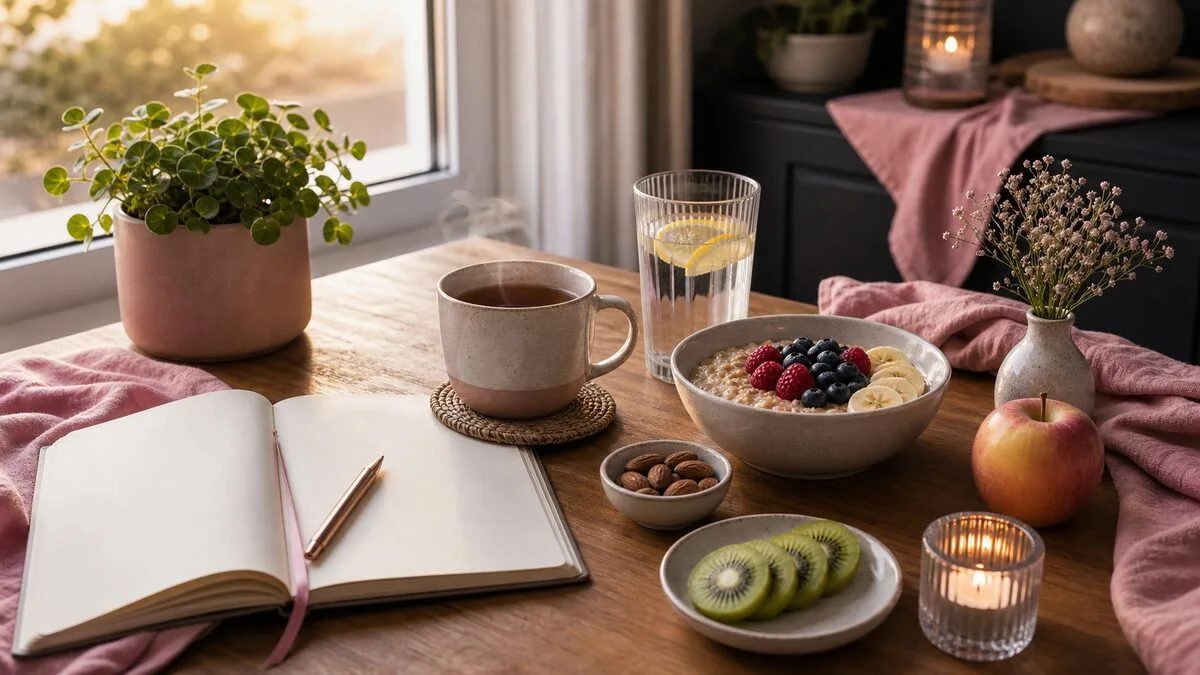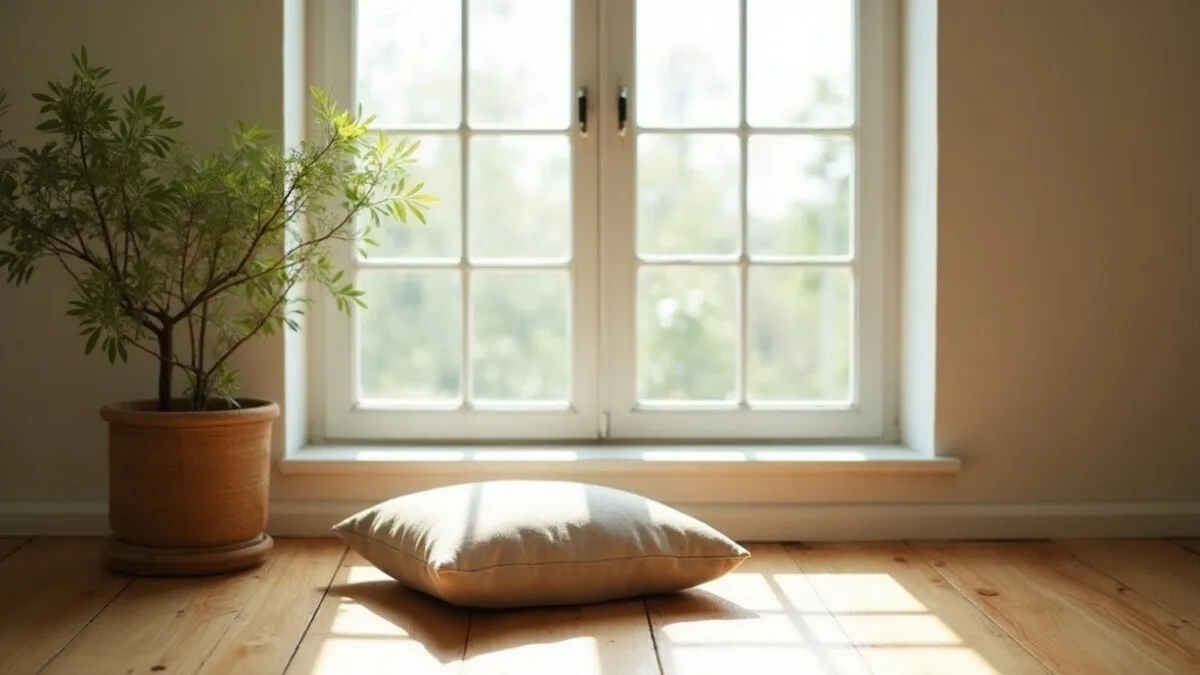
To start meditating, sit comfortably, set a timer for five minutes, and gently follow your breath. When your mind wanders (it will, constantly), just notice and come back, without scolding yourself. That returning is the practice. No app, no incense, and no need to "clear your mind." Five minutes a day, attached to something you already do, is enough to begin.
What meditation actually is (and is not)
Meditation is just the practice of paying gentle attention, usually to your breath, and noticing when your mind has wandered off so you can come back. That is the whole thing. It is not about emptying your head, achieving bliss, or floating above your problems. If you can notice you got distracted and return, you are already doing it correctly.
I say this first because the wrong idea of meditation is what kept me away for years. I pictured a serene monk with a perfectly silent mind, and since my mind is a noisy market stall, I assumed I was simply not built for it. That picture is a myth. Even people who have meditated for decades have busy minds. They have just made friends with the busyness.
Think of it less like switching off and more like training a muscle. Each time you notice you have drifted into planning dinner or replaying an argument, and you bring your attention back, that is one repetition. The drifting is not failure. The drifting is the very thing that gives you something to practise on. No wandering, no workout.
You are not trying to stop thoughts. You are practising the small, kind act of beginning again.
If you want a calm, evidence-based overview before you start, the US National Center for Complementary and Integrative Health has a clear summary of what meditation and mindfulness are and what the research actually shows (read the NCCIH overview). I like that it is honest about both the benefits and the limits.
What it is not
It helps to clear away a few myths early, because they cause most of the quitting. Meditation is not a religion, though it grew up inside several. You can practise it as a plain attention exercise with no beliefs attached, the way you might stretch before a run. Nothing here asks you to adopt anything.
It is also not a way to force yourself into instant calm on demand. Some sessions are restless, some are dull, a few are surprisingly peaceful, and you do not get to choose which. Going in expecting bliss is the fastest route to disappointment. Going in expecting to simply practise, whatever shows up, is the route that lasts.
And it is not a productivity hack, despite how it is often sold. Yes, many people find they think a touch more clearly or react a little less sharply. But if you treat it as one more task to optimise your output, you have smuggled the very stress you are trying to soften right back into the chair with you.
On stiff mornings I unroll a mat and follow the gentle sequence in my guide to yoga for beginners.
Why I started, badly, three times
I am not a teacher or a guru, and I want to be clear about that. I am someone who started meditating, quit, started again, quit again, and only made it stick on the third or fourth attempt. So I know the failing-at-it part intimately. That is probably the most useful thing I can offer you.
The first time, I downloaded an app, did the free week, felt guilty when the streak broke, and deleted it. The second time, I tried to sit for twenty minutes because that seemed like a "real" amount, and the boredom was so loud I never went back. Each attempt died for the same reason: I made it too big, too serious, too easy to fail at.
What finally worked
The version that stuck was almost embarrassingly small. Five minutes. In a chair. Right after my morning coffee, while the kitchen was still quiet. No app, no candle, no special outfit. I told myself the only goal was to sit down, not to feel anything in particular. That low bar is exactly why I kept showing up.
Lowering the stakes changed everything. When the target is "be calm and focused," every restless session feels like a loss. When the target is just "sit for five minutes," a restless session still counts. You did the thing. And over a few weeks, the doing quietly becomes the calm you were chasing in the first place.
The mistakes I made so you can skip them
Looking back, my early failures all rhyme, and they are the same ones I see in most beginners. I aimed for too long, so I dreaded it. I chased a feeling, so I judged every session by whether I felt serene afterwards. And I leaned on motivation instead of a fixed cue, so the practice quietly evaporated the first busy week.
I also fell for the gear trap. I genuinely believed that the right app, the right cushion, the right playlist of singing bowls would unlock the practice. They did not. They just gave me more things to fuss over and abandon. The morning it finally clicked, I had none of that. I just sat in a kitchen chair with a cold coffee and a kitchen timer, and that was enough.
How to sit: posture without the pretzel
You do not need to fold yourself into a pretzel on the floor. The cross-legged image is lovely in photos and unnecessary in practice. A kitchen chair is perfect. The only real job of your posture is to be upright enough to stay alert and relaxed enough that you are not in pain.
A posture that works for most people
- Sit toward the front of a chair with both feet flat on the floor, or cross-legged on a cushion if that feels good.
- Let your spine be tall but not stiff, like a string is gently lifting the crown of your head.
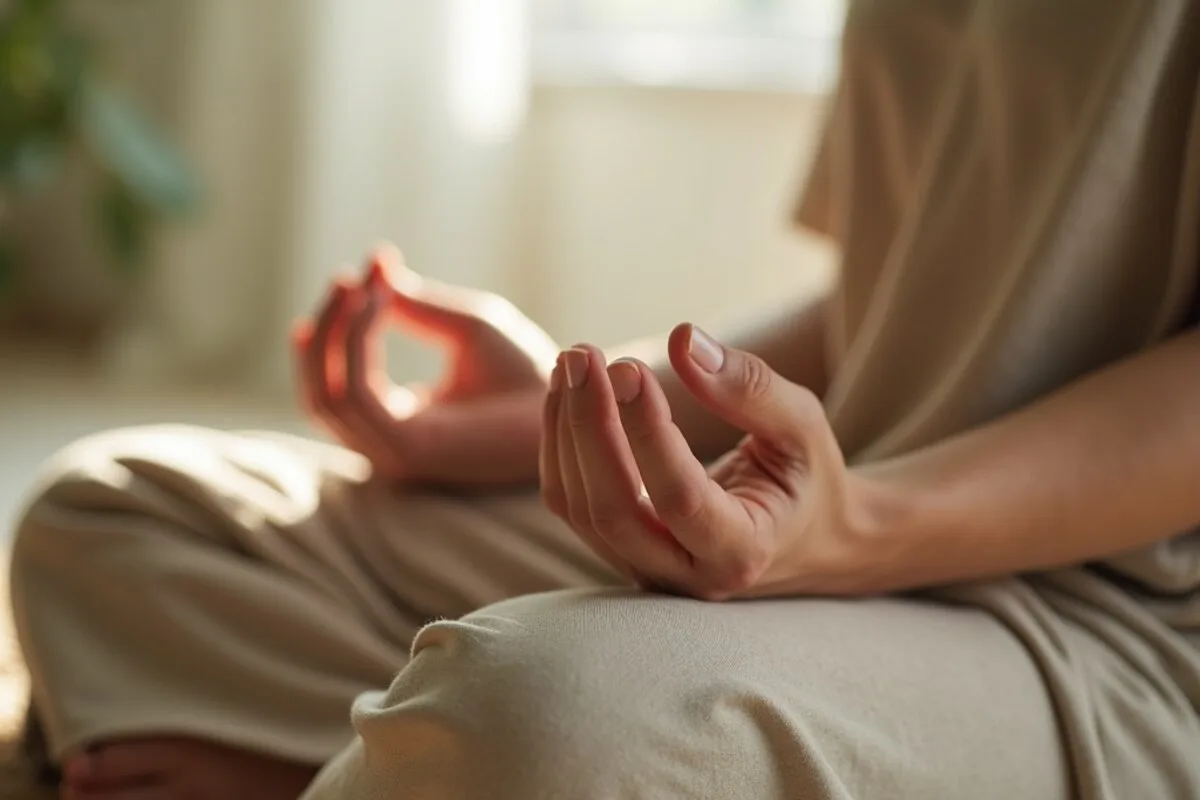
- Rest your hands on your thighs or in your lap, whatever feels natural and lets your shoulders drop.
- Soften your face, unclench your jaw, and let your eyes close, or keep them half-open with a soft downward gaze.
That is genuinely all there is to it. If your back aches, sit against the chair. If your knees protest on the floor, use the chair. The posture is a tool to help you stay present, not a test of flexibility. A comfortable body makes a settled mind much more likely.
I do like a small, set-aside corner for it, though. Not because it is required, but because a familiar spot becomes a cue. My chair by the window now means "this is the quiet bit of the morning" before I have even sat down. If you enjoy that idea, it sits nicely alongside the other small anchors in my morning wellness habits.
The breath, and counting it
Once you are sitting, you need something to rest your attention on, and the breath is the classic choice for good reason. It is always with you, it needs no equipment, and it gently anchors you in the present moment. You are not trying to control it. You are just watching it happen.
For the first few weeks, I strongly recommend counting. A free-floating "just notice your breath" is hard for a beginner because there is nothing to catch you when you drift. Counting gives your busy mind a small, harmless job, which keeps it from wandering off to your inbox.
A simple counting method
- Breathe in naturally, then as you breathe out, silently count "one."
- Next out-breath, count "two." Continue up to ten.
- When you reach ten, start again at one.
- If you lose track or notice you have counted to twenty-three while planning lunch, simply smile and start again at one.
The losing-track is not a problem to fix. It is the whole point. Noticing that you drifted and returning to "one" is the repetition that builds the muscle. Some mornings I barely reach four before wandering off. Other mornings I sail to ten. Both are completely fine, and neither tells me anything about whether I am "good" at this.
The goal is not a perfect count to ten. The goal is to notice, kindly, and begin again.
If counting starts to feel mechanical after a few weeks, you can let it go and simply feel the breath: the cool air at the nostrils, the rise of the belly, the small pause at the top. But there is no rush. I counted for months before I let it fade, and I still come back to it whenever my mind is especially loud.
Where to feel the breath
People often ask where exactly to put their attention, and there is no single right answer. Try resting it at the nostrils, noticing the slightly cooler air on the way in and the warmer air on the way out. Or rest it at the belly, feeling it gently rise and fall. Pick whichever is easier to sense, and stick with it for the session.
One quiet rule: do not turn the breath into a performance. You are not trying to breathe deeply or impressively. You are watching the ordinary breath that is already happening, the same one that runs all day without your help. If you find yourself controlling it, just loosen, and let it breathe itself again. That softening is part of the practice too.
What to do with a busy mind
This is the question everyone asks, so let me answer it plainly. When thoughts arrive, and they will arrive in a flood, you do not fight them, follow them, or judge them. You notice them, let them pass like weather, and gently return your attention to the breath. That is the entire skill.
A picture that helped me: imagine you are sitting on a riverbank, and your thoughts are leaves floating past on the water. You do not jump in and chase each leaf downstream. You do not build a dam. You just sit on the bank and watch them drift by. Some leaves are urgent, some are silly, some are sad. They all float past if you let them.
The two traps to watch for
- Following the thought. You notice a thought about work, and ten minutes later you are mentally writing an email. The fix is not to be angry; it is simply to notice and return to the breath the moment you catch it.
- Fighting the thought. You try to force your mind blank, which only creates tension and more thoughts about not having thoughts. Let them come. Just do not pull up a chair and offer them tea.
The kindness in your noticing matters more than you would expect. Early on, every time I drifted, a little voice said "you are bad at this." That voice is itself just another thought to let float by. When you return to the breath gently, without the scolding, the whole practice becomes something you want to come back to rather than a chore you dread.
Strong emotions deserve a word here too. Sometimes sitting quietly lets sadness or restlessness surface, and that can feel uncomfortable. You do not have to dive into it or push it away. Notice where you feel it in the body, breathe, and let it be there. If it ever feels like too much, it is completely fine to open your eyes and stop. This is meant to be gentle.
A gentle word on labelling
One small trick helps when the same thought keeps barging in. Instead of fighting it, give it a soft, one-word label and let it go: "planning," "worrying," "remembering." Naming a thought takes a surprising amount of its power away. You are no longer caught inside the story; you are standing a step back, watching the mind do what minds do.
Keep the labelling light. It is a feather touch, not a filing system. If you find yourself analysing every thought and ranking them, you have wandered into thinking about thinking, which is just another leaf on the river. Note it, smile, and drift back to the breath. The point is never to win against your mind, only to keep it gentle company.
How long, and when
Start with five minutes. I mean it. Five minutes is short enough that you cannot really talk yourself out of it, and that is exactly its power. A practice you actually do beats a longer one you keep skipping. You can grow it later, but the habit is built on showing up, not on heroics.
After a few weeks, if five minutes feels natural and you find yourself wanting more, nudge it to ten. There is no prize for sitting longer, and twenty minutes of dread is worse than five minutes of ease. I sit for about ten most days now, and on chaotic mornings I happily drop back to five rather than skip entirely.
Finding your "when"
The best time is whenever you can attach it to a habit you already have. This is the single trick that made it stick for me. I do not "find time" to meditate; I sit down right after I pour my morning coffee, every day, so the coffee becomes the cue. The decision is already made.
Morning works for many people because the mind is quieter and the day has not yet flooded in. But if your mornings are a scramble, try after lunch, or in the car before walking into work, or as a way to land at home in the evening. The "right" time is simply the one you will actually keep, day after day.
One gentle warning about the evening: meditating right before bed is lovely, but if you keep dozing off in the chair, you are practising sleeping, not attention. That is fine if rest is what you need, just know they are different things. For actual practice, a slightly more alert moment serves you better, even if it is only ten minutes earlier in the evening.
Stacking the habit onto an existing one is the same gentle method I lean on for almost everything, and I dug into the mechanics of it in my notes on building a self-care routine. The short version: do not rely on motivation, rely on a cue that already happens.
Start this week: a simple plan
Reading about meditation is pleasant and does almost nothing. The only thing that helps is sitting down. So here is the small, concrete plan I would hand to a friend who asked me where to begin. It is designed to be easy enough that you cannot fail at it.
- Day one: pick your spot and your cue (a chair, right after your morning coffee). Sit for just two minutes. Follow the breath, count to ten, start over when you drift. Two minutes only.
- Day two: same spot, same cue, same two minutes. The repetition of the cue matters more than the length.
- Days three to five: stretch to five minutes. Set a gentle timer so you are not clock-watching.
- Days six and seven: keep five minutes, and afterwards jot one line in a notebook: "restless," "calm," "kept drifting." No judgement, just noticing.
- Next week: simply repeat. If five minutes feels easy, let it grow to ten. If it feels hard, stay at five with zero guilt.
Notice what is not in this plan: no app, no streak counter, no buying anything. If a free timer and a chair are all you ever use, you have everything you need. The simplicity is not a budget version of meditation. It is the actual thing.
A tiny troubleshooting list
- Keep falling asleep? Sit more upright, open your eyes a little, or try a different time of day.
- Forgetting to do it? Strengthen the cue. Put the chair where your coffee lands.
- Feeling like nothing is happening? That is normal and fine. The benefits are quiet and cumulative, not fireworks.
- Hate the silence? Try a soft background of rain or a quiet room, not music with a beat that pulls your attention along.
- Mind racing too fast to count? Slow your out-breath slightly for the first minute to settle, then let it return to normal.
What "progress" looks like
Do not measure success by how calm a single session felt. That number is mostly noise, swayed by your sleep, your coffee, and your week. The real signal shows up off the cushion. You catch yourself pausing before a sharp reply. You notice a craving rise and pass without acting on it. You spend ten seconds simply watching the kettle instead of reaching for your phone.
Those tiny moments are the practice paying out. They are easy to miss because they are so undramatic, which is exactly why the one-line notebook helps. Over a month you start to see a faint pattern: not a transformed person, but a slightly less reactive one, who returns to the present a little more often. That is plenty. That is the whole promise, honestly delivered.
When it gets hard or boring
At some point, usually around week two or three, the novelty wears off and the practice gets boring. This is not a sign you should stop. It is a sign you have arrived at the real work. The boredom is just your restless mind protesting that nothing exciting is happening, and learning to sit with that is most of the point.
I have come to think boredom is one of meditation's better teachers. We spend our days fleeing it, reaching for a phone the instant a moment goes empty. Sitting still and letting a dull few minutes simply be dull is a small act of rebellion against that reflex. It builds a tolerance for stillness that quietly spills into the rest of your life.
Restlessness has its own flavour, and it visited me often. The urge to check the timer, to scratch an itch, to stand up and do something useful can feel almost physical. The instruction is the same as for everything else: notice the urge, let it be there without obeying it, and return to the breath. Each time you do not jump up, you learn that an urge is just a wave that rises and falls if you let it.
When you skip a day (or ten)
You will miss days. A week will vanish in busyness or travel or a bad mood. This does not undo your progress, and it certainly does not mean you have failed. The practice is not a fragile streak that shatters when broken. It is a place you can always return to, exactly like the breath itself.
So when you notice you have drifted away from meditating for a while, treat it precisely as you treat a wandering thought mid-session: no scolding, no story about being undisciplined, just a gentle return. Sit down tomorrow morning after your coffee. Begin again. Beginning again is the entire skill, on the cushion and off it.
If I could hand you just one sentence to keep, it would be this: the practice is not the calm, it is the returning. You will never reach a finish line where the mind goes quiet for good, and you do not need to. You only need to keep coming back, five gentle minutes at a time, and let that small habit do its slow, quiet work on the rest of your days.
That same patient, non-punishing attitude is the heart of how I handle stress generally, which I wrote about in my stress relief rituals. And if your sitting practice naturally makes you curious about resting better at night, you might enjoy the sleep wellness guide, since a calmer mind and a calmer evening tend to arrive together.
Common questions
I cannot stop thinking. Am I doing it wrong?
No, you are doing it exactly right. Nobody stops thinking, including lifelong meditators. The practice is not an empty mind; it is noticing you have wandered and gently returning. If your mind is busy and you keep coming back to the breath, that is a successful session, even if it felt messy the whole way through.
Do I need an app, incense, or a special cushion?
None of it. A chair and a timer are enough, and a quiet five minutes after your coffee is a complete practice. Apps can be a nice companion if you like guidance, but they also add a streak to feel guilty about. I would start with nothing and add tools only if you genuinely miss them.
How long until I feel a difference?
Honestly, it varies, and the changes are quiet rather than dramatic. Many people notice within a few weeks that they pause a beat longer before reacting, or that a stressful moment feels slightly less sticky. Do not sit waiting for fireworks. Just keep showing up for five minutes, and let the small shifts surprise you over time. The people who benefit most are simply the ones who kept going on the unremarkable days.
What should I read next?
If meditation is helping you slow down, the stress relief rituals and morning wellness habits guides build naturally on top of it. For the bigger picture of weaving calm into a whole week, the self-care routine is where I tie it all together.