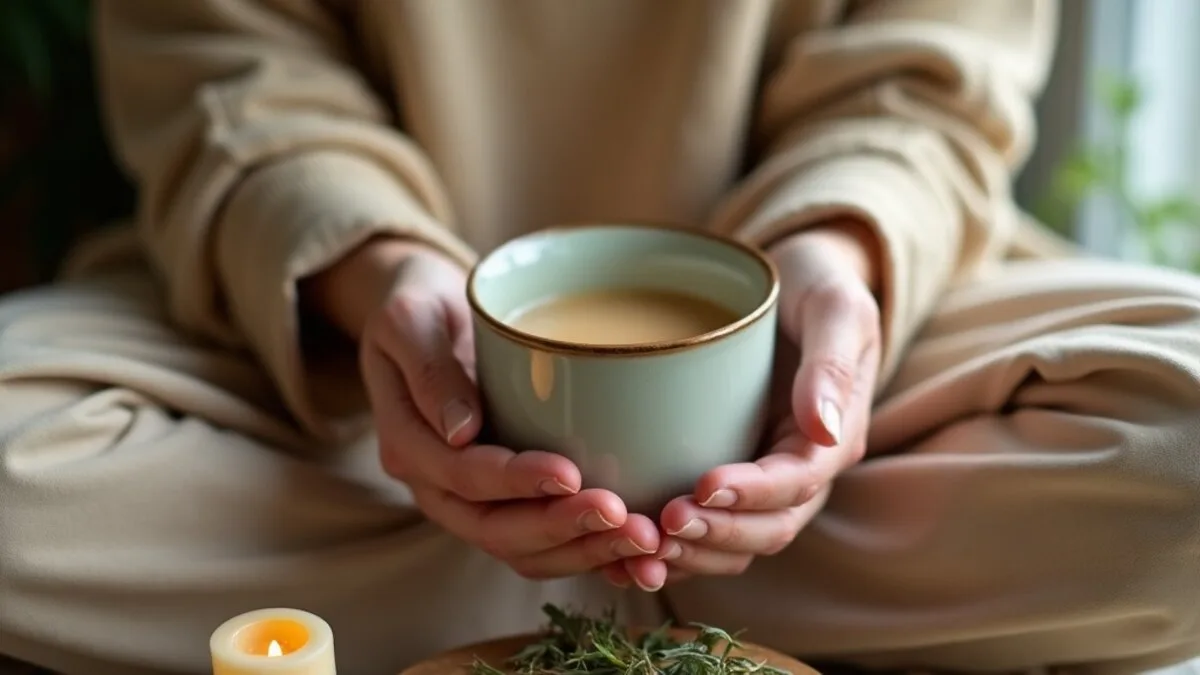
Small enough to reach for. Rituals that fit inside a real kitchen, hallway, or ten-minute break.
What I reach for first
When I'm tight, I don't journal. I don't meditate. I make tea and stand at the window. That's it, that's the first move, and I've stopped apologising for how small it is. The point of a stress ritual is not depth. It's reach. The smaller the action, the more reliable it is, and reliability is the only quality that matters when you're already frayed.
For years I had the relationship backwards. I thought the answer to stress was something big and worthy: a long meditation, a proper journaling session, a real workout. So when stress actually hit, I'd look at those big worthy things, find I had no energy for any of them, and do nothing. Then I'd feel worse for failing at my own self-care.
The fix was to lower the bar until it was almost on the floor. A stress ritual should be something you can do badly, while tired, in under five minutes, without changing your clothes. Make tea. Stand at the window. The whole skill is in how easy it is to reach.
A stress ritual you can only do on a good day isn't a stress ritual. It's a hobby.
This is the blunt-instrument corner of the wellness pillar. The gentle daily practices live in the morning habits and the self-care routine essays. This one is for the moments those aren't enough, when the day has gone sideways and you need something now.
I want to be plain about what these rituals are for and what they aren't. They're for the ordinary stress that lands on most of us most weeks: the spiky afternoon, the bad email, the moment the to-do list tips from busy into too much. They're a way of staying a person while the pressure passes. They are not therapy and they're not a fix for anything structural, which I'll come back to at the end.
The other thing worth saying up front is that a ritual works partly because it's a decision you've already made. When the day goes sideways, the worst part is often the not-knowing-what-to-do, the swirl. A ritual cuts the swirl. There's no choosing, no figuring out, just a small known action you reach for on autopilot. Half the relief is in skipping the part where you'd otherwise stand there, frozen, wondering what would help.
On the days my head will not settle, I come back to the small practice in my meditation for beginners guide.
On stiff mornings I unroll a mat and follow the gentle sequence in my guide to yoga for beginners.
Why reach beats depth
Reach beats depth because stress eats your capacity to do anything complicated. That's the whole reasoning behind everything here. When you're calm, you have the bandwidth for a twenty-minute practice. When you're stressed, which is exactly when you need it, that bandwidth is gone, and a complicated ritual becomes one more thing you fail at.
So I optimised for the worst version of me, not the best. The rituals I keep are the ones I can reach for while my heart's going and my head's full. They don't need preparation, equipment, privacy, or a clear mind. They need about ninety seconds and a willingness to do them imperfectly.
The willingness to do them imperfectly is the quiet key. A perfectionist approach to stress relief is a contradiction in terms. If you're judging your breathing, grading your walk, wondering whether you're doing the ritual "right," you've smuggled the very pressure you were trying to escape into the escape itself. Sloppy is fine. Half-hearted is fine. A badly made cup of tea drunk at the window does the job exactly as well as a perfect one.
A useful test: could you do this ritual in the middle of a bad afternoon, without anyone noticing, without having to "get in the right headspace" first? If yes, keep it. If it needs a candle, a cushion, an app, and half an hour of quiet, it's lovely, but it's not a stress ritual. It's a treat for the days you're already fine.
There's a small irony here worth naming. The deep practices, the meditation and the journaling, do work, and I do them, just not as emergency tools. Trying to use them as emergency tools is what taught me the difference. Depth is for the calm days. Reach is for the storms. You want both, and you want to stop confusing them.
I think the reason this gets muddled is that wellness content tends to show us the deep version, because it photographs better. A person cross-legged on a cushion at dawn is a nicer image than a tired person filling the kettle for the third time. But the kettle is the one that actually catches me on a Tuesday. The cushion is for the mornings I'm already calm enough to use it, which, by definition, are the mornings I need it least.
So I'd gently push back on any stress advice that assumes you'll be in a fit state to follow it. The whole premise of stress is that you're not in a fit state. A good ritual meets you in the unfit state and asks almost nothing. If you take one idea from this essay, take that one: lower the bar until you can clear it on your worst day, then lower it a little more.
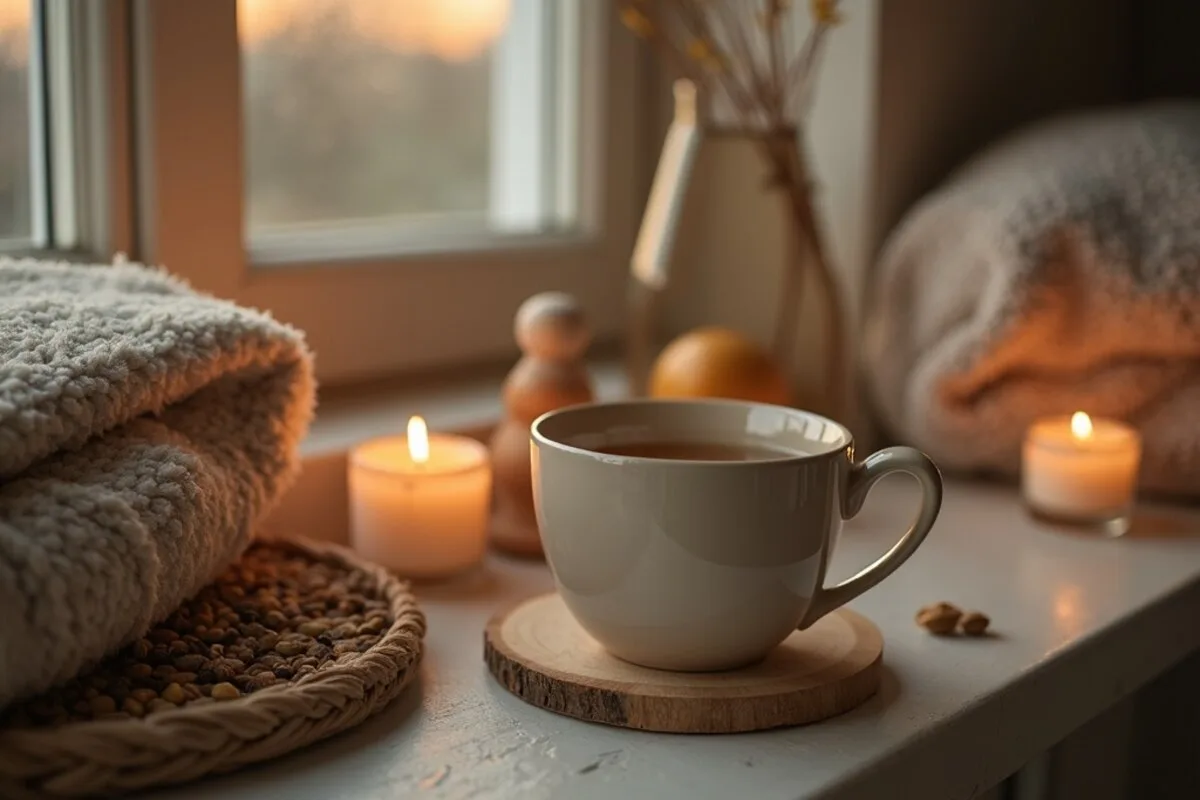
Ten reach-for rituals
Here are the ten I actually use. None of them is impressive. That's the point. Read them as a menu, not a checklist, and steal the three or four that sound like something you'd genuinely do.
- Boil water. Make tea. Stand at a window.
- Walk to the end of the block and back.
- Wash one bowl, slowly.
- Open every window for five minutes.
- Stretch the hips on the floor.
- Write one paragraph in a notebook.
- Text one person, no agenda.
- Sit in the car with the engine off.
- Eat one piece of fruit, sitting.
- Read three pages of a novel.
Notice how physical and ordinary most of them are. There's no "visualise your calm place," because when I'm tight I can't visualise anything except the thing stressing me out. The body is easier to steer than the mind in those moments, so most of these give the body a small, simple job and let the mind follow along behind.
The car one always gets a laugh, but it's saved me dozens of times. Sitting in a parked car with the engine off is one of the only truly private, claim-able spaces a lot of us have. No one expects anything of you in there. Two minutes of just sitting, before you walk into the house or the office, can change the whole next hour.
The "text one person, no agenda" ritual is the one I'd most encourage people to try, because stress is isolating and we forget that. Not a cry for help, not a vent, just a small human signal: a photo of the sky, a "thinking of you," a daft meme. The point isn't to solve anything. It's to feel, for a second, that you're part of a web of people rather than alone with the problem. That feeling does real work, and it costs one text.
Washing one bowl, slowly, is the sleeper hit on the list. There's a long tradition of treating ordinary chores as a kind of moving meditation, and a single bowl is the lowest-commitment version of it. Warm water, a clear task, a visible result in thirty seconds. I'm not "doing the washing up." I'm doing one bowl, deliberately, and somehow that one bowl steadies me more than a sink full ever could, because it has an end I can actually reach.
How to pick yours
You don't need ten rituals. You need two or three that fit your life so well you'll actually reach for them. Picking them is its own small skill, and getting it wrong is why most people's "coping strategies" stay theoretical.
Match the ritual to the kind of stress
Different stress wants different medicine. Buzzy, anxious, can't-sit-still stress wants movement: the walk, the windows open, the hips on the floor. Heavy, flat, foggy stress wants warmth and a tiny task: the tea, the one washed bowl, the piece of fruit eaten sitting down. Notice which kind you tend to get, and stock the matching rituals.
Make them where you already are
The best ritual is the one available in the room you're standing in. I keep tea things at home and at work, a notebook in my bag, and the car is always, well, the car. If a ritual requires you to be somewhere you're usually not, you'll never reach it in time. Put the tools where the stress happens.
The trick of choosing in advance
The single most useful move is deciding your rituals when you're calm, not when you're spiralling. In the middle of a stress spike, your brain can't generate options, it can barely hold one thought. So I picked mine on a quiet Sunday, wrote them on a card, and now I don't have to choose under pressure. I just reach for the thing I already chose.
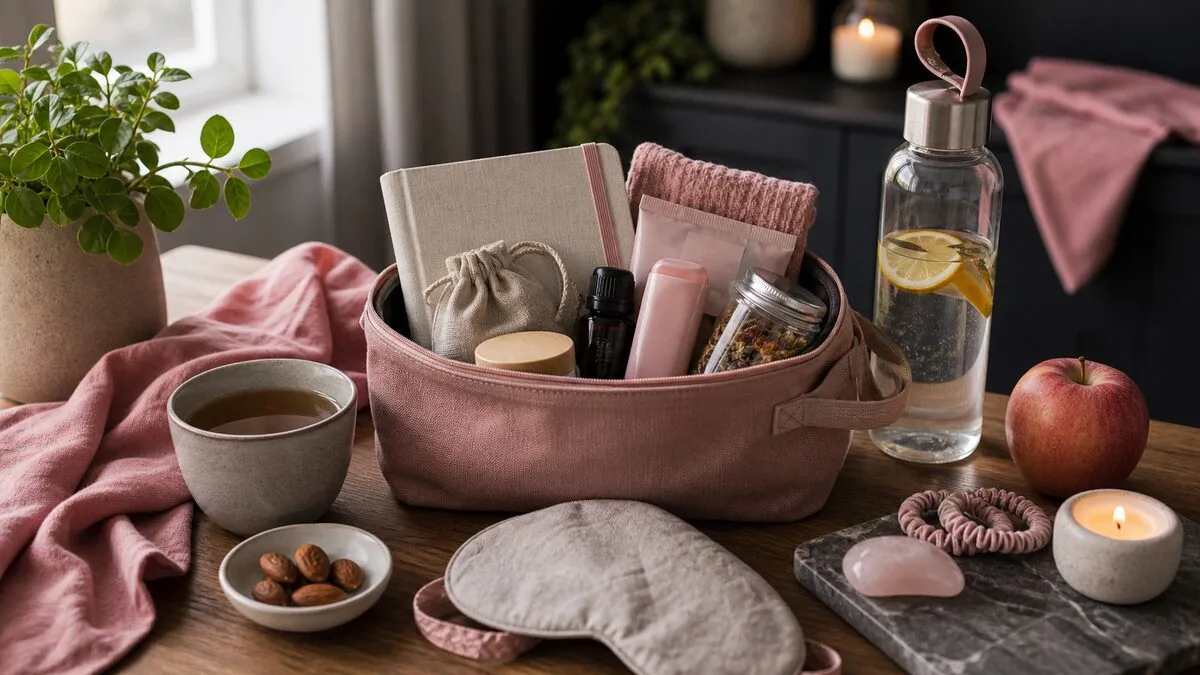
This is exactly the logic behind keeping a wellness kit: the rested version of you makes the decisions, so the frayed version doesn't have to. A stress ritual is the same idea in motion rather than in a basket. Decide once, in the calm, and let that decision carry you through the storms you can't yet see.
Start with one. Just one, for a couple of weeks, until reaching for it is automatic. Then add another. This is the same patient approach I lay out for any new habit in healthy habits for beginners, and it works here precisely because a stressed brain can't learn five new things at once.
The body-first ones, for when thinking won't help
When you can't think your way out, move instead. This is the most useful thing I know about acute stress, and it's why half my rituals are physical. The thinking mind, in a spike of stress, is the broken tool. The body is the working one. So I bypass the broken tool and go straight for the body.
The simplest version is just breathing, with the exhale longer than the inhale. Four counts in, six out. I do it standing at the window with the tea steeping. I'm not going to dress it up with claims I can't stand behind, but the long exhale reliably drops my shoulders a notch, and that small physical change seems to give the rest of me permission to follow. If you want the background, the page on diaphragmatic breathing covers it well.
Cold, air, and stretch
Cold water on the wrists or the face is a blunt reset that works when nothing else lands. Opening every window, even in winter, even for two minutes, changes the air and somehow changes me with it. And lying on the floor with my hips stretched out, which feels faintly ridiculous and helps anyway, lets the tension I've been holding in my body actually leave it.
None of this is profound. That's the recurring theme. The body responds to simple, physical, slightly boring inputs, and trying to make stress relief sophisticated usually just adds a layer of "doing it right" to worry about. The walk works. The breath works. The cold water works. Sophistication is optional and often gets in the way.
The walk deserves its own small note, because it's the one I'd defend hardest. There's something about forward motion, the rhythm of it, the changing view, that loosens a stuck mind in a way sitting still never does for me. I do my best thinking on walks, but more often I don't think at all, which is the point. Ten minutes of walking nowhere in particular resets more than I can explain, and it asks nothing but a pair of shoes.
Eating one piece of fruit, sitting down, sounds almost too trivial to include, and it's quietly one of the best. It interrupts the stress with a small sensory event, the cold of an apple, the mess of a peach, and it forces a pause where I have to actually stop and chew. It's mindful eating shrunk to a single bite, and I write about the longer version of that in the mindful eating guide. On a frantic day, one attentive piece of fruit is a whole minute of being somewhere other than the panic.
The thirty-second versions
On the worst days, even five minutes is too much, so I keep a set of thirty-second versions for when the full ritual is out of reach. These are the flares, the bare minimum I send up to remind myself I'm still steering. They're almost too small to count, which is exactly why they survive the hardest moments.
- Three slow breaths, long exhale, wherever I'm standing.
- One glass of water, drunk on purpose, not gulped.
- Both feet flat on the floor, ten seconds of noticing them.
- Step outside the door, breathe once, step back in.
- Unclench the jaw and drop the shoulders. That's it.
The jaw-and-shoulders one is embarrassing in how often I need it. I hold tension there without noticing, all day, and a single deliberate release is sometimes the entire ritual. Thirty seconds. No tools. No privacy needed. You can do it in a meeting and no one will know.
What these tiny versions protect against is the all-or-nothing trap, where a bad day means you skip self-care entirely because you can't do the "real" version. Thirty seconds is the real version, on a thirty-second day. The point was never the length. It was the returning.
The feet-on-the-floor one is worth a sentence, because it sounds like nothing and does a surprising amount. When I'm spinning, I'm rarely in my body, I'm somewhere up in my head running scenarios. Putting both feet flat and just noticing them, the weight, the contact, the ground holding me up, drops me back down into the present where the actual problem is usually smaller than the imagined one. It's the cheapest way I know to stop a spiral mid-spin.
I'd encourage you to write your own thirty-second list and keep it somewhere stupidly visible, a phone wallpaper, a sticky note on the monitor, the inside of a cupboard. Because here's the cruel part: in the moment you most need these, you will not remember they exist. The list is there to remember for you. Outsourcing the memory to a note is not a weakness. It's just good planning for a brain that goes offline under pressure.
Rituals at work, where you can't make tea
Work is where stress relief most often falls apart, because the obvious rituals don't fit. You can't lie on the floor in an open-plan office, and a fifteen-minute walk isn't always on the table. So the work versions have to be even smaller and more invisible than the home ones.
Mine are mostly breath and movement disguised as ordinary actions. A slow walk to fill a water glass becomes a reset. A trip to the bathroom becomes thirty seconds of breathing in a cubicle, which is not glamorous and is reliably available. Looking out a window for a full minute, properly, at something far away, gives the eyes and the mind a small holiday.
The one I'd most recommend for work is the deliberate pause between tasks. Before opening the next thing, three breaths. Before replying to the email that spiked you, three breaths. It costs nothing, no one sees it, and it inserts a tiny gap between the stress and the reaction, which is most of the battle. I keep a small card on my desk that just says "stretch, breathe, look out a window," part of the desk version of my wellness kit.
There's also the meeting that goes badly, the call that leaves you shaking slightly, and no time to recover before the next one. For those I have a thirty-second airlock: between the two, I do nothing for half a minute. No phone, no prep, just three breaths and a glance out the window. It feels wildly indulgent to "waste" thirty seconds when you're behind, and it's the difference between carrying the bad meeting into the next one and arriving fresh. The airlock is cheaper than the damage it prevents.
If your whole working day is a low hum of stress rather than sharp spikes, the rituals matter less than the bigger structure of the week. That's a different fix, and I write about it in everyday balance habits and the broader idea of a slow living routine. Rituals patch the moment. Balance fixes the pattern.
One more workplace note: lunch is a ritual, if you let it be. Eating at your desk while you work is a small daily theft from yourself. Even ten minutes of eating somewhere else, looking at something that isn't a screen, resets the afternoon in a way the desk-sandwich never will. I treat it as the one non-negotiable pause in the working day, and on the days I skip it I can feel the difference by four o'clock.
What I stopped calling self-care
I had to retire the phrase "self-care" for a while, because it had started to stress me out, which is its own dark joke. It had come to mean expensive, performed, and faintly aspirational: the bath, the candle, the spa weekend I never booked. None of that was reachable on a hard Tuesday, so the phrase just made me feel behind.
What I do instead is plainer. I call these rituals "the small reach," and I think of them as maintenance, not treats. You don't reward your car with an oil change. You just do it, because that's how the thing keeps running. The small reach is the same. It's not a luxury you've earned. It's basic upkeep on the machine you live in.
Stripping the glamour out of it made it far more usable. There's no performance, no photo, no sense that I'm meant to feel transformed afterwards. I make the tea, I stand at the window, I feel one notch less terrible, and I get on with the day. That's the entire promise, and it's a promise small enough that I actually keep it. For the calmer, planned version of looking after yourself, the full self-care routine picks up where these emergency rituals leave off.
There's also a quiet honesty in calling it maintenance rather than transformation. Maintenance doesn't promise to change your life. It just keeps the machine from seizing up. That's a smaller, truer claim, and I trust it more. I'd rather have ten reliable small reaches than one grand ritual I do twice and then guilt myself about for a year.
When a ritual isn't enough
A ritual is a patch, not a cure, and I want to be honest about its limits. Standing at the window with tea will get me through a hard hour. It will not fix a job that's grinding me down, a relationship that's gone wrong, or a stretch of genuine overwhelm that no amount of breathing will reach. Pretending otherwise would be a disservice.
So I treat the rituals as triage, the thing that keeps me functional while I deal with the actual cause. If I find I'm reaching for them constantly, every day, all day, that's not a sign I need better rituals. It's a sign something bigger needs changing, and the ritual is just keeping the alarm from screaming while I work out what.
That distinction took me a while to learn, and I learned it the wrong way, by getting very good at coping with a situation I should have been leaving. The rituals worked so well that they masked the problem for far too long. So now I check, every so often, whether I'm using them to get through a passing hard patch or to tolerate something that isn't going to stop. The first is wisdom. The second is just a more elegant way of suffering, and it deserves a braver answer than a cup of tea.
If you're reaching for the lifeboat every day, the problem isn't the lifeboat. It's the boat.
And there's a line past which this is no longer a blog's job. Stress that doesn't lift, that's flattening your sleep and appetite and pulling you under for weeks, deserves a real person to talk to, a friend, a doctor, a professional. I write for the ordinary frayed days, the ones a glass of water and an open window can genuinely touch. If yours have gone deeper than that, please treat these rituals as a bridge, and reach for more than a bridge.
It also helps to look, on the calm days, at what's actually generating the stress, rather than only getting better at surviving it. A ritual that gets you through a brutal week is a gift. A brutal week that repeats every week is a question. Sometimes the kindest thing isn't a better breathing technique, it's saying no to one commitment, or rearranging a corner of your life so the spikes come less often. I write about that slower, structural side in a slow living routine.
For most of us, most of the time, though, the small reach is enough. The day gets loud, you make tea, you stand at the window, and you find you can keep going. Keep the bar low. Keep the tools close. And forgive yourself the days you forget them, because remembering tomorrow is the whole practice.
If you take nothing else from all this, take the kettle. Boil water, make something warm, and stand somewhere you can see the sky for as long as it takes to drink it. It's the most ordinary thing in the world, and on a bad afternoon it has reliably given me back a version of myself I could work with. That's not a small thing. On the hard days, it's nearly everything.
Common questions
How long will this take, honestly?
The reading is 8 min. The practice is a lifetime. Start with one small piece this week and let the rest follow when it feels natural, not before.
Do I have to be fully plant-based for this to help?
No. Everything I write is for people who want a softer relationship with food and routine. The recipes happen to be plant-based; the ideas work in any kitchen.
What should I read next?
The related essays below, in order. If you only read one more thing, read A first hour worth keeping, it picks up exactly where this one ends.
Can I cite this guide somewhere?
Yes. Please link back to this page and credit Caleb Leuchi. All photographs are made for Leuchi unless noted; the writing is original.
Continue reading in this cluster
All wellness →
Wellness
A first hour worth keeping
Wellness
A self-care routine that truly helps
Wellness
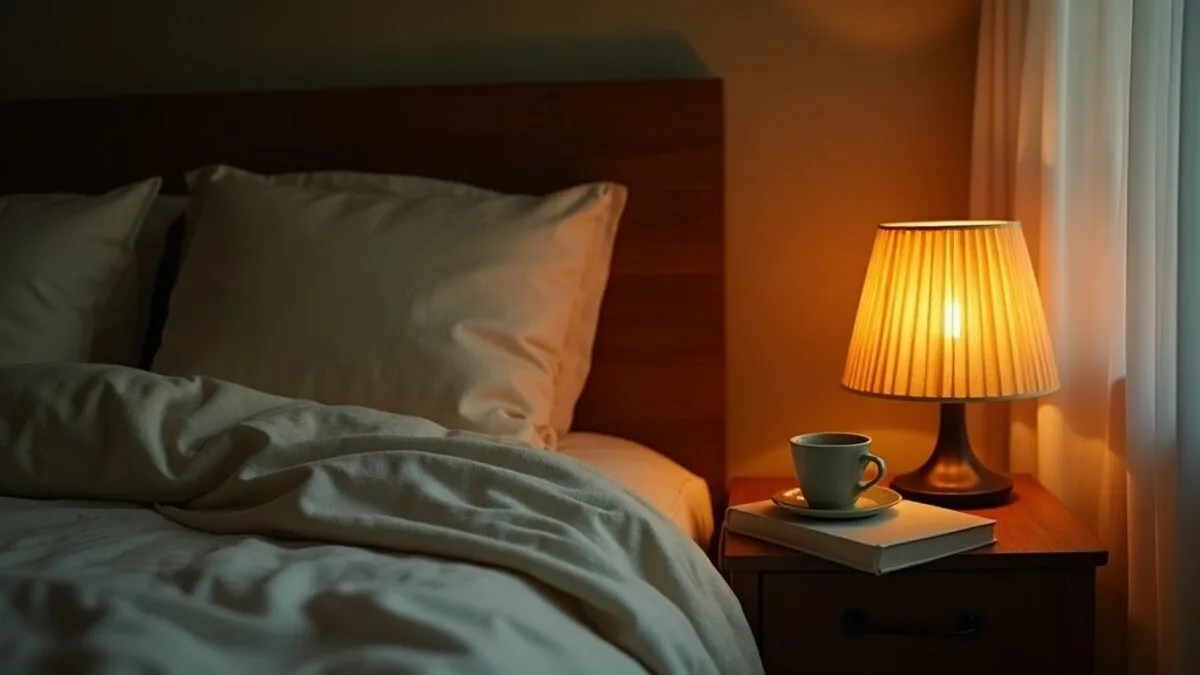
A sleep wellness guide for better nights
Wellness