
Steady before it impresses anyone. Small enough to repeat, kind enough to keep.
What self-care actually is for me
Self-care is the work of being kind to yourself on a Tuesday, when no one is watching and there is no candle lit. That's it. It is not bath bombs, it is not a face mask, and it is definitely not a weekend spa package you book once a year to make up for fifty-one weeks of neglect. The Tuesday version, the boring unphotogenic one, is the only version that actually matters.
I have nothing against a nice bath. I have a lot against the idea that a nice bath is self-care, because that framing quietly lets us off the hook for the ordinary, daily kindnesses that actually keep a person upright. A bath is a treat. Self-care is closer to maintenance: the unglamorous tending you do so that you don't fall apart in the first place.
The word got hijacked, I think, somewhere between wellness marketing and the gift-set aisle. It became a thing you buy rather than a thing you do, an aesthetic rather than a practice. So I had to take it back to basics for myself, and the basics turned out to be small, repeatable, and almost embarrassingly ordinary.
Self-care isn't the candlelit evening. It's whether you drank water and went to bed at a sane hour on a forgettable Tuesday.
This is the heart of the wellness pillar, the thing all the other essays are really circling. The morning habits, the sleep runway, the stress rituals, they're all just self-care wearing more specific clothes. This essay is the plain version underneath them all.
When my head is loud, three lines on a page help, which is the whole idea behind journaling for a quieter mind.
Why the Tuesday version is the real one
The Tuesday version is the real one because that's where your life actually happens. Most of your days are Tuesdays, in spirit if not in name: ordinary, unremarkable, a bit tired, nothing special going on. If your self-care only works on a serene Sunday with a free afternoon and good lighting, it isn't going to touch the vast bulk of your actual life.
I learned this the hard way, by being a person who saved up self-care for special occasions and then wondered why I felt depleted in between. I'd push through hard weeks promising myself a reward at the end, and the reward would arrive and feel hollow, because what I'd needed wasn't a treat at the finish. It was a little kindness scattered through the middle.
So I stopped thinking of self-care as something that happens at the edges of life, the weekends and the holidays, and started threading it through the ordinary days. A glass of water. A real lunch break. Bed before midnight. None of it Instagrammable. All of it the difference between coping and quietly cracking.
The Tuesday test is a good filter for any wellness advice, honestly. Could you do this on a normal, slightly tired Tuesday, for free, without rearranging your life? If yes, it might actually help you. If it needs a special day, a special purchase, and a clear schedule, it's a treat dressed up as care, and treats are lovely but they're not what holds you together.
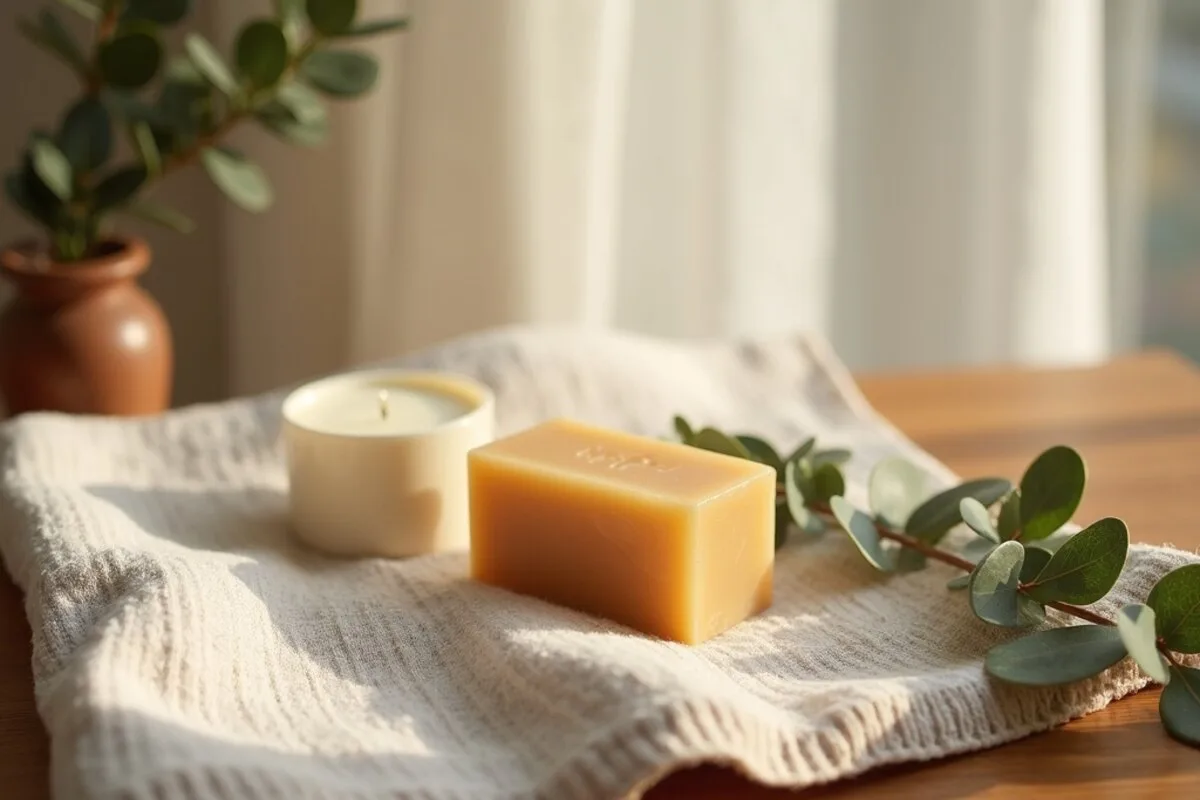
A weekly shape
Here's the loose weekly shape I keep. I want to stress loose. It's a rhythm, not a rota, and I miss days constantly. But having a default shape means I don't have to decide from scratch every day what looking after myself looks like, which is half the battle when you're tired.
- Monday: a long walk after dinner.
- Tuesday: cook something for tomorrow's lunch.
- Wednesday: phone in the hallway from 9pm.
- Thursday: one person, one real conversation.
- Friday: write what you're carrying into the weekend.
- Saturday: a slow breakfast, eyes off the screen.
- Sunday: thirty minutes of nothing.
You'll notice none of it costs money and none of it takes more than an hour. That's deliberate. Self-care that requires spending or a big block of free time is self-care that quietly excludes most people on most days. The whole shape is built from things I already had access to: my feet, my kitchen, a notebook, a person I like, and the radical act of doing nothing for half an hour.
Each day has a slightly different flavour of care. Movement on Monday. Future-kindness on Tuesday, when I cook for the version of me who'll be hungry and rushed tomorrow. Boundaries on Wednesday with the phone in the hallway. Connection on Thursday. The point isn't this exact list. It's that "care" is more than one thing, and a good week touches a few of them.
The kinds of self-care nobody photographs
The most important self-care is the stuff that never makes it into a wellness photo, because it's not pretty. It's admin, boundaries, and tiny acts of future-kindness. I'd argue these matter far more than any bath, and they get almost no airtime because you can't sell them in a gift set.
The boring administrative kind
Booking the dentist appointment you've been avoiding. Opening the scary email. Paying the bill before it becomes a late bill. These are genuine acts of self-care, because the low-grade dread of undone admin is a real weight, and lifting it is a real relief. I've come to treat a dreaded errand as exactly as caring as a nap, sometimes more.
The future-kindness kind
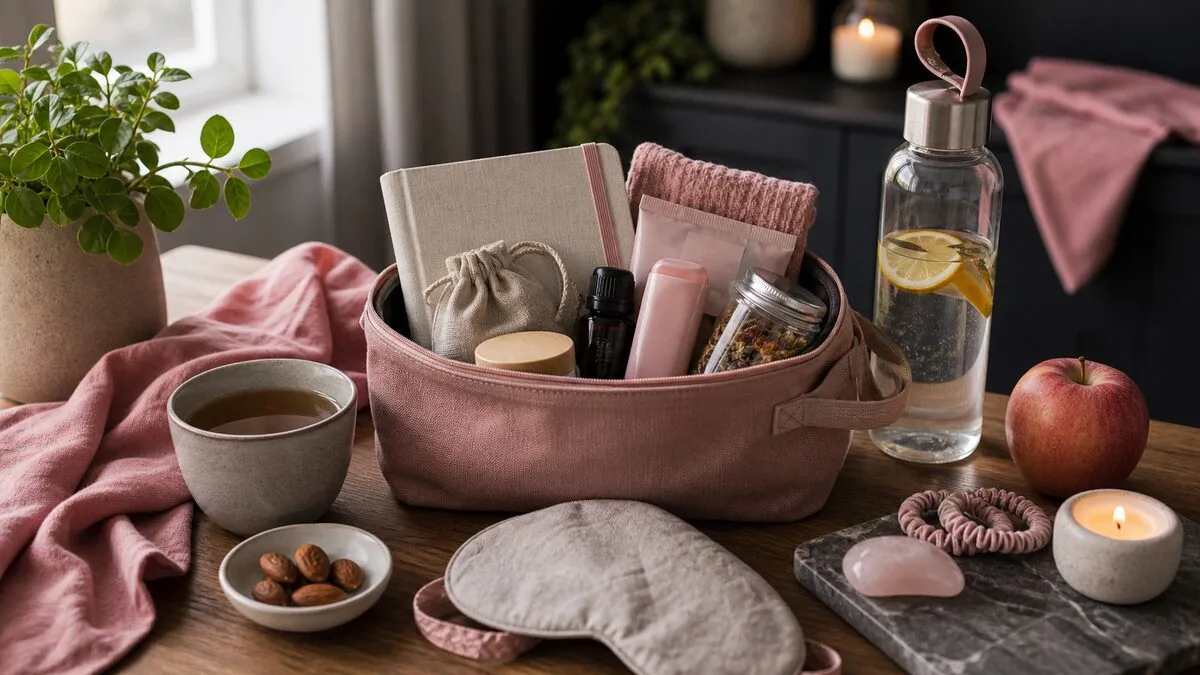
So much of self-care is just doing a small thing now for the version of you who shows up later. Cooking tomorrow's lunch tonight. Laying out clothes. A little plant-based meal prep on a Sunday so the tired Wednesday version of me eats well without effort. It's the same logic as keeping a wellness kit: the rested you takes care of the depleted you in advance.
This kind of care is quiet and almost invisible, and it's the kind I'd most want to pass on. Nobody claps for the person who did the boring future-kindness. But future-you notices, every time, and over months that accumulated small kindness is what a steady life is actually made of.
Rest is not a reward you earn
You do not have to earn rest, and unlearning the opposite belief was one of the most useful things I've done. Somewhere along the way a lot of us absorbed the idea that rest is a prize for productivity, something you're only allowed once the list is finished. The list is never finished. So we never quite let ourselves rest, and we wear the exhaustion like a merit badge.
I had to actively practise resting without having earned it, which sounds absurd written down. Sitting on the sofa at 4pm doing nothing, while things remained undone, and not letting the guilt talk me out of it. The first few times it felt almost transgressive. Now I understand that rest is part of the work of being a functioning person, not a reward bolted on after it.
Rest isn't what you do when the work is done. It's part of what lets the work get done at all.
The "thirty minutes of nothing" on my Sunday is the purest version of this. Not thirty minutes of a hobby, or a productive wind-down, or anything with an output. Thirty minutes of genuinely nothing: staring out a window, lying on the floor, letting the mind wander with no destination. It's the hardest item on the list and the one I'd defend most fiercely.
If even that feels impossible, you might be more depleted than you think, and the bigger picture is worth a look. I write about the slower, structural version of all this in a slow living routine and everyday balance habits, because sometimes the problem isn't a missing ritual, it's a life with no slack built into it anywhere.
Saying no as self-care
The most powerful self-care tool I have is the word no, and it took me an embarrassingly long time to use it. Every yes you give to something is a no to something else, often to your own rest, and a calendar packed with obligations you half-resent is a fast route to depletion no amount of bath salts will fix.
I'm not talking about becoming selfish or flaky. I'm talking about the gentle, honest no to the extra commitment, the event you're dreading, the favour that would cost you more than you have to give this week. Protecting your time and energy isn't self-indulgent. It's the upstream version of self-care, the kind that prevents the crash rather than mopping it up.
What helped me was realising that a reluctant, resentful yes serves no one. The friend doesn't actually want you at the thing you're miserable about attending. They want the version of you that shows up gladly, which means sometimes the kindest answer for everyone is a clear no now rather than a grudging yes you'll quietly hold against them.
This connects to the daily stress, too. A lot of what I reach for in my stress relief rituals is just managing the overwhelm that a string of bad yeses created. Saying no earlier means needing the rituals less later. The boundary is the cheaper fix, even though it's the harder one to say out loud.
Self-care on the days you can't be bothered
On the days you can't be bothered, the whole point is to lower the bar until you can step over it without lifting your foot. This is the failure mode of every self-care routine: it works great when you're already doing okay, and evaporates exactly when you're low, which is when you need it. So the low-day version has to be almost insultingly small.
My floor is three things: drink a glass of water, get outside for even two minutes, and go to bed at a reasonable hour. That's it. On a genuinely terrible day, hitting those three is a complete success, and I refuse to feel bad about not doing more. Three tiny kindnesses beat a perfect routine I abandon in a heap of guilt.
The trick is to decide the floor in advance, when you're well, so the low version of you doesn't have to negotiate. I borrow this directly from how I build any habit, the gentle approach in healthy habits for beginners: make the minimum so small that "I can't be bothered" is no longer a valid excuse, because the thing barely takes any bother at all.
And on the days you do nothing from any list, not even the floor? That's allowed too. A day of falling completely apart is not evidence that self-care doesn't work for you. It's just a hard day, and the kindest self-care available is to not pile self-criticism on top of it. You return tomorrow. The returning is the whole practice, here as everywhere.
Building your own week without copying mine
Please don't copy my week. I mean that. My shape fits my life, my work, my energy, and the specific things that restore me, and yours will be different in ways that matter. The useful thing isn't my list. It's the method for building your own.
Start by noticing what actually restores you, as opposed to what you've been told should. For some people a long walk is bliss; for others it's a chore and a quiet hour with a book is the real medicine. Pay attention to which activities leave you fuller rather than more drained, and build from those. Honest data about yourself beats any template, mine included.
A simple way to begin
- List five small things that reliably make you feel a bit more human. Be honest, not aspirational.
- Pick the easiest one and attach it to a day or a moment you'll remember.
- Do just that one for two weeks, until it's automatic.
- Add a second. Build slowly. A real week beats a perfect plan.
Cover a few different flavours over the week if you can: something for the body, something for connection, something that's pure rest, something that's future-kindness. But don't force all of them at once. A week with two genuine acts of care that you actually do is worth ten aspirational ones that live only on a list. Make it yours, make it small, and let it grow at its own pace.
The long game of being on your own side
Underneath all the lists and shapes, self-care is really one thing: the practice of being reliably on your own side. Not in a grand way. In the small, daily, slightly boring way that means you treat yourself with the same basic decency you'd offer a friend who was tired and trying their best.
That reframe changed more for me than any specific habit. When I'm deciding whether to push through or rest, whether to say yes or no, whether to eat properly or skip it again, I ask what I'd tell a friend in my position. The answer is almost always kinder than the one I'd default to for myself, and following it has slowly rebuilt a trust I didn't know I'd lost.
The payoff isn't dramatic, and I won't pretend it is. You don't transform. You just become a little more steady, a little less depleted, a little more able to handle the ordinary hard things without unravelling. Over months and years, that quiet steadiness is worth more than any peak experience a wellness brand could sell you.
So start where you are, on whatever ordinary Tuesday this happens to be. Drink the water. Take the walk. Say the no. Go to bed. None of it will look like self-care in a photo, and all of it is the real thing. Pair it with a gentle first hour and a kinder relationship with food in the mindful eating guide, and you've built something that holds. Be on your own side. It's the whole routine.
Self-care for the body, quietly
A surprising amount of self-care is just basic, unglamorous tending of the body, the kind that gets no airtime because you can't sell it in a gift set. Before any candle or mask, the body wants the dull stuff: enough water, enough sleep, some movement, a real meal. Skip those and no amount of pampering at the edges will make up the difference. The dull stuff is the foundation; the pretty stuff is the cherry.
I had to make peace with how boring this layer is. Drinking water isn't a ritual you can photograph. Going to bed at a sane hour doesn't feel like a treat. But these are the things that decide whether I'm coping or quietly cracking, far more than any indulgence I might book to make up for neglecting them. So I treat them as the real self-care and the bath as the bonus, not the other way round.
The body basics I keep returning to
- Water within sight, so I drink it without having to remember.
- A daily walk that asks nothing, just getting outside and moving a little.
- One properly nourishing meal, even on a day that's otherwise a write-off.
- A sane bedtime, because sleep quietly repairs everything else.
None of this is a fitness plan, and that's the point. It's maintenance, the gentle upkeep that keeps the machine running without strain. The fuller version of the food side lives in my vegan wellness routine, and the sleep side has its own home in the sleep wellness guide. But you don't need either to start. You need a glass of water and a slightly earlier night.
The thing I'd most want you to take from this is permission to count the boring stuff. The day you drank water, took a short walk, and got to bed on time was a genuine act of self-care, even though it would make a terrible photo. Many people find that once the body basics are steady, the need for dramatic recovery treats quietly fades, because there's far less to recover from.
There's one more piece worth naming here, and it's the gentlest of all: easing up on the body when it's tired rather than pushing through. A rest day. A slower pace. Letting a sore, drained body do less without turning it into a guilt trip. The body keeps a fairly honest record of how we've been treating it, and listening to that record, even occasionally, is its own quiet form of care.
Self-care for the mind, without the jargon
Looking after your mind doesn't require a special practice or any vocabulary you have to learn, it mostly requires a little space and a little honesty. I'm wary of how clinical wellness language can make ordinary mental upkeep sound like a technical skill you might be doing wrong. You're not doing it wrong. Giving your mind a moment of room is something humans have always done, badly and well, without any app.
For me the simplest version is just noticing what I'm carrying before it builds up. My Friday habit of writing down what I'm bringing into the weekend is exactly this: not journalling as a grand practice, just emptying my head onto a page so it stops circling. Naming a worry usually shrinks it a little. Leaving it unnamed lets it grow in the dark, which is how a small thing becomes a 3am thing.
The other piece is letting the mind genuinely rest, which is harder than it sounds in a world built to fill every gap. My "thirty minutes of nothing" is the purest form, but even smaller doses help: a walk with no podcast, a coffee with no phone, a few slow breaths in a doorway. The general idea sits under mindfulness, but you don't need the formal version to get the benefit.
A worried mind doesn't need a technique. It often just needs somewhere quiet to put the worry down for a minute.
What I'd steer you away from is turning mental self-care into another thing to perform or optimise. The goal isn't a perfect meditation streak or a beautifully kept journal. It's a slightly less crowded head. If a quiet walk does that for you, brilliant, you're done. The slower, structural version of all this is really what my slow living routine is about: less input, more space, fewer things shouting at once.
Self-care when you live with other people
Self-care gets quietly complicated when you share your life with others, because the time and quiet it needs is exactly what a full house tends to absorb. A lot of advice assumes you have a spare room and a free evening, which is a fantasy for anyone living with a partner, children, flatmates, or caring responsibilities. So the practice has to bend to a busier, noisier reality, or it just becomes one more thing you fail at.
The first shift that helped me was letting go of the idea that self-care has to be solitary and uninterrupted. Some of it can be, but plenty of it can happen in the cracks: a slow first coffee before the house wakes, a walk you take alone for twenty minutes, a quiet ten minutes with the door closed that you ask for out loud. Small, claimed pockets beat a grand solo retreat you'll never actually get.
The harder shift was learning that asking for those pockets is itself an act of self-care, and not a selfish one. Saying "I need half an hour" to the people you live with isn't taking something from them; it's keeping yourself in a state where you can actually be present for them. A depleted person with no boundaries isn't more generous, just more frayed. The boundary is the upstream kindness, for everyone.
It also helps to fold care into shared life rather than always carving it out separately. A walk with a partner. Cooking something good for the household, which feeds you too. The future-kindness of a little meal prep that makes the whole week easier, not just yours. Family rhythms get their own gentle treatment in plant-based family life, and the home side in cozy home rituals, because care and shared life don't have to compete.
A starter kit for a depleted week
If you're reading this already running on empty, ignore most of what I've written and start here, with the smallest possible kit. When you're truly depleted you don't need a nine-section philosophy, you need three or four tiny things you can do without thinking, today, that will move you a little back toward steady. The full routine can wait. The floor cannot.
- Drink a glass of water now, before you finish this sentence if you can.
- Step outside for two minutes. Not a walk, just out and back, just daylight.
- Do the one piece of dreaded admin that's been quietly draining you. The smallest one.
- Decide your bedtime, then keep it tonight, even if the day was a write-off.
That's the whole starter kit. Notice there's nothing in it to buy and nothing that takes a free afternoon, because a depleted person has neither spare money nor spare energy to spend on their own recovery. Each item is almost insultingly small on purpose, so that "I can't be bothered" stops being a valid excuse, the same gentle logic I use in healthy habits for beginners.
Do those for a few days and you'll usually find a little more capacity returns, almost on its own. Then, and only then, add one more thing from the weekly shape further up. Build slowly. A real, tiny routine you actually keep beats a beautiful, ambitious one you abandon in a heap of guilt by Wednesday. The returning is the practice, here as everywhere.
And if even the starter kit feels like too much today, that's allowed. A day of falling completely apart is not evidence that self-care doesn't work for you; it's just a hard day, and the kindest thing available is to not pile self-criticism on top of it. You come back tomorrow, at whatever size you can manage. Pair it with a gentle first hour and the wider wellness pillar when you've got more in the tank. For now, water, daylight, one small thing, bed. That's enough. That's the whole routine on a bad week, and it counts.
Common questions
How long will this take, honestly?
The reading is 9 min. The practice is a lifetime. Start with one small piece this week and let the rest follow when it feels natural, not before.
Do I have to be fully plant-based for this to help?
No. Everything I write is for people who want a softer relationship with food and routine. The recipes happen to be plant-based; the ideas work in any kitchen.
What should I read next?
The related essays below, in order. If you only read one more thing, read A first hour worth keeping, it picks up exactly where this one ends.
Can I cite this guide somewhere?
Yes. Please link back to this page and credit Caleb Leuchi. All photographs are made for Leuchi unless noted; the writing is original.
Continue reading in this cluster
All wellness →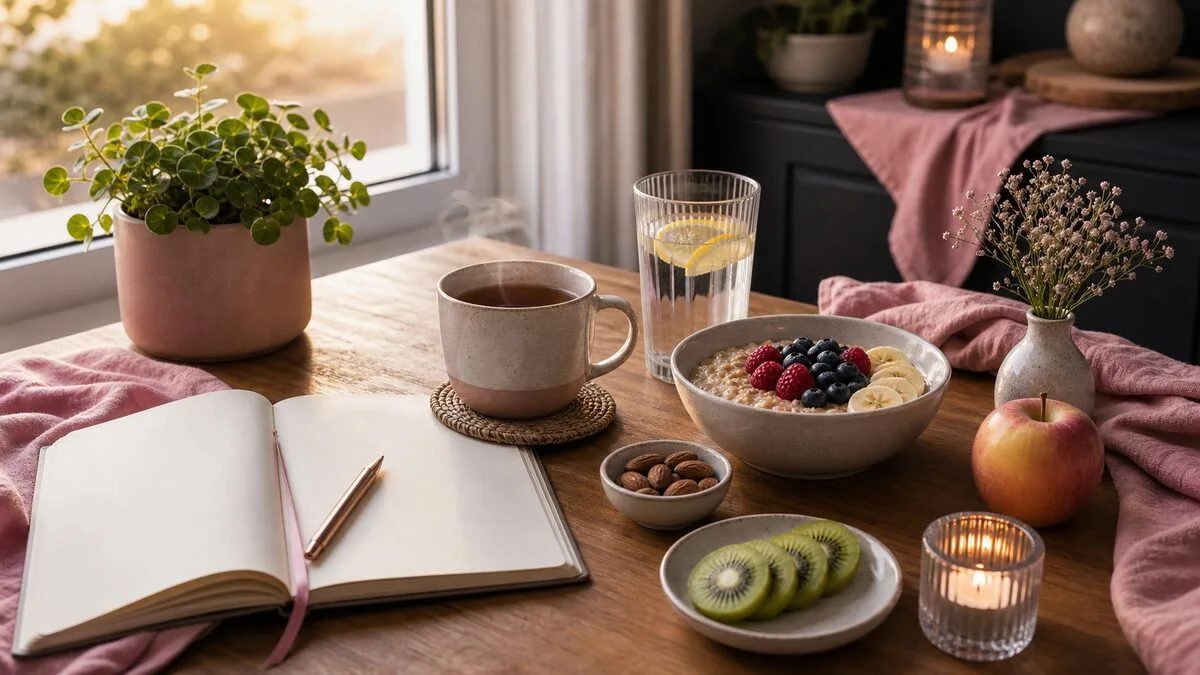
Wellness
A first hour worth keeping
Wellness
Stress relief rituals for hard weeks
Wellness
A sleep wellness guide for better nights
Wellness