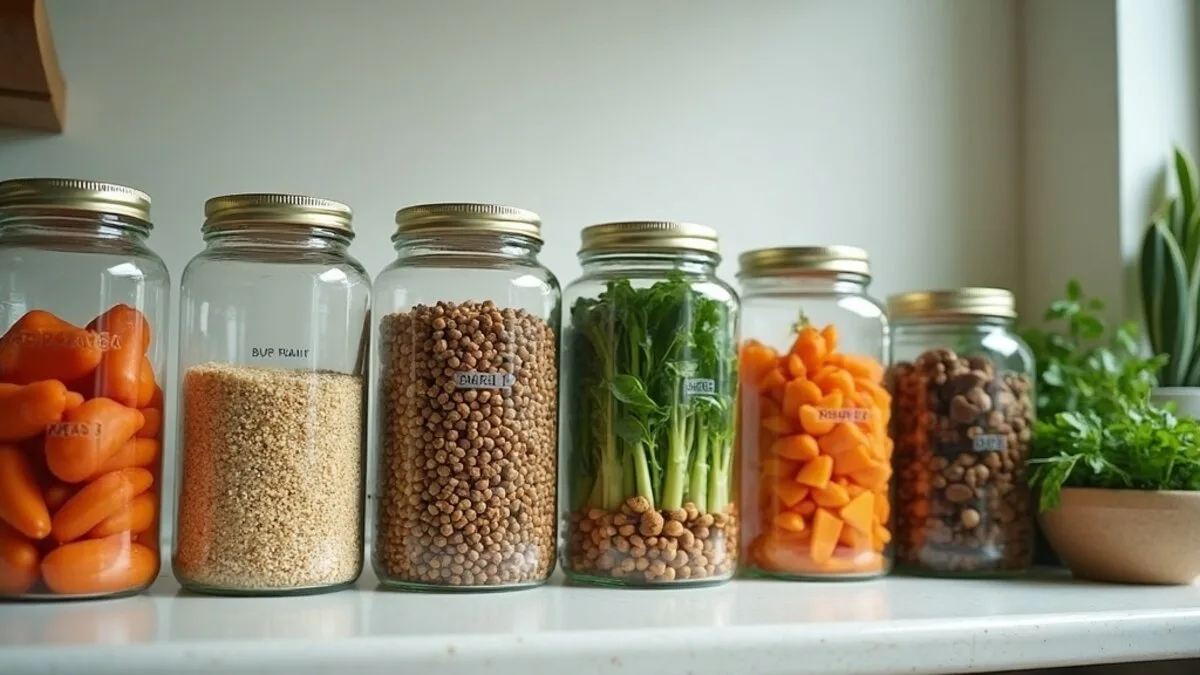
Vegan meal prep for the week is one focused cooking session, usually a Sunday, that sets up five weekday lunches or dinners in about ninety minutes. You plan a short menu, build one shopping list, then cook in a deliberate order: oven first, a pot simmering while you chop, a grain resting at the end. Pack the parts into clear containers, eat the freshest things early in the week, and freeze or save the sturdier ones for later. This is the structured how-to, the literal method, not a mood.
Vegan meal prep for the week, in one Sunday
Vegan meal prep for the week is one focused cooking session that sets up five weekday meals, and the whole thing fits inside a single Sunday if you work in the right order. You are not chasing perfection or a feed-worthy fridge. You are leaving food in clear containers so that your tired weeknight self only has to assemble and warm, never cook from scratch. That is the entire promise, and it is a reliable one.
I want to be clear about what this piece is, because I have written about meal prep before in a very different spirit. My plant-based meal prep without the pressure is the flexible-components philosophy this method is built on: a grain, a pulse, a roast tray, a sauce, mixed and matched with no rigid plan. This article is the opposite register. It is the structured how-to, a literal process you can follow start to finish.
How to read this guide
Treat it as a sequence. There are six numbered steps and then a sample week to copy. Step one is a thirty-minute planning ritual. Steps two through four cover shopping, cooking and packing. Step five is the storage timeline, and step six is reheating. You do not need special gear, only a pot, a sheet pan, a few clear containers and one Sunday hour and a half. Start here and the rest of your week gets noticeably quieter.
Why a method beats willpower
The reason vegan meal prep for the week works is not discipline. It is that a method removes the decisions that usually defeat us. On a Wednesday evening, hungry and a little frayed, nobody wants to choose a recipe, check whether they have the ingredients and then chop an onion. That gap, between getting home and food being ready, is exactly where takeout wins. A finished prep closes the gap to about five minutes.
Willpower is a poor tool because it runs out precisely when you need it. A system does not. Once the food is cooked and labelled on Sunday, your weeknight self makes no real decisions at all. You open the fridge, you see the parts, you build a plate. The thinking happened once, on a calm afternoon, instead of five times in five tired moments.
What a method buys you
- One round of decisions instead of five scattered ones.
- One shopping trip, so you are never missing a key ingredient at 7pm.
- One mess to clean, rather than a kitchen wrecked every night.
- A soft landing on the days that go sideways, which is most of the point.
If you want the gentler, looser version of all this, the components essay covers it. This is the engine room: the exact order of operations that makes a week of plant-based eating run on rails.
Step 1: the 30-minute planning ritual
Every good week of vegan meal prep starts before any cooking happens, with about thirty minutes of quiet planning. I do this on Saturday evening or early Sunday with a coffee. The aim is to decide what you are making before you stand in a shop or open a cupboard, because decisions made on a full stomach are far better than ones made under fluorescent supermarket lights.
The planning template
I use a simple grid every single week, and it never changes. Four rows, because four parts cover almost everything. Fill each row with one choice, and you have effectively planned the week in three minutes once you are used to it.
- Grain or base: brown rice, farro, quinoa or couscous. Pick one.
- Protein: a pot of lentils, a tin of chickpeas, a block of baked tofu, or beans. Pick one or two.
- Vegetables: whatever is in season and on offer, enough for one big roast tray.
- Sauce: one bold dressing that ties it all together, plus salt, lemon and oil.
That grid is the backbone. For protein ideas that genuinely fill you, I lean on my notes in high-protein vegan meals for real life, which is where I work out how to build protein into prep so a bowl is a meal and not a snack.
The two questions I ask first
Before I fill the grid, I ask two things. How many nights am I actually home this week, so I do not over-cook and waste food. And what is already in the fridge that needs using, which usually decides the roast tray for me. Planning around what you have keeps a zero-waste kitchen honest, and it is the cheapest planning trick there is, since the saddest produce becomes the plan rather than the bin.
Step 2: the shopping list that prevents mid-week gaps
The planning grid converts directly into a shopping list, and this is the step that quietly prevents the most failures. Almost every collapsed meal-prep week I have had came down to one missing ingredient on a Tuesday. A complete list, built straight from the grid, means you buy everything in one trip and never face an empty cupboard halfway through the week.
How I build the list
I write the list grouped by where things live in the shop, not by recipe, because that is how you move through a store efficiently. Produce together, tins and dry goods together, fridge items last. Under each, I note exact quantities from the grid, so I am not guessing whether one squash is enough for a tray. Guessing is how you end up short.
- Produce: the roast-tray vegetables, plus loose greens and a lemon or two.
- Dry and tinned: the grain, dried or tinned pulses, and a tin of tomatoes for a quick braise.
- Fridge and staples: tofu or tempeh if you are using it, plus tahini, miso or whatever the sauce needs.
- Check, do not buy: oil, salt, spices and vinegar, which you usually already have.
Buy fresh things in two waves
One honest adjustment: greens and bread do not last a week, so I buy a small amount on Sunday and top them up mid-week if I am near a shop. Everything cooked keeps. Leaves wilt. Planning around that single fact, that the soft things are bought little and often while the cooked base is built once, is what keeps the back half of the week from feeling tired and limp.
Step 3: the cook order for one 90-minute session
This is the heart of the method, so I will be precise. A good prep session is about ninety minutes, and the magic is entirely in the order. You start the thing that takes longest and needs no attention, then fill the waiting time with the active jobs. Done well, the oven and the hob are working while your hands chop, and nothing sits idle. Here is the exact timeline I follow.
The 90-minute timeline
- 0 to 10 minutes: oven to 220C, 425F. Chop the roast-tray vegetables roughly, toss with oil and salt, spread on a sheet pan, slide it in. Oven first, always.
- 10 to 15 minutes: rinse the grain, get it on the hob to simmer with a lid on. It now cooks unattended.
- 15 to 35 minutes: while those run, cook the pulses. Simmer lentils, or drain and crisp chickpeas in a pan. Press and cube tofu if you are using it.
- 35 to 45 minutes: make the sauce in a jar. Turn the roast tray once. Check the grain.
- 45 to 90 minutes: let things cook through, cool, and pack. The grain rests off the heat with the lid on.
The principle is simple: oven-first, then anything that simmers, then the active chopping in the gaps. If you also want a pot of something to freeze, this is the session to start a batch of vegan soup on a back burner, because it babysits itself while you handle everything else and the freezer thanks you all month.
One small habit makes the whole session calmer: clean as you go. While the grain simmers and the tray roasts, you have natural pauses, and those are the minutes to wash the chopping board, wipe the counter and rinse the pot you just emptied. Cook this way and the kitchen is nearly tidy by the time the food is done, which means the session ends with packing rather than with a sink full of dread. The order is not only about the food, it is about ending the afternoon feeling lighter rather than wrecked.
Why oven-first matters
Roast vegetables take the longest and need the least from you, which makes them the perfect thing to start. By the time the tray is golden, your grain has cooked and rested, your pulses are done, and your sauce is in its jar. Reverse the order and you are standing around waiting for the oven at the end, with cooling pots cluttering every surface. The sequence is the whole trick.
Step 4: containers, and packing for freshness
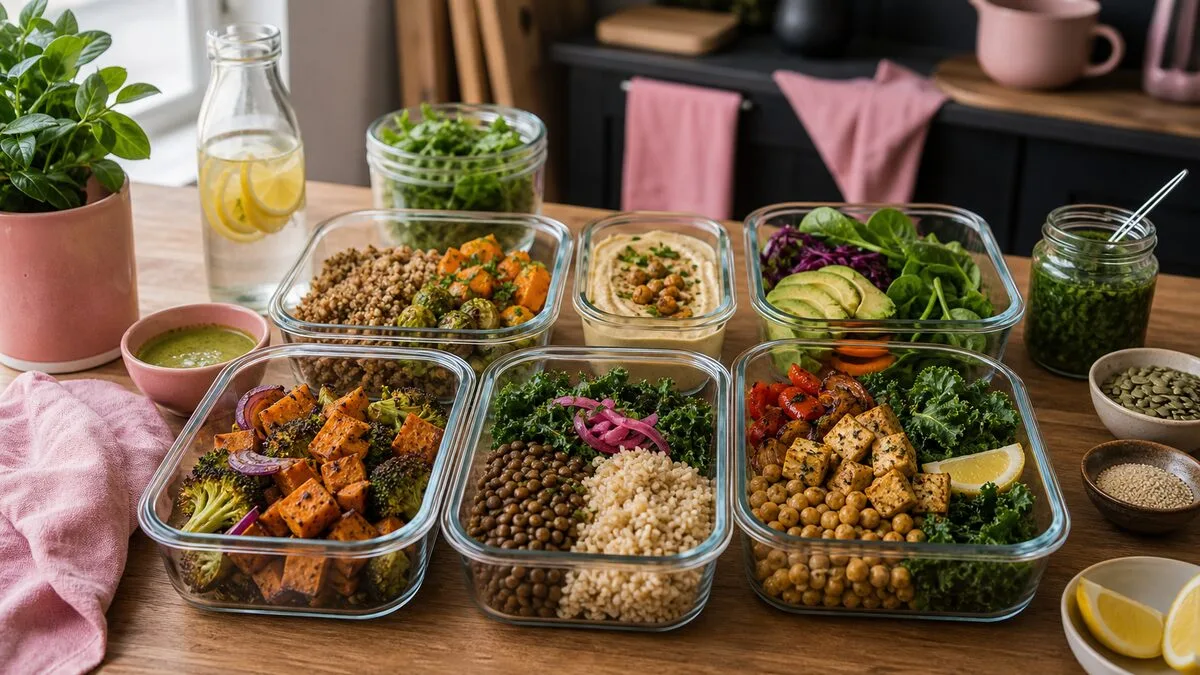
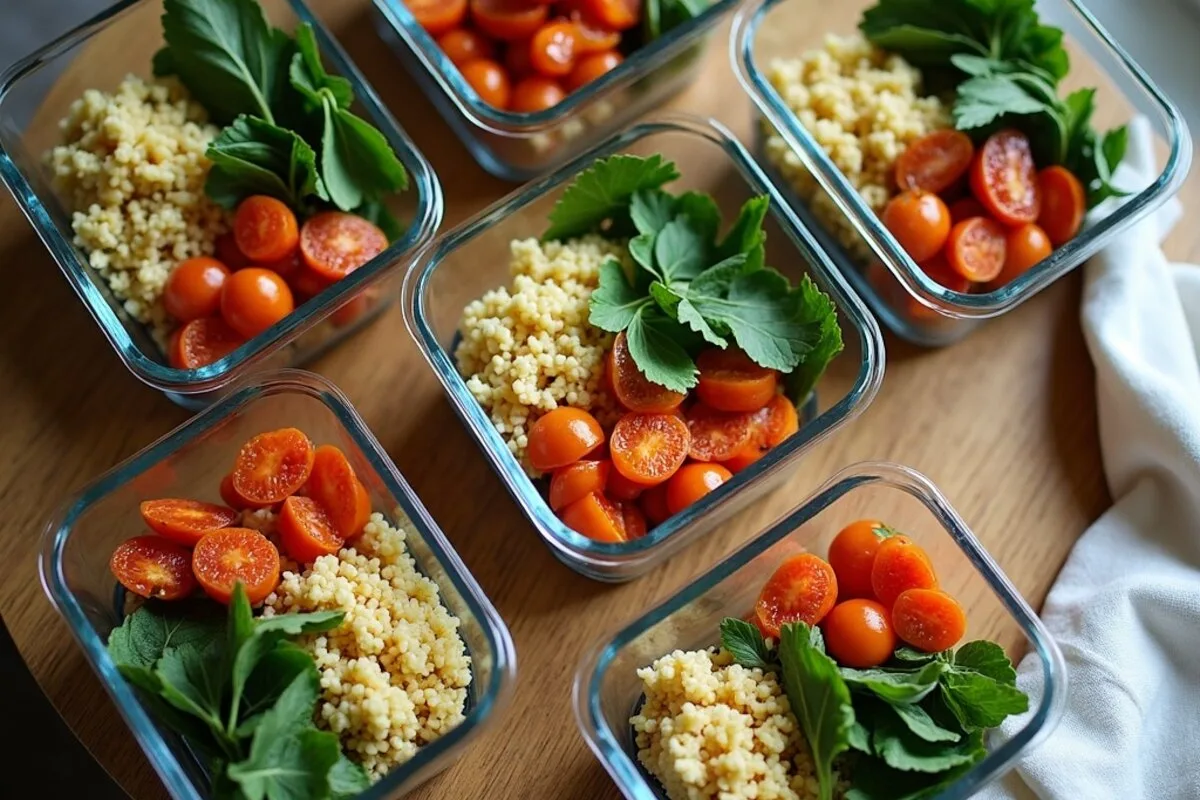
How you pack the food matters almost as much as how you cook it. The golden rule of vegan meal prep for the week is to store the components separately, not pre-assembled into finished bowls. A grain dressed on Sunday is mush by Tuesday. The same grain kept plain, with the sauce in its own jar, stays good and lets you build a different meal each day.
The containers I actually use
I keep it minimal: four medium glass boxes with proper lids, two small ones, and a handful of jars. Glass beats plastic for two practical reasons. You can reheat in it without worry, and you can see what is inside, which means food gets eaten instead of forgotten behind something opaque. Most of my old fridge waste was simply things I could not see.
- Wide and shallow over deep: food spread thin cools faster and more safely, and stacks better.
- Sauces in jars: always separate, added only at the moment of eating.
- Greens kept dry: a piece of kitchen paper in the box absorbs moisture and slows wilting.
- Label the lids: a strip of tape with the date, so the storage timeline in the next step actually works.
Cool before you close
Let food cool before lidding and refrigerating, but do not leave it out longer than about two hours. Spreading it thin on a plate or in a wide container speeds the cooling considerably. Trapping steam in a sealed warm box is how condensation forms, and condensation is how perfectly good roast vegetables turn slick and soft by the next afternoon. A few minutes of patience here protects the whole week.
Step 5: a day-by-day storage timeline
Once the food is packed, a clear timeline tells you what to eat when, so nothing is wasted and nothing is eaten past its best. This is where dated lids earn their place. Cooked grains, beans and lentils generally keep about three to four days in the fridge, which shapes the entire shape of the week. I eat the freshest, softest things first and save the sturdier ones for later.
The week, mapped
- Monday and Tuesday: eat the most perishable parts. Anything with fresh greens, the softest roast vegetables, and dishes you want at their peak.
- Wednesday and Thursday: the grain and pulses are still good. This is fried-rice and grain-bowl territory, where reheating revives everything.
- Friday: the clean-out meal. Whatever is left, in one bowl, with the boldest sauce to lift it.
- From the freezer: anything you batched ahead, pulled out the night before to thaw.
For the exact numbers, I defer to a proper authority rather than my own nose. The UK Food Standards Agency guide to chilling and storing leftovers lays out how many days cooked foods safely keep in the fridge, and it is worth a glance the first few times you do this until the timings become second nature.
The rule I never break
When in doubt, the oldest container gets used or frozen by Thursday, not stretched into the weekend on faith. Food safety is not the place for optimism. If something smells off, looks slimy, or you genuinely cannot remember when you made it, it goes. The cost of one wasted portion is nothing next to a bad night, and a labelled lid means you almost never have to guess in the first place.
Step 6: reheating without sad, soggy food
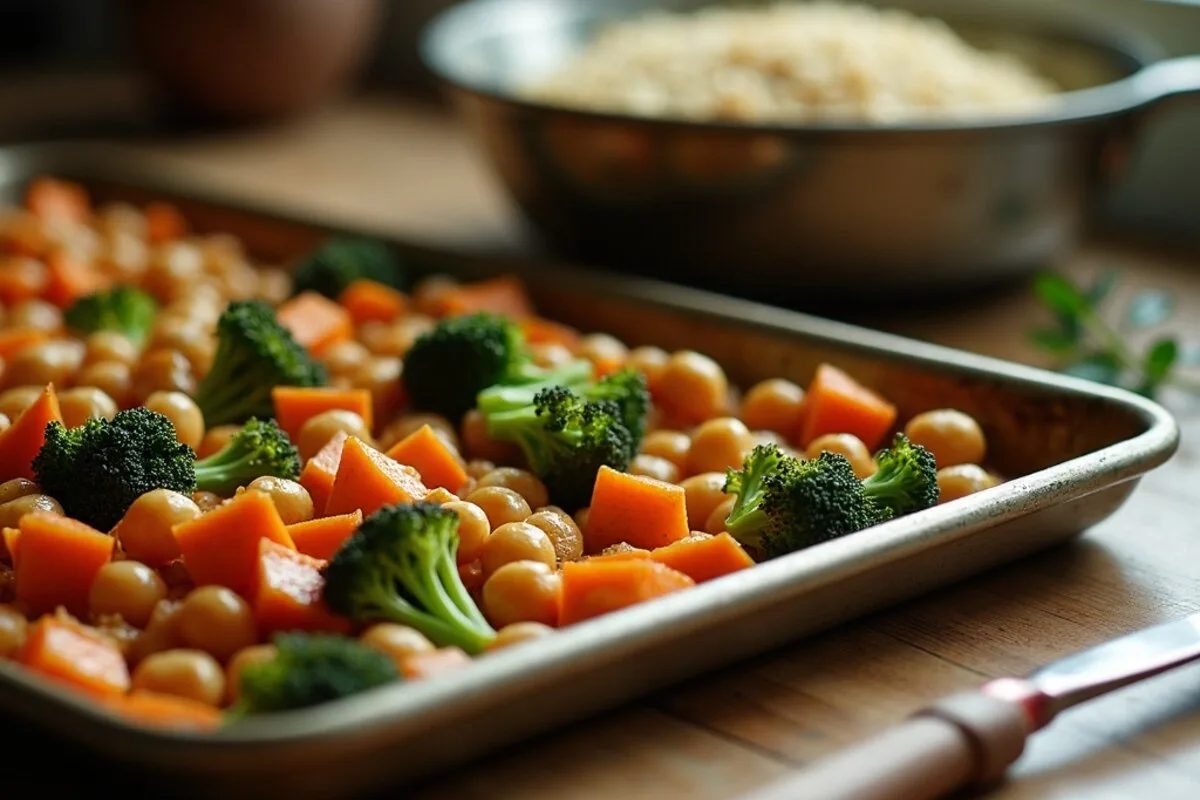
The last skill is reheating, because food that has been prepped well can still be ruined in the final minute. The two enemies are dryness and sogginess, and each has a simple fix. Grains and beans dry out in the fridge, so they want a splash of water and gentle heat. Roast vegetables go limp if you microwave them, so they want dry, fierce heat to crisp back up.
How I reheat each part
- Grains and pulses: a tablespoon of water in the pan or bowl, a lid or cover, and gentle heat. The steam brings them back to life. Never add oil to revive them, it just makes them greasy.
- Roast vegetables: a hot oven, an air fryer, or a dry pan, never the microwave, which steams them soft. A few minutes of real heat restores the edges.
- Tofu and tempeh: a quick sear in a hot dry pan crisps the surface again far better than any microwave can.
- Sauces and greens: never heated. Added cold, at the end, the moment before eating.
The assemble-cold trick
On the nights I have no patience at all, I skip reheating entirely. Cold grain, beans straight from the box, a fistful of greens, a glug of sauce and some toasted seeds is a genuinely good meal that takes the same effort as opening a delivery app. Not everything needs heat. Half of good prep is knowing which parts taste fine cold, which is most of them, honestly.
If you are heating a full plate at once, warm the grain and pulses first and add the roast vegetables only for the final stretch, so they crisp rather than stew alongside everything else. Then take the plate off the heat before you add the sauce, the greens and any seeds. Cold-added freshness against warm, savoury components is the contrast that makes a reheated bowl taste cooked rather than tired, and it costs nothing but a little attention to the order.
A sample week of vegan meal prep for the week
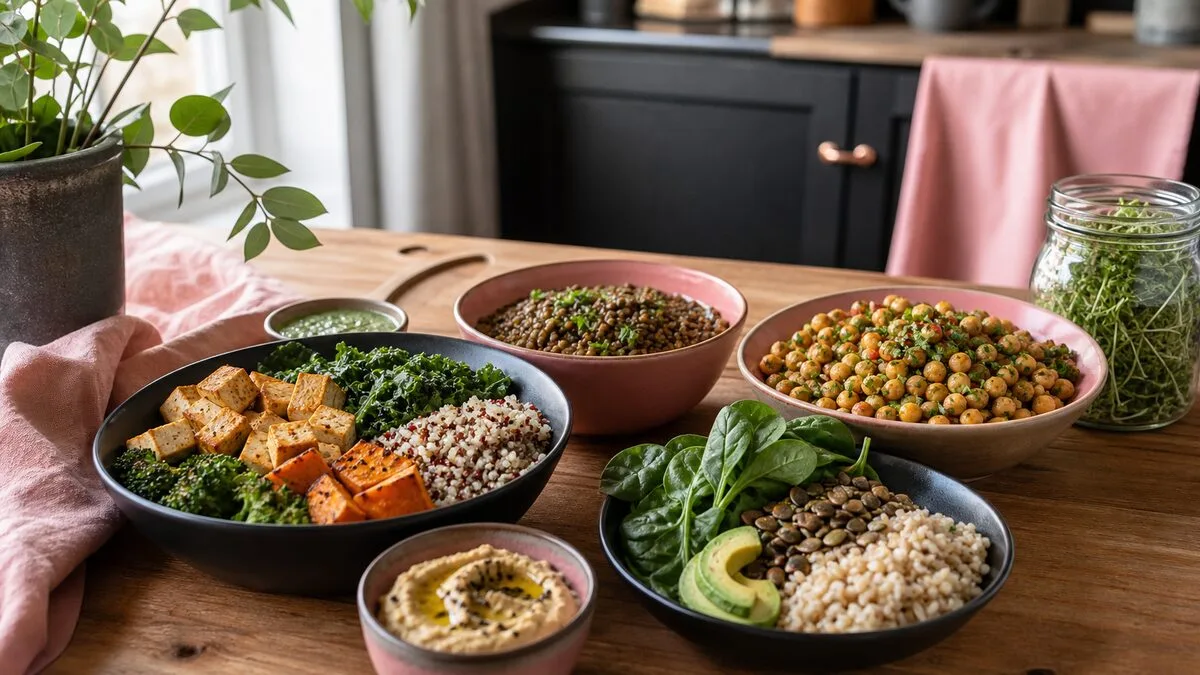
To make all of this concrete, here is a full week built from one Sunday session, so you can see how the parts recombine into five meals that feel unrelated. The base is a pot of brown rice and a pot of farro, a batch of lentils and a tin of crisped chickpeas, one big tray of roast vegetables, baked tofu, and two sauces: tahini-lemon and miso-maple.
Monday to Friday
- Monday: rice, lentils, the softest roast vegetables, tahini-lemon, fresh greens on the side. The classic grain bowl, eaten while the greens are at their best.
- Tuesday: farro, crisped chickpeas, roast broccoli, miso-maple. Same components, completely different plate.
- Wednesday: leftover rice fried hot with whatever vegetables remain and cubes of baked tofu, sauce spooned over. Ten minutes, start to finish.
- Thursday: a warm grain bowl with the last of the lentils and tofu, reheated with a splash of water, miso-maple to finish.
- Friday: the clean-out bowl. Everything left, both sauces, toasted seeds on top.
Notice there is no separate recipe for any single night. There is a base, a protein, a vegetable and a sauce, recombined five ways. If you want fuller plated dinners to slot into this rhythm, my vegan dinners for cozy weeknights are built to drop straight into a prepped week, and the vegan buddha bowl ratio is the template I use whenever I want one bowl to do all the work at once.
When to cook fresh and when to freeze
Not everything should live in the fridge for a week, and knowing what to freeze is what stops vegan meal prep for the week from becoming repetitive or risky. My rule of thumb is simple. The fridge holds three to four days of food, the freezer holds the overflow and the future, and a few things are always better cooked fresh on the night despite all the planning.
What freezes beautifully
- Cooked grains, beans and lentils: they freeze flat in bags and thaw fast, so a double batch on Sunday seeds two weeks at once.
- Soups and braises: the freezer's best friend. A pot frozen in portions is the easiest dinner you will ever reheat.
- Sauces: most freeze fine in small jars or ice-cube trays, ready to drop into a pan.
What to keep fresh
Some things resist prep and I have stopped fighting them. Leafy greens and salads are bought and assembled the same day, never stored dressed. Avocado browns, so it is a day-of addition. Roast vegetables thaw soft rather than crisp, so I freeze them only when they are heading into a soup, where softness is welcome. Cooking a small fresh element on a couple of nights keeps the whole week from feeling like leftovers, which is a real risk worth naming.
The freezer is also where a tired produce drawer goes to be saved. A bag of vegetable scraps slowly fills until it becomes stock, which is the same instinct behind a zero-waste kitchen: nothing wasted, everything with a next destination. Batch-cook a pot of vegan soup when you have the time, freeze it in portions, and your worst weeks always have a soft landing waiting.
An honest word before your first Sunday
A few honest things before you try this. The first week will feel slower and clumsier than the timeline suggests, because you are learning the order, not just following it. By the third week the ninety minutes is real and the planning takes five minutes flat. Do not judge the method by the first attempt, the way you would not judge a recipe by the first time you cooked it.
You also do not have to do all six steps at once. Start with two: a grain and a sauce, cooked on Sunday. That alone changes more weeknights than you would expect. Add the roast tray the following week, the pulses after that, until the full session feels easy rather than ambitious. A method you actually keep beats a perfect one you abandon by Wednesday.
And remember what this sits beside. The structured version here is the how-to, but the spirit behind it is the flexible-components philosophy in my plant-based meal prep without the pressure. The steps are the scaffolding. The point underneath them is gentler: you are leaving a small kindness in the fridge for a future, tired version of yourself, and that is reason enough to spend one calm Sunday hour on it.
Common questions
How long does vegan meal prep last in the fridge?
Cooked grains, beans, lentils and roast vegetables generally keep about three to four days in the fridge when stored cool and covered. I cook on Sunday and use or freeze the oldest container by Thursday rather than stretching it into the weekend. The US government's cold food storage chart is the reliable reference for exact timings, and a dated label on each lid takes the guesswork out entirely.
Can you freeze vegan meal prep?
Yes, and it is one of the best ways to make the method sustainable. Cooked grains, beans and lentils freeze flat in bags and thaw quickly, and soups and braises freeze beautifully in portions. Sauces freeze well too, in small jars or ice-cube trays. The exceptions are leafy greens, avocado and crisp roast vegetables, which are better fresh, so save those for the day you eat them.
How do I meal prep for a week without getting bored?
Prep neutral components rather than finished meals, then recombine them. A pot of grain, a protein, a roast tray and one or two bold sauces can become five plates that taste unrelated. The sauce is where the variety lives, so make sure your dressings are genuinely distinct. Buying fresh greens mid-week and cooking one small fresh element on a couple of nights also keeps the back half of the week from feeling like leftovers.
How much time does a week of vegan meal prep take?
Plan on roughly thirty minutes of planning and shopping prep, then a single cooking session of about ninety minutes. The cook time feels long the first week while you learn the order, but once oven-first becomes a habit, the oven and hob do most of the work while you chop. By the third week the whole thing reliably fits inside one calm Sunday afternoon with time to spare.
What containers are best for vegan meal prep?
Glass containers with proper lids are worth it for two practical reasons: you can reheat in them safely, and you can see what is inside, so food gets eaten instead of forgotten. Wide, shallow boxes cool food faster and stack better than deep ones. Keep sauces in separate jars, store greens with a piece of kitchen paper to absorb moisture, and label each lid with the date so your storage timeline actually works.