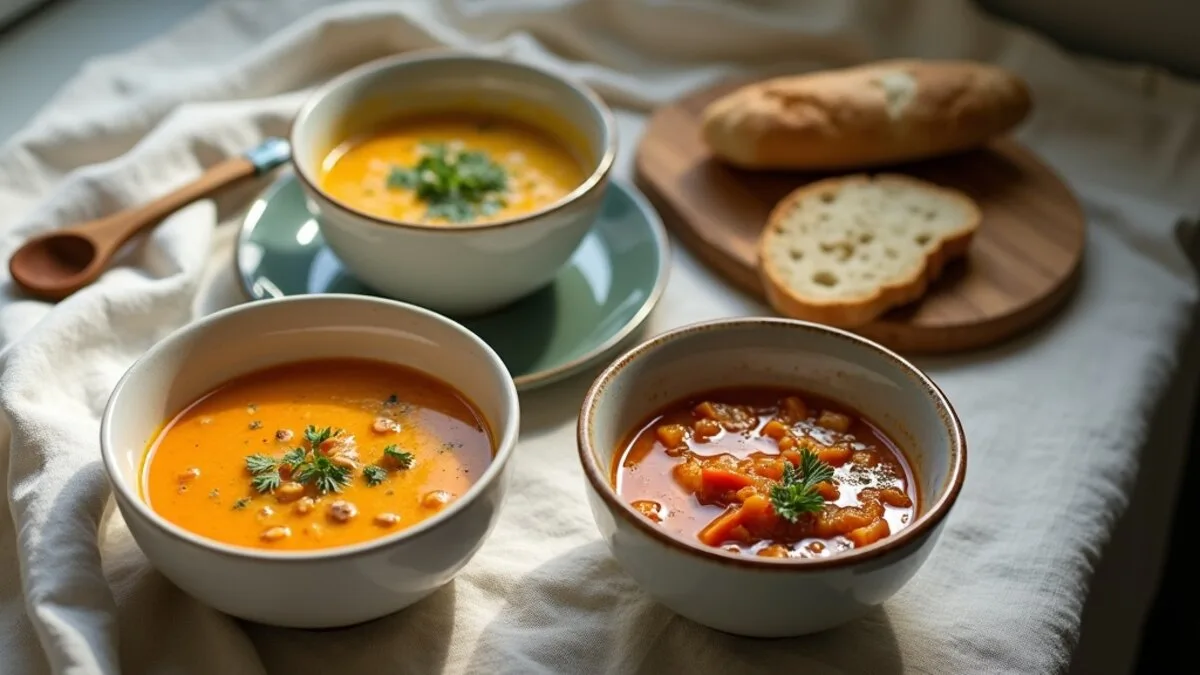
The vegan soup recipes I cook on repeat are a golden red lentil soup, a roasted squash soup, a chunky minestrone, and a fast miso noodle bowl for tired nights. Each one starts the same way, with onion, garlic and celery softened in oil, then leans on lentils, beans or blended vegetables for body. Some I leave brothy and some I blend smooth, but they all freeze well and all come back to life with a little salt and acid before serving.
Vegan soup recipes, the short version
The vegan soup recipes I lean on are a golden red lentil soup, a roasted squash soup, a chunky minestrone, a quick miso noodle bowl, and a creamy potato and leek. They all begin with the same soft base of onion, garlic and celery, and then split into two families. Some get blended smooth until they are velvety, and some stay brothy and full of texture. None of them are hard. Most are done in well under an hour, and every one of them freezes into a future dinner.
This piece is a dedicated soup collection, so it stays narrow on purpose. If you want the wider table of cosy plates, my vegan comfort food recipes cover gravies and bakes, and my vegan dinner recipes handle the plates a bowl of soup wants beside it. Here, though, it is just soup, the way I actually make it on a quiet evening.
How to read this collection
I have written each soup so you can cook it straight from the section, but the real value is in the base and the technique. Learn the soft start, the blend-or-leave-it choice, and the salt-and-acid finish, and you can improvise a pot from almost anything in the fridge. The named recipes are just my favourite versions of a few simple shapes.
A note on quantities before we start. I rarely measure soup tightly, because it is the kind of cooking that bends to taste rather than rules. The recipes here serve roughly four with a hungry margin, but a soup is forgiving of a little more stock, a little more salt, or one extra handful of beans. Cook them once as written, then trust your own spoon. The tasting is the whole point, and a pot you have adjusted yourself always tastes more like home than one you followed to the letter.
Why soup earns its place
Soup is the most forgiving thing I cook. There is no plating, no timing five elements to land together, and almost nothing you can do that a few more minutes of simmering will not quietly fix. On the evenings when I have no energy left for a proper meal, a pot of soup is the difference between eating something warm and eating toast over the sink. That low bar to entry is exactly why it stays in my week.
It is also genuinely good food. A bowl built on lentils or beans carries real protein and fibre, and the long, gentle cooking makes vegetables taste deeper than they have any right to. The team at the Harvard T.H. Chan School of Public Health treats legumes and pulses as a cornerstone of a healthy plant diet, filling and nutritious in equal measure, which is most of why a lentil soup holds me the way a thin vegetable broth never does.
Brothy or blended, the only real fork
Almost every vegan soup falls into one of two camps, and knowing which you are making shapes every choice after. A brothy soup keeps its pieces whole, so the vegetables need cutting evenly and the liquid needs to taste good on its own, because there is nowhere for a weak broth to hide. A blended soup forgives rough chopping entirely, since everything ends up smooth, but it lives or dies on body, which means something starchy or creamy to carry it.
I decide which I want before I start, because it changes how I cut, how much liquid I add, and whether I am reaching for a blender at the end. Once you see soup through that single fork in the road, the rest of the cooking gets a lot calmer.
Soup as kindness to a tired week
There is a practical reason I cook so much soup beyond the comfort of it. One pot can feed several days, it scales without any fuss, and it asks for very little attention while it simmers. That makes it the friendliest dish I know for the evenings when I am tired or short on time. I can start a pot, walk away to do something else, and come back to dinner mostly cooked. Few other things give back so much for so little effort, which is why soup quietly carries a large part of my cooking week.
The base that makes any vegan soup good
Nearly every soup I make starts the same way, with a soft, slow base. Onion, garlic and celery, sometimes carrot, cooked gently in oil until they collapse and sweeten. This is the part people rush, and rushing it is the single most common reason a homemade soup tastes flat and watery. Ten unhurried minutes here is what separates a pot that tastes like something from a pot that tastes like warm water with vegetables in it.
The four things every pot needs
- Aromatics: onion, garlic and celery are my default trio, with carrot when I want sweetness. Cook them slowly in oil until soft and translucent, never browned hard.
- Fat: a real glug of olive oil at the start carries flavour and gives the soup a rounder mouthfeel. Soup made with no fat at all tends to taste thin.
- Salt: added in layers, a little at the base and more at the end, so it builds the flavour instead of sitting on top of it.
- Acid: a squeeze of lemon or a splash of vinegar right before serving. This is the finish that wakes the whole pot up.
Get those four working together and the specific vegetables almost stop mattering. I have made a good soup from a sad half-fridge of odds and ends purely because the base was right and I finished it with lemon. That reliability is why I treat the base as the actual recipe and the rest as variation.
The salt and acid finish
If a soup tastes boring at the end, it is almost never short on herbs or spice. It is short on salt or short on acid, and usually both. I taste right before serving and add salt until the flavours snap into focus, then a squeeze of lemon, and taste again. The change is dramatic and a little addictive. A dull pot becomes a bright one in two small additions, and I have learned to trust that step more than any fancy ingredient.
Golden red lentil soup
If you cook one thing from this collection, make it this. Red lentil soup is the recipe that taught me how forgiving soup could be, and it is still the pot I reach for most. Red lentils need no soaking and break down into a thick, golden, almost creamy texture on their own, so the soup ends up rich without a drop of dairy or any blending if you do not want it. Warmed with cumin, coriander and turmeric, finished with coconut milk and lemon, it is the most comforting bowl I know.
How it comes together
Soften a chopped onion and carrot in olive oil, add garlic and the ground spices for a minute until fragrant, then tip in rinsed red lentils and vegetable stock. Simmer for around twenty-five minutes until the lentils have collapsed and the soup is thick. Stir in coconut milk, season hard with salt, and finish with a generous squeeze of lemon. That acid at the end is not optional here. It is what lifts the whole pot from pleasant to genuinely good.
Why lentils make it filling
This is where the bowl gets its staying power. Red lentils bring protein and fibre that a vegetable-only soup simply cannot, which is why this one holds me through a long evening instead of leaving me hungry an hour later. If I want it heartier still, I stir in a handful of spinach at the end or serve it over a scoop of rice. For more dishes built on that same filling, plant-forward logic, my guide to high-protein vegan meals is where I would point you next.
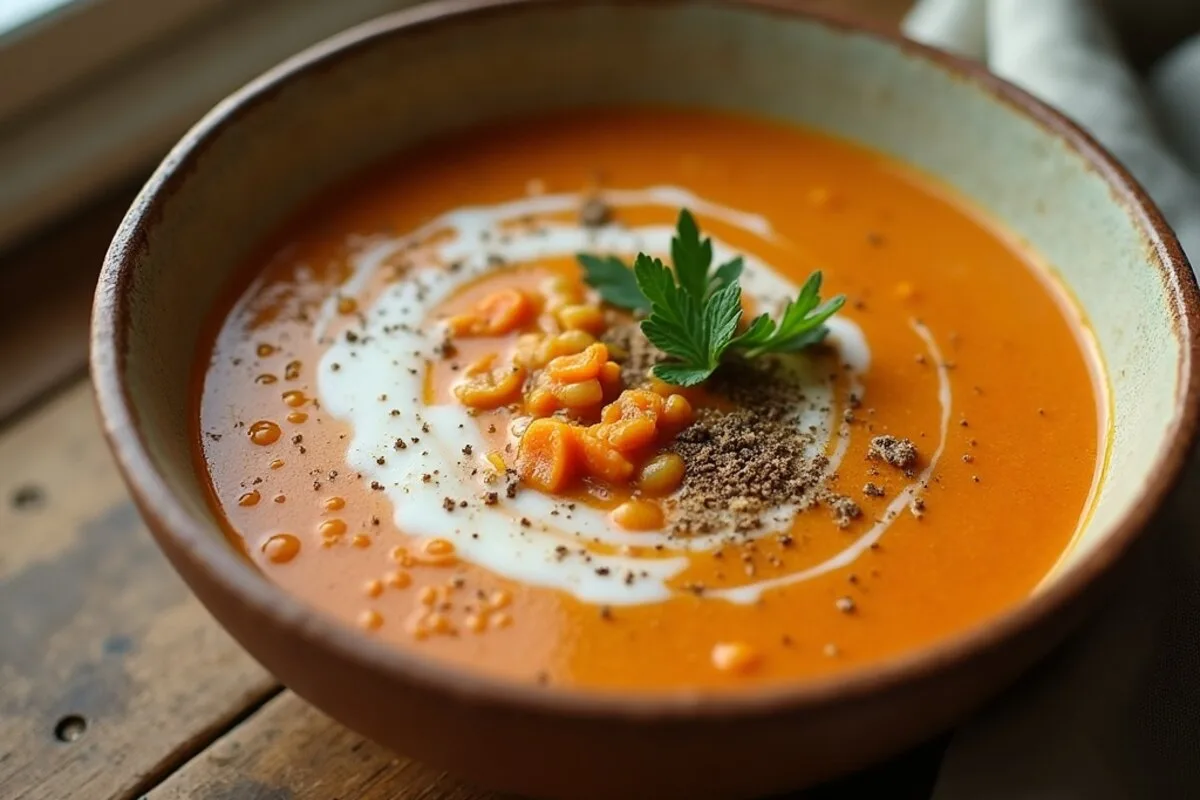
Roasted squash soup, deep and sweet
This is the soup I make when I want something a little special without much more effort. The trick is in the name. Roasting the squash before it ever goes near the pot concentrates its sugars and adds a caramelised depth that you cannot get from simmering it raw. It turns an ordinary blended vegetable soup into something with real character, sweet and savoury at once, smooth as anything.
The roasting step that matters
Toss chunks of butternut or any sweet squash with olive oil and salt, and roast at a high heat until the edges are properly browned and a little blistered. Those dark edges are flavour, so resist pulling the tray early. Meanwhile, soften your onion, garlic and celery base in the pot. Add the roasted squash, cover with stock, simmer briefly to bring it together, then blend until completely smooth and silky.
Finishing it well
Blended squash soup can taste one-note if you stop too soon, so the finish does the work. I season hard with salt, add a squeeze of lemon to cut the sweetness, and often stir in a little coconut milk for richness. A scatter of toasted pumpkin seeds or a swirl of chilli oil on top gives the contrast a smooth soup craves. Roasted squash soup also freezes beautifully, which is why I usually roast two trays and make a double pot while the oven is already hot.
Toppings that lift any blended bowl
A smooth soup can look and feel a little flat on its own, so I treat toppings as part of the recipe rather than an afterthought. A handful of toasted seeds or croutons brings crunch, a swirl of good oil or coconut milk adds richness and a pretty marbled look, and a few torn herbs lift the whole thing with freshness. A pinch of chilli flakes or a grating of lemon zest wakes it up further. None of this takes more than a minute, and it is the difference between a bowl that feels finished and one that feels like it stopped halfway.
Minestrone and chunky bean soups
When I want a soup that eats like a meal rather than a starter, I go brothy and chunky, and minestrone is the model for the whole family. It is the most flexible soup I make, a clear, tomato-flecked broth full of vegetables, beans and a little pasta, built to use up whatever the fridge holds. Unlike the blended soups, here the broth has nowhere to hide, so it pays to build flavour at every stage.
Building a brothy soup with body
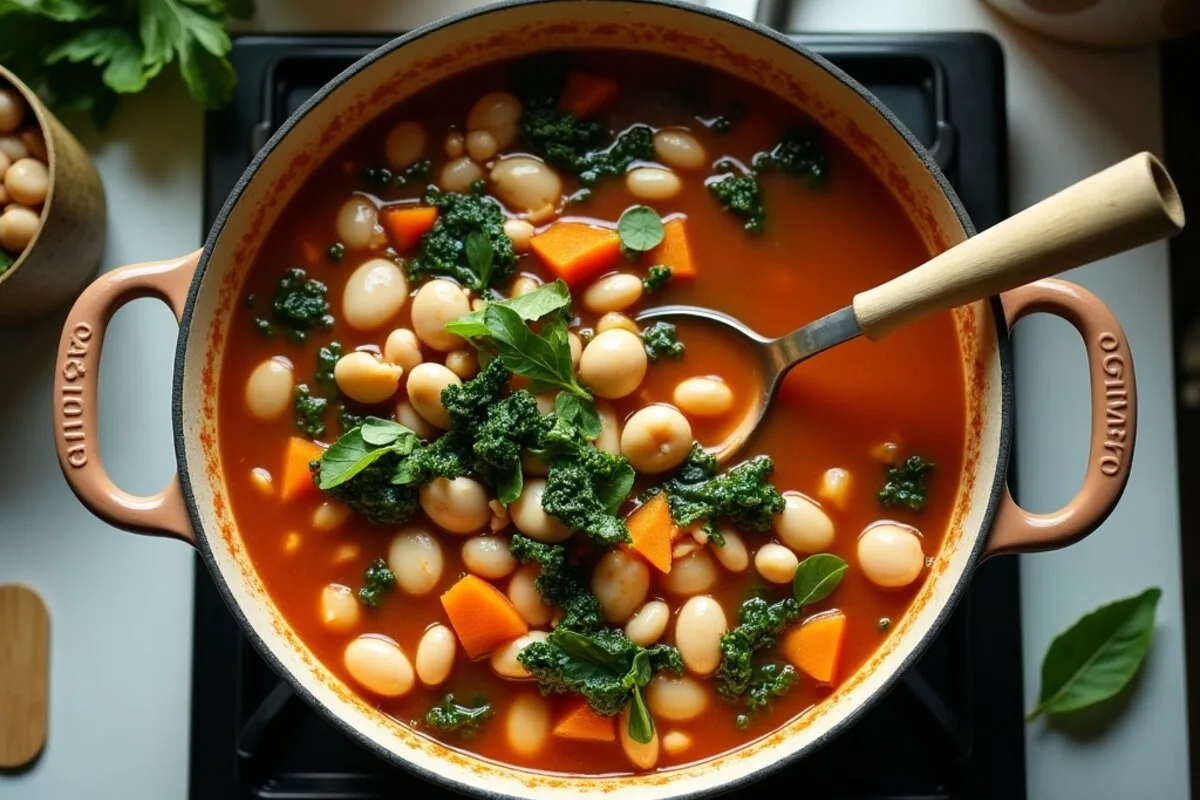
Start with the usual soft base, then add tinned tomatoes and let them cook down for a few minutes before the stock goes in, which deepens the broth. In go the firmer vegetables first, then a tin of cannellini or borlotti beans, and a handful of small pasta near the end so it does not turn to mush. The beans are doing double duty, both adding protein and lending the broth a quiet creaminess as a few of them break down.
The riffs I make most
- A black bean soup, smoky with cumin and a little chipotle, half of it blended for body and half left whole.
- A white bean and kale soup, brothy and garlicky, finished with a hard grating of lemon zest.
- A chickpea and tomato soup with plenty of paprika, almost a thin stew, good with crusty bread.
- A barley and mushroom soup for the deepest, most savoury version when the weather turns properly cold.
These chunky soups are where I lean hardest on beans and pulses for both flavour and staying power. They make a bowl filling enough to be dinner on its own, though I rarely say no to bread alongside. For the plates I build around a soup like this when it needs a partner, my vegan dinner recipes are full of easy companions.
Fast vegan soup recipes for tired nights
Not every evening has half an hour of simmering in it. For the nights when I want soup in the time it takes to boil a kettle, I keep a couple of fast vegan soup recipes that lean on pantry shortcuts rather than long cooking. The star is a quick miso noodle bowl, ready in about ten minutes, brothy and savoury and exactly what a tired body wants.
The ten-minute miso noodle bowl
Bring stock or water to a gentle simmer, never a hard boil, because boiling can turn miso bitter and dull its savour. Add sliced mushrooms, a handful of greens and some quick-cooking noodles, and cook just until the noodles are tender. Take it off the heat, then whisk a generous spoon of miso paste into a ladle of the hot broth before stirring it back in. Top with sliced spring onion, a little chilli, and a squeeze of lime. It tastes far better than ten minutes has any right to.
Other fast routes
A near-instant tomato and white bean soup comes together from a tin of each, simmered with garlic and blitzed for two minutes. A quick coconut and sweetcorn soup needs little more than a tin of corn, coconut milk and curry paste. These are the soups I make on autopilot, and they have saved more weeknights than I can count. They lean on the same lesson as the slower pots: a strong savoury base and a bright finish do most of the heavy lifting, even when the clock is against you.
Creamy vegan soup recipes without cream
Some of the most comforting vegan soup recipes are the creamy ones, and the lovely thing is you need no cream at all to get there. Plants give you several routes to a silky, luxurious bowl, and once you know them you can make almost any soup velvety. The secret is usually something starchy or fatty hiding in plain sight, blended until smooth.
The four ways I get creaminess
- Potato: a couple of floury potatoes simmered into the soup and blended give body and a natural creaminess with no dairy at all. This is the heart of a classic potato and leek.
- Cashews: a handful soaked and blended into the soup turn it rich and silky, the same trick I use across creamy sauces.
- Coconut milk: a splash stirred in at the end adds richness and a faint sweetness, perfect in the lentil and squash soups.
- White beans: blended into a soup, a tin of cannellini brings creaminess and a quiet protein boost at the same time.
Blending tricks for a silky bowl
Smoothness is what makes a creamy soup feel luxurious instead of merely pureed, so I blend longer than feels necessary. If you use a jug blender, vent the lid and cover it with a folded towel, because hot soup expands and can blow the lid off if it is sealed tight. A stick blender is safer and easier to clean, though a jug always gives the silkiest result. For the very smoothest texture, I blend half the soup and stir it back into the chunky half, which gives a bowl that is creamy and still has something to chew. That balance is the one I come back to most.
Freezing, storing and reheating vegan soup
Soup might be the best batch-cooking food there is, because most pots taste better the next day once the flavours have settled. I almost never make a single portion. I make a big pot, eat a bowl, and put the rest away for a future evening when cooking from scratch feels like one task too many. A freezer full of labelled soup is its own kind of quiet security.
What freezes well and what does not
Blended soups and lentil or bean soups freeze beautifully, holding their texture and flavour for up to three months. The things to watch are pasta and potato chunks, which can turn soft or grainy after freezing. For a soup like minestrone, I freeze the broth and beans but cook the pasta fresh when I reheat, which keeps it from going mushy. Coconut milk can split slightly on thawing, but a good stir and a gentle reheat brings it right back together.
Batching it into a week
A single pot of soup can quietly anchor several lunches, which is why it sits at the centre of how I cook ahead. I portion it into tubs once cooled, label them with the date, and freeze flat where I can. If you want the wider system around this, my vegan meal prep for the week walks through batching a pot and freezing the week, and my plant-based meal prep guide covers fitting soups alongside grains and other components. Soup is the easiest entry point into both.
Reheating it right
Reheat soup gently over a low heat, stirring, rather than blasting it, because a hard boil can dull delicate flavours and split any coconut or cashew creaminess. Soups thicken as they sit, especially lentil ones, so I keep a splash of stock or water handy to loosen them back to the texture I want. Then I taste and almost always add a fresh hit of salt and a squeeze of lemon, because that bright finish fades a little in the fridge and is worth renewing every time.
A quiet word on the pot and the evening
I started cooking soup seriously because of how it makes an evening feel, not because of any nutrition chart. There is something steadying about a pot ticking away on the hob, the window going soft with steam, and an hour where the only thing asked of me is the occasional stir. In a week that often moves too fast, that slow, low-effort ritual is half the reason I keep coming back to it.
The food is genuinely good for you too, of course. A bowl built on lentils and beans is filling, full of fibre, and kind to both body and budget, which is a rare and welcome combination. But I would make these soups even if none of that were true, simply because they turn a tired evening into a warm one. That, more than anything, is what a good pot of soup is for.
If a bowl of soup leaves you wanting something sweet and warm to follow, that is the most natural ending I know, and my easy vegan banana bread is exactly the kind of soft, comforting thing I bake to round off a soup night. A pot on the hob and a loaf in the oven is, for me, very close to a perfect slow evening.
Common questions
What is the easiest vegan soup to start with?
Red lentil soup is the one I always recommend to beginners. Red lentils need no soaking and break down on their own into a thick, golden soup, so you do not even need a blender. Soften some onion and carrot, add spices, lentils and stock, simmer for twenty-five minutes, then finish with lemon. It is almost impossible to get wrong.
How do I make vegan soup creamy without dairy?
You have several routes, all dairy-free. Simmer a couple of floury potatoes into the soup and blend them in for natural body, or blend in a handful of soaked cashews or a tin of white beans for richness. A splash of coconut milk stirred in at the end works beautifully in lentil and squash soups. Blend until truly smooth and the result feels every bit as luxurious as cream.
Can you freeze vegan soup?
Yes, and most soups freeze brilliantly for up to three months. Blended, lentil and bean soups are the most reliable. The things to watch are pasta and potato chunks, which can go soft, so for something like minestrone I freeze the broth and add fresh pasta when I reheat. Cool the soup, portion it, label it with the date, and freeze flat to save space.
How do I make soup more filling and a proper meal?
Build it on lentils or beans rather than vegetables alone, since they bring the protein and fibre that actually hold you. Stir in greens like spinach or kale near the end, add a handful of small pasta or some cooked grains, or serve the bowl over a scoop of rice. A good chunk of crusty bread on the side never hurts either. Those additions turn a starter into dinner.
What can I serve with vegan soup?
Bread is the classic for good reason, whether that is crusty sourdough for dunking or warm flatbread alongside a lentil soup. A sharp green salad cuts a rich, creamy bowl nicely, and a grain like rice or couscous makes a brothy soup more of a meal. For something cosier, a toasted sandwich beside a tomato or bean soup is hard to beat.