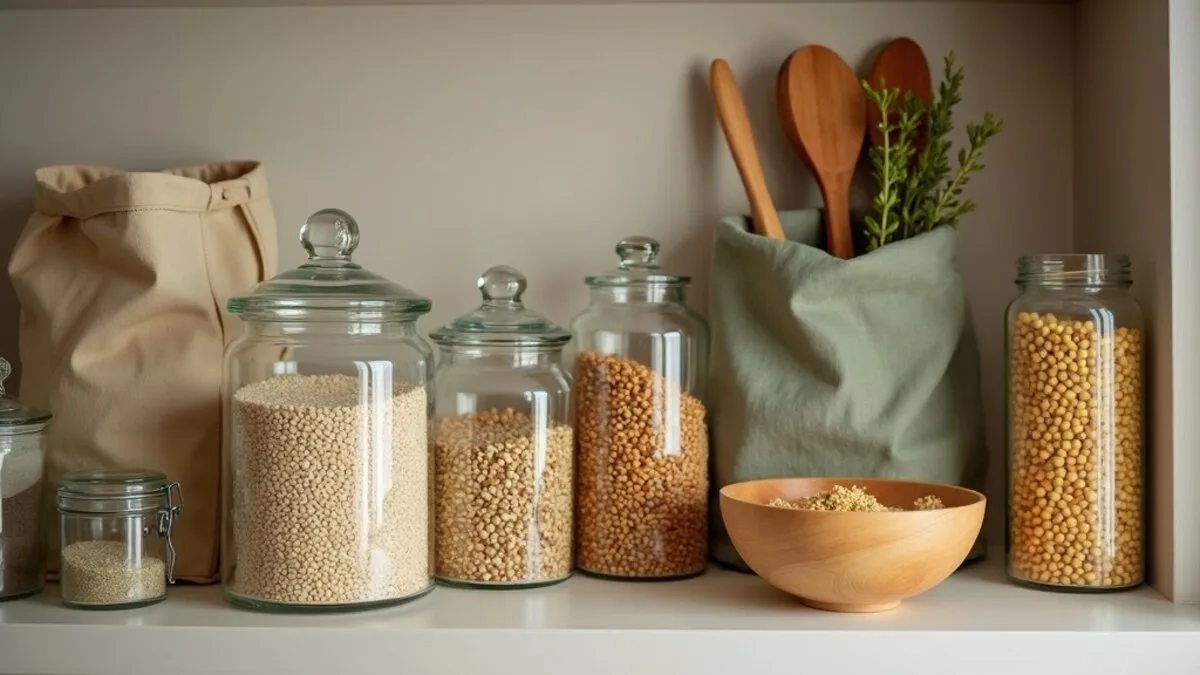
To start a zero-waste kitchen, begin with food, not gadgets. Plan a few meals before you shop, store your produce so it actually lasts, and commit to using up what you already have before buying more. Composting and reusable swaps matter, but they come second. The single largest win, by a wide margin, is simply throwing away less food, and that starts with a little planning and some of the same component thinking behind plant-based meal prep.
Why food waste matters more than packaging
My kitchen is not zero waste. No kitchen really is. But it throws away a fraction of what it used to, and that happened through small, boring habits, not a single heroic overhaul. The first habit was the most surprising one: I stopped worrying about packaging and started worrying about food. That single shift changed more than any jar or tote bag ever did.
When most of us picture a zero-waste kitchen, we picture the bin: the plastic film, the takeaway containers, the endless wrappers. So we attack the packaging first. It feels visible and satisfying. But the much larger problem is quieter, and it hides in the fridge. It is the bag of spinach that turned to liquid, the half loaf gone hard, the leftovers we meant to eat and did not.
The numbers, gently put
Roughly a third of the food produced in the world is never eaten. In many homes, a meaningful slice of the weekly shop goes straight to the bin uneaten. That wasted food carries with it all the water, land, fuel, and effort that went into growing it, and none of that is recovered by recycling a yoghurt pot. The packaging is the small print. The food is the headline.
Is packaging worthless to think about?
No, packaging still matters, and we will get to swaps that genuinely help. But it helps to keep the order honest. If you spend your whole budget of energy on beeswax wraps and refill shops while half a cabbage rots each week, you have polished the small thing and left the big one. I would rather you waste no food in supermarket plastic than waste food beautifully in glass. Start where the weight actually is.
What this guide is and is not
This is not a purity test. I am not going to tell you to weigh your bin or photograph a year of rubbish in a single jar. I find that kind of thing makes people anxious and then quit. This is a guide to wasting less, gently, in a normal home with a normal week. Some of it overlaps with broader sustainable living tips, but the kitchen is where the easiest wins live, so it is a good place to begin.
The bathroom was the last room I greened, which is why I wrote down my whole zero waste oral hygiene routine.
If you are just starting out, I keep a gentle list of eco friendly swaps for beginners.
Planning and shopping to waste less
Almost all food waste is decided before you cook anything. It is decided in the shop, when you buy more than you have a plan for, and at home, when nobody quite knows what is for dinner so the fresh things sit and wilt. A little planning is the single most effective tool in a zero-waste kitchen, and it costs nothing but ten quiet minutes.
Shop your own kitchen first
Before I write a list, I look at what is already here. I open the fridge, the freezer, and the cupboard, and I notice what needs using: the half pepper, the tired herbs, the tin that has lived at the back for a year. I build a couple of meals around those things first. This one habit, cooking from what you have before buying more, probably prevents more waste than everything else in this guide combined.
Plan loosely, not rigidly
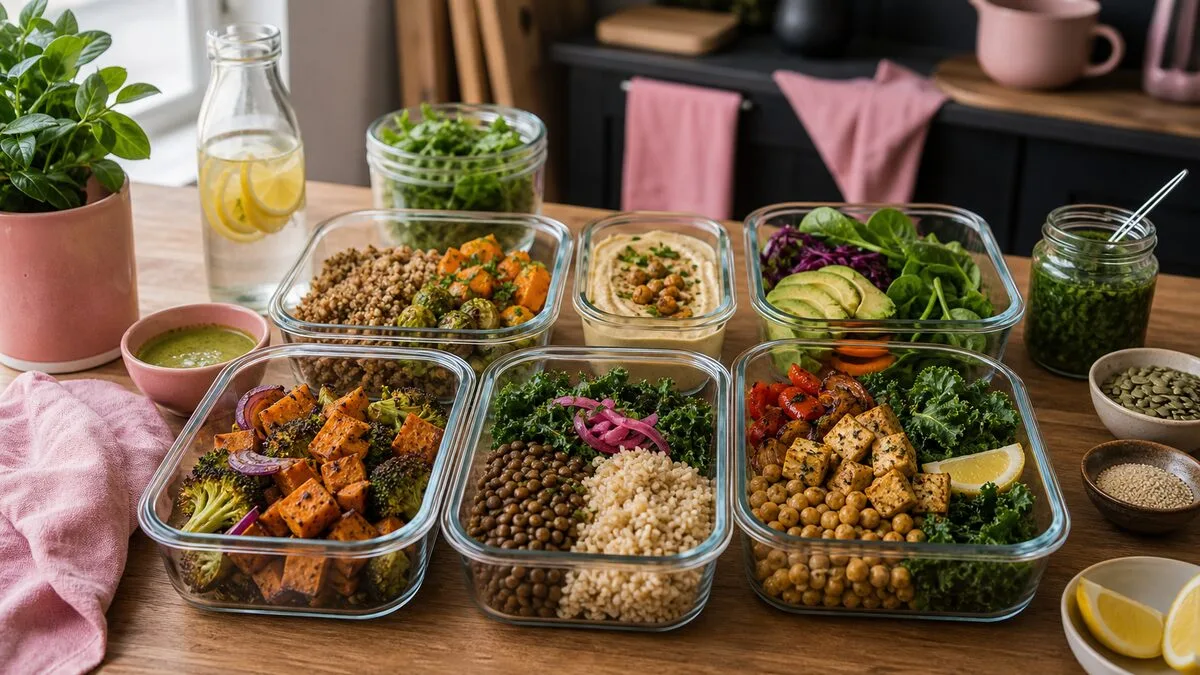
I do not plan every meal. Rigid plans break the first time life happens, and then the unused ingredients rot anyway. Instead I plan three or four anchor dinners and leave the rest of the week open. I shop for those anchors precisely and buy very little else. The open days get filled by leftovers, by the freezer, or by a quick throw-together from what survived. The same component thinking behind plant-based meal prep works beautifully here.
Buy loose, buy less, buy more often
- Loose over bagged: loose produce lets you buy exactly three carrots instead of a bag of nine, and it skips the plastic at the same time.
- Smaller, more often: a couple of smaller shops a week waste far less than one giant Sunday haul that outpaces what you can actually eat.
- Honest quantities: ask yourself when you will eat a thing before it goes in the trolley. If there is no answer, it does not go in.
What is the single biggest source of kitchen waste?
For most homes it is fresh produce and bread: the salad leaves, herbs, soft fruit, and loaves that spoil before they are eaten. These are bought hopefully and forgotten quietly. Almost everything in this guide circles back to keeping that fresh, perishable third of your shopping alive long enough to actually eat it, through better planning, better storage, and a willingness to use the slightly-past-its-best.
Storing produce so it lasts
So much produce dies young, not because it was bad, but because we stored it carelessly. A few small habits here will stretch the life of your fresh food by days, sometimes weeks. None of it requires special equipment. Most of it is just learning what each thing actually wants, which is mostly the opposite of stuffing everything into one drawer and hoping.
Herbs and leaves: the easiest save
Soft herbs like coriander, parsley, and basil last far longer treated like flowers. I trim the stems and stand them in a glass with a little water on the counter or in the fridge door. Leafy greens keep best loosely wrapped in a slightly damp cloth or kept in a box with a piece of kitchen paper to catch excess moisture. Wet leaves rot; bone-dry leaves wilt. A little damp is the sweet spot.
What lives in the fridge, and what does not
- Keep out of the fridge: tomatoes, potatoes, onions, garlic, bananas, and unripe stone fruit. Cold dulls their flavour or ruins their texture.
- Keep in the fridge: leafy greens, berries, mushrooms (in paper, not plastic), broccoli, carrots, and most herbs.
- Keep apart: apples, bananas, and avocados give off a ripening gas that hurries everything near them along. Store them away from your greens.
Bread, the quiet casualty
Bread goes stale on the counter and stales fastest in the fridge, oddly enough. For anything I will not finish in two days, I slice the loaf and freeze it. Frozen slices toast straight from the freezer with no thawing, and a loaf that would have hardened by Thursday lasts a month instead. Stale bread that did slip past me does not get binned either; it becomes breadcrumbs, croutons, or the base of a simple panzanella.
The first-in, first-out shelf
I keep one shelf at eye level as the eat-me-soon shelf. Anything close to turning gets moved to the front there, where I cannot ignore it. It sounds trivial, but visibility is most of the battle. Food does not usually rot because we decided to waste it; it rots because we forgot it was there. A dedicated shelf is the cheapest reminder I know, and it pairs well with the calm of good cozy home rituals around the kitchen.
Using up scraps instead of binning them
Once the fridge is better organised, the next surprise is how much of what we call scraps is actually food. Peels, stems, stale ends, and the last sad vegetables are the raw material for some of the best things I cook. This is not about gnawing on carrot tops to prove a point. It is about noticing flavour and nourishment we were quietly throwing away.
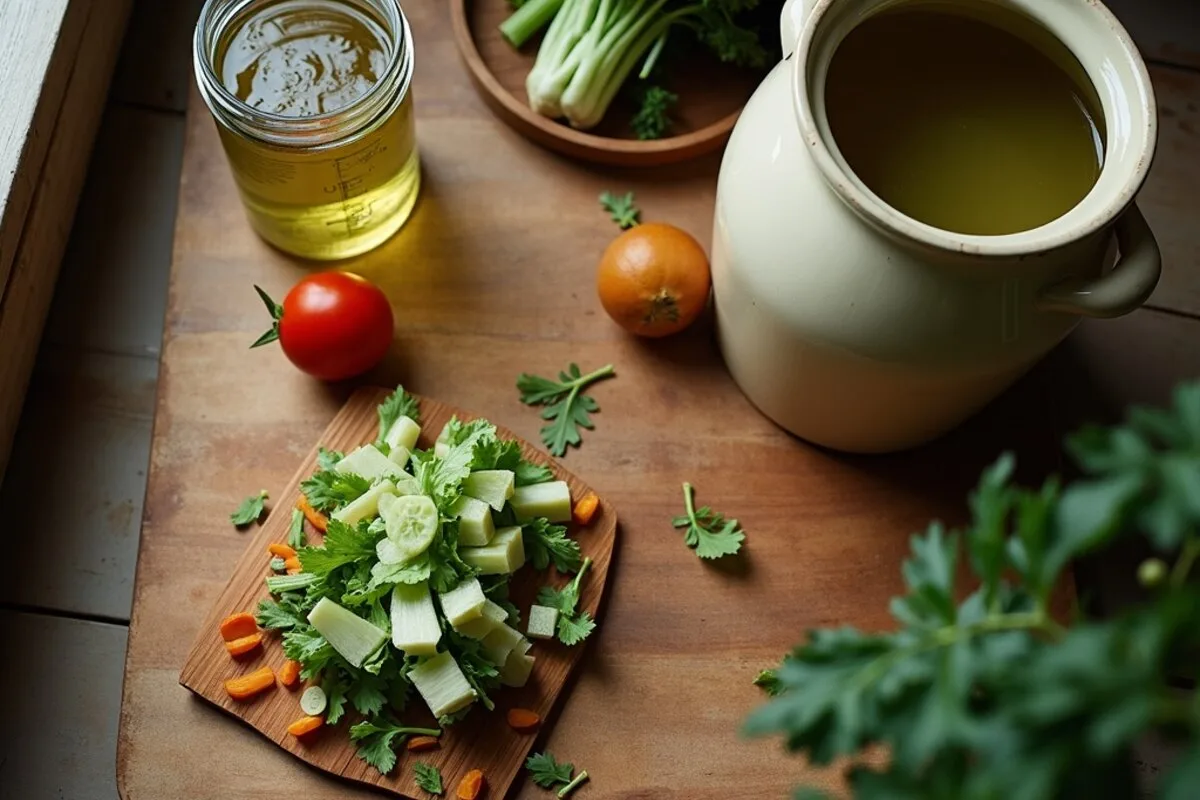
The freezer scrap bag and stock
I keep a bag in the freezer and feed it all week: onion skins, carrot ends, celery tops, leek greens, mushroom stems, herb stalks, parmesan-style rinds if I have them. When the bag is full, I tip it into a pot, cover with water, simmer for an hour, and strain. That is a jar of vegetable stock for the cost of things I would have thrown away. It freezes flat in bags and turns the next risotto or soup into something with depth.
Peels, stems, and ends
- Herb stems: coriander and parsley stems carry more flavour than the leaves. I chop them finely into dressings, soups, and stir-fries.
- Broccoli and cauliflower stalks: peeled and sliced, they roast or stir-fry as happily as the florets.
- Potato and carrot peels: tossed in a little oil and salt and roasted hot, they crisp into snacks.
- Citrus peels: zest before juicing, and freeze the zest; the spent halves freshen a sink or a chopping board.
Are vegetable scraps actually worth saving?
For stock, yes, easily; a freezer bag of trimmings becomes real flavour for nothing. Beyond stock, be honest with yourself. If you will genuinely roast the peels or chop the stems into dinner, save them. If they will sit in the fridge as a guilt project until they rot, they belong in the compost, which is still better than the bin. Saving scraps should reduce work and waste, not invent a second chore.
The almost-empty jar trick
The dregs in jars are food too. A nearly empty mustard or tahini jar becomes a salad dressing: add oil, vinegar, salt, a little water, put the lid on, and shake. The last of a jam jar does the same with a splash of vinegar for a sweet-sharp glaze. It is a tiny thing, but tiny things, repeated all year, are the whole game here.
A simple composting primer, even in a flat
Composting is where the food that truly cannot be eaten goes to do some good instead of rotting in a landfill. When organic waste breaks down sealed in a bin bag, it produces methane, a potent greenhouse gas. Composted in air, the same scraps become soil. You do not need a garden, and you do not need to become an expert. You need somewhere for the peelings to go.
If you have outdoor space
A simple bin or heap in a corner of the garden is enough. The basic rhythm is to balance greens (food scraps, fresh trimmings) with browns (dried leaves, cardboard, paper), keep it roughly as damp as a wrung-out sponge, and turn it occasionally for air. The EPA's home composting guide lays out the green-to-brown balance clearly if you want the detail without the dogma.
Composting in a flat, without a garden
I composted in a small flat for years, so I promise it is possible. The options, from least to most involved:
- Municipal food waste collection: the easiest by far. Many councils now take food scraps at the kerb. A small lidded caddy on the counter feeds the outdoor bin. Check what your area accepts.
- A worm bin (vermicomposting): a tidy box of composting worms lives happily under a sink or on a balcony, eats your scraps, and barely smells if balanced. It makes excellent compost for houseplants.
- Bokashi: a sealed bucket ferments scraps, including some cooked food, into a pre-compost you can later bury or hand off to someone with a garden.
- A community plot or neighbour: a surprising number of community gardens will happily take your frozen scrap bag.
What can and cannot go in
Most home systems welcome fruit and vegetable scraps, coffee grounds, tea, eggshells, and plain paper. Most home heaps do not want meat, fish, oils, or large amounts of cooked food, which attract pests and smell. Bokashi is the exception, since fermentation handles more. When in doubt, keep it plant-based and simple, which suits a minimalist vegan lifestyle kitchen anyway.
A crock on the counter
The thing that made composting stick for me was a small lidded crock by the chopping board. If the caddy lives across the room or out the back door, scraps end up in the bin out of laziness, mine included. Within arm's reach, composting becomes automatic. Empty it every couple of days and it never smells. Convenience, not willpower, is what makes the green habit last.
The pantry in jars
Here we cross from food waste into packaging, and into the part of zero-waste kitchens that gets photographed most: the shelf of matching jars. I love my jars, but I want to be honest about what they do and do not do. They are a storage and visibility tool first. The aesthetic is a pleasant side effect, not the point.
What jars actually solve
Decanting dry goods into clear jars does three useful things. You can see exactly how much you have, so you stop buying duplicates and stop letting things vanish to the back of a cupboard. Airtight jars keep grains, flours, beans, and nuts fresh far longer, so they spoil less. And jars make refill shopping practical, since you can bring them and fill only what you need. Less waste, less spoilage, fewer impulse duplicates.
You do not need to buy a single jar
This is the part the pretty photos skip. You do not need to buy a matching set. I built most of my pantry from jars that food already came in: pasta sauce jars, pickle jars, large nut butter jars. Wash them, soak the labels off, and they are free, sturdy, and perfectly good. A wall of identical jars is lovely, but buying new glass to feel zero waste is its own small irony. Reuse first.
Refill shops, used honestly
Refill and bulk shops are wonderful when they are genuinely on your route and genuinely cheaper or comparable. They are not worth a special forty-minute drive that burns more than it saves, and they are not worth feeling guilty about if your town does not have one. Use them where they fit your real life. A pantry half-filled from a refill shop and half from loose supermarket goods is a completely respectable thing.
Labelling, lightly
I label jars with a chalk pen or a strip of masking tape, including the cooking notes I always forget: the ratio of water to rice, how long the lentils take. It turns the pantry into a small set of instructions and means nobody has to find the packet. This kind of quiet ordering belongs with broader eco-friendly home swaps that make the whole home calmer to run.
Reusable swaps that are actually worth it
Reusable swaps are the friendliest face of the zero-waste kitchen, and also the easiest place to overspend on things you will not use. A reusable item only helps once it has replaced its disposable equivalent enough times to earn back the resources used to make it. So I want to be plain about which swaps I reach for daily and which sit in a drawer as good intentions.
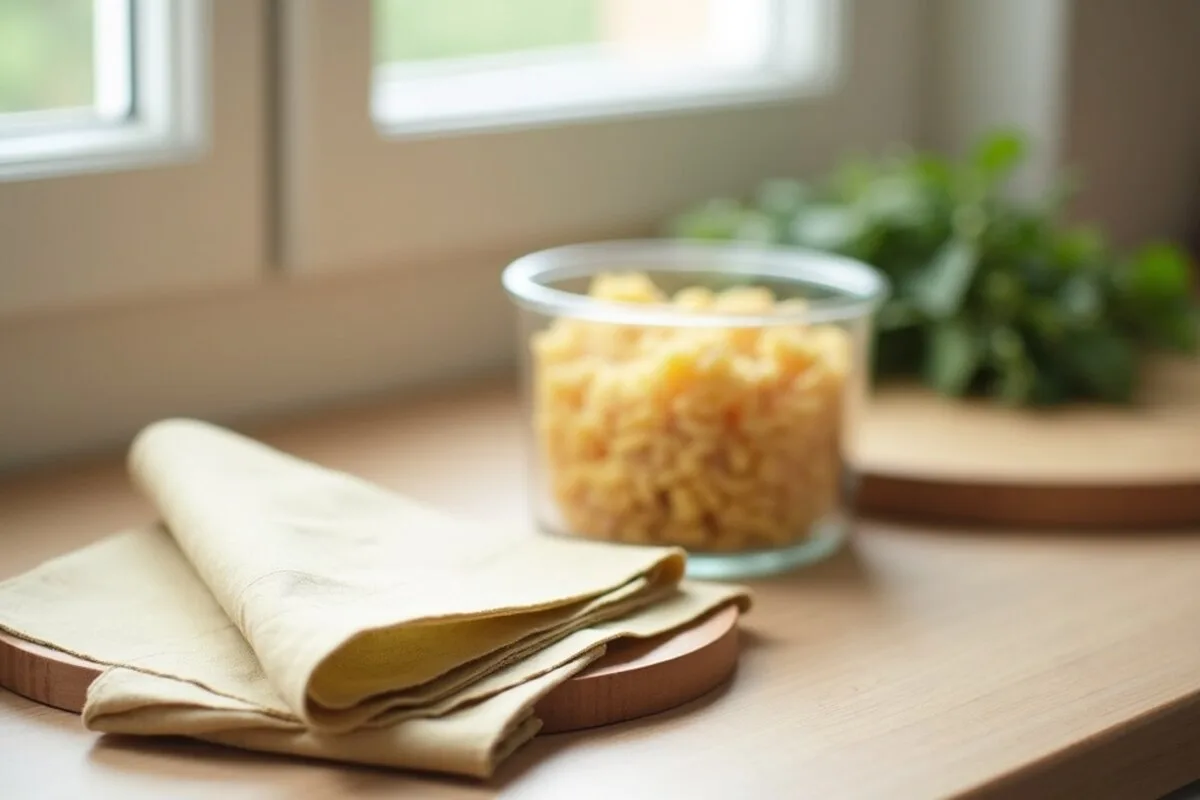
The swaps I use every single day
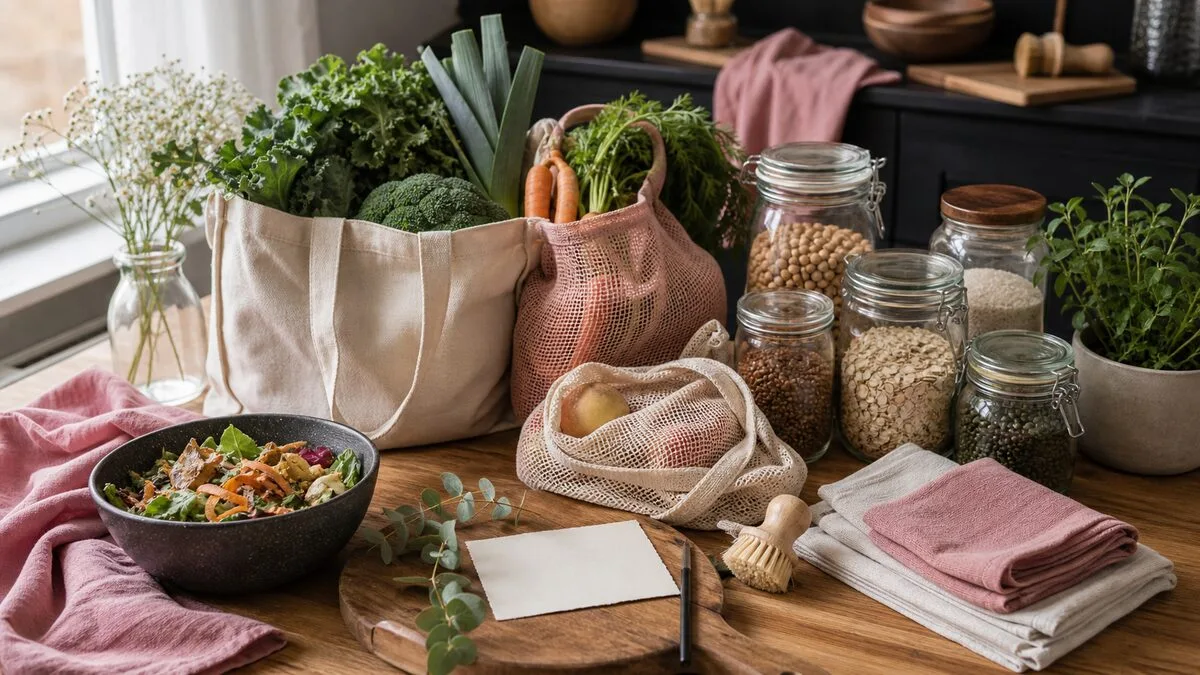
- Cloth napkins and rags: a stack of old cut-up towels and cloth napkins retired my paper towels almost entirely. This is the highest-impact swap I made, and it cost nothing.
- Glass containers: see-through containers mean I actually eat the leftovers, because I can see them. Visibility beats the prettiest opaque tub.
- Beeswax wraps: excellent for covering a bowl or wrapping half a cucumber. I use them constantly, though they are not for raw meat or the dishwasher.
- A good water bottle and coffee cup: obvious, but they remove a steady stream of disposables from the day.
- Cloth produce bags: for loose fruit and veg. A few light ones live in my main shopping bag so I never forget them.
Swaps that were not worth it for me
I have bought my share of zero-waste objects that did nothing. Novelty silicone gadgets, a special tool for one vegetable, a second set of fancier jars to replace fine ones, reusable items so fiddly to clean that I quietly went back to the old way. The greenest item is almost always the one you already own. Buying a cupboard of new sustainable gear to feel sustainable is just consumption wearing a nicer label.
How do I choose a swap worth keeping?
Ask three questions. Do I already use the disposable version often enough that replacing it actually matters? Will the reusable version slot into my real habits, or does it demand new ones I will resent? And can I use something I already own instead of buying new? If a swap clears all three, it tends to stick. If it fails any, it usually ends up in the drawer.
Batch cooking, leftovers, and the freezer
If planning prevents waste at the front of the week, batch cooking and the freezer rescue it at the back. The freezer is, quietly, the most powerful anti-waste tool in the kitchen, and most of us barely use it on purpose. It is a pause button for food. Anything heading toward the bin can usually be frozen and saved for a day you are glad to find it.
Cook once, eat several times
I cook components in slightly larger batches than I need: a pot of beans, a tray of roasted vegetables, a big pan of grains. Leftovers are not failures; they are tomorrow's lunch with no extra effort. Cooking with intentional surplus also means fewer days where tired-me orders a takeaway and lets the fridge spoil. The rhythm overlaps neatly with my notes on plant-based meal prep and on cooking high-protein vegan meals in advance.
What to freeze that people forget
- Bread: sliced, toasted straight from frozen.
- Herbs: chopped into an ice cube tray with a little oil or water.
- Overripe bananas: peeled and frozen for baking or smoothies.
- Citrus and ginger: zest and grated ginger freeze and grate straight from frozen.
- Cooked beans and grains: portioned flat in bags for fast future dinners.
- That scrap bag: always, ready for the next pot of stock.
Freeze it well, find it later
A freezer only saves food you can find and identify. I freeze things flat in bags so they stack and thaw quickly, and I label everything with what it is and the date, because mystery containers become permanent residents. Once a month I cook a deliberate use-the-freezer dinner from whatever has accumulated. It clears space, prevents freezer burn, and is often a surprisingly good meal.
Leftovers you will actually eat
Leftovers waste away when they are boring or invisible. So I store them where I will see them, on that eye-level shelf, and I am willing to remix rather than just reheat. Yesterday's roasted vegetables become today's frittata, grain bowl, or soup. A little reinvention keeps leftovers feeling like a meal rather than a penance, which is the only reason they get eaten at all. Comfort matters, and a few vegan comfort food recipes are perfect for turning odds and ends into something genuinely nice.
Cleaning without single-use
The cleaning cupboard is the kitchen's other quiet source of waste: paper towels by the roll, sponges that crumble and shed plastic, a fleet of plastic spray bottles for every surface. You can simplify all of it without buying a single specialist product, and usually for less money than the disposable version cost in the first place.
Retire the paper towel, gently
I did not ban paper towels overnight; I just made cloth easier to grab. A basket of cut-up old towels and rags sits within reach, and a stack of clean cloths lives where the paper roll used to. They go in with the regular wash. I keep one small roll of paper for the genuinely grim jobs nobody wants to launder, and that roll now lasts months instead of days.
Fewer products, plainer ingredients
- White vinegar and water cleans glass, counters, and most surfaces. Skip it on natural stone, which does not like acid.
- Bicarbonate of soda scours sinks and pans and deodorises the fridge.
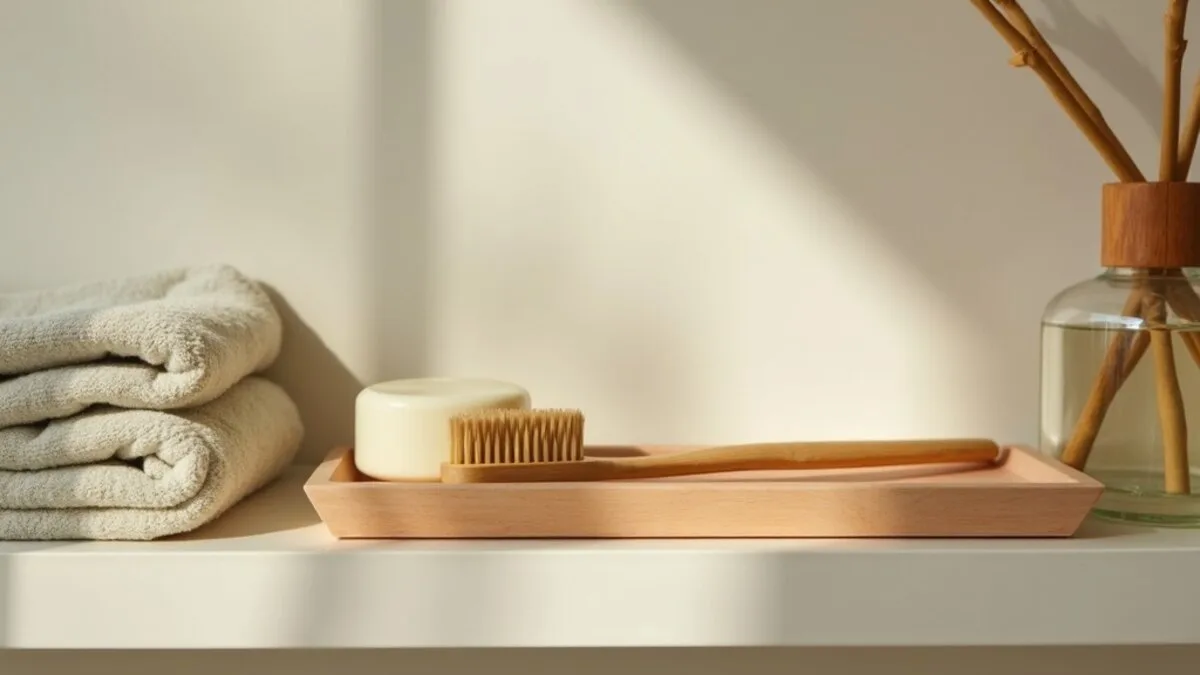
- A bar soap or solid dish block replaces a steady stream of plastic bottles.
- A refillable spray bottle you keep for years beats buying a new one with every cleaner.
Sponges and brushes
Most kitchen sponges are plastic and shed microplastics as they wear. I switched to a wooden dish brush with a replaceable head and to cloths I can wash and reuse, plus the occasional natural sponge. It is a small swap, but sponges are bought endlessly, so the saving compounds. As with everything here, I made the change when the old sponge wore out, not by binning a perfectly good one to feel virtuous.
Doing this on a budget
There is a myth that a zero-waste kitchen is expensive, all matching jars and pricey refill shops and artisanal cloth. The opposite is closer to the truth. Wasting less food is, by definition, saving money, because you are buying food and then actually eating it instead of paying to throw it away. Done honestly, this whole project should cost less, not more.
Is a zero-waste kitchen expensive to start?
No, not if you start the right way. The highest-impact habits, planning your shop, storing food well, using up scraps and leftovers, are entirely free and save money immediately. The costs only appear if you treat zero waste as a shopping event and buy a coordinated set of new equipment. Start with the free habits, let any purchases be slow replacements of things that wear out, and the budget takes care of itself.
Where the savings actually come from
- Less binned food: the biggest line by far. Eating what you buy is a quiet pay rise.
- Cooking from scraps and basics: stock, beans, and grains from staples cost a fraction of packaged equivalents.
- Reusables that retire disposables: cloths, containers, and bottles you already owned stop you rebuying paper and plastic forever.
- Fewer impulse duplicates: a visible pantry means you stop buying the third bag of rice.
The free-first order of operations
If money is tight, do everything in this guide that costs nothing before you buy anything at all. Plan, store, freeze, use up, repurpose jars you already have, cut up old towels for cloths. Only then, and only as things wear out, consider a swap. A budget zero-waste kitchen is not a stripped-down version of the expensive one. It is the original, honest version, and it lines up naturally with broader sustainable living tips that favour less over more.
Starting small, without guilt
If there is one thing I would protect you from, it is the all-or-nothing trap. People read about zero-waste kitchens, feel a wave of guilt about their bin, attempt a total overhaul in a weekend, and quit within a month because it was exhausting and joyless. A fraction kept up forever beats perfection abandoned in three weeks. This is a slow practice, and slow is the point.
Pick one habit, not twenty
Choose a single change and let it become invisible before you add another. Maybe it is freezing your bread. Maybe it is the eat-me-soon shelf, or the freezer scrap bag, or planning three dinners before you shop. When that one thing is automatic and you no longer think about it, add the next. Habits stack quietly. A kitchen transforms over a year of small additions, not over one heroic weekend.
Let it be imperfect
Some weeks I still bin a slimy bag of salad I forgot. Some shops still come home wrapped in plastic I would rather avoid. That is fine. The goal was never a spotless conscience or a single jar of yearly rubbish; it was a kitchen that wastes meaningfully less than it used to, run by a real person with a real week. Guilt is not a sustainable fuel. Gentleness is.
Why does the gentle approach work better?
Because it survives. Dramatic overhauls rely on motivation, which fades; gentle habits rely on convenience and repetition, which last. A scrap bag in the freezer and a crock by the board ask nothing of your willpower once they are in place. That is the whole quiet philosophy: make the low-waste choice the easy one, and then mostly stop thinking about it. The calm of it belongs with other cozy home rituals and with eating a little more slowly, which I wrote about in my mindful eating guide.
A last, plain word
Throwing away less food is, genuinely, one of the most useful everyday things any of us can do, and it asks for so little: a little planning, a little attention, a freezer used on purpose. If you want one external nudge to begin, the EPA's guide to reducing wasted food at home is calm and practical. Start with one habit this week. That is enough. The kitchen will quietly do the rest over the months that follow.
Common questions
How do I start a zero-waste kitchen?
Start with food, not gadgets. Plan a few meals before you shop, store produce so it lasts, and use up what you already have before buying more. These habits are free and cut the most waste immediately. Composting and reusable swaps matter too, but they come second to simply throwing away less food.
What is the single biggest source of kitchen waste?
For most homes it is fresh produce and bread: salad leaves, herbs, soft fruit, and loaves that spoil before they are eaten. They are bought hopefully and forgotten quietly. Better planning, better storage, and a willingness to use slightly-past-its-best food are the most effective fixes for this perishable third of the shop.
Is a zero-waste kitchen expensive to start?
No, not if you start the right way. The highest-impact habits, planning, storing food well, using up scraps and leftovers, are free and save money straight away. Costs only appear if you treat it as a shopping event and buy a set of new gear. Start with the free habits and let purchases be slow replacements.
Can I compost without a garden?
Yes. Many councils now collect food scraps at the kerb, which is the easiest option with just a small counter caddy. Otherwise a worm bin or a sealed bokashi bucket fits a flat or balcony, and many community gardens will happily take your frozen scrap bag. A garden is helpful but not required.