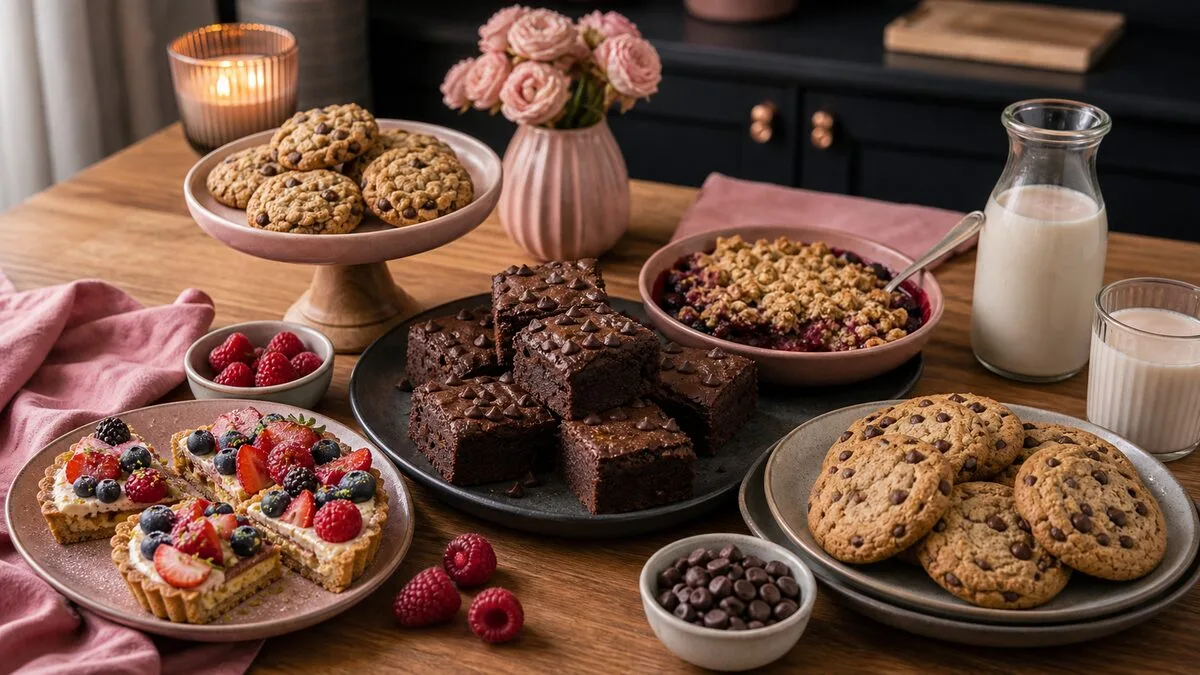
Dessert should still feel like a small celebration. Tender crumb, fruit, dark chocolate, no eggs, no dairy, no fuss.
The two desserts I bake most
Most weeks I bake one of two things: an olive-oil cake with citrus, or a tray of dark-chocolate cookies. Both keep for days. Both forgive a tired Wednesday baker. Both turn an ordinary night into something a little bit nicer without asking much of me in return.
I didn't always think of dessert this way. For a while, going plant-based felt like it meant giving up the sweet end of the day, or replacing it with something virtuous and slightly disappointing. That turned out to be wrong. Vegan baking isn't a sacrifice once you understand a few small mechanics, and most of the desserts I make now are easier than the egg-and-butter versions they replaced.
This piece is everything I've worked out, the two recipes I lean on hardest, the egg swaps that actually work, the fruit-based shortcuts for nights I can't be bothered, and the small fixes for when a cake sinks or a cookie spreads into a puddle. None of it is precious. I bake in a small kitchen with one oven and a single hand whisk, and that's all you need.
On the mornings I have three soft bananas going dark, they turn into a loaf of easy vegan banana bread before lunch.
When I want something sweet without much fuss, I blend up my fudgy chickpea brownie recipe.
When the craving is small and the patience is smaller, I make one of these quick vegan sweet treats.
Why does dessert still matter?
Dessert matters because it's a punctuation mark, a small, deliberate pause that tells the day it's allowed to end. It's not about sugar or indulgence so much as ritual. A square of cake with a cup of tea is a way of saying the evening belongs to you now.
I think that's why "healthy dessert" content always leaves me a little cold. It treats the sweet course as a problem to be solved or hidden, sweetened with dates and apologised for. I'd rather make something genuinely good a little less often than something joyless every night. A real slice of cake on a Friday beats a sad approximation seven days a week.
The good news is that plant-based dessert doesn't require the apology. You're not subtracting anything the eater will miss. A well-made vegan olive-oil cake is just a very good cake, full stop. Nobody at my table has ever asked where the eggs went, mostly because they never notice.
Dessert isn't the enemy of eating well. It's the small celebration that makes the ordinary days feel chosen rather than endured.
So I keep it simple and I keep it good. Two reliable bakes, a handful of fruit-based escapes, and the confidence that comes from understanding why things work. That last part is what turns baking from a gamble into something you can actually trust.
What I learned about vegan baking
Most of vegan baking comes down to a handful of principles that, once you've internalised them, free you from following recipes to the letter. Here are the ones I'd hand a friend who was just starting out.
- Aquafaba is structural magic. The brine from a tin of chickpeas whips into stiff peaks like egg white. Treat it that way and it does the lifting in mousses, meringues, and light cakes.
- Olive oil is the friend of any citrus cake. Use a fruity, decent one, not the harsh stuff. It keeps a crumb moist for days where butter would dry out.
- Dark chocolate at 70% or higher is almost always vegan. Check the label for milk solids, but you'll usually be fine. The good bars rarely contain dairy.
- Fat carries flavour and moisture; sugar carries tenderness and browning; flour carries structure. Once you know which is doing what, you can troubleshoot anything.
That fourth point is the one that changed everything for me. Baking stopped being a set of fixed spells and became a system I could reason about. When a cake comes out wrong, I can usually name which of those three jobs went unfilled, and fix it next time.
How do you replace eggs in baking?
You replace eggs by first asking what the egg was doing, because eggs do at least three different jobs and no single swap covers all of them. Once you know whether you need binding, lift, or moisture, the right substitute is obvious.
For binding (cookies, brownies, denser cakes)
A flax egg is my default. One tablespoon of ground flaxseed stirred into three tablespoons of water, left to gel for ten minutes, replaces one egg's binding power. Chia works identically. Mashed banana or a quarter-cup of apple sauce also binds, though banana brings its own flavour you have to want.
For lift (light sponges, anything airy)
This is where aquafaba earns its reputation. Three tablespoons of the whipped chickpea brine stand in for one egg white. Whisk it cold, with a pinch of cream of tartar if you have it, until it holds peaks, then fold it in gently at the end. There's a surprising amount of food science behind why it works, the aquafaba entry covers it well.
For moisture and richness
Plant yogurt, a little extra oil, or silken tofu blended smooth. Silken tofu is the secret weapon in chocolate mousse and cheesecake fillings, it goes completely undetectable and adds protein besides. If tofu's still a mystery to you, the tofu overview is a good primer.
The mistake beginners make is trying to swap one ingredient for all three jobs at once. Match the swap to the job and your bakes stop being a gamble.
The olive-oil citrus cake, in detail
This is the cake I make most. It comes together in one bowl, needs no mixer, and stays moist for the better part of a week. The olive oil does what butter can't here: it keeps the crumb tender for days instead of hours.
The bones of it: 250g plain flour, 200g sugar, two teaspoons baking powder, half a teaspoon salt, the zest of two oranges (or a lemon and an orange), 180ml fruity olive oil, 240ml plant milk, and a tablespoon of vinegar or lemon juice to react with the raising agent. That acid-plus-baking-powder reaction is your lift, no eggs required.
Method, roughly
- Heat the oven to 180°C (350°F) and line a loaf or 20cm round tin.
- Whisk the dry ingredients and the zest in one bowl. Whisk the wet in another.
- Combine, stir just until no flour streaks remain, don't overmix or it'll go tough.
- Pour in and bake 40 to 50 minutes, until a skewer comes out with a few moist crumbs.
While it cools I make a thin glaze from icing sugar and the juice of the zested fruit, and pour it over warm so it soaks in. Poppy seeds are a nice texture if you have them. The whole thing costs almost nothing and looks far more impressive than the effort it took.
Overmixing is the only real trap. The moment the batter looks combined, stop. Gluten develops the longer you stir, and a citrus cake wants tenderness, not chew.
The dark-chocolate cookies I make on tired Wednesdays
When I want something but don't have the energy for a cake, it's these. They use a flax egg for binding, melted dark chocolate for depth, and they're in and out of the oven in twelve minutes. A tired Wednesday baker can absolutely manage them.
I cream softened vegan butter with brown sugar (brown, not white, the molasses keeps them chewy), beat in a flax egg and a splash of vanilla, then fold in flour, cocoa, a pinch of salt, and a chopped 70% bar. The dough should be soft but scoopable. If it's too loose, chill it for twenty minutes.
Scoop them onto a lined tray with real space between them, they spread, and bake at 180°C for 10 to 12 minutes. Pull them when the edges are set but the centres still look slightly underdone. They firm up as they cool, and that's the secret to a chewy middle. A flaky pinch of salt on top while they're warm is non-negotiable for me.
The most common cookie disaster is spreading into one giant sheet. That's almost always warm dough or too little flour. Chill the dough and add a spoon more flour and the problem disappears. Cold dough holds its shape long enough to set.
Fruit is the easiest dessert there is
On the nights I don't bake at all, which is most of them honestly, dessert is fruit doing the heavy lifting. Fruit is already sweet, already plant-based, and already perfect. All you're doing is framing it.
- Roasted stone fruit: halve peaches or plums, a drizzle of maple, twenty minutes at 200°C. Spoon over coconut yogurt.
- Baked apples: core them, stuff with oats, cinnamon, and a little sugar, bake until soft. Pure autumn comfort.
- Berries and dark chocolate: melt a few squares, dip cold strawberries, let them set on baking paper. Embarrassingly good for the effort.
- Grilled pineapple: caramelises into something almost custardy on a hot griddle pan. Lime and chili if you're feeling adventurous.
None of these need a recipe so much as permission. Heat concentrates the sugars in fruit and turns it into something that feels far more like a "proper" dessert than it has any right to. I lean on these more than the bakes, and nobody's ever complained.
If a slow, warm evening is the goal as much as the food, I wrote about building those nights in cozy home rituals that ground the day. Dessert is only ever one part of it.
One more fruit trick worth its weight: a quick compote. Tip a couple of handfuls of any frozen berries into a small pan with a spoon of sugar and a squeeze of lemon, simmer five minutes until it slumps and thickens. It keeps a week in a jar and turns plain yogurt, the chia pudding, or a slice of that olive-oil cake into something that looks like you tried. I almost always have a jar of it going.
A handful of no-bake nights
Some of the desserts I'm proudest of never touch the oven. No-bake is genuinely underrated, especially in summer when heating the kitchen feels like a crime. Here are three I come back to.
Chocolate silken mousse
Blend a block of silken tofu with melted dark chocolate and a spoon of maple until completely smooth, then chill for two hours. It sets into something dense and glossy that tastes like it took real skill. It took a blender and four minutes.
Chia pudding, dressed up
Three tablespoons chia to a cup of plant milk, a little maple, left overnight. In the morning it's a thick pudding. Layer it with berry compote and toasted coconut and it's a dessert rather than a breakfast. Same trick I use over in easy vegan breakfast ideas, just sweeter.
Frozen banana "nice cream"
Frozen ripe bananas blended until creamy become a soft-serve with no dairy and no added sugar. A spoon of cocoa or peanut butter sends it somewhere special. Keep a bag of peeled, frozen bananas and you've always got dessert.
These are the ones I make when guests appear unannounced. They look considered and take almost no time, which is exactly the kind of magic trick worth knowing.
Troubleshooting when a bake goes wrong
Bakes go wrong. They go wrong for me too, and knowing why turns a disaster into a one-time lesson rather than a reason to give up. Here are the failures I see most.
My cake sank in the middle
Usually too much raising agent, or you opened the oven too early and the rush of cold air collapsed the rise before the structure set. Measure your baking powder properly and leave the door shut until at least three-quarters of the way through.
It came out dense and heavy
Overmixing, almost always. Once flour meets liquid, gluten starts forming, and the more you stir the chewier and tougher it gets. Fold until just combined and walk away from the bowl.
My aquafaba won't whip
It needs to be cold, and the bowl needs to be spotlessly grease-free. Any trace of oil kills the foam, the same way it does with egg whites. Give it time too, it can take five or six minutes of whisking to reach stiff peaks.
The cookies are dry and crumbly
Too much flour or too long in the oven. Pull them while the centres still look soft, and add a spoon more fat next time. Dry cookies are nearly always overbaked cookies.
Storing, freezing, and making ahead
One of the quiet joys of these desserts is how well they keep, which means a single bake covers most of a week. Here's how I store everything so nothing goes to waste.
The olive-oil cake actually improves on day two as the glaze soaks fully in. Keep it wrapped at room temperature for four or five days, or freeze slices individually for up to three months. A frozen slice thaws on the counter in an hour, ready for an unexpected craving.
Cookies keep a week in a tin, though they rarely last that long here. The raw dough freezes beautifully: scoop it into balls, freeze on a tray, then bag them up. You can bake straight from frozen, just add two minutes, which means a fresh warm cookie any night you fancy one. That's the single best thing I do in my kitchen.
The no-bake puddings keep three or four days in the fridge in covered jars. Nice cream is best eaten the moment it's blended, it goes icy on refreezing, so make it to order. Roasted fruit keeps a couple of days and is excellent cold over yogurt the next morning.
Making ahead is what lets dessert stay a daily small pleasure rather than an occasional project. Bake once, eat all week. That's the whole economy of it.
Sweetness, restraint, and the small celebration
I'll end where I started, with the idea that dessert is a ritual more than a recipe. The point was never to out-bake anyone or to prove that vegan sweets can match the dairy versions. They can, easily, but that was never the interesting question.
The interesting question is how to end an ordinary evening on a note that feels deliberate. A square of cake, a warm cookie, a bowl of roasted plums, eaten slowly, not in front of a screen. That small ceremony does more for me than the sugar ever could. It's a way of closing the day with a little grace.
So bake the cake when you have the energy, and lean on the fruit and the no-bake tricks when you don't. Keep dough in the freezer for the nights you need rescuing. Don't apologise for the sweetness, just keep it good and keep it occasional enough that it stays a treat.
If you want the savoury companion to all this, the warm Sunday-table cooking that pairs with a slice of something sweet, I keep going back to vegan comfort food that feels like home. A good dinner and a good dessert are really the same project: making an ordinary night feel like it was worth showing up for.
Understanding chocolate, the one ingredient worth fussing over
If there's a single ingredient I'd tell you to spend a little more on, it's chocolate. It's the backbone of half the desserts here, and the gap between cheap and good is enormous in the eating. The good news is that the good stuff is often accidentally vegan.
Dark chocolate is cocoa solids, cocoa butter, and sugar. That's it, in the better bars. Milk solids are what make a chocolate not vegan, and those mostly show up in milk chocolate and the cheaper dark bars padded out with dairy. Read the back, look for anything above 70%, and you'll almost always be fine. The history and chemistry of chocolate is genuinely interesting if you go down that road.
How to melt it without ruining it
Chocolate seizes if a single drop of water hits it while melting, and it scorches if you rush it over direct heat. I melt it in short bursts in the microwave, stirring every twenty seconds, or in a bowl set over (not touching) barely simmering water. Take it off the heat when there are still a few unmelted lumps and let the residual warmth finish the job. It stays glossy that way.
A bar of good dark chocolate is also, on its own, a complete dessert. Two squares with an espresso after dinner is something I do more often than I bake anything. Don't underestimate how far a single excellent ingredient gets you when you stop trying to disguise it.
Flavour pairings that make simple bakes feel considered
The difference between a plain cake and a memorable one is rarely technique. It's pairing. A handful of small additions turn the two base recipes into a dozen distinct desserts, and none of them add real effort. Here's how I think about it.
- Citrus loves: olive oil, almond, poppy seed, rosemary, a little salt. The olive-oil cake takes any of these beautifully.
- Chocolate loves: coffee, sea salt, orange zest, tahini, chili, hazelnut. A pinch of espresso powder makes chocolate taste more like itself.
- Berries love: lemon, vanilla, basil (trust me), toasted coconut, a crack of black pepper on strawberries.
- Apples and pears love: cinnamon, cardamom, maple, walnut, a splash of bourbon-style vanilla.
The trick with pairing is restraint. Pick one or two accents, not five. A citrus cake with orange, almond, and a whisper of rosemary is elegant. The same cake with orange, lemon, lavender, cardamom, and rose is a confused mess that tastes of soap. Each addition should have a reason to be there.
Salt is the pairing nobody talks about enough. A flaky pinch on a chocolate cookie or caramel-roasted fruit doesn't make it salty, it makes the sweetness louder and rounder. I add salt to every single sweet thing I make, and it's the change people notice most without being able to name it.
Serving so it feels like an occasion
Presentation sounds like a fussy concern for a home kitchen, but it's really just the difference between food eaten standing at the counter and food that marks the evening. A small amount of care here pays off out of all proportion to the effort.
Warm desserts want something cool beside them: a scoop of frozen banana nice cream, a spoon of cold coconut yogurt, a pour of chilled plant cream. The contrast of temperatures is half the pleasure of a baked apple or a warm cookie. I almost never serve a warm dessert naked.
Plate small and let people come back. A modest slice of cake on a proper plate, with a little glaze pooling and a few berries beside it, reads as generous. A huge wedge slapped down looks careless even when it tastes the same. Portion is part of the message.
And give it a moment. Light a candle, make the tea properly, sit down. The dessert I remember from childhood wasn't elaborate, it was the fact that we stopped, sat, and ate it together. You can recreate that with a single cookie if you treat it like it matters. That's the whole game, really.
A simple dessert served with a little ceremony beats an elaborate one eaten in a hurry, every single time.
Baking well on almost no money
One last thing, because it matters and it rarely gets said: this is cheap. Genuinely cheap. The two recipes I lean on hardest cost a fraction of a shop-bought dessert and make six to twelve servings each. Plant-based baking is, if anything, kinder to the budget than the dairy version.
Flour, sugar, oil, baking powder, and a bag of frozen berries are pennies per serving. There are no eggs to buy. Aquafaba is the liquid you'd otherwise pour down the drain from a tin of chickpeas. A flax egg costs almost nothing and a small bag of seeds lasts months. The only ingredient with any real price tag is good chocolate, and you use it sparingly.
I keep a small baking shelf stocked with the dry staples (flour, sugar, cocoa, baking powder, vanilla, a bag of flaxseed) and that covers nearly everything in this piece. Add fruit, plant milk, and whatever's cheap that week, and dessert costs less than a coffee out. It's one of the most affordable small luxuries I know.
If a frugal, slow kitchen is the larger project for you, the same thinking runs through how I plan the savoury side of the week in plant-based meal prep without the pressure. Cook a little, waste nothing, and let the cheap, humble ingredients do most of the work. Dessert fits into that philosophy perfectly. It always has.
The myths I wish someone had cleared up sooner
When I started baking without eggs and dairy, I carried a few quiet assumptions that turned out to be wrong, and they held me back for longer than they should have. Clearing them up made the whole thing easier, so here they are.
The first myth was that vegan bakes need special, expensive ingredients. They don't. The two cakes here use flour, sugar, oil, and a leavener you already own. The fancy egg-replacer powders on the shelf are mostly starch and baking powder, you can do better with a flax egg and a splash of vinegar for a fraction of the cost.
The second was that the results would taste "vegan," whatever that's supposed to mean. They taste like cake and cookies, because that's what they are. The olive-oil cake is moister than most butter cakes I've made. Nobody guesses, and I've stopped announcing it, which I think is the highest compliment a plant-based bake can earn.
The third myth, the stubborn one, was that giving up eggs meant giving up structure and lift. Aquafaba quietly demolished that. Once I watched chickpea brine whip into glossy peaks, the last of my doubt went with it. There's almost nothing you can't make, you just reach for a different tool to do the same job.
So if you're hesitating, start with the cookies tonight. They're forgiving, they're quick, and they'll convince you faster than anything I could write. The rest of the confidence builds from there, one good bake at a time, until dessert is simply something you make again.
Common questions
How long will this take, honestly?
The reading is 8 min. The practice is a lifetime. Start with one small piece this week and let the rest follow when it feels natural, not before.
Do I have to be fully plant-based for this to help?
No. Everything I write is for people who want a softer relationship with food and routine. The recipes happen to be plant-based; the ideas work in any kitchen.
What should I read next?
The related essays below, in order. If you only read one more thing, read Vegan comfort food that feels like home, it picks up exactly where this one ends.
Can I cite this guide somewhere?
Yes. Please link back to this page and credit Caleb Leuchi. All photographs are made for Leuchi unless noted; the writing is original.