Travelling Europe by train means choosing fewer places, longer stays, and the window seat over the departure board. Decide between a rail pass and point-to-point tickets, book reservations for high-speed and night trains, plan a calm route around two or three bases, and pack your own vegan food for the long, quiet days. It costs more time and often less stress, which is the whole point.
Why I swapped flights for the train
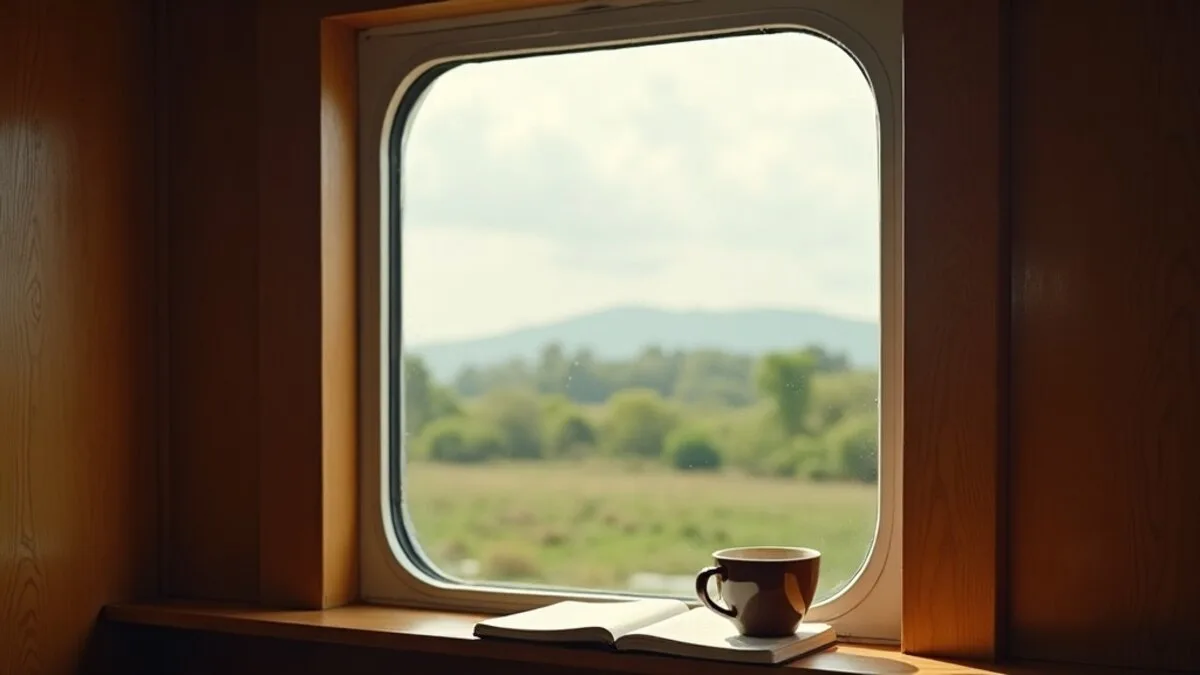
I swapped flights for the train because the train gives back the part of travel that flying quietly steals: the journey itself. A flight is an interruption you endure between two places. A train ride is part of the trip, the landscape sliding past, a coffee on the ledge, hours that belong to you. Once I noticed that difference, the slight extra time stopped feeling like a cost and started feeling like the reward.
There's a practical case too, and I won't pretend otherwise. Trains drop you in the centre of a city, not an airport an hour out. There's no security theatre, no liquid rules, no being at the gate two hours early. You walk on with your bag, you find your seat, and you're moving. The door-to-door time is often closer to flying than the timetables suggest.
And then there's the carbon. Rail is dramatically lower in emissions than short-haul flights, by a wide margin on most routes. I don't travel this way to feel virtuous, but it's a genuine part of why I sleep easily about it. If I'm going to move through the world, I'd rather do it on the gentlest reasonable footprint, and the train is exactly that.
Mostly, though, it suits how I want to feel. Rail travel is slow in the good sense: room to read, to nap, to watch a country reveal itself. It's the same instinct I bring to the rest of my life, which I've written out properly in my slow travel guide. The train is just that philosophy with a timetable.
The shift in how a trip feels
Something changes in your body when you stop flying everywhere. The clenched, rushed feeling of airports, the early alarms, the queues, the recycled air, simply drops away. You arrive in a new city already calm, already part-way into the place rather than disgorged into a terminal. I notice it most on the first morning of a rail trip, when I realise I'm not braced for anything. I'm just here, and I got here gently.
It also changes what counts as a destination. On a train, the in-between places stop being obstacles. A two-hour ride through Alpine valleys is not a transfer to endure, it's one of the best things you'll do all week. Once the journey becomes part of the holiday rather than the price of it, you start choosing routes for their views, not just their endpoints. That reframe alone is worth the switch.
Italy is kinder to vegans than its reputation suggests, as I found out writing my vegan Italy guide.
Rail pass or point-to-point tickets?
This is the first real decision, and the honest answer is "it depends on your route." A rail pass (Interrail if you live in Europe, Eurail if you don't) gives you a set number of travel days within a window, plus flexibility to change plans on a whim. Point-to-point tickets, booked in advance, are often cheaper for a fixed itinerary, especially if you lock in the early fares. Neither is always right.
A pass buys you freedom. Advance tickets buy you a discount. Pick the one that matches how you like to travel.
When a pass wins
- You want to change plans freely and decide tomorrow's train tomorrow.
- You're covering a lot of ground across several countries.
- You enjoy slow regional trains, which a pass usually lets you board without extra cost.
When point-to-point wins
- Your route is fixed and you can book months ahead for the cheapest fares.
- You're mainly riding high-speed lines, where pass holders still pay reservation fees anyway.
- You're doing only two or three long hops, not a dozen.
My own rule is simple. For a wandering, undecided trip I take a pass. For a planned trip with a clear spine of long journeys I book point-to-point and pocket the difference. The single best resource for working any of this out is the rail site I trust most, The Man in Seat 61, which explains every country's quirks plainly.
How the pass actually works
The detail that confuses people is the "travel day." A pass gives you a number of days on which you can ride as many trains as you like, within an overall window of a month or more. So a five-day pass over a month doesn't mean five days of travel back to back. It means five days you choose to be on the move, with rest days in between that cost nothing extra. That structure rewards exactly the slow rhythm I'm arguing for.
You activate each travel day in an app or on the pass itself, usually entering the trains you'll take. It sounds fiddly and takes one nervous attempt to learn. After that it's second nature. The freedom is real: I've changed a whole afternoon's plan on a platform because the light was good and a slower regional line looked prettier, and the pass simply absorbed the change.
Reservations, night trains, and the fine print
Here is the thing that trips up first-timers, so I'll say it loudly. A rail pass is not always a ticket you can just walk onto a train with. Many high-speed and most night trains require a separate seat or berth reservation, with a fee, and a limited number of those reservations exist per train. Miss this and you can be stranded on the platform with a valid pass and no seat. Plan the popular ones ahead.
Which trains need reservations
- High-speed lines (French TGV, Spanish AVE, Italian Frecciarossa, Eurostar): nearly always a compulsory reservation.
- Night trains (the Austrian Nightjet and similar): always reserve a couchette or sleeper, and book early because they sell out.
- Regional and slower trains (much of Germany, Switzerland, the Netherlands): usually no reservation needed, just hop on.
Why I love a night train
A night train is the slow traveller's secret weapon. You board in one city in the evening, sleep as the country rolls by, and step off in another city at breakfast, having paid for transport and a bed in one go. It's not luxury, exactly. The berths are narrow and the corridors rattle. But there's a romance to it, and it folds a long journey into hours you'd have slept through anyway.
The Austrian Nightjet network has quietly revived this across the continent, with routes linking cities like Vienna, Munich, Zurich, Hamburg, Amsterdam, and beyond. Book a sleeper if you can stretch to it, a couchette if you're saving, and bring earplugs and an eye mask either way. I always pack a little food too, because the dining options after dark are slim, and I'd rather not rely on them.
A word on connections and missed trains
Tight connections look efficient on paper and feel awful in practice. I leave a generous buffer between trains, especially when the first leg is one that's prone to delay. Half an hour to change stations or platforms is comfortable. Ten minutes is a gamble I no longer take. A missed connection on a slow trip is a minor shrug. On a packed itinerary it's a cascade of stress, and stress is the one thing I'm travelling this way to avoid.
If a train is delayed and you do miss a connection, stay calm. Within most national networks, a flexible ticket or a pass simply lets you take the next service. The staff are used to it. I keep a small folder of plans on my phone, but I hold them loosely. The whole point of the slow approach is that a hiccup costs you an hour, not a holiday.
Three slow routes I'd actually take
People want a route to copy, so here are three I've done or would happily do, each built around staying put rather than racing. Notice that none of them tries to "see Europe." Each picks a thread and follows it slowly. Two or three nights minimum per stop is the rule that keeps a trip from becoming a blur of stations.
1. The Rhine and the Alps (gentle, scenic)
- Amsterdam, three nights, canals and good vegan cafes.
- Cologne, two nights, the cathedral and the riverfront.
- A slow daytime train up the Rhine to Switzerland.
- Lucerne or Interlaken, three nights, mountains and lake walks.
- Night train onward to Vienna if you want to keep going.
2. The Mediterranean line (sun and cities)
- Barcelona, four nights, easily one of Europe's best vegan cities.
- High-speed to the French coast, then along to Marseille, two nights.
- A coastal train to the Italian Riviera, two nights in the Cinque Terre.
- On to Florence or Bologna, three nights, where the food alone is worth the trip.
3. The far north (quiet and long)
- Copenhagen, three nights, design, bikes, and calm.
- Train across the bridge to Sweden and up to Stockholm, three nights.
- If you've time and nerve, the long haul north toward the Arctic line.
For city-by-city detail on where a vegan eats well along these lines, I keep a running list in my vegan-friendly cities in Europe piece. And if Iberia tempts you most, my Portugal vegan travel guide goes deep on one country I love.
How to read a route like this
Notice what these itineraries share. Each has a clear spine of a few long, deliberate journeys, with everything else being short, easy hops or simply staying put. None of them asks you to change cities every day. The three-nights-minimum rule is doing quiet work in the background: it's the difference between knowing a place a little and merely photographing it. Drop a stop rather than rush them all. You will not regret the city you skipped half as much as the one you raced.
I also build them so the scenic legs happen in daylight and the dull, functional legs happen at night or get cut entirely. The Rhine, the Alps, the Mediterranean coast: these you want to be awake for, coffee in hand, doing nothing but looking. The flat industrial stretches are exactly what the night train is for. Sleep through the boring bits, savour the beautiful ones, and the journey starts to feel curated rather than endured.
What it really costs
Let's talk money honestly, because "the train is expensive" is half a myth and half true. Booked late on a high-speed line, yes, it can sting. Booked early, or ridden on slower regional trains, it's often very reasonable. A flexible global rail pass for a couple of weeks costs a few hundred euros, and whether that beats individual tickets depends entirely on your route and how far ahead you book.
Where the money goes
- Tickets or pass: the big line, hugely variable. Advance fares are the lever you control.
- Reservation fees: small but real, a few euros per high-speed train, more for a night-train sleeper.
- Beds: usually your largest cost, and the one slow travel actually helps, since fewer moves means fewer first-and-last nights wasted.
- Food: the easiest place to save, especially if you cook a little and pack your own (more on that below).
How I keep it sane
I book the long high-speed legs as early as I dare, take a pass only when the freedom is worth the premium, and ride slow regional trains for the short hops, where they're cheap and often prettier. I stay longer in fewer places, which quietly cuts both transport and the hidden cost of constant moving. And I never, ever buy food on the train if I can carry my own.
The real saving, though, isn't a number on a spreadsheet. It's the trips you don't take. By going slowly you do less and spend less, and you come home rested rather than depleted. That's the same maths I apply to a calm week at home, which I've written up as a slow living routine. Less, done well, costs less and feels like more.
The hidden costs of flying that nobody counts
When people tell me flying is cheaper, they're usually comparing the headline fare to a last-minute train ticket. That's not a fair fight. Add the airport transfers at both ends, the baggage fee, the meal you buy because you've been travelling since dawn, and the half-day lost to the whole performance. Suddenly the gap narrows, and sometimes it closes entirely. The train fare is more honest. What you see is closer to what you pay.
I count the time, too, because time is the budget that actually runs out. A cheap flight that costs me a full day of stress and a wrecked evening is not cheap. A slightly dearer train that hands me six calm, useful hours and drops me rested in the city centre is a bargain. I'd rather spend a little more money and a little more time to arrive as a person rather than a parcel.
What I pack, including the vegan food
I travel with one bag, always. A wheeled case is a nuisance on cobbles and steep station stairs, so I carry a soft backpack I can sling on and run with if a connection is tight. Packing light is itself a slow-travel habit: the less you carry, the more freely you move, and the fewer decisions you make each morning. A capsule of clothes you actually like beats a suitcase of maybes.
The kit that earns its place
- A refillable water bottle, since station fountains and cafe taps are easy to find.
- A flat travel container and a spork for assembling meals from market shopping.
- Earplugs and an eye mask, non-negotiable for night trains.
- A power bank, a plug adapter, and a downloaded offline map.
- A book, on paper, because a train window deserves a book and not a screen.
Vegan food for long, quiet days
Onboard catering is hit and miss for a vegan, and often a sad, costly sandwich. So I shop before I board. Most European stations have a supermarket or a bakery within a few minutes, and a little planning means I eat well for hours. The trick is to buy the night before for an early train, and to keep a small emergency stash that travels for days.
- Fresh fruit, a bag of nuts, and good dark chocolate, the reliable trio.
- A bakery roll with hummus or a ripe avocado, assembled on the platform.
- Oat or soy milk in a small carton, plus a banana, for a train breakfast.
- Instant noodles or a pot of couscous if your train (or hostel) has hot water.
- A few oat bars for the moment everything's shut and you're starving.
For the longer game of eating plant-based on the move, across countries and odd hours, I've put everything I know into my plant-based travel tips. The short version is simple. Carry a little food, learn a phrase or two, and you'll never be at the mercy of a vending machine.
Why the food matters more than you'd think
It sounds like a small thing, packing your own lunch. It isn't. Hunger is what turns a delightful slow day into a fraught one, and stations at odd hours rarely have a good vegan option waiting. The traveller who has eaten well is patient, curious, and kind to the conductor. The hungry one is none of those things. A few euros of fruit and bread, bought the night before, protects the entire mood of a travel day.
There's a quieter pleasure in it too. Assembling a simple meal on a platform bench, or unwrapping a roll as the landscape opens up, feels like a small ritual rather than a chore. It's the same care I'd give a meal at home, just on the move. Eating slowly, with the window for a view, is one of the genuine joys of this kind of travel, and it costs almost nothing.
A planning checklist for a calm trip
If you take one thing from this, let it be the checklist. A calm trip is mostly made in the planning, not on the platform. Run through these in order, a few weeks before you go, and the journey itself becomes the easy part. None of it is hard. It just needs doing before you're tired and standing under a departure board.
- Pick your shape: choose two or three bases, not eight. Decide the spine of long journeys between them.
- Choose pass or tickets: price both your real route. Use Seat 61 to check each country's rules.
- Book the must-reserve trains: high-speed legs and any night train, as early as you can.
- Leave gaps on purpose: keep some travel days flexible so you can stay an extra night somewhere you love.
- Book beds near the stations: arriving tired and rolling your bag for an hour ruins the day.
- Plan the food: note a supermarket near each departure station and pack your emergency stash.
- Download the basics: the national rail apps, offline maps, and your tickets, before you lose signal.
- Pack light, then unpack a third: you'll thank yourself on every staircase.
That's genuinely the whole system. Do less, book the tricky bits early, and protect the long, quiet hours that are the reason to travel this way at all. If you're going solo, the train is a wonderful way to do it, calm and safe and full of small kindnesses, and I've said more about that in my piece on solo travel destinations.
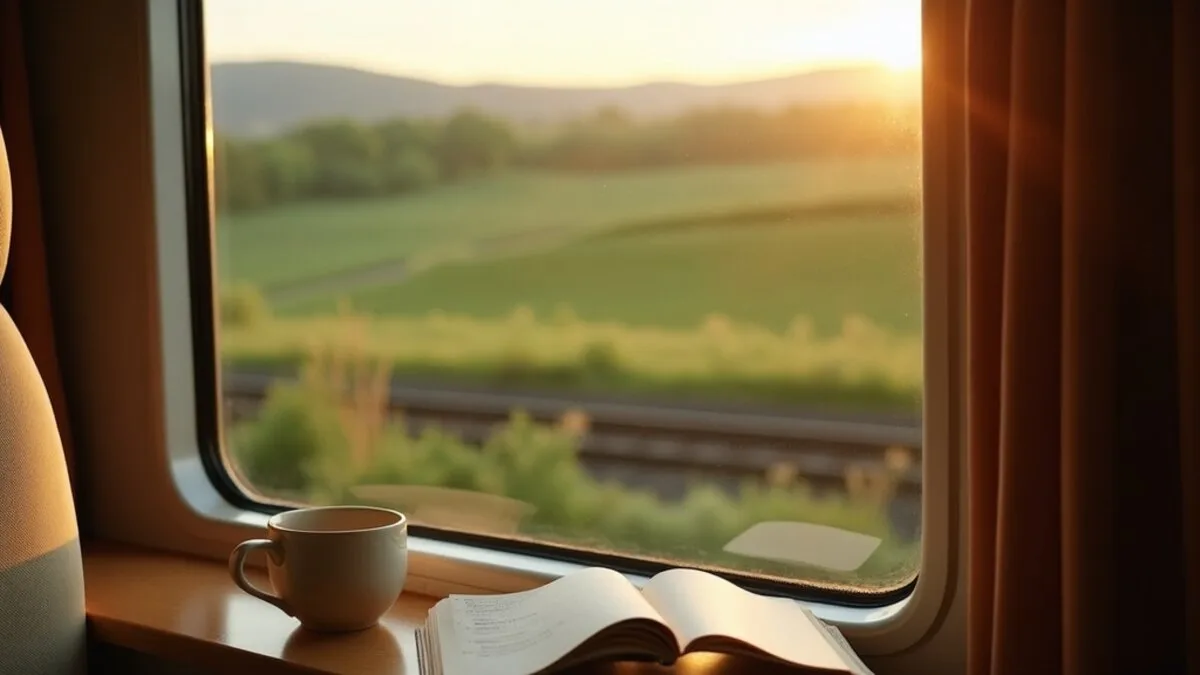
The best hours of my last trip were not in any city. They were on a quiet morning train, coffee cooling, watching a country I didn't have to do anything about slide gently past the window.
When to go, and a last gentle nudge
If you can choose your season, the shoulder months are kindest. Late spring and early autumn give you mild weather, thinner crowds, and trains that aren't heaving with summer holidaymakers. High summer is glorious in the north and punishing in the south, where some older carriages and platforms get very warm. Winter has its own quiet magic, especially through the Alps, as long as you accept shorter days and check that scenic lines are still running.
Whatever the season, the nudge is the same. Book the tricky bits, then stop planning and start trusting the trip. The over-planned itinerary is the enemy of the good travel day. Leave room for the cafe you'll fall in love with, the town you'll want one more night in, the slow train you'll take just because the valley looked beautiful from the platform. The plan gets you moving. The gaps are where the trip actually happens.
Go slowly. Take the window seat. Pack a banana and a book. Europe is small enough to cross by train and large enough to spend a lifetime doing it gently, and there is no rush at all.
Common questions
Is a rail pass worth it, or should I buy tickets?
It depends on your route. A pass is worth it for flexible, multi-country trips where you want to change plans freely. Point-to-point tickets, booked early, are usually cheaper for a fixed itinerary, especially on high-speed lines where pass holders still pay reservation fees. Price both your actual route before deciding, and use Seat 61 to check each country's rules.
Do I need to reserve seats with a rail pass?
Often yes. Most high-speed trains and all night trains require a separate, paid reservation on top of your pass, and they can sell out. Slower regional trains usually let you board freely. Reserve the popular high-speed and night legs as early as you can, and keep the regional hops flexible. Missing a reservation can leave you stranded with a valid pass and no seat.
How do I eat vegan on long train journeys?
Shop before you board. Onboard catering is unreliable for a vegan and often pricey, so I buy from a station supermarket or bakery: fruit, nuts, a hummus roll, oat milk, dark chocolate, and a couple of oat bars as backup. Carrying your own food means you eat well for hours and never depend on a vending machine. My plant-based travel tips go further.
Are night trains comfortable and safe?
Comfortable enough, and generally safe. Berths are narrow and corridors rattle, so bring earplugs and an eye mask. Book a private sleeper if you can, a shared couchette if you're saving. Keep valuables close and the door locked. The Austrian Nightjet network is the backbone of modern European night trains, linking many major cities, and booking early gets you both the bed and the better price.