Yes, Italy is genuinely easy for vegans once you know what to order. Whole categories of everyday food are already plant-based: pasta al pomodoro, marinara, pasta e fagioli, minestrone, pizza marinara, bruschetta, most contorni (vegetable sides), and sorbetto. The trick is asking clearly and kindly, and learning a few phrases like senza formaggio (without cheese) and sono vegano (I am vegan). For the wider picture, my notes on vegan-friendly cities in Europe set the scene.
Why Italy is easier than you expect
Italy is easier for vegans than its reputation suggests, partly because so much of the everyday food was never about meat in the first place. The cooking that built the country was poor-people cooking: bread, beans, vegetables, olive oil, tomatoes, and pasta. Meat was the occasional thing, not the daily thing. You are simply ordering the older, plainer version of a cuisine that already knows how to make vegetables taste like the point.
I came to Italy half-braced for a fight, and found instead that I just had to know what to order and how to ask. The fight, when it happens, is rarely about availability. It is about cheese, which appears with a generosity that is genuinely meant as kindness. Once you learn to head that off gently, most meals fall into place without drama.
It helps to think in dishes, not menus
The mistake I made early was reading a menu top to bottom looking for a labelled vegan option, and finding none. Italian menus rarely flag things that way. Instead, scan for the dishes that are plant-based by tradition: a tomato pasta, a bean soup, a plate of grilled vegetables, a simple bruschetta. They are almost always there, just not announced. Once you train your eye for the dish rather than the label, the menu opens up.
Is Italy a good country for vegans?
Yes, Italy is a good country for vegans, especially if you like simple, vegetable-forward food and are willing to ask a couple of small questions. Big cities have dedicated vegan restaurants, but you do not need them. The real ease comes from ordinary trattorias, pizzerias, and markets, where naturally plant-based options are everywhere. The official tourism site at italia.it is a calm starting point for planning regions and seasons.
Season matters as much as region
Italian cooking follows the harvest closely, so when you go shapes what you eat. Spring brings artichokes, fava beans, and tender greens. Summer is the peak of tomatoes, aubergine, courgette, and peppers, which is the easiest and most abundant time for a vegan. Autumn turns to mushrooms, chestnuts, and pumpkin. Even winter is generous, with hearty bean soups, chicory, and citrus from the south. Eating with the season is simply how the food works here, and it happens to suit a plant-based plate beautifully.
The language of asking, kindly and clearly
Most of vegan travel in Italy comes down to a handful of phrases said warmly. Italians take food seriously and take hospitality even more seriously, so a clear, friendly request is met with care, not annoyance. I have never once been treated as a nuisance for asking, as long as I asked with a smile and a little Italian. The effort of trying the language matters more than getting it perfect.
How do you say vegan in Italian?
You say sono vegano if you are a man, or sono vegana if you are a woman. It is widely understood, though in smaller towns the simpler route is to list what you do not eat rather than rely on the label. Pair the word with one concrete sentence, like "no meat, no cheese, no eggs, no milk," and you remove all ambiguity in one breath.
The phrases I actually use
- Sono vegano / vegana: I am vegan.
- Senza carne: without meat.
- Senza formaggio: without cheese.
- Senza burro: without butter.
- Niente latticini: no dairy.
- Senza uova: without eggs.
- C'e del brodo di carne?: is there meat broth in it?
I keep these on a note in my phone and read them aloud rather than show a screen, because speaking, however clumsily, opens people up. The single most useful one is senza formaggio. Cheese is the default add, the thing that arrives unasked, so naming it early saves the most trouble.
Ask before, not after
The kind way to do this is to ask while ordering, not to send a plate back. I say what I would love, then add the senza part in the same sentence, so the kitchen builds the dish correctly the first time. "Pasta al pomodoro, senza formaggio, grazie" is a complete, polite order that almost never goes wrong. A small thank-you at the end does more for the next vegan traveller than any review ever will.
Naturally vegan dishes to look for
The heart of eating well in vegan Italy is knowing the dishes that are already plant-based, or a single senza away from it. These appear on menus across the whole country, from a tiny mountain trattoria to a city lunch counter. Learn this short list and you will never be stuck, even in a town with no vegan anything.
The reliable core
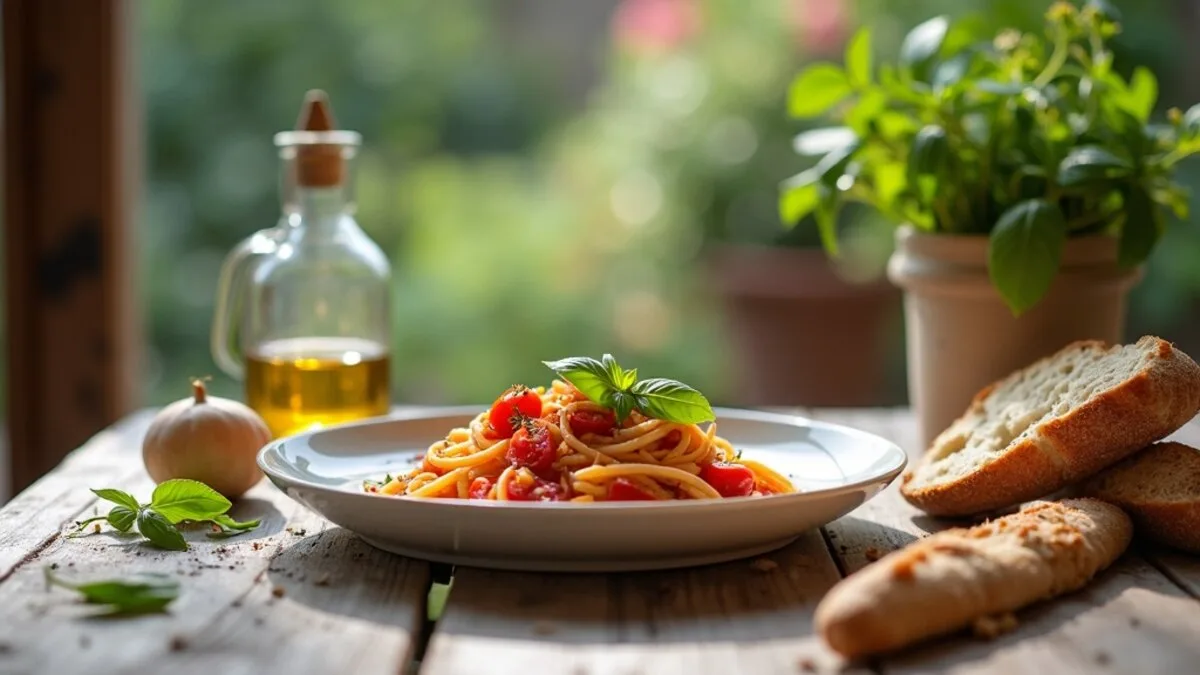
- Pasta al pomodoro: pasta with a simple tomato sauce, usually just tomato, oil, garlic, and basil.
- Pasta alla marinara: a tomato and garlic sauce with no seafood, despite the name.
- Pasta e fagioli: pasta and beans, hearty and humble (ask about the broth).
- Minestrone: vegetable soup (again, check the broth and that no cheese rind was used).
- Pizza marinara: tomato, garlic, oregano, oil, and no cheese at all, by tradition.
- Bruschetta: grilled bread rubbed with garlic, topped with tomato and oil.
- Contorni: vegetable side dishes, often the best plant food on the menu.
- Sorbetto: fruit sorbet, usually dairy-free.
Do not overlook the contorni
The contorni section, the side dishes, is where I have eaten some of my best plates in Italy. Grilled or roasted vegetables, sauteed greens with garlic and chilli, white beans dressed in oil, artichokes in season, roasted potatoes. Order two or three contorni with bread and you have a full, generous meal that needed no special request at all. In some regions these sides outshine the mains entirely.
Is pasta in Italy vegan?
Dried pasta sold in boxes is almost always vegan, made from just durum wheat and water. The thing to watch is fresh pasta, pasta fresca, which is often made with egg, especially the flat ribbon shapes like tagliatelle. Filled pastas like ravioli and tortellini usually contain cheese or meat. So a tomato sauce over plain dried pasta is a safe order; a fresh egg pasta is the one to ask about.
Pasta, pizza, and the cheese question
Pasta and pizza are the two foods every traveller eats in Italy, and both are easy to keep vegan once you understand the cheese habit. Cheese in Italy is not an afterthought; it is woven through the culture as a sign of care and abundance. The kindest framing is that an unasked plate of cheese is generosity, not a trap. You simply decline it warmly, in advance.
Keeping pasta vegan
Order dried pasta with a tomato-based or oil-based sauce and add senza formaggio. Pasta al pomodoro, marinara, aglio e olio (garlic and oil), arrabbiata (tomato and chilli), and pasta with vegetables are all good bets. The grated cheese at the end is the main thing to head off. Watch also for pancetta or guanciale hidden in sauces like carbonara and amatriciana, which are not vegetarian even before the cheese.
Pizza without cheese, on purpose
Pizza marinara is the quiet hero here. It is a traditional Neapolitan pizza with tomato, garlic, oregano, and oil, and crucially no cheese at all, by design rather than by omission. Ordering it is not asking for a stripped-down pizza; it is ordering a classic. Beyond that, many pizzerias will happily build a vegetable pizza senza formaggio, with toppings like mushrooms, artichokes, peppers, and olives over the tomato base.
Watch the dough and the broth
Pizza dough and most bread are typically just flour, water, yeast, and salt, which is vegan. In a few regions, though, some breads and focaccia are made with lard (strutto), so it is worth a quick question if you are unsure. The same care applies to risotto, which is often started with butter and finished with cheese and meat broth. Risotto can be vegan, but it rarely is by default, so always ask.
Breakfast, coffee, and the morning
Italian breakfast is small, sweet, and built around coffee, which makes it both a delight and a minor puzzle for vegans. The classic is a pastry and a coffee taken standing at a bar, in minutes. The pastry part is where dairy and egg hide, but the coffee and the wider morning are easy to navigate once you know the moves.
Coffee, the easy part
Espresso is black and vegan. The question is milk. Plant milk has spread through Italian cafes in recent years, especially soy (soia) and oat (avena), though it is far from universal outside cities. I ask "avete latte di soia?" or "latte di avena?" and accept a plain espresso or a long black (caffe lungo, or an americano) where they do not. A black coffee at an Italian bar is no hardship at all.
The cornetto problem
The cornetto, Italy's croissant, is usually made with butter and sometimes egg, so it is generally not vegan. Some bars now stock a vegan version, but do not count on it. Honestly, the simplest morning is fruit. Italian fruit, bought from a market or a bar's counter, is some of the best I have eaten, and a couple of pieces with a black coffee is a clean, happy breakfast.
What I do most mornings
I tend to skip the pastry hunt and self-cater breakfast where I can: bread from a bakery, fruit from a stall, sometimes a handful of nuts. Then I take coffee at a bar as a small ritual rather than as a meal. It keeps the morning calm, which sits well with how I think about travel generally, the way I describe in my slow travel guide. Mornings unhurried, food simple.
Aperitivo, street food, and snacks
Some of the most fun vegan eating in Italy happens outside proper meals, in the spaces around them: the early-evening aperitivo, the street food of each city, and the snacks pulled from a bakery window. These are often cheap, generous, and accidentally very plant-friendly.
Aperitivo, the early-evening ritual
Aperitivo is the Italian habit of a drink before dinner, often served with snacks, and in some cities a small spread you graze from. A spritz or a glass of wine is usually vegan, and the snack table frequently holds olives, bread, crisps, focaccia, marinated vegetables, and bruschetta. I check whether focaccia was made with lard and steer around the cheese and cured meats, but there is almost always plenty to graze on.
Street food worth seeking out
- Focaccia: often vegan, but ask about lard in some regions.
- Panelle (Sicily): chickpea fritters, naturally vegan and excellent.
- Bruschetta and crostini: check toppings, but the tomato versions are easy.
- Roasted chestnuts: a simple autumn street snack.
- Olives and taralli: salty snacks from the south, often plant-based.
Snacking from bakeries
Bakeries and alimentari (small grocers) are a vegan traveller's friend. A wedge of plain focaccia, a piece of fruit, a handful of olives, some good bread and a tomato make an easy lunch on a bench. This kind of light, mobile eating pairs naturally with being on the move, which I lean on heavily in my broader plant-based travel tips.
Drinks are mostly easy
On the drinks side, vegans have little to worry about in Italy. Espresso, wine, beer, and the classic spritz are all generally fine, and Italian coffee culture is a pleasure to lean into. The only quiet caveat is that some wines are fined with animal products, though this is rarely something a casual traveller needs to chase down. House wine in a carafe, a cold beer, or a bitter aperitivo will see you through almost any evening without a single question asked.
Gelato versus sorbetto
Few things feel more Italian than an evening gelato, and the good news is that the dairy-free version, sorbetto, is everywhere and often superb. The distinction between the two is the single most useful sweet-tooth fact for a vegan in Italy.
What is the difference?
Gelato is made with milk and is not vegan. Sorbetto is a fruit ice made with fruit, sugar, and water, with no dairy, so it is usually vegan. Good gelaterie keep a clear row of sorbetti: lemon, strawberry, raspberry, mango, peach, and dark chocolate are common. A dark chocolate sorbetto on a warm evening is one of the small joys of travelling here.
The questions worth asking
Not every fruit flavour is automatically sorbetto, because some shops make fruit-flavoured gelato with milk. So I ask "e un sorbetto? Senza latte?" to confirm it is a true sorbet with no milk. I also check that the cone is vegan, since some are, some are not, and a cup (coppetta) is the safe default. A few cities now have fully vegan gelaterie offering plant-milk gelato in many flavours, which is a treat when you find one.
Is sorbetto always vegan?
Sorbetto is usually vegan, but not guaranteed, so it is still worth asking. The main risk is a shop that blurs the line and adds milk or cream to a fruit flavour. A quick "senza latte?" settles it. Steer clear of creme flavours like stracciatella, pistachio, or hazelnut at a regular gelateria, since those are almost always dairy-based.
Markets and cooking for yourself
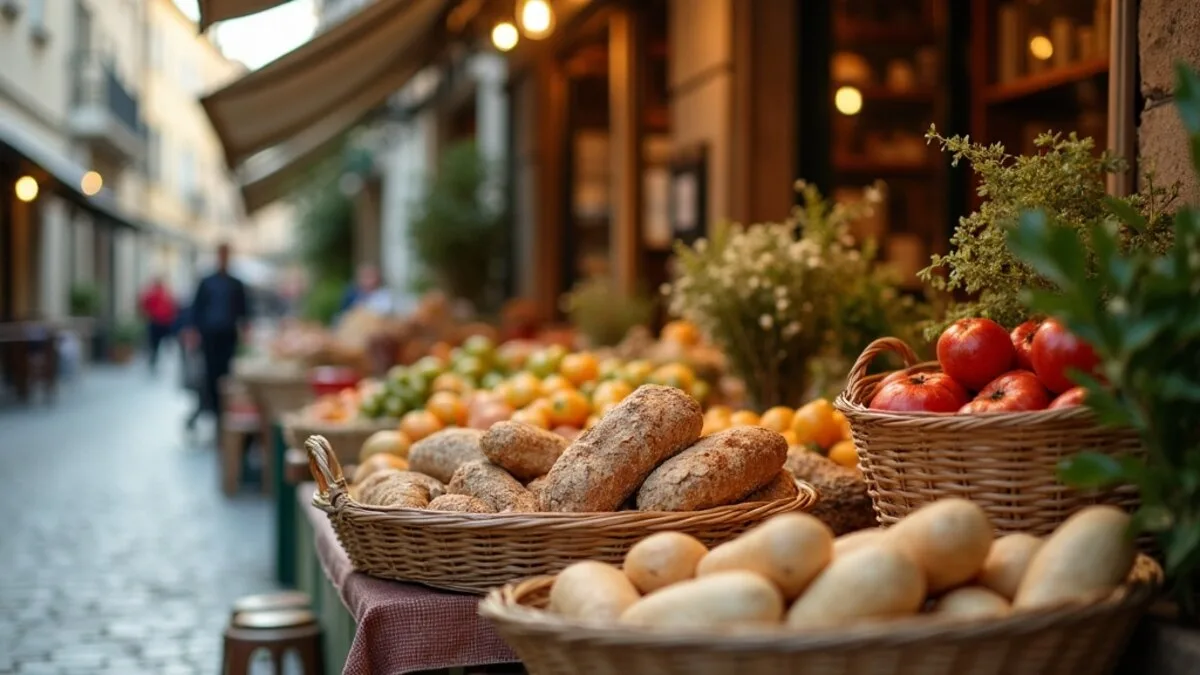
If I stay anywhere with a kitchen, I do at least half my eating from the market, and it is some of the best food of the trip. Italian markets are seasonal, cheap, and astonishingly good, and self-catering takes all the negotiation out of being vegan. It also slows the days down in a way I love.
What the market gives you
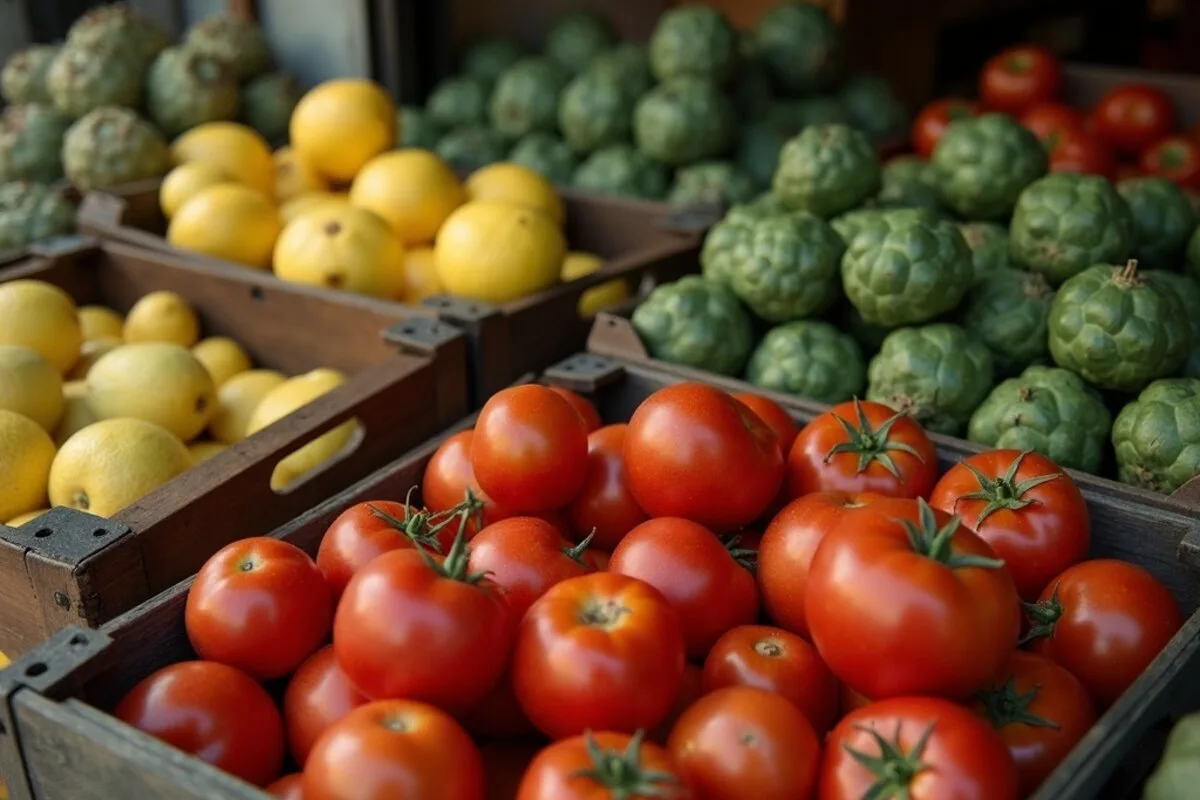
A typical market stall hands you everything a plant-based cook wants: tomatoes that taste of sun, artichokes, courgettes, peppers, leafy greens, lemons, fresh herbs, beans, and bread. Add good olive oil, garlic, dried pasta, and tinned beans from a small grocer, and you can cook simple, beautiful meals for days. A tomato pasta made with August tomatoes and fresh basil needs almost nothing else.
Easy meals from a holiday kitchen
- Pasta al pomodoro: ripe tomatoes, garlic, oil, basil, dried pasta.
- Bruschetta: grilled bread, garlic, chopped tomato, oil, salt.
- Greens with garlic and chilli: any leafy green sauteed quickly.
- White beans and tomato: tinned beans warmed with tomato and herbs.
- A simple panzanella: stale bread, tomatoes, cucumber, oil, vinegar.
A small pantry makes a holiday kitchen sing
I keep a tiny travelling pantry so a rented kitchen is never starting from nothing. Good olive oil, salt, dried pasta, a tin or two of beans, garlic, and dried chilli cover most simple meals. Italian shops make this easy and cheap, and most of it can be bought on the first afternoon. With those staples plus whatever the market offers, dinner is rarely more than fifteen minutes away, and it tastes far better than most things I would order out.
Why I lean on markets when travelling
Buying from a market connects you to a place faster than any restaurant does. You learn what is in season, you talk to people, and you eat the way locals eat. It is also the most reliable way to stay relaxed about being vegan, because you control every ingredient. This habit travels well beyond Italy; I do the same in Portugal, as I describe in my Portugal vegan travel guide.
Region by region, north to Sicily
Italy is not one cuisine but many, and the vegan experience shifts as you move through it. Knowing the regional character helps you order well and sets your expectations honestly. Broadly, the south and the islands lean more naturally plant-based, while the rich north leans on butter, cheese, and meat. None of it is hard, but it is good to know where you are.
Rome and the centre
Rome is comfortable for vegans, with plenty of dedicated spots and a strong tradition of vegetable dishes. Roman cooking loves artichokes (in season), chicory and greens, and simple pastas. Watch the famous pastas, since carbonara, amatriciana, and cacio e pepe all rely on cheese or cured pork. Stick to pomodoro, marinara, or the vegetable contorni and you eat very well.
Florence, Bologna, and the north
Tuscany around Florence is surprisingly easy, built on bread, beans, and oil; ribollita and panzanella are traditional, though always confirm no meat broth. Bologna and Emilia-Romagna are the heartland of egg pasta, filled pasta, cheese, and cured meat, so this is the trickiest region. Lean on tomato pastas, pizza, and vegetable sides here. The wider north uses more butter and cheese, but cities still have good options.
Naples, the south, and Sicily
This is the easiest part of the country. Naples gave the world pizza marinara, cheeseless by tradition, and southern cooking is built on tomatoes, aubergine, beans, and bread. Sicily is a vegan delight: panelle (chickpea fritters), caponata (sweet-sour aubergine, but check for anchovy), grilled vegetables, citrus, and granita made with fruit. The Mediterranean and Arab influences here mean vegetables are treated as the main event. Many of Sicily's towns are also UNESCO sites, listed at unesco.org, which makes the eating and the wandering one pleasure.
Slow travel across Italy by train
The way I most enjoy Italy is by train, moving slowly from city to city and letting each region's food reveal itself in turn. Italy's rail network is good, the views are often beautiful, and travelling overland keeps the whole trip calmer and lighter on the planet. It also shapes how you eat, in a good way.
Why train suits vegan travel here
Trains drop you in city centres, near markets and trattorias, not on motorway edges. Between stops you can carry market food with you, so you are never stuck with whatever a service station offers. A loaf, some tomatoes, fruit, and a bag of olives make a fine train lunch with a window seat. For the practical side of overland routes, my piece on Europe by train slow travel covers the planning in more depth.
A loose route I have loved
- Start in the north: Milan or Turin, with their grand cafes and aperitivo culture.
- Down to Bologna or Florence: bread, beans, and Tuscan simplicity.
- On to Rome: artichokes, greens, and easy vegetable pastas.
- South to Naples: pizza marinara at its source.
- Across to Sicily: the easiest, sunniest eating of the trip.
Going slowly is the point
I try not to rush between three cities in a week. Two or three nights in each place lets me find the market, learn one good trattoria, and actually rest. Eating well as a vegan in Italy is far easier when you are not hungry and harried, sprinting for a train. Slowness is its own form of travel insurance against bad, stressed meals, and it suits the country. For destinations chosen with this pace in mind, I keep a list of vegan travel destinations.
Common mistakes and hidden animal products
Most trouble in vegan Italy comes not from obvious meat but from small, hidden things: a splash of broth, a knob of butter, an anchovy melted into a sauce. None of these should put you off, but knowing them saves the occasional unhappy surprise. Here are the ones I watch for, learned mostly the hard way.
The hidden ones to ask about
- Lard (strutto) in some breads, focaccia, and pastry, especially regionally.
- Butter (burro) in risotto, sauces, and northern cooking; say senza burro.
- Anchovy (acciughe) melted invisibly into sauces, dressings, and caponata.
- Meat broth (brodo di carne) as the base of soups, risotto, and minestrone.
- Egg (uova) in fresh pasta, especially flat ribbon shapes and filled pasta.
- Cheese rinds simmered into soups and sauces for depth.
- Honey (miele) drizzled on some breads and desserts.
The mistakes I made first
Early on I assumed minestrone was always vegan and learned that it often starts with meat broth or a cheese rind. I assumed marinara pizza might contain seafood, when it never does, and nearly skipped my favourite dish. I forgot that fresh pasta usually means egg. And I trusted that fruit gelato was dairy-free, when fruit-flavoured gelato is not. Each was an easy fix once I knew the question to ask.
How do I avoid hidden animal products in Italy?
Ask one clear question per dish before ordering, focused on the most likely hidden ingredient: broth for soups and risotto, butter for northern plates, anchovy for sauces, egg for fresh pasta, lard for breads. A friendly "c'e del brodo di carne?" or "senza burro, per favore" handles almost everything. Be kind, be specific, and accept that the occasional thing will slip through. It is travel, not an exam, and Italy mostly meets you halfway. If you want a sense of how this compares elsewhere, my notes on wellness travel destinations carry the same gentle, ask-first approach.
Common questions
Is Italy good for vegans?
Yes, Italy is good for vegans, more so than its reputation suggests. Many everyday dishes are naturally plant-based, like pasta al pomodoro, marinara, pasta e fagioli, minestrone, pizza marinara, bruschetta, vegetable contorni, and sorbetto. Big cities also have dedicated vegan restaurants. The main thing to manage is cheese, which arrives by default, so a polite 'senza formaggio' goes a long way.
How do you say vegan in Italian?
You say 'sono vegano' if you are a man, or 'sono vegana' if you are a woman. In smaller towns it helps to back it up by listing what you avoid: no meat, no cheese, no eggs, no milk. Useful phrases include 'senza carne' (without meat), 'senza formaggio' (without cheese), 'senza burro' (without butter), and 'niente latticini' (no dairy).
Is pasta in Italy vegan?
Dried boxed pasta is almost always vegan, just durum wheat and water, so a tomato or oil sauce over dried pasta is a safe order. Fresh pasta ('pasta fresca') is often made with egg, especially flat ribbon shapes, and filled pastas like ravioli usually contain cheese or meat. When in doubt, ask whether the pasta contains egg ('contiene uova?').
What is the difference between gelato and sorbetto?
Gelato is made with milk and is not vegan. Sorbetto is a fruit ice made from fruit, sugar, and water, with no dairy, so it is usually vegan. Good gelaterie keep a clear row of sorbetti like lemon, strawberry, mango, and dark chocolate. Still ask 'senza latte?' to confirm, since some shops make fruit-flavoured gelato with milk, and choose a cup if you are unsure about the cone.