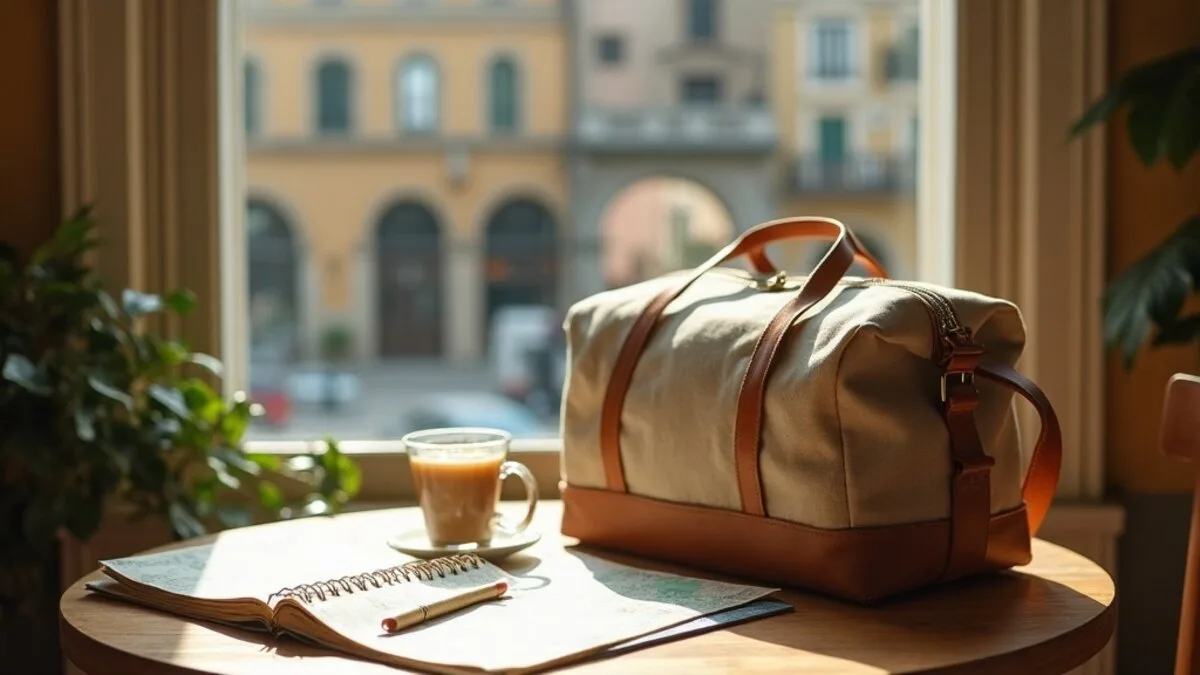
Solo travel taught me to trust my own pace. The right destination gives you good food, walkable days, and enough quiet to hear yourself think.
What makes a place good for solo travel?
A good solo destination is walkable, safe at night, generous with vegetarian food, and easy to sit alone in without feeling watched. That's the whole brief. Get those four right and the rest takes care of itself. The cities that fail solo travellers tend to fail on one of them: a place that's lovely but car-dependent, or safe but impossible to eat alone in, will wear you down faster than you'd think.
I came to solo travel late and nervously, and I've since done it enough to have firm opinions. The first thing I learned is that the destination matters more for solo trips than for any other kind. With company, a difficult city is an adventure you share. Alone, the same city is just difficult. So I choose carefully now, and I choose for ease.
The second thing I learned is that solo travel rewards exactly the slow approach I write about everywhere else. Fewer places, longer stays, days built around walks and meals. When you're alone, a packed itinerary isn't impressive, it's exhausting, because there's nobody to share the logistics with. The whole thing in the slow travel guide applies double when it's just you.
The third thing, and maybe the most important, is that the right destination doesn't just keep you safe and fed. It keeps you company. A good solo city has a rhythm you can fall into: a morning cafe, a market, a viewpoint where a few other people are also just sitting and watching. You're alone within a living place, not alone in a vacuum, and that difference is everything. The wrong city leaves you stranded; the right one folds you gently into its ordinary day.
The four things, in order
- Walkable: you'll spend a lot of time on your feet, and walking is how you fill the hours that would otherwise be conversation.
- Safe at night: so a solo evening walk feels like freedom, not risk.
- Easy to eat alone: casual food, counters, markets, places where one person at a table is normal.
- Plant-friendly: so the food is a daily pleasure rather than a daily negotiation.
With company, a difficult city is an adventure. Alone, it's just difficult.
More and more, I would rather take the long way, which is how I ended up crossing Europe by train.
Long drives go better when I pack for the gaps, which is the heart of my notes on vegan road trip food.
Six destinations that worked for me
Here's my actual short list, the cities I've travelled alone and would send a friend to without hesitation. I'll go through each in more detail below, but the list itself is the answer:
- Lisbon, Portugal: warm, cheap, endlessly walkable.
- Kyoto, Japan: calm, safe, deeply plant-friendly by tradition.
- Edinburgh, Scotland: cosy, English-speaking, full of cafes.
- Mexico City, Mexico: vast, vibrant, surprisingly easy once you find your neighbourhood.
- Copenhagen, Denmark: calm, safe, beautiful, expensive.
- Hoi An, Vietnam: small, gentle, with some of the best plant-based food anywhere.
What they share is a certain gentleness. None of them is overwhelming in the way a first-timer fears. Each can be lived in slowly. And each gives you good food, walkable days, and enough quiet to hear yourself think, which is, after all, half the reason to go alone in the first place.
You'll notice these overlap heavily with my vegan-friendly lists, and that's not a coincidence. The qualities that make a city good for a solo vegan, walkable, casual, generous with vegetables, are exactly the qualities that make it good for any solo traveller. Eating well alone is most of the battle, and a city that does that for you is doing the heavy lifting.
A note on what I left off. Big, chaotic, hard-to-navigate cities can be magnificent, but I wouldn't make them a first solo trip. Neither would I pick somewhere car-dependent, where you spend the day in a vehicle instead of on your feet meeting the place. The list above is deliberately a list of soft landings.
Lisbon and Kyoto, the easy wins
Lisbon is where I'd send a first-time solo traveller. It's small enough to feel manageable, cheap enough that mistakes don't hurt, and so walkable that you can fill a day just wandering the hills with no plan. People are warm, the cafe culture means you can sit alone for hours over a one-euro coffee, and the miradouro viewpoints are sociable spots where a solo traveller never feels conspicuous. I've written the food side up in the Portugal guide.
The thing about Lisbon alone is that the city does the work of keeping you company. There's always a tram clattering past, a viewpoint with a few other people watching the sun go down, a market to drift through. You're alone but rarely lonely, which is the distinction that matters.
It's also forgiving of mistakes, which matters on a first solo trip. Take the wrong tram and you end up somewhere interesting. Pick the wrong restaurant and you're out a few euros, not a fortune. The low stakes let you relax and learn the rhythm of travelling alone without much riding on getting it right. By day three you'll have a regular cafe, a favourite viewpoint, and the easy confidence that the whole exercise is going to be fine.
Kyoto, for quiet
Kyoto is the calmest big trip I know. Japan is famously safe, so a solo evening walk feels entirely relaxed, and the food tradition is gentle on vegans thanks to shojin ryori temple cuisine. Eating alone is completely normal in Japan; many places have counter seating designed for exactly that, and nobody bats an eye at one person quietly enjoying a bowl of noodles.
If Kyoto appeals, it slots straight into my ten-day Japan itinerary, which I built to work just as well for one person as for two. The early mornings at the shrines, the long temple afternoons, the open day at the end: all of it is, if anything, better alone.
There's a particular quality to Kyoto solo that I keep going back for. The city rewards quiet attention, and you give it more of that when there's nobody to talk to. A moss garden, a tea house, a slow walk along the Philosopher's Path: these land differently when it's just you and the place. Japan also has a deep cultural comfort with solitude, so you never feel you're doing something odd by travelling and eating alone. If anything you feel a little looked after.
The only real adjustment is the language. English isn't widespread once you're off the tourist track, so I lean on a translation app and a dietary card, and I find people endlessly patient and kind about it. A bit of preparation removes nearly all the friction, and the friction that remains is part of the texture of being somewhere genuinely different.
Edinburgh, Copenhagen, and the calm north
Edinburgh is an easy, gentle solo city, helped enormously by the shared language and a cafe-and-bakery culture that's quietly very vegan-friendly. The weather pushes you into cosy interiors, which suits a solo traveller with a book just fine. It's compact, atmospheric, and safe, and you can climb a hill for a view, then warm up over cake, and call it a perfect day.
Copenhagen is calm, beautiful, and one of the safest cities anywhere, which makes solo evenings feel effortless. Rent a bike and the whole city opens up; cycling alone through a flat, orderly, gorgeous city is a genuine pleasure. The catch is the cost, so I self-cater breakfast and save up for one good dinner. Even on a budget, it's a wonderful place to be quiet.
Both northern cities share a particular suitability for solo travel: they're orderly, low-stress, and full of small comforts. Nobody hassles you, everything works, and the pace is calm. If your idea of a good solo trip is one that lowers your blood pressure rather than raising it, head north. There's real overlap here with my restorative travel picks.
What I love about Edinburgh alone is that the weather gives you permission to be slow. When it's grey and spitting rain, nobody expects you to be out conquering a list of sights. You move between a bookshop, a cafe, a gallery, a bakery, and the day fills itself with small warm pleasures. A solo traveller with a book and a flat white in a cosy Edinburgh cafe is the most natural sight in the world there.
Copenhagen asks a little more of your wallet but almost nothing of your nerves. I've cycled it alone for whole days, stopping at harbour baths and bakeries, and never once felt the low hum of unease that some cities give a solo traveller after dark. It's the kind of place where you relax your shoulders on arrival and don't tense them again until the flight home.
If you want a cheaper northern alternative, Edinburgh is the better-value of the two by a distance, and a few other British cities (Glasgow, Bristol) offer the same easy, English-speaking, cafe-rich solo experience for less than Scandinavian prices. The whole region rewards the kind of traveller who'd rather have a quiet, well-fed, low-drama week than a frantic highlight reel, which is exactly the sort of trip I'm always quietly arguing for.
Mexico City and Hoi An, further afield
The two picks that take a little more nerve, and reward it. Mexico City is vast and at first glance intimidating, but pick the right neighbourhood, Roma or Condesa, and it becomes one of the most rewarding solo cities anywhere: leafy, walkable, full of cafes, markets, and parks, with a food culture that's deeply vegetable-friendly once you know where to look. Tacos de nopal, guacamole, beans, corn, and a growing vegan scene make eating easy.
It's also a city that's awake and social, so a solo traveller is never the odd one out. I'd stick to the central walkable neighbourhoods, take registered taxis or rideshares at night rather than wandering far, and lean on the markets for lunch. Within those bounds it's a joy, and the altitude even forces a slower pace on you whether you like it or not.
The food alone justifies the trip. Mexican cooking is built on corn, beans, squash, chillies, and herbs, which is to say it's vegetable-forward at its core, and the city has a genuine and growing vegan scene on top of that tradition. A tianguis street market is a sensory overload in the best way: stacks of fruit, pots of beans, fresh tortillas, cactus paddles, herbs by the armful. Eating your way through one slowly is one of the great cheap pleasures of solo travel anywhere.
Hoi An, the gentle one
Hoi An in central Vietnam is small, lantern-lit, and almost absurdly pretty, and Vietnamese food is some of the most naturally plant-based in the world. The Buddhist tradition means "chay" (vegetarian) food is everywhere, often signposted, and frequently vegan. Fresh herbs, rice paper, tofu, noodle soups: I ate some of my best solo meals here for almost nothing.
It's a tourist town, which means it's set up for visitors and easy to navigate alone, with the trade-off that the very centre gets crowded. Rent a bicycle, ride out to the rice paddies and the beach, and you get the quiet version. As a first foray into Southeast Asia alone, it's about as soft a landing as exists.
A small practical note on both of these: the time zones and the longer flights mean you'll want to build in a soft first day and a soft last one, the way I do in every itinerary. Don't land in Mexico City or central Vietnam and try to sightsee through the jet lag. Walk, eat lightly, sleep, and let your body catch up. The trip is longer than the daylight you have, so spend the first day buying yourself the other nine.
Both also reward staying put. The instinct on a far-flung trip is to country-hop and see everything, but you'll get more from a week in Hoi An or a week in one Mexico City neighbourhood than from a frantic loop. Depth over breadth, as ever. It's the same argument I make in the slow travel guide, and it's even truer when you're carrying the logistics alone.
How to handle solo dinners
Dinner alone is the part people dread, and it's worth addressing head on, because it's the single thing that most often makes a solo traveller feel exposed. Here's the honest truth: it gets easy fast, and there are simple ways to make it easier from night one.
I remember my own first solo dinner vividly, hovering outside a restaurant talking myself into going in, certain the whole room would clock me as the sad person eating alone. Of course nobody did. I had a lovely meal, read my book, and walked home feeling quietly triumphant. That arc, dread then ease then mild triumph, is so common it's almost a rite of passage, and it's worth pushing through because the reward is real independence.
- Bring a book. Not your phone, a real book. It gives your hands and eyes something to do and signals "content, not lonely."
- Sit at the counter. Counter seating exists for solo diners. In Japan it's the norm; everywhere it's the friendliest spot.
- Eat your big meal at lunch. Solo lunches feel completely natural, the food is cheaper, and it takes the pressure off the evening.
- Go a little early. An emptier room is a calmer first solo dinner than a packed one full of couples.
- Pick casual over formal. Markets, counters, small neighbourhood places. Fine dining alone is a particular taste; build up to it.
The reframe that helped me most was realising that nobody is actually watching. Everyone's wrapped up in their own evening. After two or three solo dinners, the self-consciousness simply burns off, and you're left with something genuinely lovely: a good meal, a good book, and the quiet pleasure of your own company. It's a skill, and like most skills it's awkward only at the start.
If a solo dinner still feels like too much on a hard night, there's no shame in the alternative. Buy a good plate of food from a market or a deli, take it back to your room or a bench with a view, and eat there. Some of my favourite travel meals have been a market haul eaten on a hilltop at sunset, no waiter, no table, just bread, olives, fruit, and a quiet view. The rules are yours to make.
And breakfast, for what it's worth, is the easiest meal to do alone anywhere. A cafe in the morning with a coffee, a pastry, and a book is so normal that it never registers as solo at all. I often make breakfast my anchor: the same place each morning, a friendly face behind the counter, a slow start. It sets the tone for a calm day, much like the morning habits I keep at home.
The reframe that helped most: nobody is actually watching. Everyone's wrapped up in their own evening.
Safety, loneliness, and the honest bits
I won't pretend solo travel is all golden afternoons. Two things are real: the practical question of safety, and the emotional one of loneliness. Both are manageable, and being honest about them is more useful than glossing over.
Staying safe
The basics carry you a long way. Share your itinerary with someone at home. Keep a copy of your documents somewhere separate. Trust the small voice that says a street feels wrong, and turn around. Take registered taxis or rideshares at night rather than long walks through unfamiliar areas. Don't broadcast that you're alone to strangers you've just met. None of this is fearful; it's just the same sense you'd use anywhere, slightly heightened.
The cities on this list are all chosen partly because they make this easy. They're safe, they're walkable, and a solo evening in any of them feels like freedom rather than risk. That's not an accident; it's the first thing I screen for.
A few practical habits I keep: I tell my accommodation host roughly when I'll be back on a longer day out. I keep a little emergency cash separate from my wallet. I screenshot my route home before I head out at night, so I'm not standing on a corner staring at my phone. And I never let my phone battery get low when I'm relying on it to navigate, which is why a power bank lives in my day bag. None of this is dramatic. It's just the quiet scaffolding that lets you relax into the trip.
The loneliness question
There's a difference between being alone and being lonely, and solo travel teaches it. Most of the time, alone is wonderful: you do exactly what you want, change plans on a whim, and pay attention in a way you simply can't in company. But there are flat moments, usually in the evening, and they pass. A call home, a busy cafe, a walk, a chapter of a book. The flatness is part of it, not a sign you've done something wrong, and learning to sit with it is half the gift of the whole exercise. It's the same muscle I describe in my slow living routine: comfort with your own quiet.
Finding company when you want it
Solo doesn't have to mean isolated. If you want a little contact, it's easy to arrange in small doses without committing to a tour group's full itinerary. A single walking tour on your first morning orients you and lets you chat. A cooking class is a lovely way to spend an afternoon with people and learn the local food. Staying somewhere with a communal table or a good cafe nearby gives you the option of a hello without obligation.
The trick is to keep it optional. The best version of solo travel, for me, is mostly quiet with the occasional easy conversation, taken when I want it and skipped when I don't. You hold the dial, which is exactly the freedom that makes going alone worth it. Some days you'll want to talk to no one, and that's allowed. Some days a stranger's recommendation becomes the best meal of the trip.
How to plan your first solo trip
Start easy. Pick one city from the top of this list, ideally Lisbon or Edinburgh, and go for four or five nights. One city, not three. A flat with a kitchen so breakfast is sorted and you have a base. A loose plan with one fixed thing a day and the rest left open. That's the whole recipe, and it's deliberately undemanding because your first solo trip is about proving to yourself that you can, not about ticking off sights.
Pick somewhere your home language gets you by, or where you're comfortable leaning on a translation app, for that first one. Removing the language barrier takes a whole layer of friction off the experience, which is what you want while you're learning the rest. You can graduate to more challenging places later, once travelling alone feels like second nature rather than a leap.
A first-trip checklist
- One city, three to five nights.
- Accommodation booked for the whole stay, not improvised.
- A couple of restaurants saved on a map, plus a supermarket located for breakfast.
- A book, a journal, and a power bank.
- One thing planned per day. The rest open.
- A check-in arrangement with someone at home.
Build the days around walks and meals, leave the evenings loose, and let yourself be a little bored sometimes. Boredom is where the trip stops being a performance and starts being a rest. The detailed habits live in plant-based travel tips, and the broader philosophy is in the slow travel guide, but the short version is simply: go easy, go slow, and go.
If you want to stretch a little further once you've found your feet, the wider lists are right next door. The vegan travel destinations roundup and the vegan-friendly European cities piece both overlap heavily with what makes a good solo trip, because, again, a city that feeds you well and lets you walk is a city you can be happy alone in. Start with the easiest and work outward at whatever pace feels right.
Packing light, for one
When it's just you, every kilo is yours to carry up every staircase and through every station, so pack ruthlessly. One bag you can carry comfortably. Shoes you can walk all day in. Layers rather than bulk. A book, a journal, a power bank, a translation card, and a couple of snack bars for the gaps. That's genuinely most of it. The less you bring, the freer you feel, and freedom is the whole point of going alone.
I'd also keep a kitchen in the equation where you can. A flat with even a kettle and a fridge means breakfast is sorted, costs drop, and you have somewhere to retreat and reset on a tired evening. Some of my happiest solo nights have ended with overnight oats and an early bed rather than a restaurant, and that's not a failure of the trip, it's the trip working exactly as intended.
The first solo trip is the hardest. Every one after is just travel, with the bonus that you've learned you're good company for yourself. That turns out to be a useful thing to know, on the road and off it. Pick a city, book the nights, and let it be simple. You'll come home a slightly different, slightly calmer version of yourself, which is more than most holidays manage.
Common questions
How long will this take, honestly?
The reading is 9 min. The practice is a lifetime. Start with one small piece this week and let the rest follow when it feels natural, not before.
Do I have to be fully plant-based for this to help?
No. Everything I write is for people who want a softer relationship with food and routine. The recipes happen to be plant-based; the ideas work in any kitchen.
What should I read next?
The related essays below, in order. If you only read one more thing, read A slow travel guide for food-loving travellers, it picks up exactly where this one ends.
Can I cite this guide somewhere?
Yes. Please link back to this page and credit Caleb Leuchi. All photographs are made for Leuchi unless noted; the writing is original.