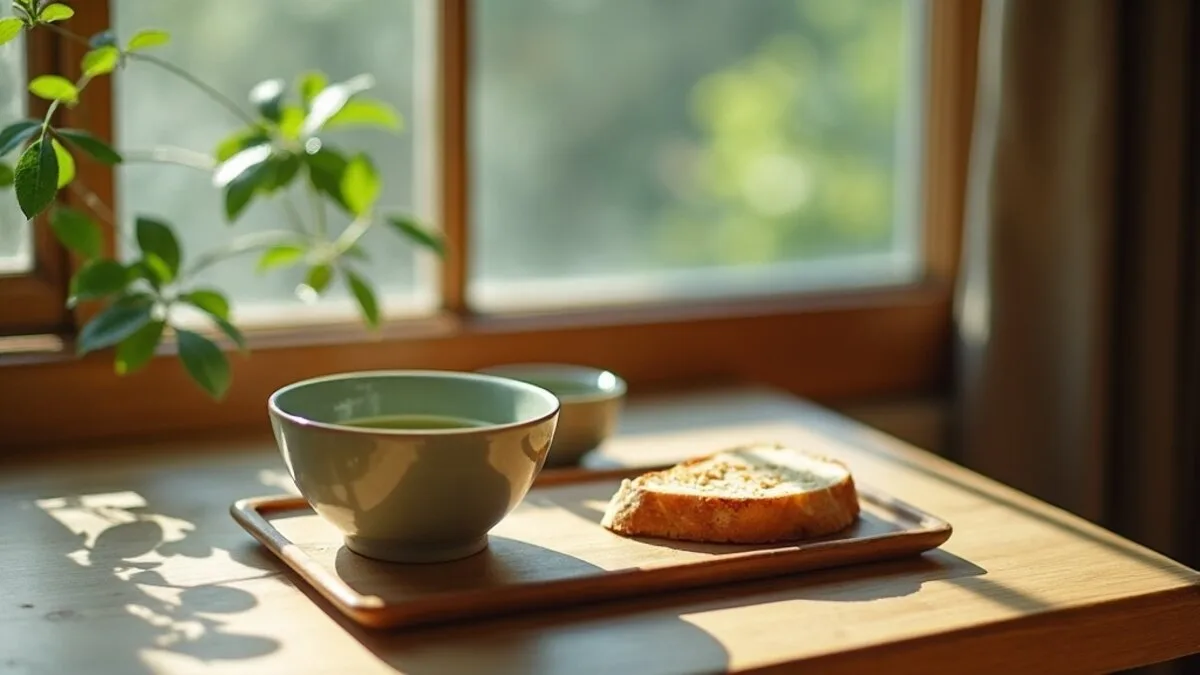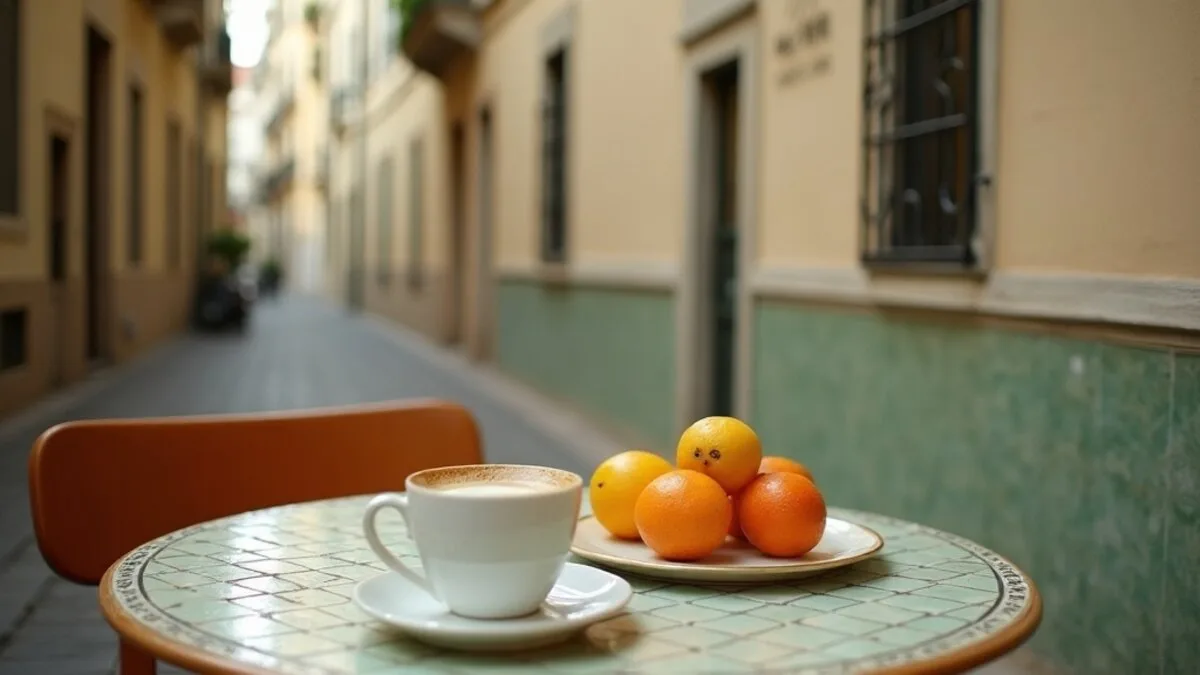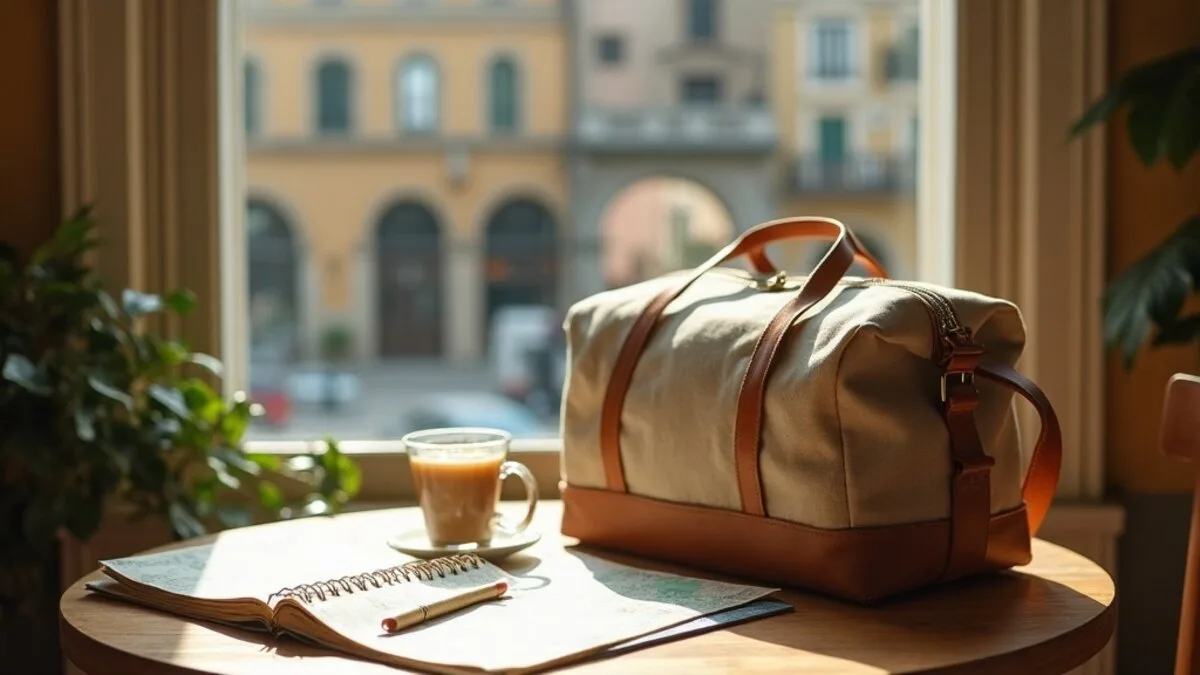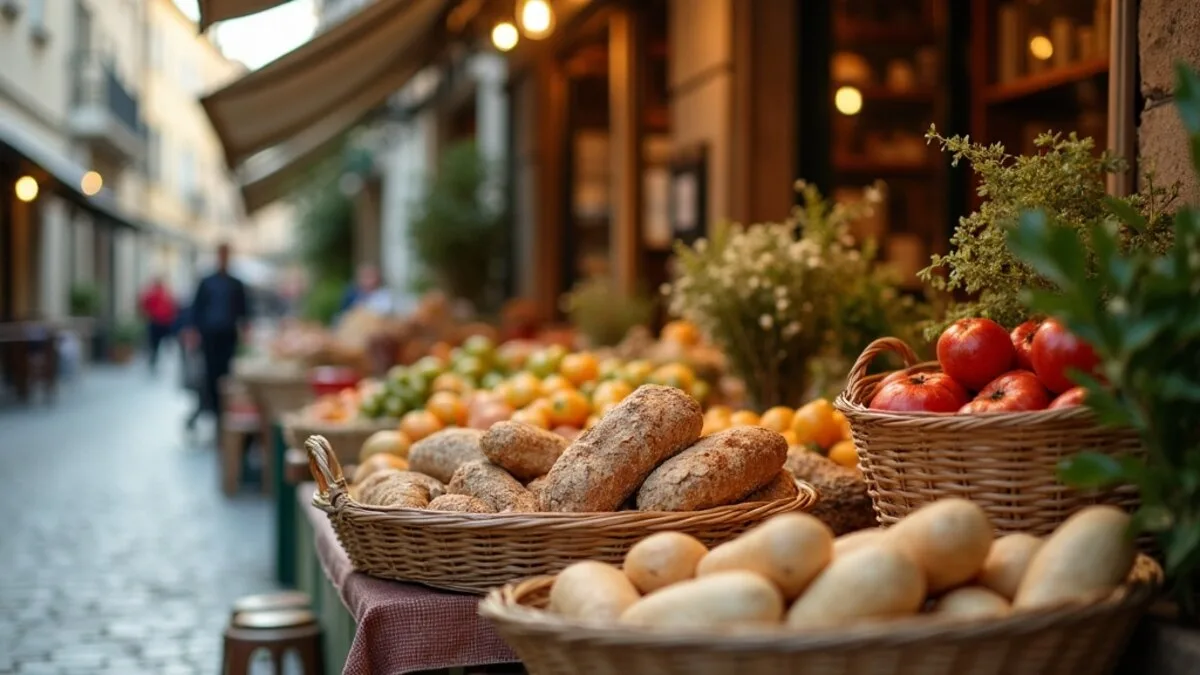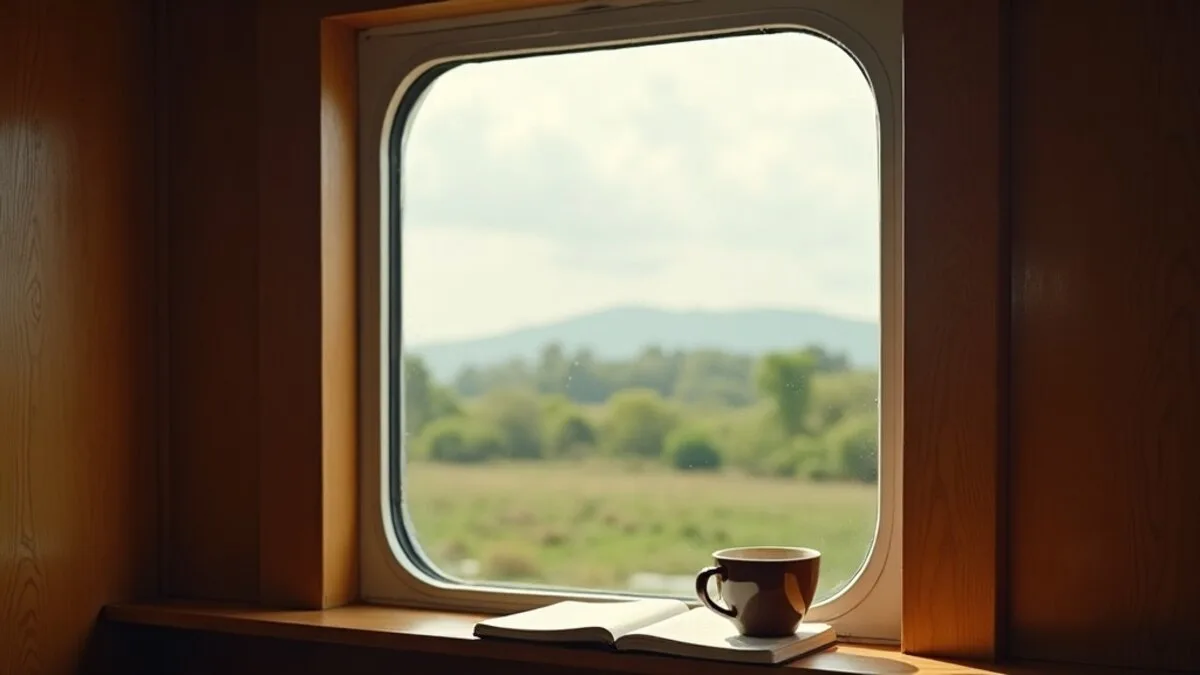
Less about doing nothing, more about doing fewer things well. I plan around meals, walks, markets, and open evenings.
What is slow travel, really?
Slow travel is less about doing nothing and more about doing fewer things well. It means staying longer in fewer places, building your days around meals and walks rather than a checklist of sights, and leaving room for the trip to surprise you. It's not laziness. It's a deliberate trade of breadth for depth, of seeing more for understanding more.
The name makes some people picture a hammock and a cocktail, and that's not it. You can have a full, rich, active trip and still travel slowly. The difference is the pace of attention. A fast traveller collects places. A slow traveller inhabits them, even briefly, and comes home with something more durable than a list of things they technically saw.
I came to this the way most people do: by burning out on the other kind. Early trips of mine were spreadsheets of sights, three cities in a week, a phone full of photos of places I couldn't actually remember standing in. I'd come home needing a holiday from my holiday. Slowing down fixed that, and it turned out the slow version wasn't just more restful. It was more interesting.
A fast traveller collects places. A slow traveller inhabits them.
Everything I write about travel runs on this idea, from the Japan itinerary to the Portugal guide. This piece is the method itself, the thinking underneath all of those, so you can apply it anywhere, to any country, on any budget.
More and more, I would rather take the long way, which is how I ended up crossing Europe by train.
The four planning rules
Slow travel is mostly four rules. They're simple to state and surprisingly hard to follow, because every instinct the travel industry has trained into us pushes the other way. Here they are.
One: pick fewer places
The single biggest lever. Most itineraries try to do far too much. Halve your list, then halve it again. Two destinations in ten days, not five. One city you get to know beats four you glimpse. This is the rule everything else hangs on, and the one people resist hardest, because saying no to a place feels like missing out. It isn't. It's choosing to actually be somewhere.
Two: stay longer in each
Three nights is my minimum, four or five the sweet spot, a week a real luxury. Anything less than three nights and you're just passing through: a half-day to arrive, a half-day to leave, and barely a full day in between. Staying longer is what lets a place stop being a backdrop and start being somewhere you have a small routine.
Three: build days around meals and walks, not landmarks
Plan one anchor a day at most, and make it a meal or a walk as often as a sight. A market in the morning, a long lunch, a wander with a loose destination. The famous monuments are fine, but one done slowly beats five done frantically, and the day spent walking a neighbourhood usually outlasts the day spent queuing for a museum.
Four: leave one evening completely open per stop
No booking, no plan. This is the rule people skip and then thank me for. The open evening is where the trip becomes yours: the wander that finds the best meal, the bath that resets you, the early night you didn't know you needed. Protect it fiercely. Everything good I remember from travelling happened in the gaps I left empty on purpose.
How to choose where to go
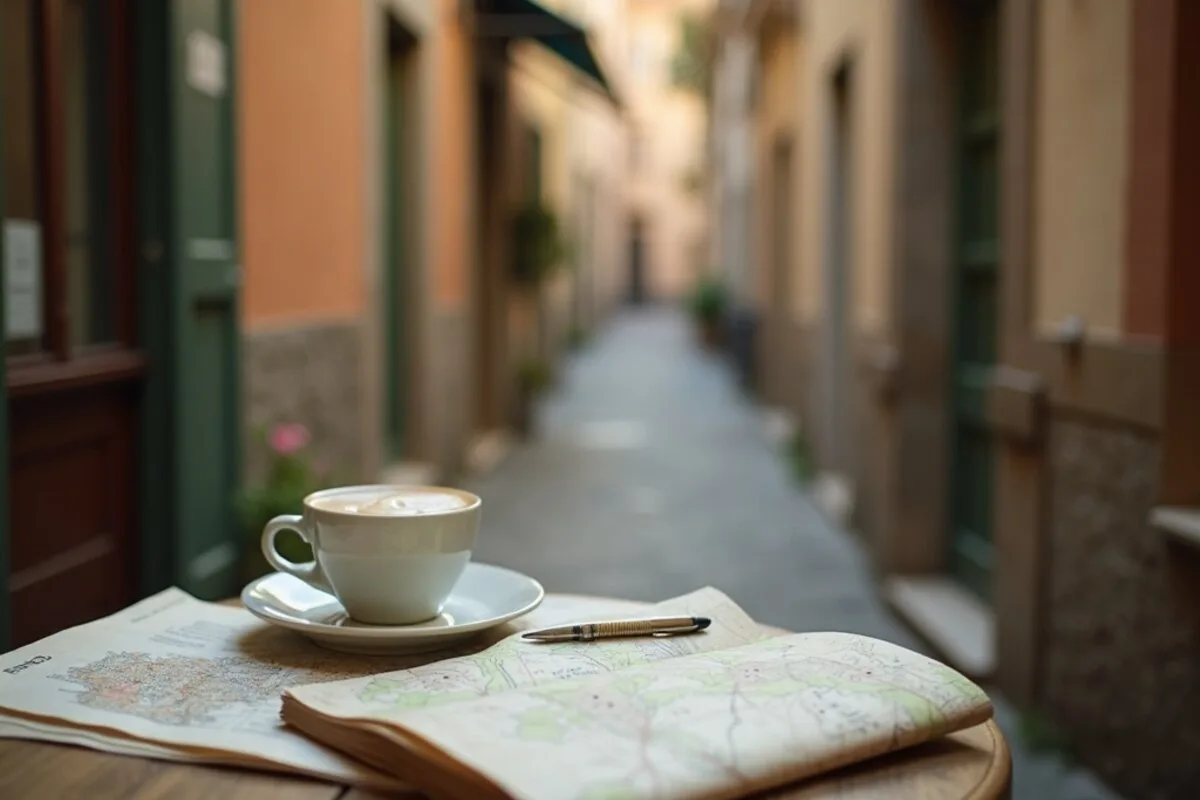
The destination matters more for slow travel than for any other kind, because you're committing to spend real time there rather than passing through. So choose for the quality of ordinary days, not the count of famous sights. A city you can walk, eat well in, and sit quietly in will reward a week. A city that's all monuments and no texture will bore you by day three.
My screen is roughly this: is it walkable, is it generous with food I want to eat, does it have markets and neighbourhoods rather than just attractions, and does it reward repetition. A place I can return to the same cafe in, walk the same park twice, and still find something new is a place I can travel slowly. If you want worked examples, my vegan travel destinations and European cities lists are both filtered through exactly this lens.
Off-season is the secret
The same place is a different, better trip out of season. Fewer crowds, lower prices, softer light, and locals who have time for you. The Algarve in October, Kyoto in November, a Greek island in May: you get the place rather than the place performing for a crowd. Slow travel and the shoulder season are natural partners, and choosing your dates well is half the work.
Distance is the other thing to weigh. A long-haul trip needs more days to be worth the flight and the jet lag, so a quick slow trip is better kept close to home. There's no rule against a weekend done slowly in a city two hours away. In fact that's often where the whole habit starts.
Building a slow day
The day is where slow travel actually happens, so it's worth being concrete about its shape. The template I use almost everywhere looks like this, and it bends to fit any city.
- Morning: a slow coffee at a place you're starting to make yours, then a walk with a loose destination rather than a strict route.
- Midday: the market if there is one, then a long, unhurried lunch. Make this your big meal.
- Afternoon: a rest (genuinely, a nap is allowed), then one anchor: a single sight done well, or a new neighbourhood, or a bookshop and a bath.
- Evening: as often as not, left open. A wander, a viewpoint, something light, an early night.
Notice how little is fixed. One anchor, one big meal, and a lot of space. The space isn't wasted; it's where the trip breathes. It's also where the unplanned good things happen, which they never do when every hour is spoken for.
The morning ritual is the part I'd defend hardest. Finding one cafe and returning to it each day gives a strange city a thread of familiarity, and there's real comfort in the barista who starts to recognise you. It's the travelling version of the morning habits I keep at home, and it sets the tone for a calm day in a way no amount of planning can.
One anchor, one big meal, and a lot of space. The space isn't wasted; it's where the trip breathes.
Eating your way through a place
For me, food is the whole point, the lens I see a place through. You can learn more about a culture from its markets and its everyday meals than from any museum, and as a plant-based traveller I've found that eating slowly and locally is also the easiest way to eat well. So I build trips around food, and I'd suggest you do too, vegan or not.
Start at the market
Every town has one, and it's the fastest way to understand a place. What's in season, what's cheap, what people actually cook. Even when I don't buy much, an hour in a market tells me what to order at dinner and gives me a portable lunch of fruit, bread, and olives for a walking day. It's free, it's sensory, and it's where the real food culture lives.
Eat the everyday plate
The trick to eating well anywhere, especially plant-based, is to look at the traditional everyday food rather than hunting for dedicated restaurants. Most cuisines have a deep stock of bean, grain, and vegetable dishes that were never meant to be a special accommodation. Find those and you eat like a local instead of like a tourist with a dietary requirement. My plant-based travel tips go deeper on the how.
And make lunch the big meal. It's cheaper, lighter, easier to navigate, and it leaves your evening free for a walk rather than a heavy dinner that flattens you. This one habit alone changes the rhythm of a trip for the better.
The logistics that make it work
Slow travel isn't just a mindset; a few practical choices make it possible. Get these right and the slowness more or less takes care of itself.
Stay somewhere with a kitchen
A flat or a guesthouse with even a kettle and a fridge changes everything. Breakfast is sorted, costs drop, and you have a base to retreat to and reset. It also puts you inside a neighbourhood rather than above a hotel lobby, which is most of what makes a place start to feel like somewhere you live rather than visit.
Move less, by train where you can
Every move costs you most of a day, so the fewer you make, the more actual time you have. When you do move, the train beats the plane for slow travel: no airport ritual, you arrive in the centre, and the journey itself is part of the trip rather than a gap to endure. Watching a country unspool from a train window is a pleasure flying has entirely lost.
Pack light and stay connected
One bag you can carry up any staircase. Comfortable shoes, because you'll walk a great deal. A data eSIM so maps and translation work without stress. A reusable water bottle, a power bank, and one snack for the gaps. The less you carry and the fewer logistics you fight, the more attention you have left for the place itself, which is the entire point.
What it looks like in practice
Concretely: a week in Lisbon, not three days in three cities. A morning market, a long lunch, a nap, a sunset walk. One restaurant booked ahead, one found by wandering. A day with a single anchor and a lot of room around it. An evening with nothing in it at all.
The Japan itinerary is this method applied to one country: three places in ten days, with the tenth left empty on purpose. The Portugal guide is the same approach somewhere warmer and cheaper. Even the solo travel piece runs on it, because slow travel and solo travel turn out to want exactly the same things.
Here's a real day from a recent Lisbon trip, because the abstract version only goes so far. Coffee and a slow read in Graça. A wander downhill through Alfama with no particular plan, getting pleasantly lost. A long lunch of beans and greens and good bread. A nap in the heat of the afternoon. A walk to a miradouro for sunset, then a bowl of something simple and an early night. I did almost nothing on paper. I remember every hour of it.
That's the paradox at the heart of all this. The days where I planned the least are the ones I remember the most. The famous sights blur together; the slow, ordinary hours stay sharp for years.
The honest case for doing less
I won't pretend there's no cost. Slow travel means you will, definitely, miss things. You'll go to a country and not see its second city. You'll skip a famous landmark because you'd rather sit in a park. People will ask "you went all that way and didn't see X?" and you'll have to make peace with the answer being yes.
For me, that trade is easy now, because the alternative is the photo-roll trip I described at the start, the one you come home from more tired than you left. The fear of missing out is real, but so is the fear of missing the actual experience while you're busy collecting its highlights. You can't be present and frantic at the same time. You have to pick.
There's a wider thread here too. Slow travel is gentler on the places you visit. Staying longer in fewer places, eating local food, walking rather than cabbing, spending in neighbourhoods rather than at the same overrun sights: it spreads your money and your footprint more kindly. Travelling slowly is, quietly, a way of being a better guest, which matters more the more crowded the world's beautiful places get.
The same instinct runs through how I live at home, in the slow living routine and the restorative travel I'm drawn to. Less, but better. Fewer things, more attention. It's not a travel philosophy so much as a whole way of paying attention, and travel is just where it shows up most obviously. Pick fewer places, stay longer, eat well, leave room. Come home rested. That's the entire guide.
How long should a slow trip actually be?
Longer than you think, and that's the honest answer most travel writing won't give you. The maths of slow travel is unforgiving on short trips. A long weekend, three or four nights, can be slow if you spend it all in one place, but stretch it across two cities and you've spent half of it in transit. So the first lever is always: more nights per place, fewer places overall.
My rough scale, learned by getting it wrong plenty of times:
- A weekend (2 to 3 nights): one city, ideally close to home, no day trips. A single neighbourhood, a couple of meals you'll remember, an early train back.
- A week (5 to 7 nights): one or two places at most. A week in one city is a real luxury and almost always better than two cities in a week.
- Two weeks: two or three places, with a few nights spare to do nothing. This is the sweet spot, enough room to settle into a rhythm twice over.
- A month or more: pick a base and treat side trips as occasional outings, not a parade. You're living somewhere now, not visiting.
The trap is the long-haul trip done fast. If you've flown ten hours, the worst thing you can do is cram five cities into ten days to "make it worth it." The flight is sunk; the only way to honour it is to slow down once you land. A friend once did Vietnam top to bottom in eight days and came home unable to tell you a single street he'd walked. The flight wasn't the waste. The pace was.
For couples and families there's an extra reason to go long and slow: a packed itinerary turns small people, and tired adults, into the worst versions of themselves. A pool afternoon and an early pizza are not a failure of ambition. They're often the day everyone remembers fondly. The solo travel notes make the same case from the other direction, that travelling alone gives you permission to go even slower.
What slow travel actually costs
People assume slow travel is expensive, all long hotel stays and leisurely restaurant meals. In my experience it's usually cheaper than the fast kind, sometimes dramatically so, and understanding why helps you plan it without dread.
Where the savings come from
Movement is the hidden cost of fast travel. Every city change is a train or flight, a transfer, a new check-in, often a meal eaten out because your kitchen is packed away. Cut your itinerary from five cities to two and you've deleted three sets of those costs in one stroke. Staying longer also unlocks the weekly rate on flats, which is often a quarter to a third cheaper per night than a few scattered bookings.
Where you choose to spend
A kitchen turns breakfast and several lunches into market food at a fraction of restaurant prices, which then frees real money for the one dinner a week you actually care about. Walking instead of taxiing is free and better. And the off-season, which slow travel naturally leans into, can halve your accommodation and flights at once.
A rough shape from a recent week in Porto, for two of us: a flat at around 70 euros a night, market breakfasts and lunches for maybe 10 euros a day between us, a few good dinners at 20 to 30 each, trains and walking for almost nothing. It came out cheaper per day than a frantic three-city version would have, and we ate far better. The Portugal guide has more concrete numbers if you want them.
The other saving is harder to put a figure on but real: the energy cost. Fast travel taxes you in a way that quietly leads to bad, expensive decisions, the airport meal you didn't want, the taxi you took because you were too tired to walk, the day written off to recovery. Slow days keep you rested enough to make good choices, and good choices are usually the cheaper ones. Tiredness is the most expensive thing you can pack, and slow travel leaves it at home.
Movement is the hidden cost of fast travel. Delete it, and slow travel turns out to be the thrifty option.
Slowing down in a city built for speed
Not every destination is a sleepy coastal town. Sometimes the place you want to see is enormous, famous, and engineered to move you through quickly. Slow travel still works there. You just have to defend your pace more deliberately, because the whole machinery of a big city pushes you to consume it fast.
The move is to shrink your map. Instead of trying to "do" Paris or Tokyo or New York, I pick one or two neighbourhoods and treat them as my village for the stay. A market, a park, a cafe, a few streets I learn properly. The famous sights become occasional outings from that base rather than a checklist that defines the days. You see less of the city and understand far more of it.
Tokyo taught me this best. The first time, I tried to see all of it and left exhausted, with a blur of train platforms and nothing solid. The second time I more or less lived in one district, Yanaka, an old low-rise neighbourhood of temples and tiny shops, and made daily forays out to one big thing at a time. I came home with a real sense of one corner of an enormous city, which is infinitely more than a thin sense of all of it. The Japan itinerary is built on exactly that lesson.
The one-anchor rule under pressure
Big cities are where people abandon the one-anchor-a-day rule, and where it matters most. The temptation is to chain three museums, a viewpoint, and a famous meal into a single day. Resist it. Pick the one thing, do it early or late to dodge the crowds, and let the rest of the day be walking and sitting and eating. You'll remember the morning you had the gallery half to yourself, not the afternoon you queued exhausted for the next thing.
Crowds are the real enemy of slowness, so I plan around them rather than into them. Famous sights at opening or in the last hour. Popular neighbourhoods on a weekday. A long lunch during the midday crush, then out to wander once the day-trippers have gone. It's the same instinct as the off-season writ small: go where the pressure isn't, and the same place becomes calm. Even a giant city has quiet hours if you're willing to shape your day around them.
Bringing the slow pace home
Here's the part that surprised me most: the hardest day of a slow trip is the first one back. You've spent a week or two paying close attention, eating without rushing, leaving evenings open, and then you walk back into a life built on the opposite. The contrast is sharp, and it's worth using rather than wasting.
I treat the return as part of the trip, not the end of it. No alarm the first morning home. No big plans the first weekend. I do one thing I learned to love away, the slow coffee, the long unhurried walk, the market shop instead of the supermarket dash, and I keep it going at home. The point of travelling slowly isn't just a better holiday. It's a reminder of a pace you can mostly keep, if you choose to.
That's where this connects to everything else I write. The morning habits are the at-home version of the travelling cafe ritual. The slow living routine is the whole philosophy applied to an ordinary week. Even the cooking, the plant-based recipes I come back to, is slow travel by other means: paying attention to one good thing instead of rushing through five.
I keep a small habit that bridges the two worlds. Near the end of every trip I write down one ordinary thing I want to carry home, not a souvenir, a practice. From Lisbon it was the long lunch. From Kyoto it was the morning walk before anything else. From a week in the Alentejo it was simply eating outside when the weather allows. None of these cost anything or need a plane ticket. They're just the trip's pace, smuggled back into normal life, and they're the part of travelling that actually lasts.
A short checklist before you book anything
- Halve your list of places, then look hard at whether you can halve it again.
- Set a minimum of three nights per stop, and prefer four or five.
- Book accommodation with a kitchen, or at least a kettle and a fridge.
- Plan one anchor per day, no more, and make some of them meals or walks.
- Leave one evening per stop completely empty, on purpose, and protect it.
- Travel in the shoulder season if you possibly can.
That's it. Six lines that quietly rewrite how a trip feels. If you want the idea in one sentence, it's the one I keep coming back to, and the one I'll leave you with. Slow travel is the small, deliberate decision to understand a few things deeply rather than to see many things barely at all. It's the oldest way to travel, really, and it's gathered a name only because we forgot it for a while. You can read the wider history of the slow travel movement if you're curious where the term came from. But you don't need the theory. You need fewer places, more nights, and the nerve to leave a few hours empty.
Common questions
How long will this take, honestly?
The reading is 11 min. The practice is a lifetime. Start with one small piece this week and let the rest follow when it feels natural, not before.
Do I have to be fully plant-based for this to help?
No. Everything I write is for people who want a softer relationship with food and routine. The recipes happen to be plant-based; the ideas work in any kitchen.
What should I read next?
The related essays below, in order. If you only read one more thing, read A 10-day Japan itinerary, unhurried, it picks up exactly where this one ends.
Can I cite this guide somewhere?
Yes. Please link back to this page and credit Caleb Leuchi. All photographs are made for Leuchi unless noted; the writing is original.