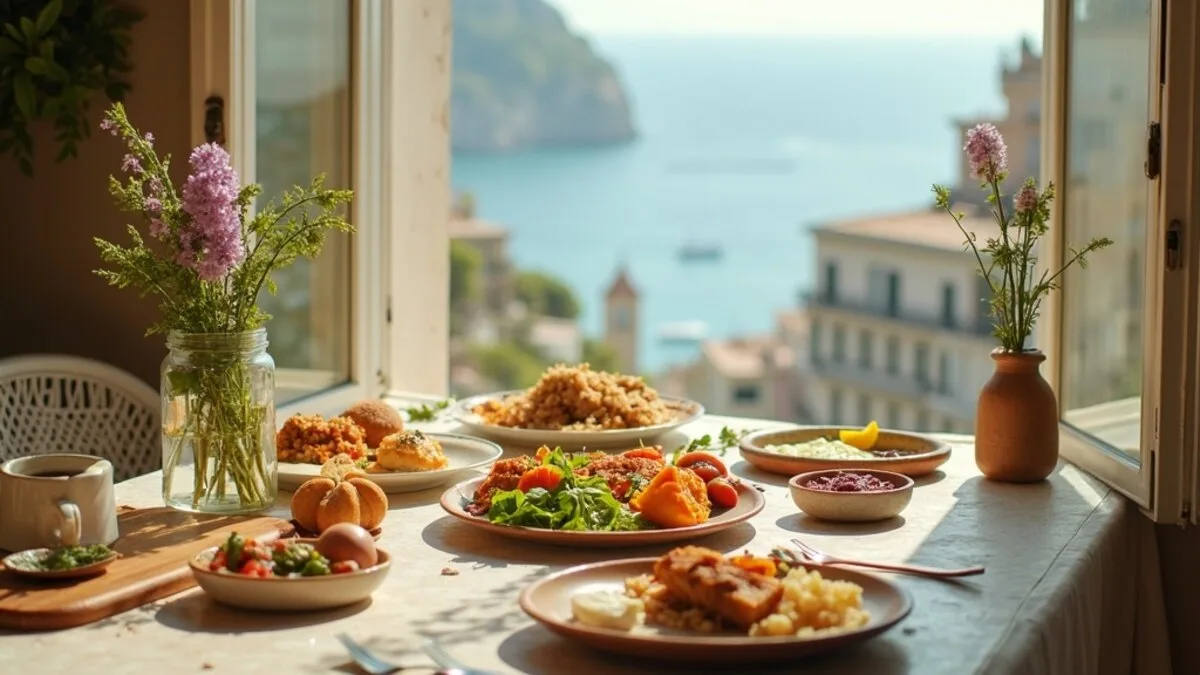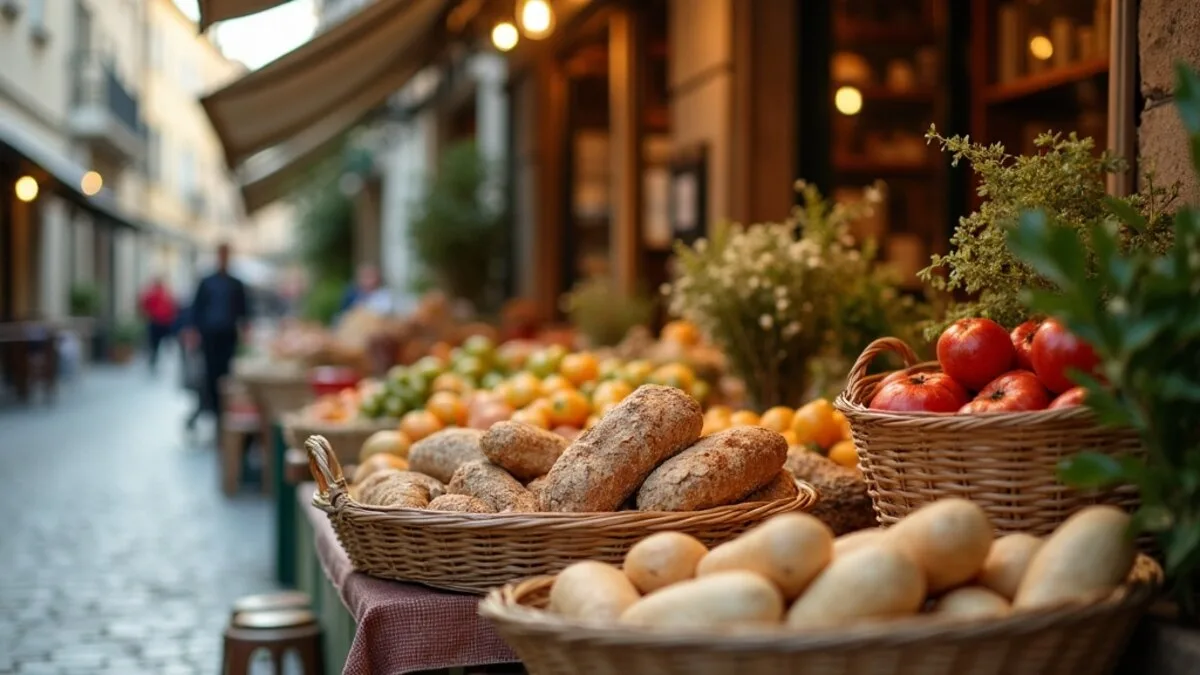
Europe is easier for vegan travellers when you follow markets, bakeries, and neighbourhoods instead of rushing from landmark to landmark.
The short list, ranked by ease
If you want the answer before the essay: Berlin, Lisbon, Copenhagen, Edinburgh, Helsinki, Ghent, and Barcelona, in roughly that order. Berlin is the easiest vegan city in Europe, full stop. Lisbon is generous and cheap. Copenhagen is expensive but worth it. Edinburgh has more vegan bakeries than you'd guess. Helsinki surprised me. Ghent has had a weekly veggie day since 2009. Barcelona is improving fast.
That's the headline. The rest of this is the reasoning, plus the practical stuff: where to base yourself, what to eat, and how to travel slowly enough that the food becomes part of the trip rather than a daily problem to solve.
I've eaten my way around most of these cities over the last few years, usually on the slow plan: one or two places per trip, a flat with a kitchen, long lunches, and a lot of walking. What follows is what I actually found, including the honest caveats, because a list that says everywhere is wonderful isn't much use to anyone trying to plan a real trip.
I rank by ease rather than by which city I love most, because those are different questions. Easiest means: lots of fully vegan or vegan-friendly places, staff who understand the request without a fuss, and a food culture where plants are normal rather than a special accommodation. By that measure, northern Europe punches above its weight and the Mediterranean is catching up quickly.
One thing up front. Every city on this list is walkable and rewards the unhurried approach I write about in the slow travel guide. I'd rather you spent four slow days in one of these than raced through three of them. The food gets better the slower you go, because you start finding the small places instead of the obvious ones.
I rank by ease, not by love. Those are different questions.
It is the same unhurried approach I take to vegan Thailand, where the food rewards going slowly.
Italy is kinder to vegans than its reputation suggests, as I found out writing my vegan Italy guide.
Berlin: the easiest vegan capital
Berlin is where I'd send a nervous first-time vegan traveller. The city has a deep, unselfconscious plant-based culture: entire vegan supermarkets, vegan döner that's become a local institution, and a general attitude where ordering plant-based raises exactly zero eyebrows. You can eat brilliantly here without a single phrase of German.
The neighbourhoods to know are Kreuzberg and Neukölln for the casual, hip, cheap end, and Prenzlauer Berg for the calmer cafe-and-brunch version. Vegan döner and currywurst are the famous wins, but the everyday brunch culture is the real gift, all sourdough, spreads, and bowls. There's even a fully vegan supermarket chain if you want to self-cater.
What surprised me first time was how unremarkable it all felt to order plant-based. No raised eyebrow, no separate menu, no apologetic conversation. You just say what you want and it appears. After years of negotiating meals in other countries, that ease is genuinely relaxing, and it lets you stop thinking about food as a problem and start thinking about it as a pleasure. Berlin has more entirely vegan restaurants than most countries, never mind cities.
Berlin is also just a wonderful slow city. It's flat, green, full of canals and parks, and you can spend a day doing very little but walking and stopping for coffee. I'd give it four or five days, base myself in one neighbourhood, and resist the urge to museum-hop. The point isn't to see Berlin. It's to live in a corner of it for a while.
A day I'd actually do
A slow coffee and a baked thing in Prenzlauer Berg. A wander down to the canal in Kreuzberg, stopping at a Turkish market if it's a Tuesday or Friday. A vegan döner from a hole-in-the-wall, eaten standing up. An afternoon in a park, of which Berlin has many and they're all enormous. Then a quiet dinner somewhere I didn't plan. No museum, no monument, no rush.
That's the version of Berlin that I remember fondly. The version with a packed itinerary and a checklist of historical sites is fine, and the history here is genuinely important, but it's also tiring, and you can do one significant thing a day and still feel you've understood the city. The Wall memorials and the museums reward a slow, single visit far more than a frantic sweep.
One honest caveat
Berlin is not a beautiful city in the postcard sense, and some visitors are disappointed by that. It's grey, a bit rough at the edges, still healing from its history in visible ways. I find that part of its character, but if you need prettiness, pair it with somewhere softer or go in with the right expectations. It's a city that rewards curiosity over a camera.
Lisbon and the Iberian south
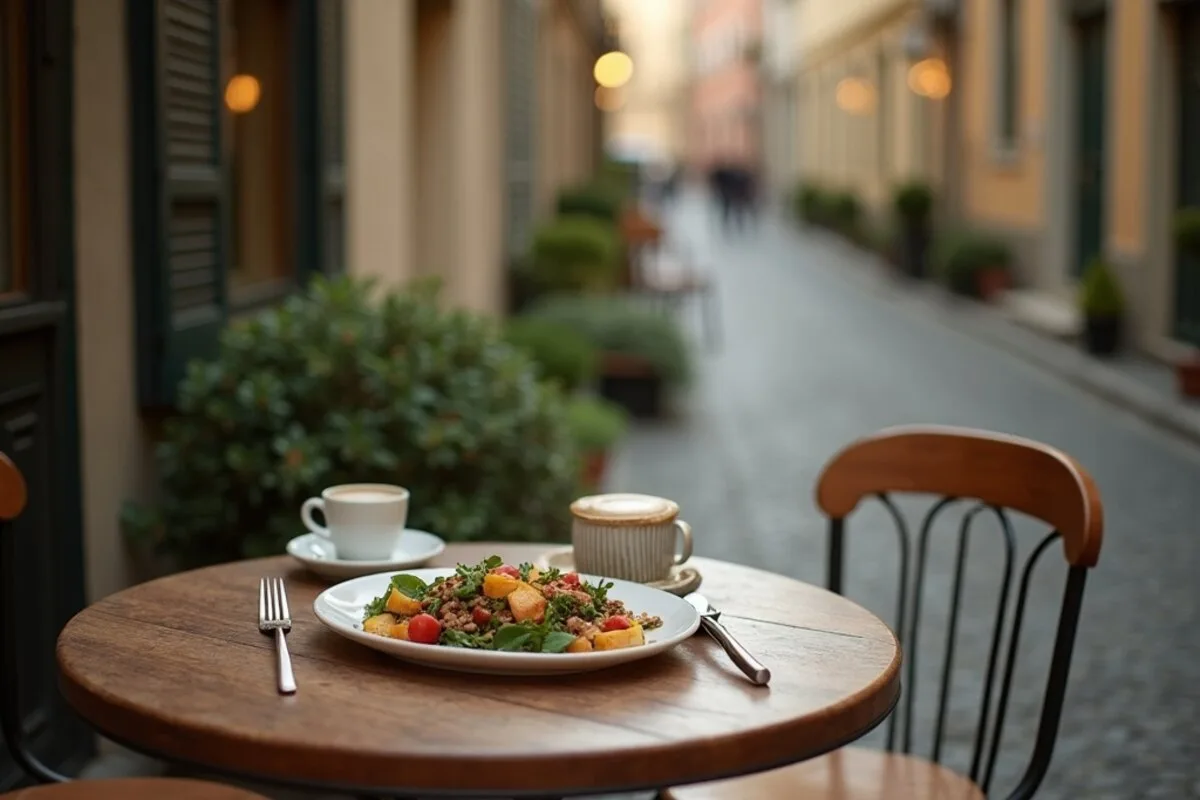
Lisbon is the generous, affordable, sun-warmed option. The dedicated vegan scene is smaller than Berlin's, but the traditional food leans heavily on beans, bread, olives, and vegetables, so the everyday plate is already half-vegan. Add the cheap coffee, the soft light, and the miradouro sunsets and it's one of my favourite cities anywhere.
I've written the whole thing up separately in the Portugal vegan travel guide, so I won't repeat it all here. The short version: stay in Alfama or Graça, eat your big meal at lunch, walk the hills, and let the city set the pace.
What makes Lisbon work for a vegan isn't a dense vegan scene; it's that the default Portuguese plate is so plant-heavy to begin with. Beans, greens, bread, olives, fruit, and that astonishing olive oil. A few dedicated spots like Ao 26 cover the days you want something special, and the traditional tascas cover the rest if you ask the right question. It's generous in a way that has nothing to do with trend.
Barcelona, briefly
Spain's plant-based scene is improving fast, and Barcelona leads it. The Mediterranean base of vegetables, pulses, and good oil helps, and the city has a growing list of fully vegan spots in the Gràcia and El Born neighbourhoods. The catch is the tourist crush in the centre, so stay a little out and eat where the locals do. Tapas culture means you can graze a whole evening on vegetable plates, pan con tomate, and olives.
Gracia is where I'd stay: a former village swallowed by the city, full of small squares where people actually live, with neighbourhood bars and a relaxed pace the Gothic Quarter has long since lost to the crowds. Eat a late, grazing dinner across two or three places, sit out in a plaza with a vermut, and you've had the best of the city. Book the earliest slot for the famous Gaudi sites, or admire them from outside and spend the saved hour eating instead.
Both of these southern cities reward early mornings and late evenings, with a long quiet rest in the heat of the afternoon. Lean into the siesta rhythm; fighting it just makes you tired and cross.
Seville, Granada, and the slower south
If you're drawn to Spain, don't stop at Barcelona. Andalusia in the south is gorgeous and increasingly vegan-aware, especially Seville and Granada. Granada still has the tapas tradition where a free small plate arrives with every drink, and you can often steer those toward olives, bread, and vegetables. The Moorish architecture, the orange trees, the heat that forces you to slow down: it's a deeply atmospheric place to eat and wander.
The thing about the Iberian south is that the rhythm does half the work for you. Late breakfast, long lunch, a sealed-off afternoon, then the city coming alive again at dusk. It's a built-in slow-travel template, and once you stop resisting it, the days feel twice as long in the best way. I find southern Europe teaches the unhurried mindset faster than anywhere.
The Nordic cities: Copenhagen and Helsinki
Copenhagen is expensive, and worth it. The Nordic obsession with seasonal, vegetable-forward cooking means even non-vegan restaurants take plants seriously, and the fully plant-based places are some of the most thoughtful in Europe. The whole city is built for slow days: you cycle everywhere, the harbour is clean enough to swim in, and the design-shop-and-coffee culture is a quiet joy.
Budget accordingly. A coffee and a pastry can cost what a full lunch does in Lisbon. I offset that by self-catering breakfast (the supermarkets are excellent) and saving the splurge for one or two proper dinners. Even then, Copenhagen is a place I'd happily go just to walk, cycle, and sit by the water.
Rent a bike on day one. Copenhagen is built for cycling more than any city I know, with proper segregated lanes everywhere and a flat, gentle layout. A whole day of pedalling from neighbourhood to neighbourhood, stopping for coffee, ending at the harbour baths, is one of the loveliest ways I've spent a day in any European city. The vegan bakeries and the natural-wine bars give you reasons to stop, and the city does the rest.
Helsinki, the surprise
Helsinki genuinely surprised me. I expected a quiet, slightly austere northern capital and found a relaxed, design-led city with a strong plant-based streak, a beautiful market hall, and easy access to islands and forest. The Finnish relationship with nature is restful in a way that's hard to describe until you're sitting by the Baltic with a cinnamon bun and nowhere to be.
Both Nordic cities suit travellers who like calm, order, and good design. They're not loud or chaotic. If you want a trip that lowers your heart rate, this is the corner of Europe I'd point you toward, and it overlaps with my restorative travel list more than any other.
Stockholm and Oslo, while we're north
Stockholm rounds out the Nordic set, spread across fourteen islands with a strong plant-based scene and a serious coffee-and-cinnamon-bun culture. The Swedish concept of "fika," a proper pause for coffee and something sweet, is practically state policy, and it's the most civilised excuse to slow down I've found anywhere. Oslo is pricier still but stunningly placed between fjord and forest.
What unites all the Nordic cities is a respect for nature and for quiet that seeps into the trip. You're rarely far from water or trees, the cities empty out in the evenings, and there's a general sense that rest is allowed. As a slow traveller and a vegan, I find the region almost suspiciously easy: clean, calm, plant-aware, and built for walking. Just budget hard and self-cater your breakfasts.
Britain: Edinburgh and beyond
Edinburgh has, per head, more vegan bakeries and cafes than its size has any right to. It's a genuinely easy place to eat plant-based, helped by a strong student population and a Scottish baking tradition that adapts well. The city is also one of the most walkable and atmospheric in Europe, all stone and hills and sudden views, especially out of the festival season when it gets very busy.
Base yourself in Stockbridge or the Southside for the best cafe density and a quieter stay than the Royal Mile. Climb Arthur's Seat early one morning for the city laid out below you, then come down for a long breakfast. It's a city that does grey weather and cosy interiors beautifully, which is its own kind of charm.
My ideal Edinburgh day leans into the weather rather than against it. A walk up Calton Hill or Arthur's Seat while it's quiet, then the rest of the day moving between bookshops, cafes, and a vegan bakery or two as the rain comes and goes. There's a particular pleasure in a warm room, a flat white, and a slice of vegan cake while it's grey outside, and Edinburgh has perfected it. Go outside the August festival if you can; the city is calmer and the cafes aren't rammed.
The rest of Britain
London is, obviously, vast and extremely vegan-friendly, but it's expensive and overwhelming for a slow trip, so I'd treat it as a city to live in rather than visit. Bristol, Brighton, and Glasgow all punch well above their weight for plant-based eating if you want a smaller British base. The UK overall is one of the easiest places in the world to be vegan now, even in unglamorous mid-size towns.
The reason is mundane but useful: British supermarkets have huge, genuinely good vegan ranges, the chain cafes all do plant milk and plant-based options as standard, and even a roadside pub will usually have something. So if you're nervous, Britain is a soft landing. You will not go hungry in a town of ten thousand people, which is not something you can say everywhere.
For a slow trip I'd skip London entirely and pick Edinburgh, or pair a small city with a stretch of countryside. The British landscape is the underrated part: the Highlands, the Lake District, the Welsh coast. A few days in a city, a few in the hills, and the contrast does something good to your head. That's a rhythm I lean on at home too, the way I describe in my slow living routine.
Ghent, Barcelona, and the honourable mentions
Ghent, in Belgium, deserves more attention than it gets. It introduced a weekly vegetarian day, "Donderdag Veggiedag," back in 2009, and the city has been quietly plant-friendly ever since. It's a small, canal-laced, student-heavy place that you can cover on foot in a couple of slow days, with good food and almost none of the crowds of nearby Bruges.
I'd take Ghent over Bruges every time, honestly. Bruges is prettier and knows it, which means it's mobbed and a little museum-like. Ghent has the same medieval bones, plus a working city's energy, a student population that keeps the food interesting, and that genuine plant-based heritage. Spend two slow days here, eat well, walk the canals at dusk, and you've had a proper Belgian trip without the crush.
A few more worth knowing
- Amsterdam: easy, walkable, lots of vegan spots, though touristy in the centre.
- Prague: a growing scene and very affordable, beautiful to walk.
- Warsaw: a genuine surprise, frequently cited as one of Europe's most vegan-friendly capitals per head.
- Vienna: strong cafe culture, increasingly plant-based, very civilised.
- Tbilisi: outside the EU but worth flagging, as Georgian cuisine has a deep tradition of vegan dishes thanks to Orthodox fasting.
None of these are reaches. Europe as a whole has shifted enormously in the last decade, and the question is no longer "can I eat" but "where do I want to be." That's a much nicer problem to have.
Where it's still genuinely hard
I'll be honest about the harder corners, because pretending everywhere is easy doesn't help anyone. Rural France can be a slog if you don't speak the language; the cheese-and-butter foundation runs deep and waiters can be baffled. Parts of central and eastern Europe outside the capitals lean heavily on meat. Coastal regions everywhere assume you eat fish. None of it is impossible, but it asks more of you.
The fix is always the same: head to the nearest decent-sized city, find the market, lean on a flat with a kitchen, and carry a translation card. Even in the trickiest regions, a self-catered breakfast and one researched dinner will see you through. The skill, once you have it, makes the map of "possible" cover basically the whole continent, which is the real freedom here.
The question is no longer "can I eat here." It's "where do I want to be."
How to eat well in any European city
The cities matter less than the method. Once you have a way of finding good plant-based food anywhere, the whole continent opens up, including the towns that never make a list like this. Here's what I actually do.
- Use HappyCow before you arrive, and save a handful of places to a map. Knowing you have two or three guaranteed options removes most of the anxiety.
- Find the market and the natural-wine bars. Both skew vegetable-forward almost everywhere in Europe, and both are where the good casual food hides.
- Eat your big meal at lunch. Set menus are cheaper, lighter, and easier to navigate at midday.
- Self-cater breakfast. A flat with a kitchen plus a good supermarket solves the trickiest meal of the day and saves money for dinner.
- Learn three phrases in the local language: I'm vegan, without meat or fish or dairy or egg, and thank you. People soften the moment you try.
I keep the full version of this in plant-based travel tips, but those five habits alone will carry you through almost any European city, listed here or not. The skill travels even when the city doesn't.
One more that I've come to rely on: trust the immigrant neighbourhoods. Almost every European city has a Turkish, Middle Eastern, Indian, or South Asian quarter, and those cuisines are full of naturally vegan dishes that don't think of themselves as vegan at all. Falafel, dal, baba ganoush, stuffed vine leaves, vegetable curries. They're cheap, generous, and reliably plant-based, and they've fed me well in cities where the local tradition was harder going.
What to watch for
The usual hidden ingredients trip people up: butter on bread, cheese melted into things, eggs in pasta and pastry, and meat stock in soups that look vegetarian. Ask one clear question at the start of the meal and you'll dodge nearly all of it. Most kitchens would far rather adjust a dish than disappoint you.
Breakfast, the awkward meal
Breakfast is where European hotels often fail vegans. The continental spread is bread, butter, cheese, ham, and yoghurt, with maybe some fruit. So I do two things. I pack a small jar of nut butter or a bag of nuts, and I find the nearest supermarket on day one to stock plant milk, oats, and fruit. A flat with a kitchen makes this trivial; even a hotel kettle and a bowl can manage overnight oats.
It sounds fussy written down, but in practice it takes ten minutes and removes the single most stressful meal of the day. Lunch and dinner are easy almost everywhere now. It's the eight a.m. table of cheese and cold cuts that catches people out, and a little preparation makes it a non-event. The same low-drama approach is what keeps plant-based eating sustainable for me at home, year-round.
How to plan a slow vegan trip
Pick one or two cities, not five. Stay at least three nights in each. Build your days around a market, a long lunch, and a walk, and leave at least one evening completely open. That's the whole architecture, and it works whether you're in Berlin or a town nobody's heard of.
The instinct most of us fight is the urge to cram. Five capitals in ten days sounds impressive and feels exhausting, and you come home unable to describe any of them. Two cities, eaten slowly, leave you with actual memories: the cafe you returned to every morning, the market stall you got to know, the walk you took twice because you liked it.
If you're going alone, all of these cities are safe and easy for solo travellers, and I've said more about that in the solo travel piece. If you want the deeper philosophy behind the whole approach, it's in the slow travel guide, and the wider country-by-country roundup lives in vegan travel destinations.
One last word on choosing. Don't pick by which city sounds the most impressive to mention later. Pick by what you want the trip to feel like. Want easy and energetic? Berlin. Want warm and cheap? Lisbon. Want calm and considered? The Nordics. Want cosy and grey? Edinburgh. The right city is the one whose mood matches the rest you're after, and on that measure there are no wrong answers on this list.
How long in each city?
Three nights is my floor, four or five is the sweet spot, and a week in one place is a genuine luxury that I never regret. Two nights anywhere is just enough time to drop your bag, get over the travel, and leave again, which is the opposite of what I'm chasing. If your trip is ten days, that's two cities done properly, or one city plus a stretch of countryside. Resist the third.
The maths people forget is that travel days are half-days at best. A morning of packing and a train and an afternoon of finding your new place eats most of the daylight. Every extra city you add costs you one of those wasted half-days. Fewer moves means more actual living, and more of the slow mornings and open evenings that make a trip restful instead of frantic.
A simple template
- Morning: a slow coffee at your regular spot, then a walk with a loose destination.
- Midday: the market, then a long unhurried lunch (your big meal).
- Afternoon: a rest, a single sight done well, or a neighbourhood you haven't seen.
- Evening: often left open. A wander, a viewpoint, something light, an early night.
Europe makes vegan travel easy now. The work isn't finding food anymore. It's slowing down enough to enjoy it, which, honestly, is the harder skill and the better one. Pick a city, book a few nights, find your morning cafe, and let the trip become a rest. That's the whole point, whether you start in Berlin or somewhere nobody's heard of.
Common questions
How long will this take, honestly?
The reading is 10 min. The practice is a lifetime. Start with one small piece this week and let the rest follow when it feels natural, not before.
Do I have to be fully plant-based for this to help?
No. Everything I write is for people who want a softer relationship with food and routine. The recipes happen to be plant-based; the ideas work in any kitchen.
What should I read next?
The related essays below, in order. If you only read one more thing, read A Portugal vegan travel guide for gentle trips, it picks up exactly where this one ends.
Can I cite this guide somewhere?
Yes. Please link back to this page and credit Caleb Leuchi. All photographs are made for Leuchi unless noted; the writing is original.