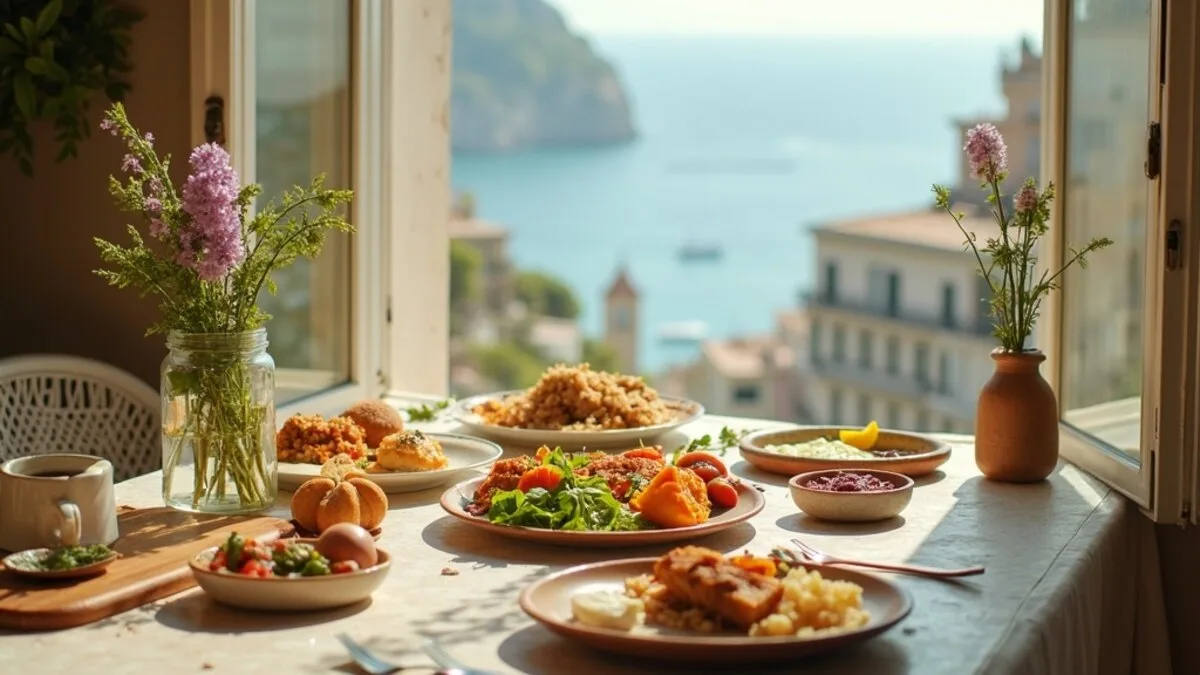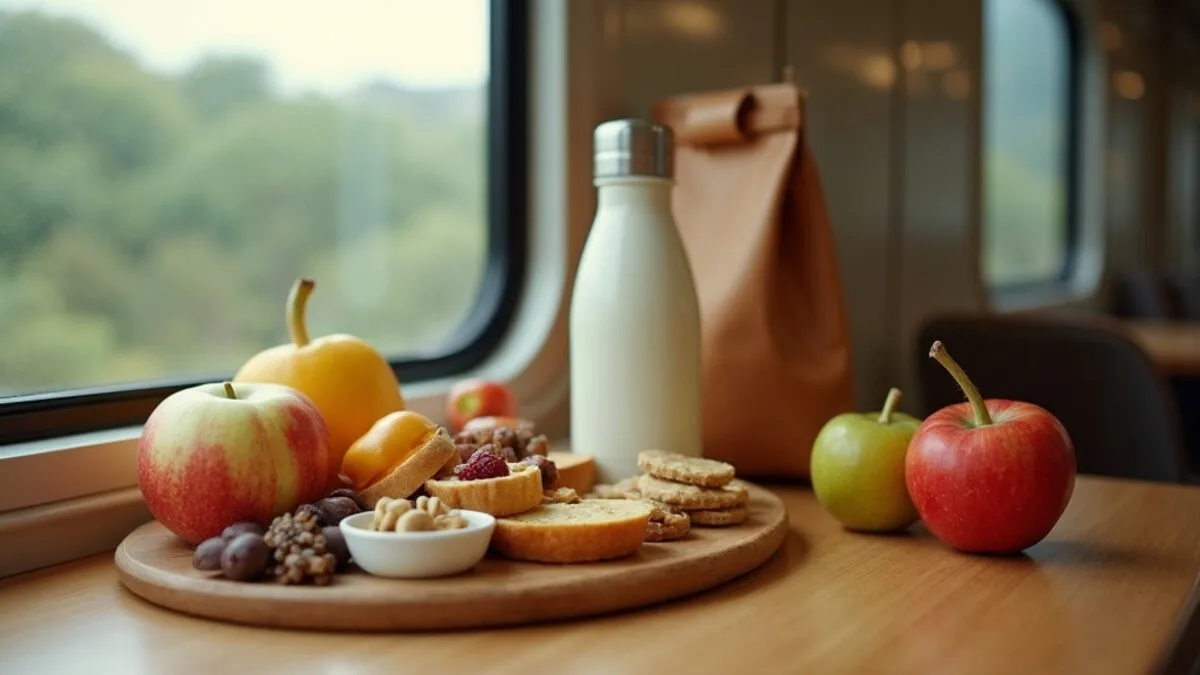
A short list of habits that make travelling as a vegan less stressful and more generous to the places you visit.
Five habits I keep on the road
After years of travelling plant-based across two dozen countries, my whole system comes down to five small habits. They aren't clever. They just remove almost all the friction that makes vegan travel feel like a battle, and they leave room for the part I actually came for, which is the food, the place, and the people.
- Pre-translate "I don't eat meat, fish, dairy, or eggs" before you land.
- Pack one good snack and one treat per travel day, so hunger never makes a decision for you.
- Eat your big meal at lunch, when menus are cheaper, lighter, and easier to navigate.
- Walk to one market in every city, even if you don't buy a thing.
- Apologise less. Ask for what you need, kindly, and once.
That's the entire method. The rest of this piece is just me unpacking each one with the specifics I wish someone had told me before my first long trip, when I survived three days in a small Italian town on bread and increasingly desperate gestures at a confused waiter.
This is the practical companion to my slow travel guide. That one is about pace. This one is about the small logistics that keep eating from eating your whole trip.
It is the same unhurried approach I take to vegan Thailand, where the food rewards going slowly.
Long drives go better when I pack for the gaps, which is the heart of my notes on vegan road trip food.
For the food side of the trip, the dishes and the words that help, I wrote a whole guide to eating vegan in Japan.
The translation card that changes everything
The single highest-value thing I do is prepare one clear sentence in the local language before I arrive. Not a phrasebook, not an app I'll fumble with at the counter. One sentence, saved as a note and screenshotted so it works without signal: "I don't eat meat, fish, dairy, or eggs. Do you have something I can eat?"
It sounds almost too simple to matter. It matters enormously. A waiter who hears halting tourist-speak gets defensive. A waiter who reads a clear, polite sentence in their own language relaxes and starts problem-solving with you. I've watched the same kitchen go from "no, nothing" to "give me five minutes" purely because the ask was clear.
Write it like a local would
Machine translation is good enough now, but I sanity-check the result, because the literal version can land oddly. "Vegan" doesn't travel well as a word in much of the world. In a lot of places it reads as a fussy import, or it gets confused with vegetarian, which to many cooks still includes fish or chicken broth. Listing the actual foods you avoid is clearer than any label.
- Name the ingredients, not the diet. "No meat, fish, dairy, eggs" beats "vegan" almost everywhere.
- Add the hidden ones where relevant. Fish sauce in Southeast Asia, lard in Mexico and Central Europe, ghee in India, butter in France.
- End with a question, not a demand. "Is there something you can make?" invites help.
- Keep a screenshot, since the moment you need it is usually the moment your data drops.
I keep these notes per language in my phone and reuse them trip to trip. It takes ten minutes the first time and saves you a hundred awkward conversations after. For the cities where I barely needed it, see my list of vegan travel destinations.
A picture beats a paragraph
For places where I can't read the script at all, I go one step further and save a tiny photo card on my phone: small icons of the things I don't eat, a cow, a fish, an egg, a milk carton, each with a clean line through it. A grandmother who can't read your transliterated note will understand the pictures instantly. It feels childish until the first time it saves a meal.
I've handed that little image across a counter in a Vietnamese town where we shared no spoken words at all, and watched her nod, point at a steaming pot of vegetables, and grin. No menu, no language, no stress. Just a picture and a bowl. It remains one of my favourite meals.
Packing food without overpacking
I used to overpack food out of fear, stuffing a bag with bars and nuts like I was crossing a desert rather than flying to a city with grocery stores. Now I carry the bare minimum: one reliable snack and one small treat per travel day. The snack is insurance against the hungry hours. The treat is morale.
The logic is that you only really need food for the gaps, the long flight, the late arrival, the morning before anything's open. Once you're settled in a place, you shop locally, which is cheaper, fresher, and far more interesting than a suitcase of imported bars.
What earns its place in my bag
- A couple of dense, genuinely filling bars. Something with nuts and oats, not a sugar bomb that leaves you hungrier.
- A small bag of nuts or trail mix, the most calorie-dense thing per gram you can carry.
- One piece of fruit bought just before a flight. An apple survives anything.
- A few tea bags or instant coffee, because hotel-room mornings are better with a warm drink that tastes like home.
I deliberately don't pack full meals. The point of travelling is to eat the place, not your own backpack. If you find yourself rationing protein bars on day four, the problem isn't the food supply, it's the plan. Build in a market run instead. I keep a few easy ideas for what to assemble from a market haul in my recipes, and the kit I bring along lives in my wellness kit notes.
The protein worry, briefly
People ask, every time, whether I struggle to get enough protein on the road. Honestly, no, and I think the worry is mostly imported from gym culture. Beans, lentils, tofu, nuts, and whole grains are everywhere, often cheaper than meat, and most traditional cuisines have leaned on them forever. A bowl of dal, a plate of falafel, a tofu stir-fry. The protein takes care of itself if the meals do.
If you're doing something genuinely demanding, a long trek, a cycling trip, I'll pack a little protein powder in a zip bag and stir it into oats. But for ordinary travel, eating a decent variety of real food covers it without a spreadsheet. The body is more forgiving than the supplement aisle would have you believe.
Eating your way through an unfamiliar city
The fear is always the same before a trip: what if there's nothing I can eat? In practice the answer, almost everywhere, is "more than you'd think, you just have to look in the right places." Most of the world's traditional cooking is plant-heavy by default, because meat was historically expensive. You're often not asking for something new, you're asking for the everyday food the tourist menu hides.
Look past the tourist street
The restaurants clustered around the main square are built for tourists, which means heavy, meat-forward, and weirdly inflexible. Walk fifteen minutes into a residential neighbourhood and the cooking gets simpler, cheaper, and more vegetable-forward. The grandmother running a tiny place off a side street has been making beans and greens her whole life. She just never put it on an English menu.
I scan HappyCow once when I land, save two or three options, and then mostly forget it. It's a safety net, not an itinerary. The best meals I've had were never on it: a market stall, a bakery that did a vegetable focaccia, a Lebanese place that turned out to be entirely incidental and entirely plant-based.
Cuisines that make it easy
- Indian and Ethiopian food: vast, intentional vegetarian and vegan traditions, often the default rather than the exception.
- Middle Eastern and Levantine: mezze is built for this, falafel, hummus, tabbouleh, stuffed vegetables.
- Southeast Asian: gorgeous once you've learned to ask about fish sauce and shrimp paste, which hide everywhere.
- Italian, surprisingly: ask for "pasta with just tomato and no cheese" and most kitchens shrug and oblige.
For the European cities where this is almost effortless, I keep a running list in vegan-friendly cities in Europe, and Portugal gets its own deeper treatment in the Portugal vegan travel guide.
The hidden ingredients that catch people out
Most accidental slips happen because something animal is hiding where you'd never look. It pays to know the usual suspects per region, because asking "does this have meat?" misses all of them. The cook isn't trying to trick you. To them, fish sauce simply isn't meat, and broth simply isn't an ingredient worth mentioning.
- Stock and broth: vegetable soups are routinely built on chicken or beef stock. Ask specifically.
- Fish sauce and shrimp paste: the backbone of much Southeast Asian cooking, invisible in the finished dish.
- Lard and animal fat: standard in Central European, Mexican, and a lot of traditional baking.
- Butter, cream, and ghee: assume their presence in France, much of India, and any sauce that looks glossy.
- Cheese and egg wash: sprinkled or brushed on at the end, after the "vegetable" dish was technically true.
I don't say this to make you anxious. I say it so your one translated sentence can name the right traps. Once you've learned the local hiding spots, the question gets sharp and the answers get honest.
Markets, the friendliest place to be vegan
If I could give a nervous plant-based traveller one habit, it would be this: walk to a market in every city, even if you buy nothing. A market is the one place where being vegan is a non-issue, because fruit, vegetables, bread, olives, and nuts ask no questions and need no menu.
Markets are also how you read a place fast. What's in season, what's local, what people actually eat when they're not performing for tourists. I've planned entire days around a morning market: a bag of tomatoes, fresh bread, good olive oil bought by the cup, a peach eaten standing up. That's lunch, and it's better than most restaurants.
Working a market
- Go early. The best produce moves first, and the vendors have time to talk before the rush.
- Buy small amounts from several stalls rather than loading one. You'll eat more variety and waste less.
- Watch what locals buy and copy them. It's the fastest way to find the regional thing you'd never order.
- Carry a cloth bag and small change. Many vendors can't break a large note, and plastic bags are increasingly frowned on.
This habit also quietly answers the kindness in this article's title. Money spent at a market goes to a grower and a family, not a chain. You eat what the land actually produces, in season, which is gentler on the place than flying in your familiar foods. It's the same instinct I follow at home, which I wrote about in cozy home rituals, just transplanted.
Turning a market into a meal
You don't need a kitchen to eat well from a market, just a little improvisation. My standard road lunch is a fresh flatbread, a tub of olives or hummus, a ripe tomato, and whatever fruit looks best, assembled on a bench in a park. It costs a fraction of a restaurant, it's entirely yours, and it tends to be the meal I remember longest.
If your room has even a kettle and a knife, the options widen fast. Soaked oats overnight, a chopped salad, instant noodles bulked out with market vegetables. None of it is cooking exactly, but it's enough to keep you nourished and out of the late-night-crisps trap. The simplest assemblies from my recipes survive the trip down to a hotel windowsill surprisingly well.
Flights, trains, and the hungry hours
The hungry hours are predictable: the long flight, the delayed train, the late arrival into a town where everything shut at nine. These are where most vegan-travel misery happens, and they're entirely avoidable with a little forethought.
In the air
On most full-service airlines you can request a vegan meal in advance, usually coded VGML. It's hit or miss, sometimes genuinely good, sometimes a sad tray of plain rice, but it's better than the alternative of nothing. The crucial part is to order it at least 24 hours before the flight, and then, this is the bit people skip, to confirm it at check-in and again at the gate. Special meals fall off systems constantly. A polite double-check saves you.
Budget airlines won't feed you at all, so for those I pack as if there's no food on board, because there isn't. A proper snack and a refillable water bottle filled after security covers a surprising amount of misery.
On the ground between places
Train stations and motorway stops are the bleakest food landscape for a vegan, full stop. My rule is simple: never arrive at a transit hub hungry and hopeful. Eat properly before you travel, carry your snack, and treat anything you find on the road as a bonus rather than a plan. A bag of crisps and an apple from a kiosk has rescued more journeys than I can count.
This is also why I lean toward the slow travel approach of fewer, longer stays. Every transfer is a hungry hour waiting to happen. Cut the transfers and you cut the problem.
The supermarket is your friend
People forget that nearly every town on earth has a grocery store, and a grocery store is a vegan's safe harbour. When everything else fails, when it's late and you're tired and the language is a wall, a supermarket has bread, fruit, hummus or beans, nuts, and usually some bagged greens. A picnic in a hotel room beats a fraught restaurant negotiation when you've nothing left to give.
I treat the first grocery run in a new place as reconnaissance. I learn what's cheap and local, I stock the room with breakfast and snacks, and I take the pressure off every future meal. It's not glamorous, but it's the single thing that's kept me fed and even-tempered across countries where eating out plant-based was genuinely hard.
How to ask without apologising
This one is less about logistics and more about posture, and it changed my travels more than any packing trick. For years I apologised my way through every meal: "I'm so sorry, I know this is difficult, I don't want to be a bother." All that did was make the request feel like an imposition, which made everyone, me included, tense.
Here's what I learned. A clear, warm, confident ask is easier for a kitchen to handle than an anxious one. You're not asking them to perform surgery. You're telling them what you eat and trusting them to help, the way you'd trust any professional. Most cooks genuinely enjoy the small puzzle if you let them.
The script
- State it plainly and once. "I don't eat meat, fish, dairy, or eggs. What would you suggest?"
- Hand the problem to the expert. "What's easy for you to do?" gets better food than a list of demands.
- Skip the apology. "Sorry to be difficult" plants the idea that you're difficult. You're not.
- Be warm and patient, then let it go. If a place truly can't help, thank them and move on without drama.
Asking well is a kindness in both directions. It respects the kitchen's time and it spares you the low hum of guilt that ruins otherwise good meals. I've found the same to be true travelling solo, where there's no one to hide behind, which is partly why it shows up in my notes on the best solo travel destinations.
Being a kinder guest in someone's home
Eating at someone's home, a host, a friend of a friend, a homestay, is the situation that worries plant-based travellers most, and understandably. Hospitality is sacred in a lot of cultures, and refusing food can read as refusing the person. This is where a little grace and a lot of forethought matter.
The fix is to tell your host gently and early, never at the table. A message a few days before, framed warmly: "I'm so looking forward to it. One small thing, I eat only plants, so please don't go to any trouble, I'm happy with whatever vegetables and bread you have." That last part is key. You're lowering the stakes, not adding a demand.
Carry your weight
- Offer to bring a dish. A plant-based plate you make solves your own problem and shares something.
- Eat generously of what you can. Enthusiasm for the bread and the salad does more goodwill than any explanation.
- Praise loudly and specifically. Hosts remember the guest who loved the food, not the one who couldn't eat half of it.
- Know your own line in advance. Decide before you arrive what you'll quietly accept and what you won't, so you're not negotiating it in the moment.
I'll be honest that this is the one area where I hold my rules a little more loosely, not on the food itself, but on the fuss. I'd rather decline a dish quietly than turn a host's generosity into a referendum on my diet. Kindness, in the end, is the whole point of the trip.
The goal was never to eat perfectly. It was to be an easy guest who happens to eat plants.
Country notes from the road
Every country has its own quirks, and a little specific knowledge goes a long way. These are rough notes from my own trips, not gospel, but they'll save you a few confused meals.
Where it's easy
India is the easiest country I've ever eaten in, with whole regions cooking vegetarian by default, though watch for ghee and paneer. Taiwan has a deep Buddhist vegetarian tradition and clearly marked vegetarian buffets. Israel and Lebanon make mezze that's vegan without trying. Much of the UK and Germany has caught up fast, with labelled options even in small supermarkets.
Where it takes effort
France can be stubborn outside the cities, butter and cream live in everything, so lean on bakeries, markets, and North African restaurants. Italy is easy if you ask plainly and ignore the cheese reflex. Japan is wonderful but tricky because dashi (fish stock) hides in nearly everything, so my translated note there specifically names it; the Japan itinerary goes deeper. Argentina and the deep meat cultures take planning, but even there, the empanada and the grilled vegetable exist if you seek them.
The throughline is that "hard" usually just means "you have to ask," and the asking, done well, is rarely the ordeal you fear. If you want the wider history of how plant-based eating spread so unevenly across the map, the Wikipedia entry on veganism is a decent rabbit hole.
A word on cities versus countryside
Within almost any country, the rule holds that cities are easy and the countryside takes more work. A capital will have dedicated vegan spots, labelled supermarket aisles, and waiters who've heard the request a hundred times. A village two hours away might never have served a vegan and will improvise gamely if you're patient and clear.
I actually love the village version more, despite the effort. There's a warmth in watching someone solve your meal from scratch with whatever's in the larder, and the result, a plate of garden vegetables and good bread, is often the truest food of the trip. The cities are convenient. The villages are where the stories come from.
If you're plotting a route, it's worth front-loading the trickier rural stretches with a market stop in the last proper town. A little stocking up before you head into the quiet means you're never relying on a single café to feed you. The slow travel habit of mapping where your food will come from pays off most exactly here.
When you can't eat perfectly
Here's the part most travel guides won't say out loud. Sometimes, on the road, you won't eat perfectly. A dish will have butter in it you didn't know about. A long travel day will end with crisps and a banana for dinner. A host will have cooked something with you in mind and gotten it slightly wrong. This is fine. Genuinely fine.
Plant-based travel done with white-knuckle perfectionism is exhausting, and exhaustion makes you a worse traveller and a worse guest. The point of all these habits isn't to never slip. It's to make the good choice the easy choice most of the time, so that the occasional imperfect meal is a footnote, not a crisis.
I'd rather someone travel plant-based at ninety percent for years than perfectly for one stressful trip and then give up. Sustainable beats spotless. Be kind to the places you visit, be kind to your hosts, and be kind to yourself when the logistics defeat you for one meal. The next market is never far.
The cruel irony is that the strictest travellers I've met are often the unhappiest, eyeing every plate with suspicion, interrogating waiters, ruining their own dinners over a possible trace of butter. That vigilance helps no animal and no place. It just makes you a tense person at a beautiful table. Easing your grip a little, only on the road, only at the margins, tends to make you both calmer and, oddly, more consistent over the long run.
If perfectionism is the wider knot you're trying to loosen, not just at the table, my wellness writing circles the same idea from a few directions.
A gentler way to travel as a vegan
Pull all of this together and a kind of philosophy falls out, almost by accident. Prepare a little so you can relax a lot. Ask clearly so others can help you easily. Shop where the answer is always yes. Eat the place rather than your own supplies. And forgive the gaps, because there will be gaps.
What I've found, after a lot of trips, is that eating plant-based abroad slowly stops being the obstacle I once feared and becomes a kind of map. It walks me into markets I'd have skipped, into the residential streets where the real cooking lives, into conversations with cooks who light up at the small puzzle. The diet that was supposed to limit my travel ended up directing it somewhere better.
So if you're standing at the start of a trip, worrying about the food, I'd gently tell you to worry less. Translate your sentence, pack your one snack, find the market, ask without apology, and trust the place to meet you halfway. It almost always does.
From here, I'd send you to my travel archive for where to go, the vegan travel destinations shortlist for the easy wins, and the lifestyle notes for the slower thinking underneath all of it. Safe travels, and eat well.
Common questions
How long will this take, honestly?
The reading is 8 min. The practice is a lifetime. Start with one small piece this week and let the rest follow when it feels natural, not before.
Do I have to be fully plant-based for this to help?
No. Everything I write is for people who want a softer relationship with food and routine. The recipes happen to be plant-based; the ideas work in any kitchen.
What should I read next?
The related essays below, in order. If you only read one more thing, read A slow travel guide for food-loving travellers, it picks up exactly where this one ends.
Can I cite this guide somewhere?
Yes. Please link back to this page and credit Caleb Leuchi. All photographs are made for Leuchi unless noted; the writing is original.