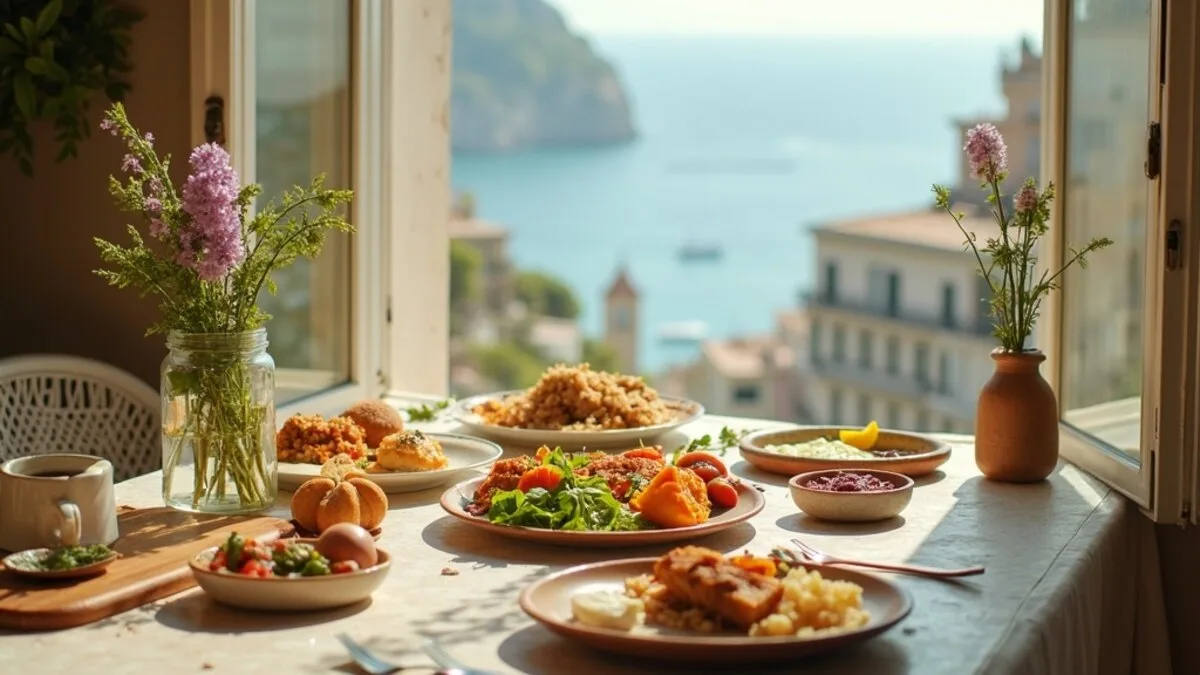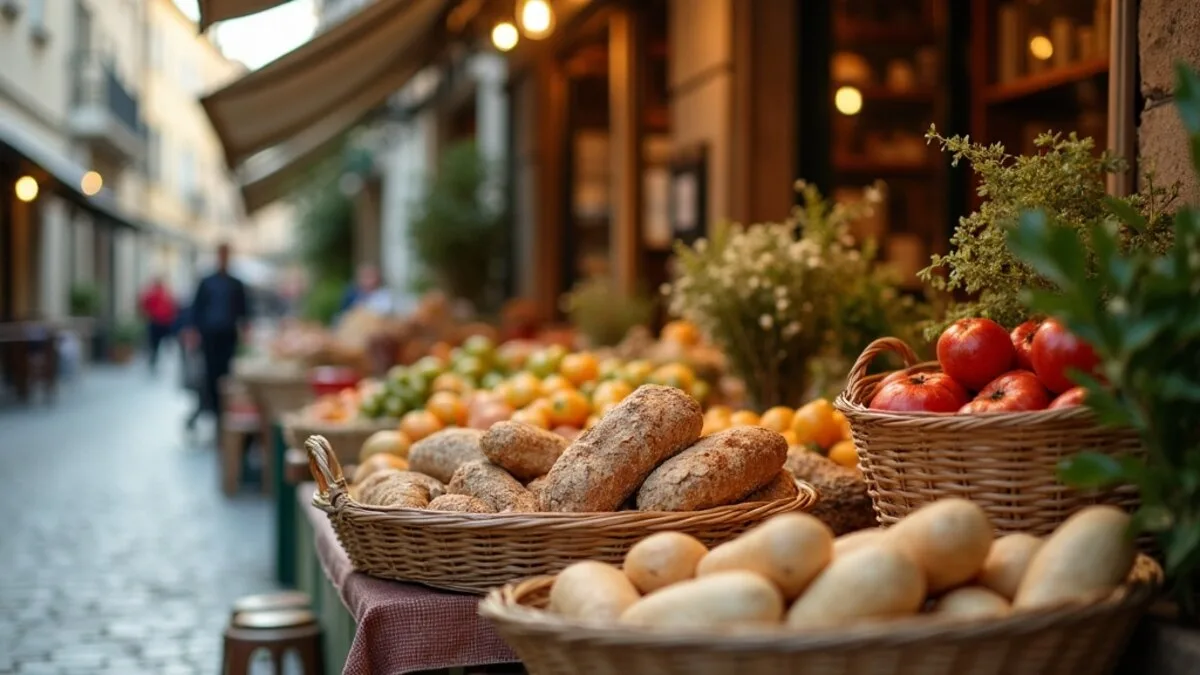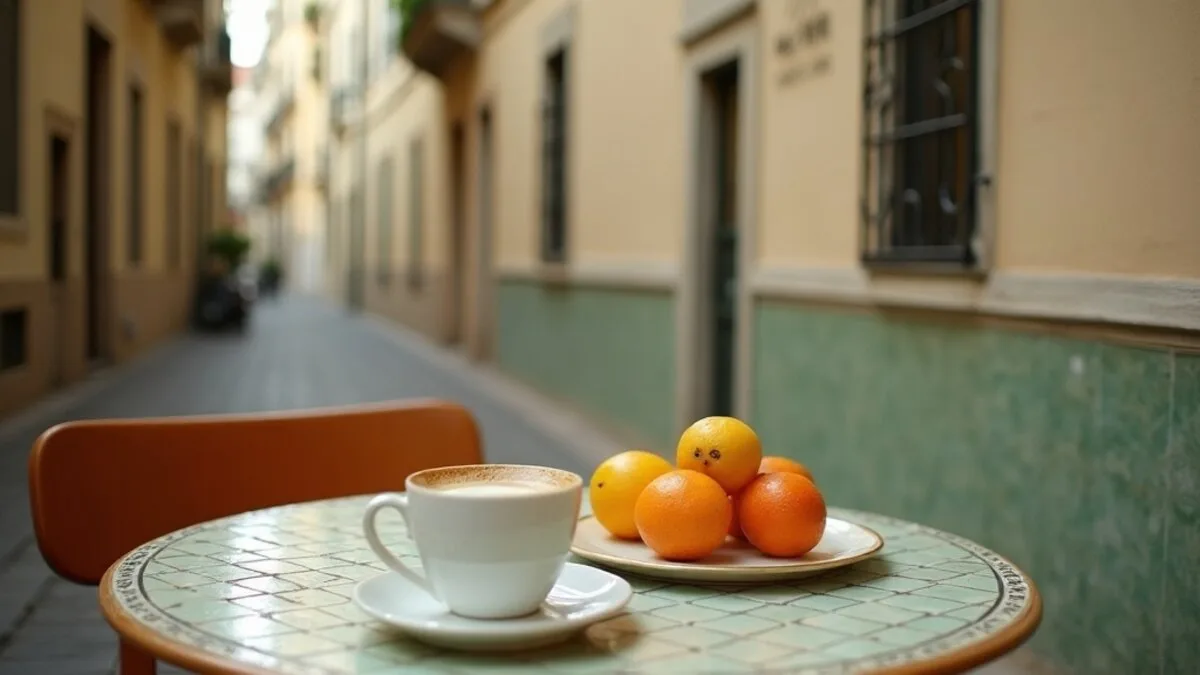
Markets, beans, bread, olives, coffee, sea air. Vegan travel in Portugal can feel generous with a little planning.
Is Portugal good for vegan travel?
Yes, more than its reputation suggests, and especially if you plan a little. Portugal is famous for salt cod and pork, which scares some plant-based travellers off, but underneath that lies one of the most vegetable-friendly food cultures in Europe: beans, bread, olive oil, ripe fruit, grilled vegetables, and a deep love of breakfast. With a handful of phrases and the right neighbourhoods, you can eat generously here.
I've spent a good chunk of three different springs in Portugal, mostly because it does the things I want from a trip cheaply and gently. The coffee is excellent and costs almost nothing. The light is soft and golden. People aren't in a hurry, and after a couple of days you stop being in one too.
The vegan scene proper is concentrated in Lisbon and Porto, but the bigger advantage is the traditional food that happens to be plant-based: a bowl of beans, a tomato salad with good oil, grilled greens, bread that's worth crossing a city for. You don't need a vegan restaurant on every corner when the everyday plate is already half-vegetarian.
This guide follows the same unhurried approach as my slow travel guide: fewer places, longer stays, days built around meals and walks. Portugal is the easiest country I know to travel this way.
How much does it cost?
Portugal is one of the cheaper countries in Western Europe, which is part of why I keep going back. A small coffee is under a euro. A simple lunch of soup, bread, and a vegetable plate might run you eight to twelve euros outside the tourist traps. A bed in a clean, characterful guesthouse can be had for far less than the equivalent in Spain or Italy. The money you save goes straight into longer stays, which is the whole game.
The one place it adds up is the centre of Lisbon in high season, where prices and crowds both spike. Step two neighbourhoods out and both fall away. That's true of most things here: a short walk from the postcard view is a quieter, cheaper, better version of the same city.
A note on language
English is widely spoken in Lisbon and Porto, less so in small towns, and a little Portuguese is met with real warmth because so few visitors try. You don't need to be fluent. "Bom dia," "obrigado," "por favor," and the dietary phrases below will carry you a long way and earn you a smile. People here are generous to anyone making an effort.
One gentle word of warning, since I want this guide to be honest. Lisbon in particular has changed fast under the weight of tourism, and some central streets now feel more like a theme park than a city. Travel a little more thoughtfully than the crowds: stay outside the busiest core, eat where locals eat, learn the words, and tread lightly. The country gives back what you bring to it.
More and more, I would rather take the long way, which is how I ended up crossing Europe by train.
Italy is kinder to vegans than its reputation suggests, as I found out writing my vegan Italy guide.
Lisbon, slowly
Lisbon is a city that rewards slow legs. Spend three or four days walking it, drinking small coffees, sitting on the miradouros at sunset, and eating beans for lunch like a local. The hills are real, so wear proper shoes and let the trams carry you uphill when your legs give out.
The vegan scene is small but genuine. Ao 26 Vegan Food Project in Chiado is the reliable favourite, doing Portuguese classics in plant-based form. The Food Temple up in Mouraria is tiny, warm, and changes its menu nightly. Around them sits a long list of natural wine bars and casual spots that will happily build you a plate of vegetables.
Beyond the dedicated spots, the trick in Lisbon is to eat where the food is naturally plant-leaning anyway. The growing number of brunch and natural-wine places almost always have a strong vegetable plate, a good soup, and bread that does half the work. I tend to keep one or two fully vegan restaurants in my back pocket for the days I'm tired and want zero negotiation, and improvise the rest.
Don't sleep on the simple stuff, either. A bowl of olives, good bread, a tomato salad swimming in oil, and a glass of vinho verde on a terrace as the sun drops is, honestly, one of my favourite meals anywhere. It costs very little and asks nothing of you but to slow down.
Where to base yourself
I like staying in Alfama or Graça, the old hilltop neighbourhoods east of the centre. They're quieter at night, full of washing lines and fado drifting out of doorways, and a short walk from the best viewpoints. Príncipe Real is the leafier, more design-minded option with the best concentration of cafés.
Wherever you land, do the thing I always do on a first morning: pick the nearest café and make it yours for the trip. A small coffee, a slow read, the same friendly face each day. It's a tiny ritual but it's how a strange city starts to feel like somewhere you belong, and it pairs well with the kind of gentle mornings I try to keep on the road.
A loose Lisbon plan
- Day 1: Walk Alfama with no destination. Get lost on purpose. End at a miradouro for sunset.
- Day 2: The Time Out Market for lunch (several vegan stalls), then the riverside out to Belém on foot or by tram.
- Day 3: A neighbourhood you haven't seen, a long lunch, an open evening with nothing booked.
Pick the nearest café on your first morning and make it yours for the trip.
The viewpoints, and which ones are worth it
Lisbon is a city of miradouros, the little terraced lookouts perched on the hills, and they're free, social, and the best place to watch the light go. Miradouro da Senhora do Monte is the highest and quietest. Portas do Sol looks straight over Alfama's rooftops to the river. São Pedro de Alcântara is central and lively, with a kiosk for a drink. Pick one near where you're staying and return at dusk; sunset over the Tagus is the city's nightly gift.
What I'd skip, or at least not stress about: the Santa Justa Lift queue (walk up the back instead, it's free and quicker), and the more aggressively touristy stretches of the Baixa where the menus have photos and the food is forgettable. The good eating is up the hills and off the main drag.
What to eat: the everyday Portuguese plate
The single most useful thing to know is that Portuguese cooking leans hard on legumes, bread, and vegetables, which means a lot of the traditional plate is already close to vegan or one substitution away.
- Feijoada de legumes: a vegetable-and-bean stew, the plant-based cousin of the meaty original. Worth seeking out.
- Grão (chickpeas) with spinach and garlic: a humble classic, often vegan as served.
- Caldo verde without the sausage: kale and potato soup, ask for it "sem chouriço."
- Açorda: a garlicky bread soup, sometimes made with just bread, oil, garlic, and coriander.
- Grilled vegetables and tomato salad with that astonishing olive oil, on almost any menu.
The phrases that help
Learn to say "sou vegano" (I'm vegan) or "sou vegetariano" if that's clearer, and "sem carne, sem peixe, sem queijo, sem ovos" for "without meat, fish, cheese, or eggs." The cheese and egg part matters; vegetarian here often still means dairy. A polite "obrigado" or "obrigada" goes a long way.
Portuguese hosts can take a guest's restrictions personally in the best way, so be warm and specific and you'll usually be looked after. If you want a tighter set of road-tested habits for any country, I keep them in plant-based travel tips.
The hidden animal ingredients
A few things catch people out. "Caldo" (stock) is often meat-based even in vegetable soups, so ask. Bread is usually vegan but the butter that arrives with it is not, and the couvert (the little plate of olives, cheese, and bread brought unasked) is charged for, so wave away what you won't eat. Many soups start with a sofrito that includes chouriço. And the famous custard tarts, as I'll say again later, are firmly off the menu.
None of this is hard once you know it. I find one clear sentence at the start of a meal solves almost everything, and the kitchen would rather adjust a dish than send you away unhappy. Lean on HappyCow for fully vegan spots when you want a guaranteed easy meal, and keep the everyday plate for the rest.
When the Portuguese actually eat
Lunch is the main event, eaten unhurried between roughly one and three, and it's where you'll find the best value and the most generous vegetable plates. Dinner runs late by some standards, often from eight onwards, and is a more relaxed affair. If you want a quiet table, go early; if you want the place buzzing, go late. Either way, nobody will rush you out. Lingering over the last of the wine is expected, not frowned upon.
I lean into this by making lunch my big meal, the way I suggest in my travel habits. It's cheaper, lighter, and it leaves the evening free for a walk and a viewpoint rather than a heavy meal that flattens you. The pattern suits a hot country and a slow trip equally well.
Porto and the north
Porto is my favourite city in Portugal, and I say that knowing it's a slightly contrarian pick over Lisbon. It's smaller, steeper, more weathered, and somehow more itself. Fewer crowds, more bread, and a river gorge running through the middle that catches the evening light beautifully.
Give it three days. Walk the Ribeira along the water, cross the bridge to the Gaia side for the view back, and spend a long while in the bookshops and the cafés. The vegan options have grown a lot; you'll find dedicated spots plus plenty of casual places that'll do you a plate of grilled vegetables and beans without blinking.
Worth it, and skip it
Worth it: the Bolhão market, the riverside at golden hour, a slow morning in a tiled old café. Skip it, or at least don't stress about it: the port wine cellars are a tourist conveyor belt and port isn't usually vegan anyway, so unless you love fortified wine, spend the time walking instead.
If you have an extra day or two, the Douro Valley upriver is gorgeous, all terraced hillsides and slow trains hugging the water. It's a classic slow-travel detour, more about the journey than any single stop.
Where to stay in Porto
I'd base myself in Cedofeita or around the Bolhão market rather than right on the riverfront. The Ribeira is beautiful but it's also where the day-trip crowds funnel through, and the prices reflect it. A few streets uphill you get the same city at a calmer volume, with bakeries and small restaurants that locals actually use.
Porto rewards aimless walking more than almost anywhere I've been. The tiled façades, the steep alleys down to the water, the bridges, the way a turn reveals the whole gorge at once. Give yourself permission to have no plan for at least one full morning. That's when the city gets under your skin.
Sintra, the Algarve, and slower days
Sintra is an easy train ride from Lisbon and worth one slow day, not a rushed half one. The palaces are extraordinary and the crowds are intense, so go early, do one or two sites properly rather than all of them, and leave time to just walk in the misty forest. Bring snacks; the food up there is patchy.
The classic mistake people make with Sintra is treating it like a checklist of five palaces and racing between them by tuk-tuk. You'll end the day frazzled and remember none of it. Pick the Pena Palace or the Quinta da Regaleira, do that one well, then let the green, slightly enchanted hills be the rest of the day. Sintra is a mood more than a monument.
A nearby alternative if the crowds defeat you: Cascais, a short train further on, a relaxed seaside town with a lovely coastal walk out to the dramatic Boca do Inferno cliffs. It's an easy place to do nothing for an afternoon, which is sometimes exactly the right plan.
The Algarve is the south coast, famous for beaches and, in summer, for being completely overrun. Go in the off-season instead. In spring or autumn you get the cliffs, the sea air, and the long walking trails almost to yourself, with the kind of empty light that resets your nervous system.
My ideal Algarve day is one long coastal walk, a simple lunch, and an afternoon doing nothing on the sand. That's it. It's the part of any trip I leave deliberately empty, the same instinct behind the open day in my Japan itinerary and the rhythm of my slow living routine at home.
Go to the Algarve in the off-season, for one long walk a day, and the coast is almost yours.
A quieter alternative: the Alentejo
If you want somewhere most visitors skip entirely, the Alentejo is the wide, slow, golden region between Lisbon and the Algarve. Cork oaks, wheat fields, whitewashed hill towns like Évora and Monsaraz, and a cuisine that's surprisingly bean and bread heavy. It's the most agricultural part of the country and the food shows it.
Days here are simple by nature. A morning in a small town, a long lunch under a vine, a drive or a walk through landscape that doesn't change much for miles. It's not a place to rush, which is exactly why I like it. If your idea of a good trip is fewer sights and more sky, point yourself inland.
The islands, for a future trip
I'll mention them rather than fold them in, because they deserve their own trip: Madeira for its levada walking trails and improbably green mountains, and the Azores for volcanic lakes, hot springs, and a slow Atlantic stillness that's hard to find anywhere else in Europe. Both are more walking and landscape than dining scene, so you plan your food a little harder, but for a quiet, restorative trip they're hard to beat. They sit closer to my restorative travel list than this mainland one, which is why I'd save them for when you have a full week to give a single place.
Markets, coffee, and pastries
If you do one thing in every Portuguese town, walk to the market. The produce is seasonal and cheap, the fruit is properly ripe, and a bag of oranges, almonds, and bread makes a perfect portable lunch for a walking day. Even when I don't buy much, the market tells me what's in season and what to order at dinner.
Lisbon's Mercado da Ribeira (the Time Out Market) is the famous one, half traditional market and half food hall, and it's genuinely useful for a vegan lunch with several plant-based stalls under one roof. But I'm fonder of the smaller neighbourhood markets where nobody's taking photos: piles of citrus, bunches of coriander, women who've sold the same stall for decades. Porto's Bolhão is the great northern one, freshly restored and still full of life.
Spring brings strawberries and the first cherries. Autumn brings figs, grapes, chestnuts roasted on street corners, and quinces. Eating with the season is automatic here because the market simply doesn't stock what isn't ready. It's a gentle lesson in patience that I try to carry home into my own kitchen.
The coffee thing
Coffee in Portugal is a small, strong espresso (a "bica" in Lisbon) drunk standing at the counter for under a euro. It's one of the great cheap pleasures of travel here. Add a "meia de leite" if you want something milkier, though you'll need to ask for plant milk and not every place has it, so a black coffee is the safe default.
And the pastries, honestly
The famous pastel de nata is made with egg and dairy, so it's not vegan. I won't pretend otherwise. The good news is that vegan versions are turning up in Lisbon and Porto's plant-based bakeries, and they're genuinely good. Beyond that, look for simple bread, almond sweets, and fruit. You won't go hungry, and the bread alone is worth the trip.
Self-catering, when you want it
Even on a holiday I like a kitchen for at least breakfast, and Portugal makes that easy. A loaf from a padaria, fruit and olives from the market, good oil, a handful of almonds, and you've got a better start to the day than most cafés will sell you. It also takes the pressure off, so the one big meal you eat out can be the leisurely lunch it deserves to be.
This is the same rhythm I keep at home, really. A simple morning, a proper midday meal, an easy evening. Travelling doesn't have to mean abandoning the habits that make ordinary days feel good, and some of my favourite simple recipes started as things I threw together in a rented Lisbon kitchen with whatever the market had.
Getting around without a car
You don't need a car for this kind of trip, and I'd argue you're better off without one. The train between Lisbon and Porto is fast, comfortable, and cheap if you book a few days ahead; it's about three hours and a lovely ride. Sintra and Cascais are easy day trains from Lisbon. The Douro line is a scenic journey in its own right.
Within cities, walk. Lisbon's trams and the funiculars save your legs on the hills, and the metro is clean and simple. In Porto, the historic centre is small enough to cover on foot, steep bits and all. A car only really pays off if you're set on remote Algarve coves, and even then a bus plus a long walk usually gets you there.
Skipping the car keeps the pace slow and the days simple, which is the whole point. It also leaves more in the budget for long lunches, which is the right place to spend it.
Practical train notes
Book the long-distance trains (the AP and IC services) on the Comboios de Portugal site a few days ahead for the cheapest fares and a reserved seat. The fast Alfa Pendular between Lisbon and Porto is the comfortable option; the slightly slower Intercidades is cheaper and barely different in practice. Regional trains to Sintra and Cascais you just turn up for; tap your card and go.
One small thing that surprises people: Portuguese stations are calm. There's none of the scrum you get in bigger countries, the trains are clean, and the staff are patient with confused visitors. After the chaos of some European hubs it feels almost restful, which sets the right tone for the whole trip.
Getting in from the airport
Lisbon's airport sits inside the city, with a metro line straight from the terminal that drops you near the centre for a couple of euros. Skip the taxi queue unless you're heavily laden. Porto's airport is similarly easy by metro. Both rides are a gentle, cheap introduction to the country, and arriving by train into a neighbourhood rather than by cab into traffic is a small thing that starts the trip on the right foot. Tap your card, find your seat, and let Portugal do the rest at its own pace.
When to go and what to pack
Spring (April to June) and autumn (September to October) are the sweet spots: warm but not brutal, long days, fewer crowds, and the off-season calm on the coast. July and August are hot and busy, especially in the Algarve. Winter is mild, quiet, and underrated, though the Atlantic can turn grey and wet.
My personal favourite is May. The weather has warmed up, the jacaranda trees in Lisbon are about to flower into that unreal purple, the markets are full of strawberries, and the summer crush hasn't arrived yet. October is the close runner-up, with figs in the markets and the sea still warm enough to swim. If you can choose your dates, choose the shoulders.
What I pack
- Shoes with grip. Lisbon and Porto are built on hills paved with smooth, slippery calçada stones.
- Layers and a light rain jacket, even in spring; the coast does what it likes.
- A reusable water bottle and a tote for market hauls.
- A printed or saved translation card for your dietary needs.
- One snack bar per travel day, for the gaps between meals.
That's really it. Portugal is a forgiving, affordable place to take your first slow trip, and an easy one to do plant-based once you stop looking for vegan restaurants and start looking at the everyday plate.
Where to sleep, and why it matters
I'd choose a small guesthouse or a rented flat with a kitchen over a big hotel almost every time here. Partly it's the kitchen, which makes plant-based breakfasts effortless. Mostly it's that the smaller places put you inside a neighbourhood rather than above a lobby, and that changes everything about how a city feels. You hear the morning sounds, you greet the same baker, you become, briefly, a temporary local.
Book a few nights in each base rather than hopping every day. Two cities and a couple of day trips over ten or twelve days is plenty. Unpacking properly, knowing where the good coffee is, having a regular morning walk: these are the things that turn a trip into a rest, which is what the whole slow approach is chasing.
What stays with me from Portugal isn't a single sight. It's the texture of ordinary time here: the clatter of a tram, the smell of grilled vegetables drifting from a doorway, the way an old man at the next table tips his glass at you for no reason. It's a country that's very good at the small, unhurried pleasures, which makes it the perfect place to practise travelling gently.
If you want to keep planning in the same spirit, the roundup of vegan-friendly European cities and the broader vegan travel destinations list both pick up where this leaves off. And if you'd like the underlying method before you book anything, the slow travel guide lays out the four rules I use every time. Boa viagem.
Common questions
How long will this take, honestly?
The reading is 12 min. The practice is a lifetime. Start with one small piece this week and let the rest follow when it feels natural, not before.
Do I have to be fully plant-based for this to help?
No. Everything I write is for people who want a softer relationship with food and routine. The recipes happen to be plant-based; the ideas work in any kitchen.
What should I read next?
The related essays below, in order. If you only read one more thing, read A slow travel guide for food-loving travellers, it picks up exactly where this one ends.
Can I cite this guide somewhere?
Yes. Please link back to this page and credit Caleb Leuchi. All photographs are made for Leuchi unless noted; the writing is original.