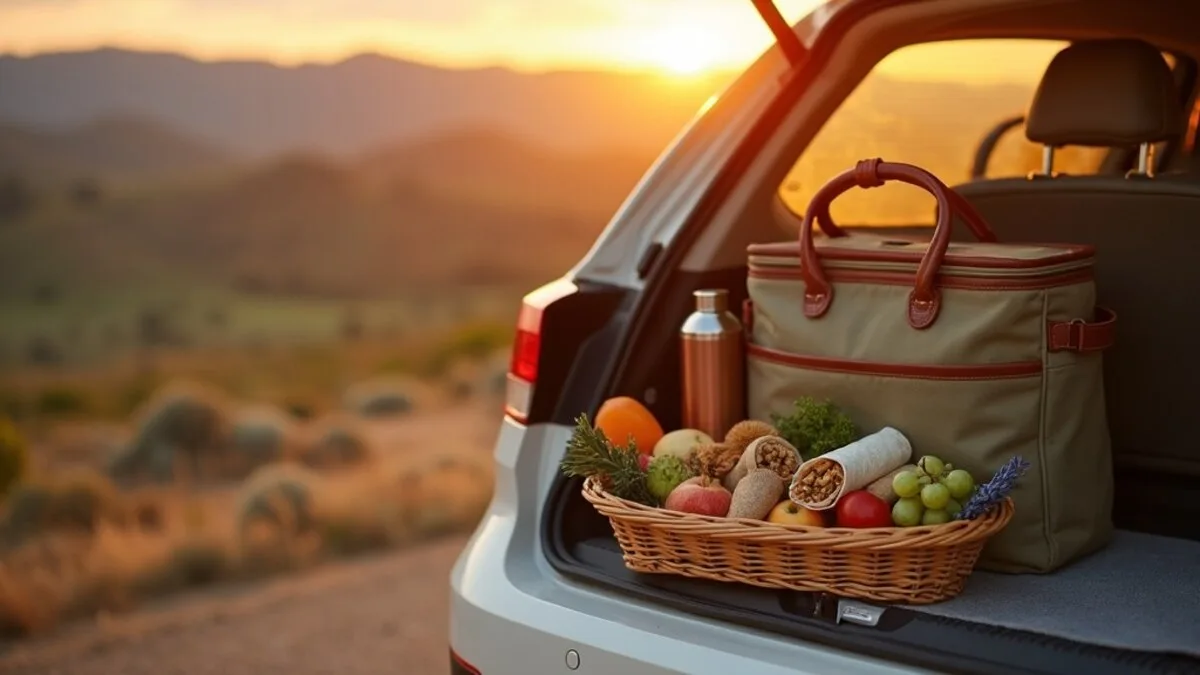
For a vegan road trip I bring two layers of food: shelf-stable snacks that survive a hot car (nuts, dried fruit, oat bars, crackers, nut butter, dark chocolate, fresh fruit) and a cooler kit of cook-ahead foods (sandwiches, wraps, energy bites, overnight oats, pasta salad, hummus and cut veg). The shelf-stable layer is your safety net for the gaps; the cooler is the real meal. I plan it the same way I plan the rest of a trip in my plant-based travel tips: pack for the longest gap, not the shortest.
The principle: pack for the gaps
A good road trip is mostly about not getting hungry and grumpy somewhere with nothing but a petrol station and a sad bag of crisps. So I pack like the gaps between towns are longer than they are. That single habit has saved more drives than any clever recipe. If the food runs out and the next real shop is ninety minutes away, the mood in the car turns fast, and no view fixes a hungry passenger.
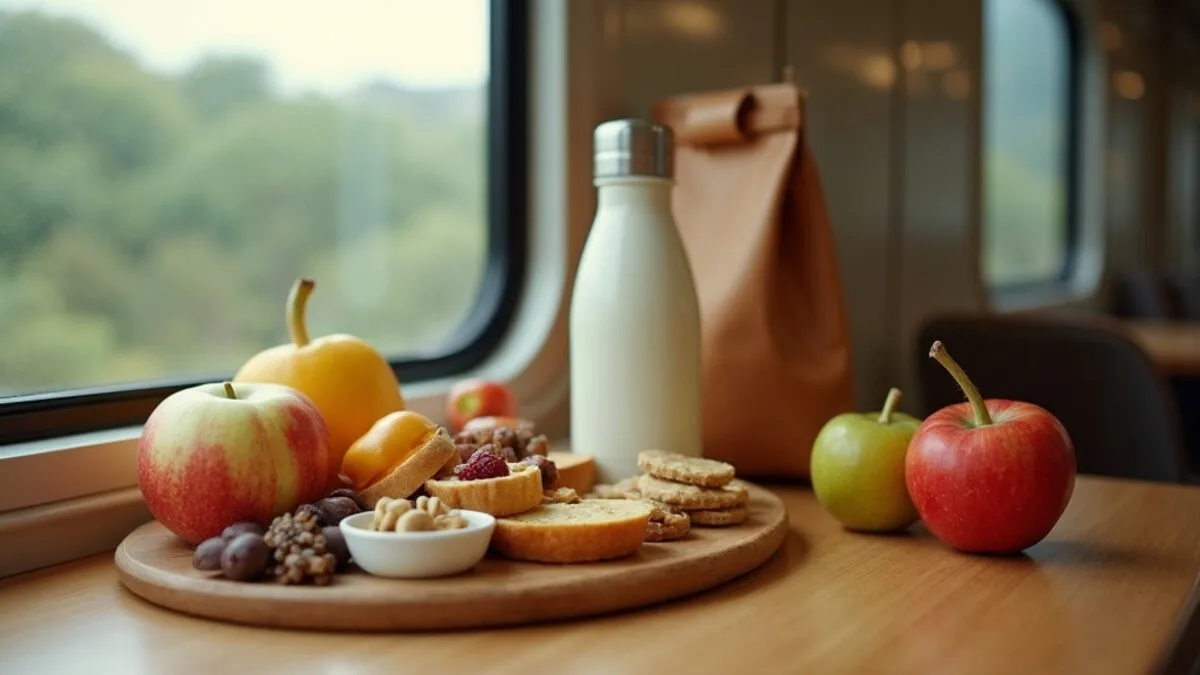
The way I think about it is two layers. The first layer is shelf-stable food that needs no cooler and tolerates a warm car all day: nuts, dried fruit, oat bars, crackers, fruit. The second layer is the cooler, where the proper meals live: sandwiches, wraps, pasta salad, hummus. The first layer is insurance. The second layer is the actual eating. When I keep those two jobs separate in my head, packing gets simple.
Why I overpack snacks on purpose
I would rather drive home with a spare bag of almonds than ration the last oat bar across two hungry people. Food is cheap insurance against a bad afternoon. A little extra also covers the things you cannot plan for: a closed roadside cafe, a wrong turn, traffic that doubles a drive. I aim for roughly a day and a half of snacks for every full day on the road, and I have never once regretted the surplus.
There is a calmer reason too. When the food is sorted, the trip relaxes. You stop scanning every exit sign for somewhere that might have something you can eat, and you start noticing the drive itself: the light changing, the towns thinning out, the quiet hour after lunch when everyone goes still. A packed basket buys that ease. It is a small amount of preparation traded for a whole day of not thinking about food, which on a long drive is exactly the trade I want to make.
How does vegan road trip food differ from any other?
Honestly, less than you would think. The structure is the same as any good packing list: shelf-stable layer plus cooler layer. The difference is that you cannot rely on grabbing a random sandwich at a service station, because most are not vegan. So the planning leans a little harder toward what you bring yourself. That is the whole adjustment. The same calm, unhurried approach I take to a slow travel guide applies here: do the small prep, then stop worrying.
No-cooler snacks that survive a hot car
This is the layer I never travel without, because it asks nothing of me. No ice, no timing, no worrying whether it has gone off in the sun. A hot car can sit at thirty-something degrees by mid-afternoon, and these foods simply do not care. I keep them in a soft basket or a tote on the back seat, within reach, so nobody has to dig.
The snacks I always pack
- Nuts and seeds: almonds, cashews, walnuts, pumpkin seeds. Filling, high in fat and protein, completely heat-stable. A handful actually holds you.
- Dried fruit: dates, apricots, raisins, mango. Sweet, energy-dense, and they pair perfectly with nuts.
- Trail mix: I mix my own from the two above plus dark chocolate chunks, so it is exactly what I like and far cheaper than the packets.
- Oat bars and flapjacks: check the label for honey, but most are vegan. They survive being squashed at the bottom of a bag.
- Crackers and oatcakes: sturdy, plain, a good vehicle for nut butter.
- Nut butter: single-serve sachets, or a small jar with a spoon. Peanut or almond butter on a cracker is a real mini-meal.
- Dark chocolate: most plain dark chocolate is vegan. It will soften in the heat but it does not spoil; just keep it out of direct sun.
- Fresh fruit that travels: apples, oranges, bananas (eat these first, they bruise), grapes in a tub.
What vegan snacks survive a hot car?
Anything dry, salted, or naturally shelf-stable: nuts, seeds, dried fruit, crackers, oat bars, popcorn, pretzels, dark chocolate, and whole fruit with a skin like apples and oranges. Avoid anything with fresh dairy-free yoghurt, cut melon, or sauces in the no-cooler layer; those belong in the cooler. The simple test I use is whether a food would be fine sitting in a warm cupboard for a day. If yes, it rides on the back seat.
A homemade trail mix I keep coming back to
My standard mix is two parts roasted almonds, one part cashews, one part chopped dates or raisins, and one part dark chocolate chunks, with a pinch of flaky salt. The salt is the secret; it makes the whole thing taste finished rather than just healthy. I make a big jar before a trip and decant it into a reusable tub. It is endlessly snackable and gives you steady energy instead of the sugar crash you get from sweets alone. For more of how I think about portable fuel, my notes on high-protein vegan meals carry over neatly to the car.
The cooler kit and how to pack it cold
The cooler is where the actual meals live, and a cooler that is packed badly is just a warm box of disappointment by lunchtime. The goal is simple: get everything cold before it goes in, keep cold things touching cold things, and open the lid as little as possible. Done right, a decent cool box holds safe temperatures for the better part of a day.
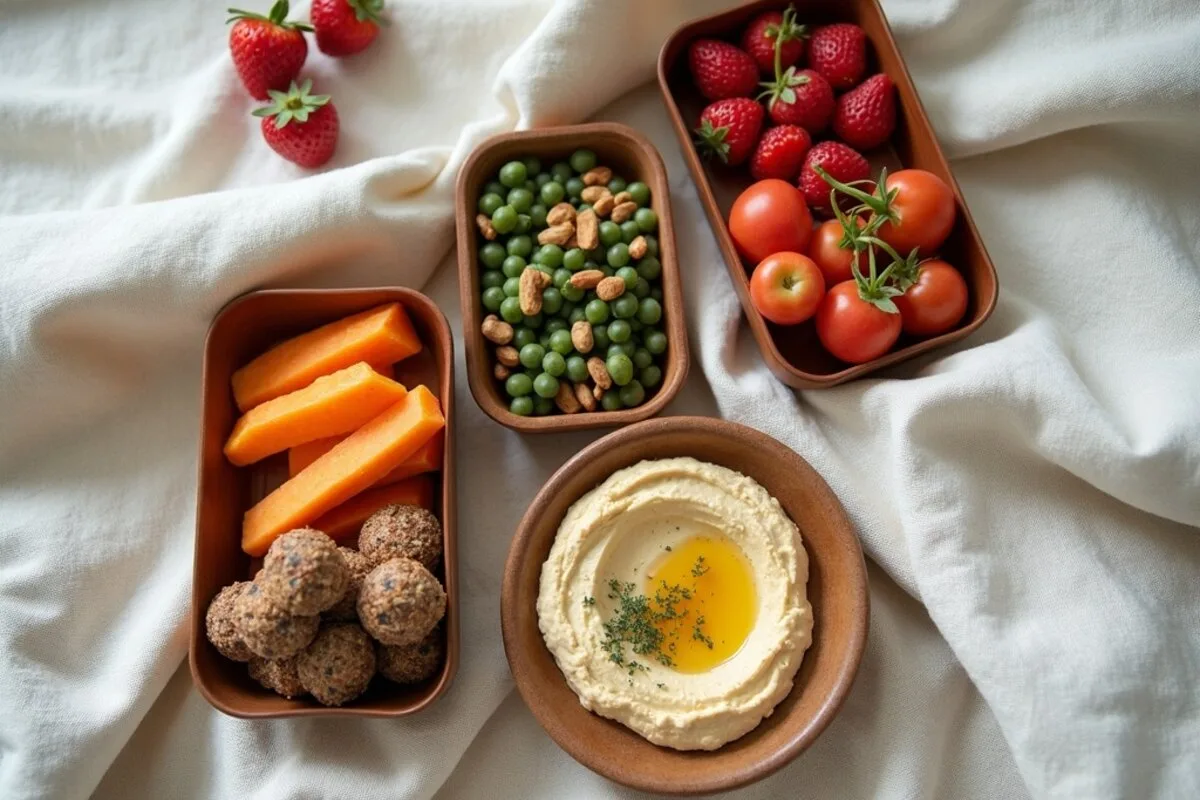
Packing the cooler so it stays cold
- Chill everything first. Put food and drinks in the fridge overnight. A cooler keeps cold in; it does not make warm food cold.
- Freeze your packs and a few drinks. Solid ice blocks last far longer than ice cubes. A couple of frozen water bottles double as cold packs and as drinking water once they thaw.
- Layer it. Ice packs on the bottom, dense cold food in the middle, things you want first on top.
- Fill the gaps. A full cooler stays cold longer than a half-empty one. Pack spare ice or crumpled paper into the air gaps.
- Two coolers if you can. One for drinks, which gets opened constantly, and one for food, which you barely touch. The food one stays much colder.
What goes in the cooler
- Made-up sandwiches and wraps
- Hummus, salsa, and other dips in jars
- Cut vegetable sticks: carrot, pepper, cucumber, celery
- Pasta salad or grain salad in a sealed tub
- Overnight oats in jars
- Firm fruit you want chilled: grapes, berries, melon if you have eaten it within a day
- Plant milk for coffee or cereal
How long does hummus last in a cooler?
Opened hummus kept properly cold, below about five degrees, is good for a few hours of a day trip and safest eaten within four hours once it has warmed past fridge temperature. If your cooler is genuinely cold and stays shut, it will comfortably last a morning into early afternoon. The honest rule: if it has been warm and sweaty for more than a couple of hours, do not risk it. I treat dips as eat-first items and bring shelf-stable snacks as backup for later in the day.
Make-ahead food worth cooking the night before
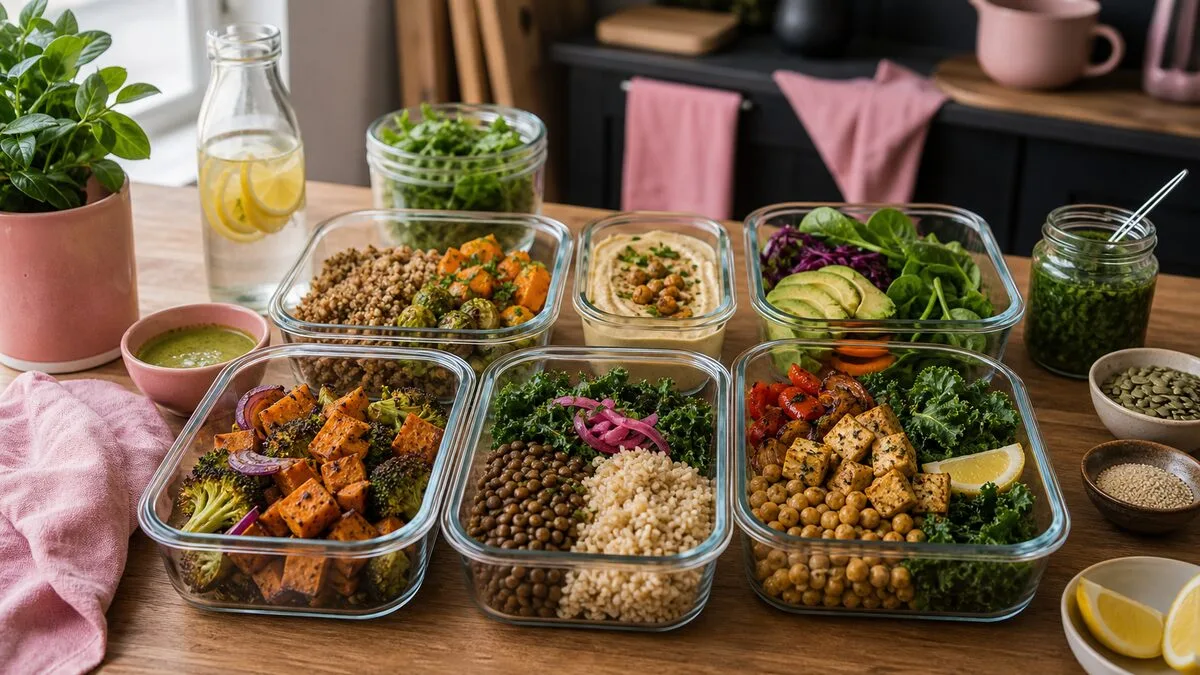
The night before a drive, I spend maybe forty minutes making food that will taste better cold in the car than most things I could buy. None of it is hard. It is the same component thinking I use for plant-based meal prep at home: cook things that hold their texture, season them well, and pack them so they travel without turning to mush.
Sandwiches and wraps that do not go soggy
The enemy of a packed sandwich is moisture. I build a barrier so the bread stays dry: spread hummus or mashed avocado right to the edges as a seal, then layer the wet things, like tomato or cucumber, in the middle away from the bread. Sturdy fillings travel best: roasted vegetables, falafel, marinated tofu, chickpea mash with lemon and herbs. Wraps in a tortilla hold together better than soft sliced bread on a bumpy road. I wrap each one tightly in paper or beeswax wrap so it keeps its shape.
Salads built to last hours
A leafy salad wilts; a sturdy one improves. Pasta salad, couscous, or a grain salad with roasted vegetables, chickpeas, and a sharp dressing actually tastes better after a few hours as the flavours settle. Keep the dressing tossed through robust ingredients, and keep any delicate leaves separate to add at the last minute. A tub of this is one of my favourite car lunches, and it borrows the same simple structure I use for a bowl at home: a grain, a protein, roasted veg, and something crunchy, all bound by a sharp dressing that holds for hours. Make a big batch; it keeps three days cold and only deepens in flavour as the dressing soaks in.
Energy bites and roasted chickpeas
Two things I make almost every trip. Energy bites are just blended dates, oats, nut butter, and a little cocoa or seeds, rolled into balls and chilled until firm. They are dense, sweet, and hold a long drive better than a fragile cake. Roasted chickpeas, tossed with oil, salt, and smoked paprika and roasted until crisp, are a savoury, crunchy, protein-rich snack that needs no cooler for a day. Both feel like a treat and quietly do the job of keeping everyone fed and steady.
Overnight oats for the second morning
If the trip runs more than a day, I make overnight oats in jars before leaving: oats, plant milk, chia, and fruit, sealed and chilled. By the next morning they are ready, no cooking, no stop required. They keep two to three days in a cold cooler. It is the easiest breakfast I know, and it means the first hungry moment of day two is already solved while everyone is still rubbing their eyes.
Breakfast on the move
Breakfast is the meal most likely to go wrong on a trip, because you are tired, you want to get moving, and nothing roadside is reliably vegan first thing. So I solve it before I leave. A solved breakfast is the difference between a calm start and a stressful detour while everyone is hungry and the day has barely begun.
Breakfasts that need no stop
- Overnight oats in a jar: made the night before, eaten cold with a spoon at the first rest area.
- Banana and nut butter: the simplest portable breakfast there is. A banana and a sachet of peanut butter.
- Fruit and a handful of nuts: light, fast, no cleanup.
- A breakfast wrap: tortilla with mashed avocado, spinach, and a little salt, wrapped the night before.
- Granola in a tub: dry, with a small carton of plant milk poured in at a stop, or eaten by the handful.
What is the easiest vegan breakfast for a road trip?
Overnight oats win for me, because there is no cooking, no stop, and no cleanup; you make them the night before and eat them cold from the jar. A close second is a banana with a sachet of nut butter, which needs no prep at all. If you want a few more ideas to rotate through on a longer trip, I keep a fuller list in my easy vegan breakfast ideas. The principle is the same: decide breakfast the night before so the morning makes no demands.
Drinks, water, and the coffee question
Water is the one thing I never want to be short of in a car. Heat, air conditioning, and salty snacks all quietly dry you out, and a headache from mild dehydration is easy to mistake for tiredness. I bring far more water than seems necessary and refill at every chance. Frozen bottles in the cooler thaw into cold drinking water as the day goes on, which is a tidy two-for-one.
What I bring to drink
- Plenty of water: a big refillable bottle each, plus a few frozen ones doubling as ice packs.
- Plant milk: a small carton for coffee or cereal, kept in the cooler.
- Cold infusions: water with sliced cucumber, lemon, or mint, which makes plain water more tempting on a hot day.
- A treat drink: a kombucha or a sparkling juice, kept cold for the afternoon slump.
The coffee question
Roadside coffee is hit and miss for plant milk, and often the oat option has run out by the time you arrive. So I make coffee at home and carry it in an insulated flask. A good steel flask keeps it hot for hours, and there is something genuinely lovely about pouring your own coffee at a quiet viewpoint instead of queuing at a service station. If I want it iced, I brew it strong, chill it overnight, and pour it over ice from the cooler. For the mornings I want something more substantial, I sometimes blend a vegan protein smoothie into the flask before leaving; it holds for a few cold hours and doubles as breakfast.
What to actually find at gas stations and supermarkets
However well you pack, at some point you will stop somewhere and want fresh supplies. The good news is that vegan road trip food is more findable than it used to be, even at small petrol stations. The trick is knowing what to reach for without reading every label in despair. Here is what I genuinely buy on the road.
Reliable gas station vegan finds
- Plain salted nuts and trail mix: almost always there, almost always vegan.
- Crisps: many plain salted and ready-salted crisps are accidentally vegan. Check, but the basics usually pass.
- Pretzels and plain popcorn: common and reliably vegan.
- Dark chocolate and some plain biscuits: check for milk, but plain dark chocolate is a safe bet.
- Fresh fruit: bananas and apples turn up even at small stops.
- Bottled water and black coffee: always available; bring your own plant milk for the coffee.
What to grab at a supermarket stop
If you pass a proper supermarket, that is your chance to reset the cooler. I head for the same few aisles every time: a tub of hummus and a bag of carrots, a loaf of bread and an avocado, a punnet of cherry tomatoes, a bag of pre-washed salad, falafel from the chilled section, and fruit. Within ten minutes you can assemble a far better lunch than any roadside cafe, often for less money. Many supermarkets now have a clearly labelled vegan or chilled meal-deal section too, which makes the grab-and-go even faster.
One habit that pays off: keep a mental shortlist of the chains you are likely to pass and what each one reliably stocks. After a few trips you learn which supermarket near a motorway always has decent hummus and which petrol brand carries the better trail mix. That knowledge turns a stop from a hopeful rummage into a thirty-second resupply. I also check opening hours for anywhere I am counting on for an evening meal, because a closed shop at eight in the evening is precisely the gap the packed layer exists to cover.
Can you eat vegan at any gas station?
Almost always, yes, if you keep your expectations to snacks rather than hot meals. Nuts, trail mix, crisps, pretzels, dark chocolate, fruit, and water are nearly universal, and that is enough to bridge any gap until the next real stop. What you cannot count on is a vegan hot sandwich or a labelled vegan ready-meal at a small station, which is exactly why the packed layer matters. The same realism guides where I choose to stop in my vegan travel destinations notes: assume you will self-cater the gaps.
Keeping it low-waste with reusables
A road trip can generate a startling pile of single-use packaging in a single day. A little planning keeps it almost waste-free, which also happens to keep the car tidier and the food cheaper. I pack a small kit of reusables and a way to deal with rubbish, and then I barely think about it again. Reducing food waste at home and on the road is one of the simplest everyday climate actions, as the EPA's guide to reducing wasted food lays out plainly.
The reusable kit I bring
- A set of sealable tubs and jars: for snacks, salads, dips, and oats. They stack and they do not leak.
- Refillable water bottles and an insulated flask: the single biggest cut to packaging.
- Beeswax wraps or paper: for sandwiches and wraps, instead of foil and film.
- A few cloth napkins and a small towel: for the inevitable spills.
- Reusable cutlery and a couple of cups: one fork each saves a surprising amount.
- A small bag for rubbish and another for recycling: so nothing gets left at a stop and sorting stays easy.
How do you avoid food waste on a road trip?
Plan portions to the trip length, pack perishables you will actually eat first, and bring shelf-stable snacks that keep indefinitely so leftovers are dry goods rather than spoiled fresh food. I label the cooler items roughly by when they need eating and work through them in order. Anything I do not finish that is still shelf-stable simply comes home in the snack basket. The aim is to come back with dry surplus, never a bag of food gone bad.
Kids, longer trips, and food safety basics
Once you add children or extend the trip past a day, the same system still works; you just scale it up and tighten the food safety. Hungry kids melt down faster than adults, so I keep their snacks even more accessible and even more frequent than seems reasonable. The goal is to head off hunger before it arrives, not to respond to it from the fast lane.
Packing for kids
- Small, frequent portions: snack pots of grapes, crackers, and cut fruit, ready to hand back without stopping.
- Familiar favourites: the road is not the moment to introduce a new food. Bring what you know they eat.
- Less mess by design: avoid anything that crumbles catastrophically or stains; whole fruit and bars beat anything saucy.
- Their own water bottle: so hydration is not a negotiation.
Longer trips and topping up
On a multi-day drive I plan a proper supermarket stop roughly once a day to refresh the cooler and refreeze ice packs, often at an evening stop where there is a freezer. I lean more on shelf-stable food and use the cooler for one good fresh meal a day rather than trying to keep three days of perishables cold at once.
Travelling alone changes the maths too: smaller portions, fewer dishes to wash, and shorter, more frequent stops because you set the whole rhythm yourself. On longer drives I also rotate the menu so no single thing gets boring, swapping the salad base from pasta to couscous to grains across the days and alternating which dip rides in the cooler. Variety costs nothing extra to pack and does a lot to keep morale up by day three.
Food safety basics worth respecting
The rules are short and they matter. Keep cold food genuinely cold, below about five degrees, and eat the most perishable things first while the cooler is at its coldest. Do not let prepared food sit in a warm car for more than about two hours, or one hour if it is properly hot outside. When in doubt, throw it out; an upset stomach two hours from anywhere is not worth saving a sandwich. Protein-rich foods like tofu, beans, and hummus deserve particular care, which is also why pairing plants for steady nutrition, as Harvard's overview of protein describes, is easier when you have packed those foods to stay safely cold.
A simple vegan road trip packing checklist
Here is the whole thing in one place, the list I actually run down the night before. I keep it deliberately short, because a checklist you will not finish is worse than none. If I tick these off, the food side of the trip simply takes care of itself, and I can spend the drive looking out of the window rather than worrying about lunch.
The shelf-stable layer
- Mixed nuts and seeds
- Dried fruit and a jar of homemade trail mix
- Oat bars or flapjacks
- Crackers or oatcakes plus nut butter
- Dark chocolate
- Whole fruit: apples, oranges, bananas
The cooler layer
- Made-up sandwiches and wraps, sealed with hummus or avocado
- Pasta or grain salad in a tub
- Hummus and cut vegetable sticks
- Overnight oats in jars for the next morning
- Energy bites and roasted chickpeas
- Plant milk and a treat drink
- Frozen ice packs and a couple of frozen water bottles
The kit
- Refillable water bottles, one each, plus a big spare
- Insulated flask of coffee made at home
- Reusable tubs, jars, cutlery, and cups
- Beeswax wraps or paper, cloth napkins, a small towel
- A rubbish bag and a recycling bag
That is the entire system: pack for the gaps, keep cold food cold, cook a little the night before, and trust the snack basket for everything in between. Do that and a long drive stops being a series of hungry compromises and becomes one of the quietest, most pleasant parts of any trip. It is the same unhurried instinct that runs through all my plant-based travel tips: do the small prep once, then relax and enjoy the road.
Common questions
What vegan food should I bring on a road trip?
Bring two layers. First, shelf-stable snacks that survive a hot car: nuts, dried fruit, trail mix, oat bars, crackers with nut butter, dark chocolate, and whole fruit. Second, a cooler kit of cook-ahead meals: sandwiches and wraps sealed with hummus, pasta or grain salad, hummus with cut veg, overnight oats, and energy bites. The snacks are your safety net; the cooler holds the real meals.
What vegan snacks survive a hot car without a cooler?
Anything dry or naturally shelf-stable: nuts, seeds, dried fruit, crackers, oatcakes, oat bars, popcorn, pretzels, dark chocolate, and whole fruit with a skin like apples and oranges. A simple test is whether the food would be fine in a warm cupboard for a day. Keep fresh dips, cut melon, and anything saucy in the cooler instead.
How long does hummus last in a cooler on a road trip?
Kept genuinely cold, below about five degrees in a well-packed cooler that stays shut, opened hummus is good through a morning into early afternoon. Once it has warmed past fridge temperature, treat four hours as the limit. If it has been warm and sweaty for more than a couple of hours, do not risk it. I eat dips early in the day and rely on dry snacks later.
Can you eat vegan at gas stations on a long drive?
Yes, as long as you stick to snacks rather than hot meals. Plain salted nuts, trail mix, crisps, pretzels, dark chocolate, fruit, and water are nearly universal, even at small stations. What you cannot count on is a vegan hot sandwich or a labelled vegan ready-meal, which is exactly why packing your own meal layer matters. A proper supermarket stop lets you reset the cooler with hummus, bread, and salad.