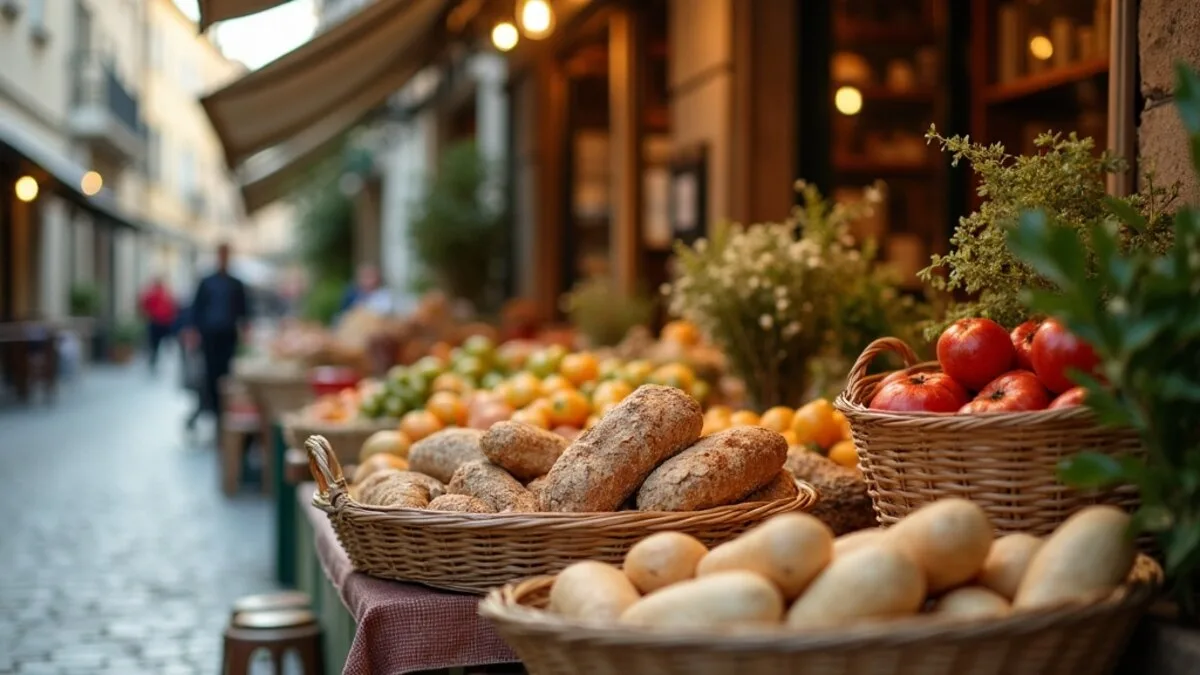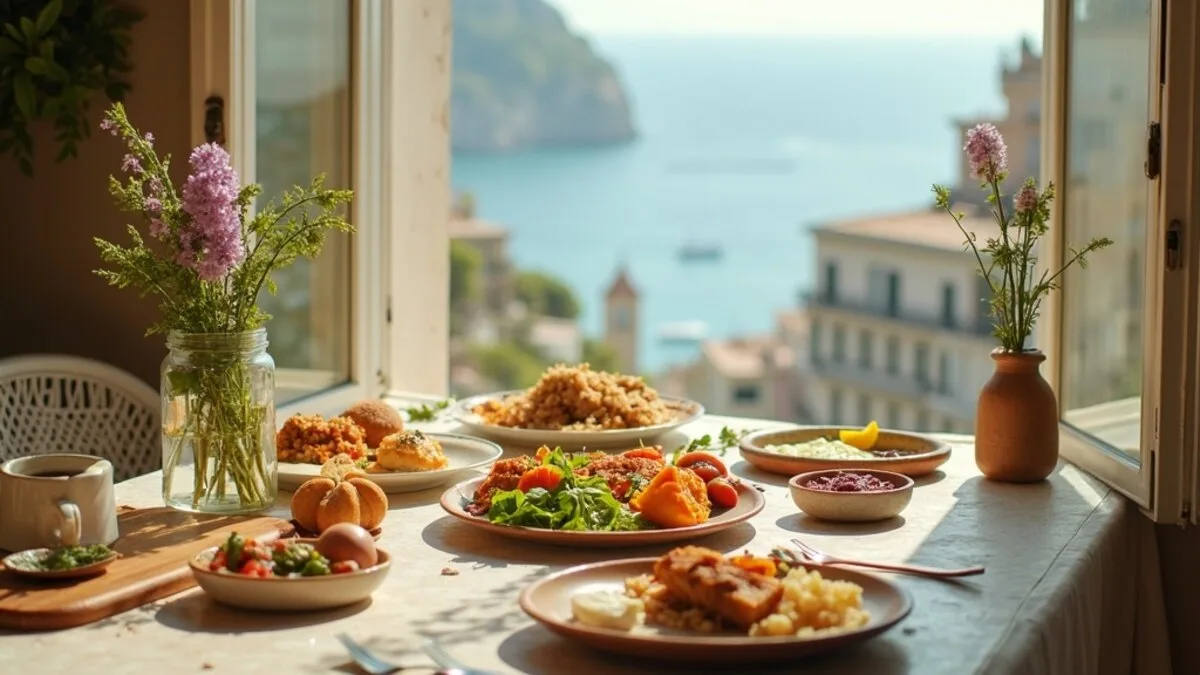
The best places to travel as a vegan feed your curiosity and your appetite at the same time.
Cities where plants are native, not novel
The easiest vegan travel happens in places where plant-based food is already part of the culture, not a recent trend, not an English-menu afterthought, but actually woven into how people have eaten for generations. That distinction matters more than any "top vegan restaurant" list. A city with two hundred vegan cafes can still feel hostile if the everyday food is built on butter and meat. A city with almost no vegan-labelled places can feel effortless if its grandmothers were cooking lentils and greens long before anyone coined the word.
So I plan around culture first and labels second. The short list below is the one I actually use, the handful of places I send friends to when they tell me they've gone plant-based and they're nervous about travelling. Each one earns its spot for a different reason, and I'll take them one at a time after this.
- Kyoto, Japan. Shojin ryori, a deep soy culture, mountain vegetables, and centuries of temple cooking.
- Tel Aviv, Israel. Hummus, tahini, market salads, and the most genuinely vegan-friendly cafe scene I've eaten my way through.
- Chiang Mai, Thailand. Coconut, tofu, herbs, and the jay temple food that turns up across the old city.
- Lisbon and Porto, Portugal. Beans, bread, olives, and sea air. The full Portugal guide goes deeper.
- Berlin, Germany. Possibly the easiest plant-based capital in Europe, almost by accident.
None of these is a punishment city for a vegan. None requires you to live on side salads or apologise to a waiter. They reward you for showing up hungry and curious, which is the whole reason I travel in the first place. I lean on the slow travel method in each of them: fewer places, longer stays, days built around meals rather than monuments.
Plan around culture first and labels second. The label tells you where to eat tonight; the culture tells you whether the whole trip will feed you.
It is the same unhurried approach I take to vegan Thailand, where the food rewards going slowly.
Long drives go better when I pack for the gaps, which is the heart of my notes on vegan road trip food.
Kyoto and the quiet genius of shojin ryori
Kyoto is the city I'd send a brand-new vegan to first, because it proves the point so completely. Shojin ryori is Buddhist temple cuisine, fully plant-based by design, refined over centuries by people who weren't trying to make a statement, just trying to cook beautifully within a vow. It's seasonal, restrained, and quietly spectacular. Nobody at the table is thinking about what's missing.
The full kaiseki-style temple meals are a splurge, often 4,000 to 8,000 yen, roughly 25 to 50 pounds, and worth it once. Shigetsu inside the Tenryu-ji temple grounds in Arashiyama is the classic, eaten in tatami rooms looking onto a raked garden. Book ahead through the temple. It's slow food in the literal sense, course after small course, and you leave feeling fed rather than full.
What I eat the rest of the time
You don't need a temple every day. Kyoto's soy culture means tofu and yuba (the delicate skin lifted off warm soy milk) turn up everywhere, and the city's vegetable shops near Nishiki Market are a joy. I graze the covered market in the late morning, then build a cheap lunch from pickles, sesame tofu, and roasted chestnuts in season.
A few honest caveats. Dashi, the foundational stock, is usually made with bonito (fish), so "vegetable" dishes often aren't. Learn the phrase for "no fish, no meat, no dashi," carry it written down, and lean on dedicated vegan spots like Choice or Ain Soph when you want zero negotiation. For the longer route through the country, the 10-day Japan itinerary threads Kyoto into a calmer trip.
A day I'd repeat in Kyoto
Coffee in the Gion backstreets before the crowds arrive, when the lanterns are still on and the river is quiet. A slow walk along the Kamo River, where locals sit at even intervals on the bank like a row of notes on a stave. Late morning at Nishiki for tofu and pickles. Then the long bus or a flat cycle out to Arashiyama for the temple lunch, booked weeks ahead.
Afternoons I keep gentle: the moss gardens, a second-hand bookshop, a soak if the guesthouse has a bath. Kyoto in November, with the maples turning, is one of the best slow trips I know, though you'll share the famous spots with a crowd. Go early, eat late, and the city between those hours is yours. The temple food, in particular, is proof that plant-based can be the high cuisine rather than the compromise.
Tel Aviv, the easiest city I have ever eaten in
If Kyoto is the most refined, Tel Aviv is the most effortless. The everyday food is already plant-forward: hummus eaten warm with a pool of olive oil, tahini on everything, fattoush and Israeli salad, sabich without the egg, falafel from a window for a few shekels. The cafe culture is enormous and a huge share of it is openly vegan-friendly. You can wander into almost any place and eat well without a single careful question.
Start your mornings at the Carmel Market or the smaller Levinsky Market in the south, where spice shops and bakeries spill onto the street. A bag of dates, some warm pita, a tub of hummus, and you've got a walking breakfast for under 30 shekels (about 7 pounds). The beach is a ten-minute stroll from most of the centre, so I tend to eat, walk the promenade, then sit.
Where the city earns its reputation
Tel Aviv has a properly developed vegan scene on top of the traditional food, which is rare. Whole bakeries, ice cream, shawarma made from seitan or mushroom. Florentin and the area around Rothschild Boulevard are dense with options. Even the corner shop falafel guy will usually pile on salads and pickles without blinking.
The one caveat is cost. Tel Aviv is expensive by Mediterranean standards, closer to London than Lisbon, so I keep the budget down by eating market food and falafel by day and saving one proper sit-down dinner for the evening. It pairs naturally with the slower European trips in my vegan-friendly cities guide.
The other thing to know is the rhythm of the week. Shabbat runs from Friday afternoon to Saturday evening, and a lot of the city slows or shuts, though Tel Aviv stays livelier than most of the country. I've learned to stock up at the market on Friday morning and treat Saturday as a beach-and-leftovers day. It's an enforced slow day, which I've come to look forward to rather than work around.
Chiang Mai and the jay kitchens of the north
Thailand surprises people. The instinct is to worry about fish sauce, and fair enough, it's in a lot of dishes. But northern Thailand, and Chiang Mai especially, has a built-in solution: jay food. Jay is the Thai Buddhist vegan tradition, marked by a yellow flag with red lettering outside the shop, and it means no meat, no fish sauce, no egg, and usually no pungent alliums either. Once you can spot that flag, the city opens up.
The old city inside the moat is where I base myself, walkable and full of small kitchens. A jay curry over rice runs 40 to 60 baht, barely over a pound, and the Sunday Walking Street market is a parade of grilled corn, sticky rice, mango, coconut sweets, and tofu skewers. Coconut milk does much of the heavy lifting in the north, so curries are rich without any dairy.
A note on the rhythm
Chiang Mai rewards staying put. It's cheap enough to take a flat for a couple of weeks, and the heat enforces a sensible pace: market and temple in the cool morning, a long rest through the worst of the afternoon, a wander and a meal once it softens. That's the slow approach imposed by the climate rather than chosen, and it suits the place perfectly.
Caveats: outside jay spots, ask for "mai sai nam pla" (no fish sauce) and "jay" or "mangsawirat" (vegetarian), and accept that smaller kitchens may not fully understand. HappyCow is genuinely useful here for finding the dedicated places.
If you have the time, take a cooking class while you're there. I did a half-day one in a garden outside the city, started with a trip to the local market to choose herbs, and came home able to make a green curry paste from scratch. It's the kind of souvenir that lasts. Chiang Mai also makes an easy base for short trips into the hills and villages nearby, though I'd resist the urge to pack the days. The whole appeal of the north is that it lets you breathe.
Lisbon and Porto, beans, bread, sea air
Portugal is my soft spot, the place I keep returning to, and it's far easier for a plant-based traveller than its reputation suggests. Yes, the famous dishes lean on salt cod and pork. But underneath that there's an old peasant tradition of beans, bread, greens, olives, and good olive oil that was never about meat in the first place, and it's everywhere if you look past the tourist menus.
In Lisbon I stay up in Graça or Alfama, where the trams rattle and the miradouros (viewpoints) give you the city for free. A morning at the Mercado de Campo de Ourique, a long lunch of grão (chickpea) salad and broa cornbread, an afternoon nap against the heat, a sunset walk to a viewpoint. The dedicated vegan scene has exploded too: Ao 26 and the all-vegan food court at the old Mercado are easy wins.
Why Porto might be better
Porto is smaller, steeper, and to my mind even more lovable. The riverside Ribeira is touristy but the Bolhão market and the streets above it are real. Caldo verde (a kale and potato soup) is often made vegan if you ask them to skip the sausage, and the bakeries do bread you'll think about for months.
Rough costs: a market lunch for 5 to 8 euros, a proper dinner for 15 to 25. Trains between Lisbon and Porto take under three hours and cost around 25 euros booked ahead, which is exactly the kind of single, unhurried move I like. The full Portugal guide has my neighbourhood-by-neighbourhood notes.
One detail that wins people over: the pastel de nata, the famous custard tart, now has very good vegan versions in both cities. Bakeries that would once have looked at you blankly will point you to a tray of them. It's a small thing, but it's a sign of how far the everyday food culture has shifted while keeping its soul. You're not eating around Portugal anymore. You're eating into it.
I'd also push you out of the two big cities at least once. The Alentejo, the rural region south of Lisbon, is bean and bread and olive country at heart, and a few nights in a small town there is the slowest, kindest version of this trip. Évora makes a gentle base, and the food gets simpler and more plant-leaning the further you get from the coast and the tourist tables.
Berlin, the accidental vegan capital
Berlin didn't set out to be Europe's easiest vegan city. It just is, and I find that more reassuring than anywhere that markets itself that way. The scene grew out of a cheap, creative, slightly anarchic food culture rather than a wellness boom, so it feels lived-in rather than performed. Whole vegan doner shops, vegan currywurst, supermarkets with aisles of plant-based everything, and prices that are still kind by Western European standards.
I base myself in Neukolln or Kreuzberg, both walkable and stuffed with options. The Turkish Market along the Maybachufer canal on Tuesdays and Fridays is a sensory morning: olives, flatbread, herbs, fruit, and the gozleme stall where I always end up. A doner from a vegan spot like Vincent Vegan runs around 6 to 8 euros, and a sit-down dinner rarely tops 20.
Eating well between the obvious stops
What I love is that you don't have to seek it out. The regular bakery has a vegan option. The regular Vietnamese place, of which there are many excellent ones, will adapt without fuss. Even the late-night spat-kauf corner shop has soy milk and decent chocolate. It's a city where being vegan is so unremarkable that you stop thinking about it, which is exactly the goal.
One honest note: Berlin in deep winter is grey and cold, and a lot of the canal-market joy is a warm-weather thing. I'd aim for late spring through early autumn. For the wider European picture, see the cities guide and the solo travel notes, since Berlin is a brilliant first solo city.
Berlin also has the cheapest good supermarket vegan range I've come across, which sounds dull until you've travelled enough to appreciate it. A self-catered breakfast of dark bread, hummus, tomatoes, and proper coffee costs almost nothing and means you start every day on your own terms. I lean into that here, taking a flat with a kitchen and cooking simple things, then eating out only when I actually want to. It keeps a long stay affordable and stops the trip from blurring into one restaurant meal after another.
And the city rewards walking and slow days more than landmark-chasing. The grand sights are fine, but Berlin's real character lives in its parks, its canals, and the long Sunday flea markets. A morning at Mauerpark, a coffee, a wander, a market lunch: that's a better day than queuing for anything. It's a city built for the kind of unhurried attention I value, which is half of why I keep going back.
Two more I keep going back to
Five is a tidy list, but two more deserve a mention because they catch people off guard, and because I keep booking flights to both.
Taipei, Taiwan
Taiwan has one of the deepest vegetarian traditions anywhere, again rooted in Buddhism, and the word to look for is "su" (素). There are whole vegetarian buffets where you fill a tray and pay by weight for a couple of pounds, mock-meat dishes done with real skill, and night markets full of grilled king oyster mushrooms, scallion pancakes, and taro. The MRT metro makes the city effortless to move around, and it's cheap, friendly, and humid in a way that slows you down nicely.
Mexico City
This one took me by surprise. The base of so much Mexican food, corn tortillas, beans, nopales (cactus), salsas, roasted vegetables, is naturally plant-based, and the city has a fast-growing vegan scene layered on top. Tacos de guisado with a mushroom or bean filling, esquites without the cheese and mayo, fresh fruit from the cart with chilli and lime. The neighbourhoods of Roma and Condesa are leafy, walkable, and easy.
The altitude is real (over 2,200 metres), so I take the first day gently and drink more water than feels necessary. Both cities reinforce the same lesson: look for the indigenous, everyday plant tradition and you'll eat better than any dedicated vegan restaurant could manage. If you want the at-home version of that thinking, my high-protein vegan meals use the same building blocks.
Two honourable mentions
I'll resist turning this into an endless list, but two more deserve a line. Istanbul, where the meze tradition (the small plates that open a meal) is half plant-based already, and the markets are some of the best in the world for olives, nuts, and dried fruit. And southern India, especially Kerala and Tamil Nadu, where a huge share of the everyday food is vegetarian or vegan by default, built on rice, coconut, lentils, and vegetables, and a thali costs almost nothing.
The pattern, by now, should be obvious. The easiest places to eat plant-based aren't the ones with the trendiest cafes. They're the ones where a deep, old, vegetable-forward tradition was already in place, usually for religious or simply economic reasons, long before anyone thought to label it. Find that tradition and you've found your trip.
How do you actually find the good food?
The honest answer is that I do a little homework and then mostly wander. The homework is light. The wandering is where the good meals actually come from, and the two together have never let me down across any of these cities.
Before I go
- I learn three phrases in the local language: "I don't eat meat or fish," "Is there dairy or egg in this?" and "Thank you, this is delicious." The last one matters more than people think.
- I check HappyCow once, save five or six places, and then stop. It's a starting net, not a script.
- I find the main market and a couple of neighbourhood ones, because markets are the single fastest way to understand what a place actually eats.
Once I'm there
I let breakfast be a market raid: fruit, bread, olives, something local. I make lunch the big sit-down meal, because it's cheaper, lighter, and frees the evening. I ask shopkeepers and baristas where they eat, not just where tourists eat. And I keep one snack in my bag for the gaps, so a delayed dinner never turns into a bad mood.
The deeper tactics, how to read a menu, how to handle hidden animal products, how to travel without anxiety about food, live in my plant-based travel tips. The short version: be specific, be kind, and assume goodwill. Most cooks anywhere are happy to feed you well if you make it easy for them to understand you.
The hidden ingredients worth knowing
A handful of things catch out new plant-based travellers in exactly these regions. Fish sauce in Southeast Asia. Bonito dashi in Japan. Lard hiding in beans and pastry in parts of Latin America and southern Europe. Honey brushed onto bread or drizzled over otherwise plant-based sweets across the Mediterranean. None of these should scare you off. You just want to know they exist so your questions are specific rather than vague.
I've stopped trying to be a perfect interrogator and started trusting the everyday-food approach instead. If I order the dish a culture has been making for poor people for centuries, beans and greens, a lentil stew, a vegetable curry over rice, the odds it contains a hidden animal product drop sharply. The fancy or fusion plates are where the surprises hide. The peasant food is honest, and it's almost always the best thing on the menu anyway.
Markets are the single fastest way to understand what a place actually eats. Start there and the restaurants take care of themselves.
Planning a trip around plants without losing the joy
Here's the trap I want you to avoid: turning a trip into a logistics exercise where every meal is researched and the food becomes a source of stress rather than pleasure. That's the opposite of why these places are good. The point of a vegan-friendly destination is that you get to relax, not that you get to plan harder.
So I keep the structure loose. Pick one of these cities, stay at least four or five nights, find a flat or guesthouse with a kettle and a fridge, and let the food unfold day by day. Book one special meal in advance, the temple lunch in Kyoto, say, and leave the rest to chance. The slow travel guide lays out the planning rules in full, and they apply doubly when food is the lens.
The kitchen-at-the-base part is the single best decision I make on any plant-based trip. It means a bad-restaurant night is never a crisis, just a bowl of pasta or a hummus plate at home. It means I can carry market finds back and assemble lunch. And it gives a long stay the small domestic rhythm, the morning coffee in the same chair, the trip to the same fruit stall, that turns a visited city into a briefly lived-in one. That rhythm is where the rest comes from, and rest, in the end, is most of what I travel for.
A rough first trip, if you want one
- Choose for the everyday food, not the restaurant count. A city with a deep plant tradition beats a city with trendy spots and a meaty culture.
- Go in shoulder season. Fewer crowds, softer light, kinder prices, and cooks who have time to talk to you.
- Stay put. One city, learned slowly, will feed and rest you more than three cities glimpsed.
- Walk and graze by day, sit and feast by evening. It's cheaper, calmer, and it's how the locals actually do it.
None of this is about restriction. Travelling plant-based has made me a better, more curious eater, not a narrower one, because it pushes me toward the markets, the home cooking, and the old traditions rather than the polished tourist plate. That's also where the gentlest, most restorative trips tend to live, the kind I write about in the wellness travel notes and the slow living routine at home.
What about flights and footprint?
I won't pretend a long-haul flight to Chiang Mai is gentle on the planet, and it would be dishonest to write a plant-based travel piece without acknowledging that. The way I square it: I fly less often and stay much longer when I do, so a single trip earns its carbon over weeks rather than a frantic long weekend. For shorter breaks I stay close to home and take the train, which is why so much of my list is reachable overland from Europe.
Eating local and plant-based while you're there is the easy part of travelling more kindly. You spend your money in markets and neighbourhood kitchens rather than at international chains, your plate has a smaller footprint almost by definition, and you tend to walk more because you're not rushing between sights. It lines up neatly with the slow living instinct: less, but better, and a bit more attention paid to the cost of things.
Start with whichever city you're already curious about. Kyoto if you want quiet and refinement, Tel Aviv if you want ease and sun, Chiang Mai or Mexico City if you want warmth and value, Lisbon, Porto, or Berlin if you want Europe done gently. Show up hungry. Eat where the locals eat. Leave a few evenings empty. The food, in all of these places, will meet you more than halfway.
Common questions
How long will this take, honestly?
The reading is 10 min. The practice is a lifetime. Start with one small piece this week and let the rest follow when it feels natural, not before.
Do I have to be fully plant-based for this to help?
No. Everything I write is for people who want a softer relationship with food and routine. The recipes happen to be plant-based; the ideas work in any kitchen.
What should I read next?
The related essays below, in order. If you only read one more thing, read A 10-day Japan itinerary, unhurried, it picks up exactly where this one ends.
Can I cite this guide somewhere?
Yes. Please link back to this page and credit Caleb Leuchi. All photographs are made for Leuchi unless noted; the writing is original.